Powdered sugar, also known as confectioner’s sugar or icing sugar, is an essential ingredient in countless baking recipes — from gooey brownies to silky frostings and glazes. If you often find yourself buying a whole bag for just one or two recipes, then letting it languish in the pantry for months, learning how to make homemade powdered sugar is a simple and rewarding solution. With just two common pantry staples, you can quickly create the exact amount you need, whenever you need it, with no compromise on texture or taste.
What Is Powdered Sugar?
Powdered sugar is simply granulated sugar that’s been ground to a fine, fluffy powder. It’s typically mixed with a small amount of cornstarch or another starch to prevent clumping. The result is a powder that dissolves quickly—ideal for making icings, frostings, dusting desserts, and thickening whipped cream. You might see powdered sugar under several names including:
- Confectioner’s sugar
- Icing sugar
- 10X sugar
No matter what it’s called, it’s a flexible staple that you can easily make at home to get the same result as the store-bought version.
Homemade vs. Store-Bought: Why Make Your Own?
- Freshness: Homemade powdered sugar can be made in small batches, so you always have a fresh product for your recipes.
- Precise Quantity: You can make exactly what you need for a specific recipe and avoid excess sitting in your pantry.
- No Additives: Store-bought powdered sugar may contain anti-caking agents; when you make your own, you control what goes in.
- Dietary Flexibility: By changing the type of granulated sugar—white, coconut, or other less refined varieties—you can make powdered sugar suitable for any diet preference.
Ingredients for Homemade Powdered Sugar
To make your own powdered sugar, the formula is simple and consistent:
| Ingredient | Quantity | Purpose |
|---|---|---|
| Granulated Sugar | 1 cup | The base for powdered sugar |
| Cornstarch (or substitute) | 1 tablespoon | Prevents clumping; gives smooth texture |
Note: Most recipes use a 1:1 ratio of starting sugar to finished powdered sugar (e.g., 2 cups granulated sugar will yield about 2 cups powdered sugar), but blending incorporates air, so the total volume can appear doubled.
Best Sugars and Starches to Use
You can use any of the following varieties of sugar for a standard result:
- White granulated sugar (most traditional, neutral flavor)
- Cane sugar (similar result to white sugar)
- Coconut sugar (yields a tan, caramel-flavored powdered sugar)
- Date sugar, maple sugar, turbinado, demerara (offer richer flavors and nutritional nuances)
For corn-free diets or dietary restrictions, you can substitute cornstarch with:
- Arrowroot powder
- Tapioca starch
- Potato starch
Each starch prevents clumping and helps the sugar achieve a silky smooth texture.
How to Make Powdered Sugar: Step-by-Step
- Prepare your ingredients: Measure 1 cup of your chosen granulated sugar and 1 tablespoon cornstarch (or other starch).
- Add to a high-speed blender or food processor: For the best texture, a powerful blender (such as a Vitamix or Blendtec) is ideal. Food processors can also work well.
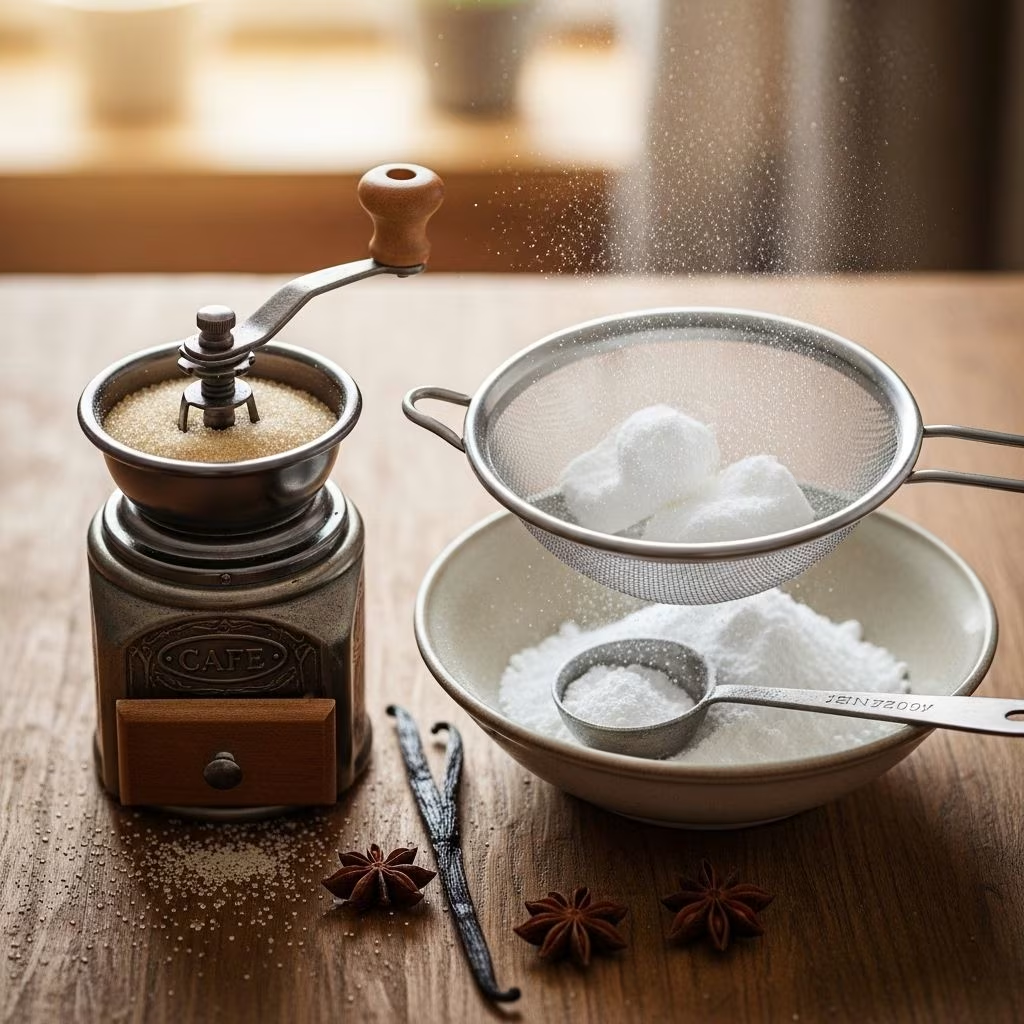
- Cover and blend: Blend on high until the sugar turns very fine and powdery—about 30–60 seconds. You might want to cover the lid with a towel to prevent dust clouds.
- Wait before opening the lid: Let the powder settle for a minute to avoid inhaling a sugar cloud.
- Sift if necessary: If your powdered sugar has lumps, use a fine mesh sieve for a perfectly smooth result.
- Store or use immediately: Transfer to an airtight container if not using right away. Keep at room temperature for up to several months.
Helpful Tips
- Make sure your blender or food processor is completely dry before starting. Even slight moisture can cause clumping.
- Allow the dust to settle after blending to avoid messes and breathing in sugar powder.
- If making a large batch, blend in smaller increments to achieve a fine texture.
- For extra smoothness, double blend: process once, let it settle, then blend again.
- Always sift before using for frostings and delicate recipes.
How Much Powdered Sugar Does This Recipe Make?
| Granulated Sugar (cups) | Powdered Sugar Yield (cups) |
|---|---|
| 1 | Approximately 2 |
| 2 | Approximately 4 |
| 0.5 | Approximately 1 |
Tip: The volume roughly doubles since powdered sugar holds more air than granulated sugar.
Powdered Sugar Substitutes and Variations
If you wish to create alternative powdered sugars for specific dietary needs or flavor preferences, consider:
- Coconut sugar – Creates a lightly caramel-flavored, tan powder perfect for vegan or paleo diets.
- Date sugar – Adds nutritional benefits; use as a sweetener in healthy baked goods.
- Maple sugar – Subtle maple flavor for unique glazes or icings.
- Arrowroot or tapioca starch – For corn-free or allergen-free baking.
Note: Powdered brown sugar does not behave like traditional powdered sugar due to moisture content, so it is generally not recommended.
Uses for Homemade Powdered Sugar
- Classic frostings and icings (e.g., cream cheese or buttercream)
- Glazes for cakes, cookies, and sweet breads
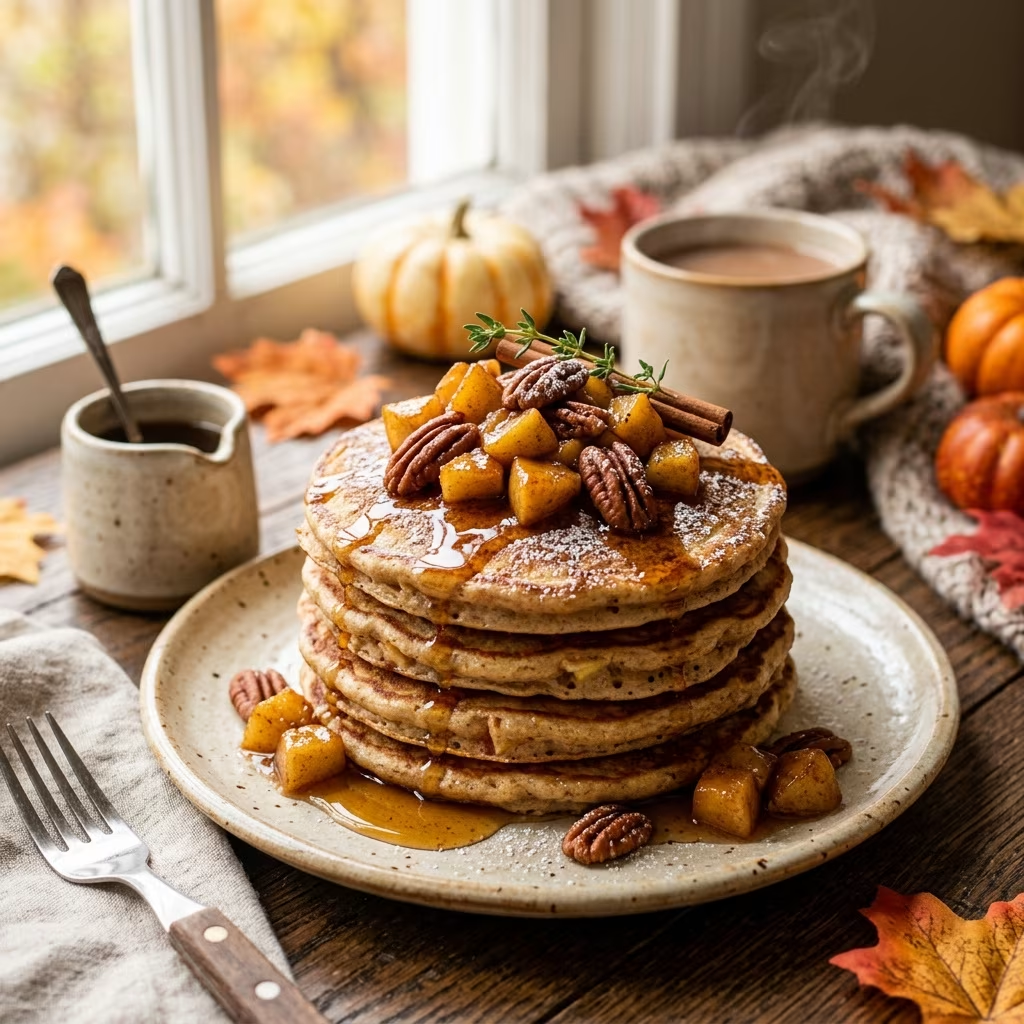
- Dusting on fruit, brownies, and pancakes
- Thickening whipped cream or stabilizing meringue
- Decorative toppings for pastries and doughnuts
Storage Tips
- Airtight Container: Always store powdered sugar in a tightly sealed jar or container at room temperature.
- Keep Dry: Avoid moisture to prevent clumping or hardening.
- Best Use: Homemade powdered sugar is freshest within three months but can be used for up to six months if stored well.
Common Questions About Homemade Powdered Sugar
Q: What is the difference between powdered sugar, confectioner’s sugar, and icing sugar?
A: They are all the same product—finely ground sugar often mixed with a small amount of starch to prevent clumping. The term varies by region.
Q: Can I use a food processor instead of a blender?
A: Yes, a food processor will work, but a high-speed blender produces a finer result. Be patient and process in small amounts for the best texture.
Q: Can I make powdered sugar without cornstarch?
A: Yes, arrowroot, tapioca, or potato starch can be substituted for cornstarch in equal amounts. You can also omit it for immediate use, but be aware that the sugar may clump if stored.
Q: Why does my homemade powdered sugar taste different from store-bought?
A: Some people notice a slightly metallic or chalky taste due to the starch, which is normal. Using superfine sugar as a starting point can give a less gritty result, and alternative sweeteners may provide nuanced flavors.
Q: Why did my powdered sugar turn out lumpy?
A: Lumps usually occur if there is moisture in the blender or container. Always start with dry equipment, and sift the finished sugar before using.
Q: Can I make powdered sugar with less refined or unrefined sugars?
A: Absolutely! Try coconut, maple, or date sugar for alternative flavors and enhanced nutrition. Each will have a unique color and taste—experiment to find your favorite.
Homemade Powdered Sugar Recipe
Ingredients
- 2 cups granulated sugar (white or cane)
- 2 tablespoons cornstarch (or arrowroot/tapioca starch)
Instructions
- In a high-speed blender or food processor, combine the sugar and starch.
- Cover and blend on high for 30–60 seconds, until very fine and powdery.
- Allow the powder to settle before opening the blender.
- Transfer to an airtight container. Sift before using if needed.
This recipe yields about 4 cups of powdered sugar and can be adjusted for smaller or larger batches based on your needs.
Troubleshooting & Tips
- Ensure absence of moisture throughout the process. Wet utensils, containers, or blender jars will result in sticky or lumpy sugar.
- Let the powder settle for 1–2 minutes before opening the blender to avoid powder clouds.
- Sift before storing to remove lumps and ensure a uniform texture.
- If your blender is not very powerful, blend longer or in smaller quantities for finer powder.
Ideas for Using and Customizing Homemade Powdered Sugar
- Use spiced sugars by adding a pinch of cinnamon, nutmeg, or cardamom during blending for flavored dusting sugars.
- Create colored powdered sugar by blending in a tiny amount of freeze-dried fruit powder or natural food coloring.
- For a vanilla version, add scraped vanilla bean or a teaspoon of vanilla powder for delicate aroma and flavor.
Final Thoughts
Making homemade powdered sugar is an easy kitchen project that takes only minutes. You save money, reduce pantry clutter, and gain control over the ingredients in your favorite sweets and baked goods. Whether you’re making a batch for a birthday cake, dusting French toast at brunch, or simply want to avoid an unnecessary grocery trip, this practical skill puts success right at your fingertips.