Washing raw chicken before cooking is a common practice in many home kitchens, often passed down through generations. Home cooks may rinse poultry in the sink with the intent of removing bacteria and improving food safety. However, an evolving body of scientific research and official food safety guidelines now advise against this practice. So what is the risk involved, and what does the science say about handling raw chicken?
Why Do People Wash Chicken?
Many people wash chicken because of tradition, habit, or the belief that it removes bacteria and makes poultry safer to eat. Some recall parents or grandparents who always rinsed chicken, and may be reluctant to break with family ways. Others are concerned about potential grime, feather fragments, or blood, and feel that washing will make the raw meat cleaner.
- Family tradition: Generational habits, especially in certain cultures.
- Visible residue: Blood, bone dust, or other matter seen on raw poultry.
- Belief: The assumption that rinsing can decrease harmful bacteria.
What Do Food Safety Authorities Say?
Bodies such as the US Department of Agriculture (USDA), Centers for Disease Control and Prevention (CDC), and Food and Drug Administration (FDA) all firmly advise: Do not wash raw chicken before cooking. Their recommendations are based on a growing understanding of how bacteria spread in the kitchen and what truly eliminates pathogens.
- USDA: Washing raw poultry increases the risk of cross-contamination and does not remove all bacteria.
- CDC: Advises against washing chicken because water droplets can transfer bacteria to other surfaces, foods, and utensils.
- FDA: Also advises that rinsing raw poultry is more likely to spread germs than eliminate them.
The Food Science: What Really Removes Bacteria?
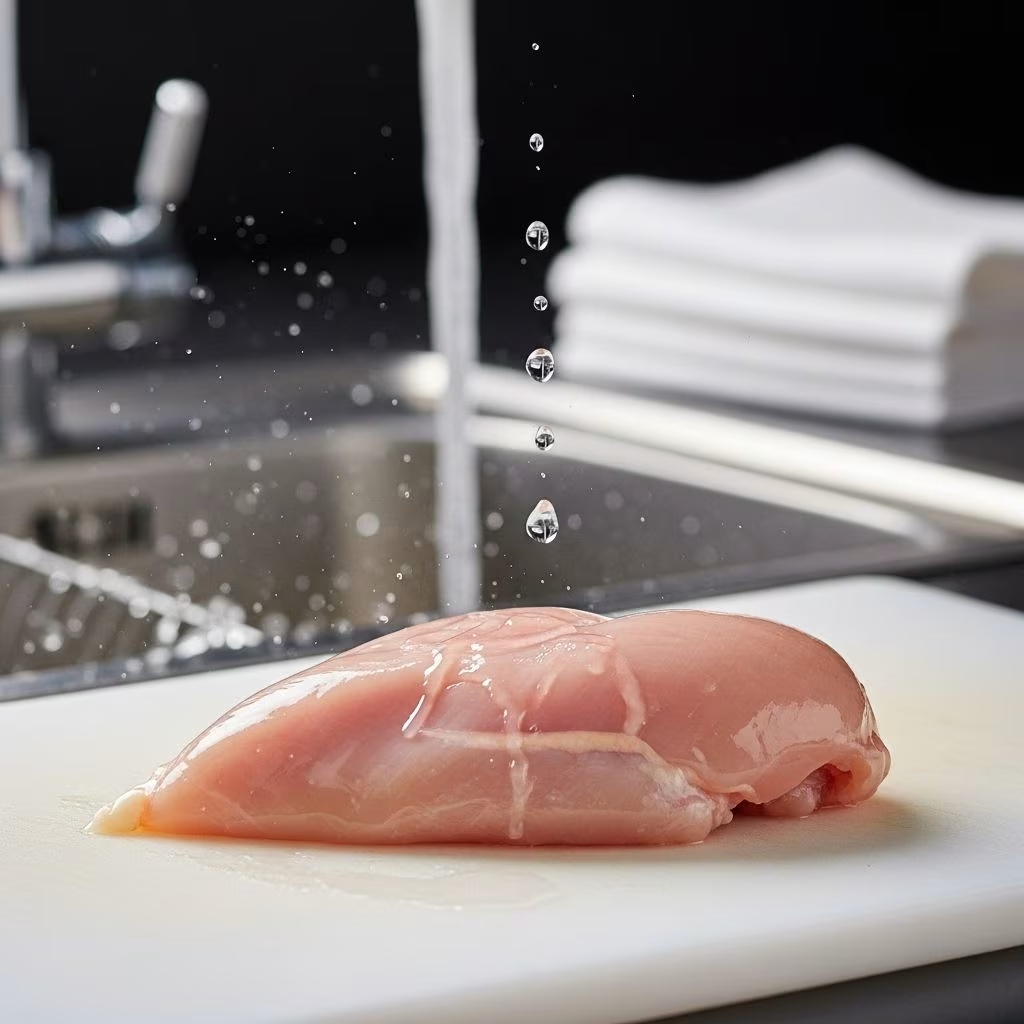
The two most common types of bacteria present on raw poultry are Salmonella and Campylobacter. These microbes are responsible for a large percentage of foodborne illnesses nationwide. Science shows that rinsing chicken under water does not effectively remove these bacteria—instead, it causes contaminated droplets or splashes that spread bacteria further in your kitchen.
- Pathogen removal requires heat. Only cooking chicken to 165°F (74°C) ensures the destruction of harmful bacteria.
- Rinsing is ineffective. Water can dislodge loose surface debris, but it will not reliably remove or kill bacteria embedded in crevices or attached to the meat’s surface.
- The splash effect. Washing chicken can project bacteria-containing droplets up to several feet from your sink, contaminating countertops, utensils, towels, or other foods; this effect is enhanced by higher water pressure or faucet height.
Splashing, Aerosols, and the Risk of Cross-Contamination
Research has confirmed that washing raw chicken produces aerosolized droplets capable of carrying bacteria to nearby areas and objects. Investigations using microbiological media and high-speed imaging demonstrate that:
- Water droplets landing on kitchen surfaces can transfer microbes from chicken skin to countertops, sinks, utensils, and hands.
- The increase in contamination is influenced by factors such as faucet height, water flow, and even the texture or shape of the chicken surface.
- These droplets may land several feet from the initial washing location, making thorough kitchen sanitization extremely challenging.
- Even rigorous cleaning does not guarantee the removal of all bacteria from splattered zones.
| Risk | Explanation |
|---|---|
| Pathogen Spread | Water splashes containing bacteria land on hands, clothes, or surrounding surfaces. |
| Cross-Contamination | Transferred bacteria can infect prepared foods or tools, increasing food poisoning risk. |
| Cleaning Difficulty | Dropped bacteria can persist on uneven or hard-to-reach surfaces even after cleaning. |
| False Sense of Security | People may assume rinsing removes risk, but only proper cooking does so. |
Common Myths About Washing Chicken
- Myth: Washing chicken makes it safer to eat.
Fact: Bacteria are not reliably removed by rinsing and are easily spread to the surrounding area.
- Myth: Washing chicken removes smells or slime.
Fact: Smells or slippery residue can be natural to raw chicken or a sign of spoilage. If chicken smells significantly off or has a sticky/slimy texture, it should be discarded, not washed.
- Myth: Rinsing poultry is required for marinades or brining.
Fact: If a recipe calls for brining, pat the chicken dry with disposable paper towels, avoid rinsing under the faucet.
- Myth: You can prevent splashing with careful technique.
Fact: Research shows that the risk persists even with lower water pressure or targeted rinsing because of unpredictable splatter paths.
Foodborne Illnesses Linked to Poultry
Chicken is a leading source of foodborne outbreaks in the United States and much of the world. According to the CDC:
- In 2016, at least 8 outbreaks, 307 illnesses, 42 hospitalizations, and 1 death in the U.S. were linked to chicken.
- From 2009 to 2015, over 12% of all single-source food outbreaks in the U.S. were poultry-related.
- Pathogens commonly found on chicken include Salmonella, Campylobacter, and occasionally Clostridium perfringens.
- Annually, foodborne illness affects roughly 48 million Americans, causing 128,000 hospitalizations and thousands of deaths.
Safe Handling Tips for Chicken in Your Kitchen
- Do not wash raw chicken. Take the poultry straight from packaging to the cooking pan.
- Immediately discard packaging. Prevent the spread of bacteria by handling packaging carefully and disposing of it right away.
- Dedicated tools and surfaces. Prepare chicken on a designated cutting board and use separate utensils for raw and cooked products.
- Wash hands thoroughly. Clean your hands with soap and water after touching raw chicken.
- Sanitize surfaces. Clean all surfaces, utensils, and cutting boards that have come into contact with raw poultry using hot, soapy water.
- Never reuse marinating liquids. If you used a marinade on raw chicken, do not use it as a basting or dipping sauce unless it is boiled first.
Proper Cooking: Your Best Defense
- Cook chicken to 165°F/74°C internally. Always use an instant-read thermometer to confirm doneness, measuring at the thickest part of the meat (avoiding bones).
- Check multiple spots. Don’t rely solely on color or texture—use a thermometer for safety.
- Let chicken rest after cooking. Resting helps juices redistribute and finishing any bacterial kill-off.
What Should You Do Instead of Washing?
- Pat chicken dry with disposable paper towels if necessary for recipe purposes (e.g., crispier roasting skin), and dispose of towels immediately.
- Avoid cross-contamination through the sink, countertops, dishcloths, or sponges after handling chicken.
- Consider prepping chicken close to the stove, so juices and drips are minimized in transit.
Are There Any Foods You Should Wash?
While meats and poultry should not be washed, many fruits and vegetables benefit from gentle rinsing under cold running water to remove soil, pesticides, or microbes on the surface. However, the rules for chicken do not apply in these cases, as most produce is eaten raw and not subject to high-temperature cooking.
Summary Table: Washing Raw Chicken vs. Not Washing
| Practice | Effect on Bacteria | Risk Level | Expert Recommendation |
|---|---|---|---|
| Washing Chicken | Does not eliminate harmful bacteria; spreads contamination via splashes. | High | Strongly discouraged |
| Not Washing | Bacteria killed by proper cooking only | Low (with careful handling and cooking to 165°F) | Recommended |
Frequently Asked Questions (FAQs)
Q: Why do people still wash chicken despite expert advice?
A: Many cooks continue this practice out of tradition or habit, or because they believe it removes bacteria and improves safety. Science shows the opposite is true.
Q: If I accidentally washed chicken, what should I do?
A: Immediately clean and sanitize all kitchen surfaces, sinks, utensils, and wash your hands thoroughly to minimize the risk of cross-contamination.
Q: What about washing chicken in vinegar or lemon?
A: Soaking or rinsing chicken with acidic solutions does not remove all bacteria and can still result in splashing and cross-contamination. Only cooking kills pathogens.
Q: Is there any situation when washing chicken is necessary?
A: The only exception may be in commercial food production situations with specific guidelines. In the home kitchen, washing is never advised for food safety and is not necessary for quality.
Q: Should I wash other types of meat?
A: No. Washing any raw meat—including poultry, beef, pork, and fish—increases the risk of bacterial spread. Adhere to similar safety guidelines for all animal proteins.
Conclusion
The tradition of washing raw chicken is deeply ingrained for many, but current research and food safety authorities emphasize that the safest and best approach is to avoid washing poultry entirely. Proper handling, kitchen hygiene, and most importantly, cooking to safe internal temperatures, offer the most effective protection against foodborne illness. Trust the science—keep raw chicken away from the faucet, and always let the oven or stovetop do the bacteria-killing work.