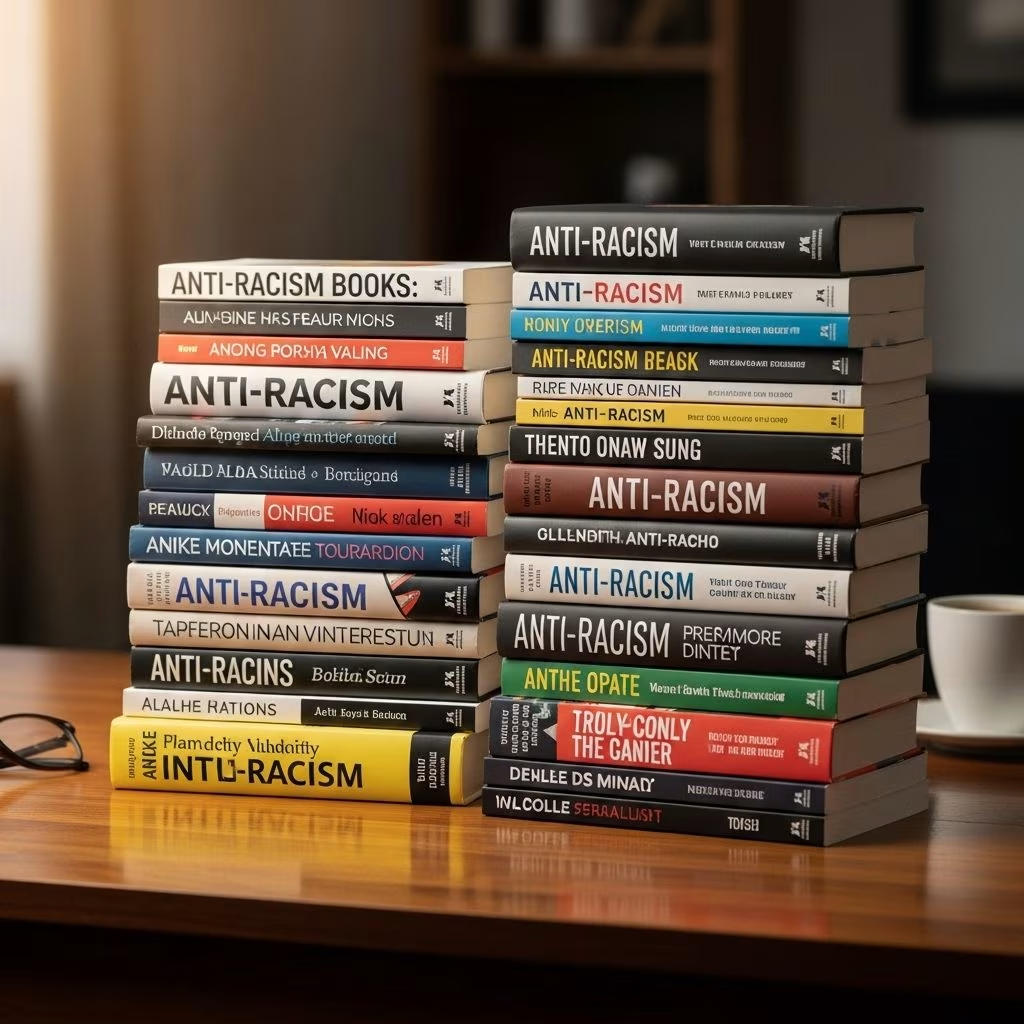
20 Essential Anti-Racism Books Everyone Should Read
Learning about anti-racism goes beyond acknowledging that racism exists—it requires critical self-reflection, education, and action. Books remain a powerful tool for understanding systemic injustice, examining privilege, and fostering honest conversation. This comprehensive guide highlights 20 essential anti-racism books that challenge, educate, and inspire readers to make meaningful change. From bestsellers rooted in rigorous research to poignant memoirs and practical handbooks, these works span generations and perspectives, equipping individuals, families, and communities to confront racism in all forms.
Why Read Anti-Racism Books?
Anti-racism literature offers more than insight—it provides language for difficult dialogues, guidance for educators and parents, and actionable steps for advocacy. Whether you’re new to the subject or seeking to deepen your understanding, every book on this list presents unique, invaluable lessons about history, culture, and what it means to work toward racial equity.
Featured Anti-Racism Books
- How to Be an Antiracist by Ibram X. Kendi
- Stamped from the Beginning by Ibram X. Kendi
- So You Want to Talk About Race by Ijeoma Oluo
- Me and White Supremacy by Layla F. Saad
- Home by Toni Morrison
- Raising White Kids by Jennifer Harvey
- Why I’m No Longer Talking to White People About Race by Reni Eddo-Lodge
- White Like Me: Reflections on Race from a Privileged Son by Tim Wise
- White Fragility: Why It’s So Hard for White People to Talk About Racism by Robin DiAngelo
- Just Mercy by Bryan Stevenson
- Between the World and Me by Ta-Nehisi Coates
- The New Jim Crow by Michelle Alexander
- How to Be Less Stupid About Race by Crystal M. Fleming
- Freedom Is a Constant Struggle by Angela Y. Davis
- This Book Is Anti-Racist by Tiffany Jewell
- I’m Still Here by Austin Channing Brown
- The Fire Next Time by James Baldwin
- The Color of Law by Richard Rothstein
- Minor Feelings by Cathy Park Hong
- America’s Original Sin by Jim Wallis
In-Depth Guide to Key Anti-Racism Books
1. How to Be an Antiracist by Ibram X. Kendi
This groundbreaking bestseller synthesizes history, law, science, and memoir. Kendi challenges readers to move beyond passive awareness to take clear anti-racist action. The book systematically walks through the concept that being “not racist” isn’t enough—true progress requires actively identifying and opposing racism in policy and practice. Combining personal awakening with a framework for systemic change, this is essential reading for all seeking to understand and dismantle racism.
2. Stamped from the Beginning: The Definitive History of Racist Ideas in America by Ibram X. Kendi
Kendi’s award-winning history deconstructs how racist ideas developed and continue to shape American society. Focusing on five historical figures—including Thomas Jefferson and W.E.B. Du Bois—this deeply researched book unpacks the creation, evolution, and ongoing consequences of racism in the U.S. Kendi argues powerfully against the notion of a post-racial society, tracing how racism is ingrained in institutional and cultural life.
3. So You Want to Talk About Race by Ijeoma Oluo
Oluo’s accessible and direct guide provides a toolkit for navigating challenging conversations about race. Addressing questions such as how to discuss racist jokes or explain privilege, Oluo empowers readers to approach these discussions with clarity and confidence. The book bridges complex topics—like intersectionality and “model minorities”—making it a vital resource for anyone ready to engage in honest dialogue and understand the pervasiveness of racism.
4. Me and White Supremacy: Combat Racism, Change the World, and Become a Good Ancestor by Layla F. Saad
Originating as a viral Instagram challenge, Layla F. Saad’s book offers a transformational journey for White readers who wish to recognize, reflect on, and dismantle their own racist behaviors. With practical reflection exercises and actionable strategies, the workbook-style book equips individuals to recognize privilege, shed defensiveness, and become responsible allies. Its structured approach makes it especially useful for group study and discussion.
5. Home by Toni Morrison
This acclaimed novel by Nobel laureate Toni Morrison chronicles the journey of Frank Money as he returns to the racially charged South after fighting in the Korean War. Morrison’s depiction of mid-20th-century Black life in America, though fictional, offers raw truth about trauma, identity, and resilience. Through Frank’s struggles, Morrison paints a moving portrait of both historical and contemporary realities of racism.
6. Raising White Kids: Bringing Up Children in a Racially Unjust America by Jennifer Harvey
Addressing one of the most challenging conversations—teaching children about race—Harvey’s practical guide is invaluable for parents, educators, and community leaders. The book explains how to discuss race with kids in age-appropriate ways, offers tools for counteracting racial bias, and explores strategies for raising children to become conscious and just citizens. Whether you are white or a caretaker of white children, this book delivers pathways to honest conversations and meaningful antiracist action at home.
7. Why I’m No Longer Talking to White People About Race by Reni Eddo-Lodge
In a work sparked by a viral blog post, Eddo-Lodge examines how discussions of race in the UK have historically centered white perspectives. Her book unpacks the erasure of Black history, the interplay between class and race, and the limitations of mainstream feminism. The narrative is both a personal testimony and a well-researched account that reveals the structural mechanisms of white dominance.
8. White Like Me: Reflections on Race from a Privileged Son by Tim Wise
Tim Wise offers an unflinching self-examination of white privilege, exploring how being “white like him” has shaped his awareness and experiences. By interrogating what it means to be the beneficiary of racial advantage, Wise demonstrates how individuals who do not identify as BIPOC can play vital roles in building a more equitable society. The memoir is rich with personal stories and historical analysis.
9. White Fragility: Why It’s So Hard for White People to Talk About Racism by Robin DiAngelo
Robin DiAngelo delves into the defensive reactions many white people display when confronted with race-related conversations. Using examples from her decades of diversity training, she explains why even well-intentioned white people often resist meaningful dialogue. DiAngelo outlines steps to move past discomfort and denial, framing racism not as a personal failing but a system of advantage that can be challenged.
10. Just Mercy: A Story of Justice and Redemption by Bryan Stevenson
Attorney Bryan Stevenson recounts his life’s work in criminal justice reform and his efforts to defend people wrongfully condemned. Through wrenching case studies, Stevenson exposes the injustices that disproportionately affect Black Americans, shining light on the links between race, poverty, and the law. The book is both an indictment of racial inequality and a call for empathy and hope in the face of injustice.
11. Between the World and Me by Ta-Nehisi Coates
Written as a letter to his teenage son, Coates’ National Book Award-winning work explores what it means to be Black in America. Blending autobiography, history, and political analysis, the book dissects structural racism, generational trauma, and the pursuit of liberation. Its poetic prose and urgent message have made it a contemporary classic for those wrestling with questions of race and identity.
12. The New Jim Crow: Mass Incarceration in the Age of Colorblindness by Michelle Alexander
This landmark book uncovers the reality that mass incarceration of Black Americans is a profound and intentional extension of past racial controls. Alexander details how the criminal justice system creates and enforces a “new caste system,” rooted in discriminatory policies and practices. The book helped ignite a national conversation about reform and abolition.
13. How to Be Less Stupid About Race: On Racism, White Supremacy, and the Racial Divide by Crystal M. Fleming
Crystal M. Fleming blends wit, rigor, and critical theory in her guide for unlearning racist ideas. Revealing the flaws in colorblindness and “post-racial” myths, Fleming’s book is a direct address to Americans who are ready to challenge their frameworks and participate in honest, transformative social action.
14. Freedom Is a Constant Struggle: Ferguson, Palestine, and the Foundations of a Movement by Angela Y. Davis
Angela Y. Davis, a veteran scholar and activist, draws connections between global struggles against oppression, situating the movement for Black lives within a broader panorama of liberation. Her essays cover a range of activism, advocacy, and coalition-building, making this collection a crucial resource for anyone invested in both historical context and contemporary action.
15. This Book Is Anti-Racist by Tiffany Jewell
Written for younger readers and families, this illustrated guide breaks down concepts such as identity, privilege, and activism with accessible language and engaging activities. Jewell’s book is designed to empower youth—and their caregivers—on the journey toward becoming actively anti-racist, making it a vital resource for classrooms and households alike.
16. I’m Still Here: Black Dignity in a World Made for Whiteness by Austin Channing Brown
Channing Brown’s memoir explores her identity as a Black woman navigating predominantly white spaces. Through personal stories, she examines microaggressions and institutional racism, calling for an honest reckoning in churches, workplaces, and society at large. The book is frank, illuminating, and ultimately hopeful.
17. The Fire Next Time by James Baldwin
This classic work by Baldwin consists of two essays that remain stunningly relevant. With lyrical force, Baldwin delves into the intersection of race, religion, and identity during the Civil Rights Movement era. His prose is both indictment and meditation, urging America toward a more honest and compassionate reckoning.
18. The Color of Law: A Forgotten History of How Our Government Segregated America by Richard Rothstein
Rothstein exposes the governmental policies and legal frameworks that systematically promoted segregation and economic disparity. By revealing how housing discrimination was sanctioned and perpetuated over decades, the book offers crucial context for current conversations about wealth inequality and urban development.
19. Minor Feelings: An Asian American Reckoning by Cathy Park Hong
Hong blends autobiography and cultural criticism to reveal the complexities of Asian American identity and racialization. Through essays on shame, anger, and belonging, Hong broadens the narrative about race in America and brings nuance to conversations about intersectionality and solidarity.
20. America’s Original Sin: Racism, White Privilege, and the Bridge to a New America by Jim Wallis
Wallis, a public theologian, calls out racism as the nation’s foundational sin and urges American Christians and faith leaders to build a genuinely just society. This book blends history, biblical analysis, and practical suggestions for reconciliation, making it a powerful resource for faith-based communities seeking to respond to racial injustice.
Comparing Key Topics in Anti-Racism Books
| Book | Primary Focus | Intended Audience |
|---|---|---|
| How to Be an Antiracist | Active anti-racism; personal and systemic change | General; all backgrounds |
| Me and White Supremacy | Self-examination of privilege; action steps | White readers, groups, allies |
| Between the World and Me | Black identity; generational trauma | Teens, adults |
| White Fragility | Understanding and confronting defensiveness | White readers, workplaces |
| This Book Is Anti-Racist | Education, empowerment, activities | Youth, families, classrooms |
How to Use These Books for Personal Growth and Community Action
- Start with self-reflection: Before facilitating conversations, examine your own beliefs and assumptions with memoirs and workbooks like Me and White Supremacy and White Fragility.
- Create group discussions: Many of these books, especially those with reflection questions, are designed for book clubs, classrooms, or workplace training sessions.
- Broaden your lens: Engage books by authors from varied backgrounds—Black, Asian American, and intersecting identities—to appreciate the full complexity of racism and solidarity.
- Take action: Look for texts with practical exercises (like This Book Is Anti-Racist) to help translate education into real-world activism.
Frequently Asked Questions (FAQs)
What is the difference between ‘not being racist’ and being ‘anti-racist’?
‘Not being racist’ is a passive stance, whereas being ‘anti-racist’ means deliberately identifying, challenging, and acting against racism in policies, practices, and individual beliefs.
Can these books be read by people of all backgrounds?
Yes. Many books on this list are applicable to people of all racial and cultural identities. While some focus specifically on white privilege, others speak to universal themes of justice and identity. Together, they foster a holistic understanding necessary for genuine solidarity.
Are there resources for children and families?
Absolutely. This Book Is Anti-Racist by Tiffany Jewell, and Raising White Kids by Jennifer Harvey, among others, provide approaches and language that are accessible to children and useful to caregivers aiming to raise antiracist youth.
How can I start difficult conversations about race?
- Educate yourself first with books like So You Want to Talk About Race and White Fragility.
- Approach conversations with humility and openness.
- Listen actively and avoid centering your own experience if you are a person benefiting from privilege.
Where can I find more anti-racism resources?
Libraries, educational institutions, and anti-racist organizations often provide curated reading lists, discussion guides, and digital resources for ongoing learning and activism.
Conclusion
Reading anti-racism books is a powerful and necessary step toward personal growth and societal transformation. Each title on this list offers tools and perspectives for not only understanding systemic injustice, but also for building an equitable future through sustained education and action.