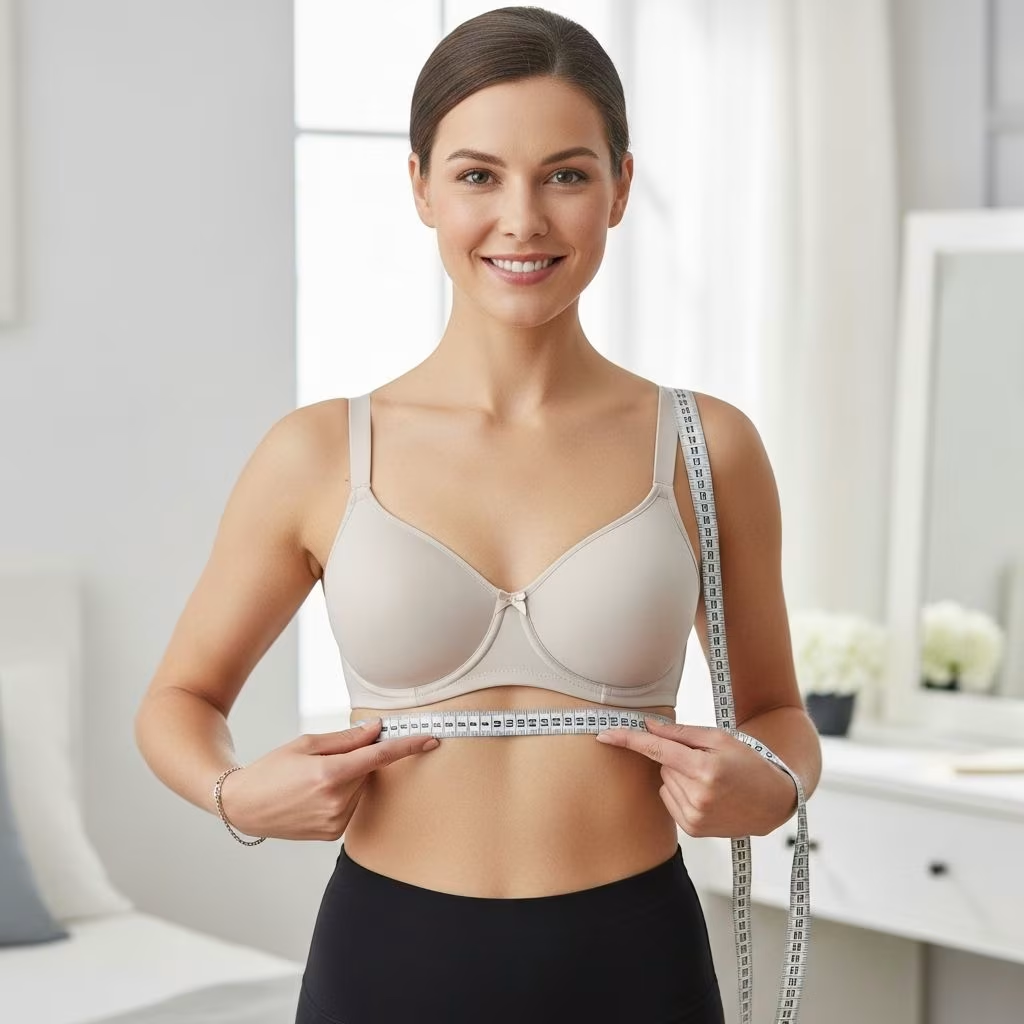
Wearing the right bra size is essential for everyday comfort, good posture, and overall breast health. Yet, research shows the majority of women are in the wrong bra size, which can lead to discomfort and even pain. By learning how to measure for a bra correctly at home, you can ensure both better support and an improved silhouette for all your outfits.
Why Knowing Your Bra Size Matters
Finding your perfect bra size is more than just a matter of style; it’s crucial for your well-being. Wearing an ill-fitting bra can result in:
- Discomfort and pain in the shoulders, neck, and back
- Straps digging into skin or falling off shoulders
- Bands riding up or feeling too tight around the torso
- Breasts spilling over or not filling out cups correctly
- Irritation and red marks on the skin
Many women stick with the same bra size for years, despite body changes from aging, pregnancy, weight fluctuation, or shifts in fitness. That’s why it’s important to measure regularly—ideally every 6-12 months, or whenever you notice a change in your fit or comfort.
How to Measure Your Bra Size at Home: Step-by-Step
To get started, you’ll need a soft measuring tape, a mirror, and ideally a well-fitting non-padded bra. Remove bulky clothing, stand up straight, and follow these key steps:
Step 1: Measure Your Band Size
- Wrap the tape snugly around your ribcage, just under your bust (where your band sits).
- The tape should be level all around your body, parallel to the floor.
- Exhale to get the most accurate measurement, ensuring the tape is firm but not tight. Round to the nearest whole number.
- Band Size Tip: If your measurement is even, add 4 inches. If it’s odd, add 5. For example, a 32″ underbust becomes a 36 band size, a 33″ becomes a 38.
Step 2: Measure Your Bust Size
- Wrap the tape loosely around the fullest part of your bust (usually at the nipple).
- Keep the tape level and avoid flattening your breasts.
- Round to the nearest whole number.
Step 3: Calculate Your Cup Size
- Subtract your band size (from Step 1) from your bust measurement (from Step 2). The difference in inches produces your cup size.
| Difference (Inches) | US Cup Size |
|---|---|
| Less than 1″ | AA |
| 1″ | A |
| 2″ | B |
| 3″ | C |
| 4″ | D |
| 5″ | DD/E |
| 6″ | DDD/F |
| 7″ | G |
| 8″ | H |
For example, if your underbust is 34″ (band size 38) and your bust is 39″, the difference is 1 inch, which is an A cup. Your bra size is 38A.
Bra Size Calculation in Different Regions
Bra sizes vary internationally. Here are common sizing systems for reference:
| Band Size (US/UK) | EU Standard | FR/ES/BE | AU/NZ |
|---|---|---|---|
| 32 | 70 | 85 | 10 |
| 34 | 75 | 90 | 12 |
| 36 | 80 | 95 | 14 |
| 38 | 85 | 100 | 16 |
| 40 | 90 | 105 | 18 |
Common Bra Fitting Issues—and How to Fix Them
Bras that don’t fit correctly can cause multiple issues. Look for these signs and use the guidance below to troubleshoot:
- Band riding up: The band should sit parallel to the floor and below the shoulder blades. Tighten the band or choose a smaller size if it rides up.
- Band digging in: If your band is leaving deep marks, try loosening it, or going up in band size. A wider band can also help distribute pressure.
- Cups gaping: If there’s space in the cups, size down or try a different shape for your breast type.
- Overflow/spillage: If breasts spill over the cups, go up a cup size or look for fuller coverage bras.
- Straps slipping/falling off: Check for a better band fit and adjust straps. In some cases, opt for bras with multiway or convertible straps.
- Straps digging in: Look for bras with broader straps or ensure your band is providing sufficient support—the band should carry most of the support, not the straps.
- Center panel not resting flat: The bra’s center (between the cups) should lie flat against your breastbone. If it sits away, the cup too small—try a larger cup size.
Tips for a Perfect Fit
- Measure yourself every 6-12 months.
- Try bras on the loosest hook; as the elastic relaxes, you’ll be able to tighten the band.
- Your band should be snug—it provides 80-90% of support.
- Cups should comfortably contain the breasts—no overflow, no gaps.
- The bra’s center gore should sit flat against your sternum.
- Ensure the back of the bra stays level when you lift your arms.
- Choose the right shape for your breast type: plunge for close-set, balconette for round, full-coverage for fuller busts, etc.
What If Your Breasts Are Different Sizes?
Asymmetry is normal! Fit your bra to the larger breast and, for a smooth fit, add a removable pad (“cookie”) or insert to the smaller side.
How to Tell If Your Bra Size Is Wrong
- Frequent adjusting or discomfort
- Marks left by straps or band
- Back pain, shoulder, or neck pain
- Breasts spilling out or not filling the cup
- Bands rising up at the back
- Cups wrinkling or cups standing away from the body
- Center gore not sitting flush against the chest
If you notice these, try the measuring process again and experiment with sizes and styles until you find your best fit.
Expert-Recommended Measuring Tips
- Don’t wear a sports bra when measuring—opt for a lightly lined, non-padded everyday bra.
- If between sizes, try both and assess comfort, support, and coverage.
- Body shape, age, hormonal changes, and even weather can change your fit.
- Try different brands and styles as sizing isn’t universal—one company’s 34C can feel like another’s 36B.
Understanding Sister Sizing
If you can’t find your exact size, sister sizes may help. For every band size up, go one cup size down, or for every band size down, go up one cup size. For example, 36C’s sister sizes are 34D and 38B.
Bra Sizing FAQs
How often should you measure your bra size?
You should measure every 6 to 12 months or whenever your weight, fitness regimen, or hormone levels change significantly.
What if your size changes throughout the month?
It’s normal for breasts to fluctuate due to hormonal cycles. Consider multiple sizes or flexible fabrics if you experience dramatic changes.
Is it normal for bra sizes to vary by brand?
Yes, sizing and fit can differ between brands. Always try on bras when switching labels or styles.
Are there differences between US, UK, and European bra sizes?
Yes. Cup and band sizing can differ, and the same label might represent a different size in another country. Check the brand’s size chart before buying, especially online.
How do I know if my bra actually fits properly?
- The band is firm but comfortable on the loosest hook.
- Cups cover your breasts fully with no spillage or gaping.
- The center panel lies flat on your chest.
- Straps stay in place but don’t dig in.
- The bra doesn’t shift when you move your arms.
Can I measure for a bra by myself?
Yes—stand in front of a mirror and follow the steps. For best results, ask a friend or professional fitter for a second opinion.
Does an inaccurate bra size affect your health?
Wearing the wrong size can cause back, shoulder, and neck pain, as well as poor posture. A well-fitted bra can improve comfort and support.
Bra Size Calculator (Quick Reference)
Use this easy process as a guide:
- Step 1: Measure snugly under your bust = Your underbust measurement.
- Step 2: Add 4 or 5 inches depending on whether your measurement is an even or odd number = Your band size.
- Step 3: Measure around the fullest part of your bust.
- Step 4: Subtract your band size from your bust measurement to get the cup size (see difference table above).
When to Get a Professional Bra Fitting
While measuring at home is a great first step, periodic professional fittings can help catch subtle changes in your size or fit. Get fitted when:
- You’re buying lingerie for a special occasion
- You notice significant changes in your body (weight loss/gain, pregnancy, menopause)
- Your bras no longer feel supportive or comfortable, even if the size is right on paper
Most department stores and specialty lingerie shops offer complimentary fittings.
Final Reminders for Bra Shopping Success
- Try before you buy whenever possible, and move around to test comfort and support.
- Update your wardrobe with a few basics in your updated size, plus specialty bras for different outfits.
- Consider a mix of styles (balconette, plunge, T-shirt, sports) to suit your wardrobe and support needs.
- Remember, the best bra is the one that makes you feel confident and comfortable—all day long.
Frequently Asked Questions (FAQs)
How long do bras typically last?
A bra’s lifespan varies, but on average, it will support you for 6–12 months of regular wear. Signs you need a replacement include stretched bands, loss of shape, underwires poking through, or fading fabric.
What is the best bra style for everyday wear?
T-shirt bras or lightly lined underwire bras are popular for their seamless silhouette and reliable support. However, the best choice depends on your breast shape, lifestyle, and garment preferences.
Can I wear a bra to bed?
There’s no medical reason you must remove your bra for sleep. Many people prefer bralettes or soft, wireless bras for nighttime, while others go without. Comfort is key.
What if my favorite bra style is discontinued?
You can try researching the exact size and style name to find similar models or use the fit and features you love to search for alternatives. Shopping at specialty lingerie boutiques or consulting fitters can also help identify comparable options.
Are wired or wire-free bras better?
This depends on your comfort and support needs. Wired bras often lift, shape, and separate, while wire-free bras offer relaxed comfort. Both can be supportive if correctly fitted.
References
- https://www.jcpenney.com/m/editorial/guides/bra-fit-guide
- https://www.primalwear.com/blogs/team-estrogen/how-do-i-find-the-right-size-bra
- https://www.calculator.net/bra-size-calculator.html
- https://www.abrathatfits.org
- https://www.lanebryant.com/cacique-intimates/bras/bra-fit-guide
- https://www.youtube.com/shorts/hJ–32Z75H0