A Century of Spectacle: The Enduring Magic of the Macy’s Thanksgiving Day Parade
The Macy’s Thanksgiving Day Parade has become the heartbeat of America’s holiday season, bursting onto the streets of New York City each November with breathtaking floats, colossal balloons, vibrant performances, and millions of joyful onlookers. For nearly a century, the parade has grown from a modest festive procession into a grand spectacle that not only launches the holiday celebrations but also reflects the ever-changing spirit of American culture.
Origins and Early Traditions
The origins of the Macy’s Thanksgiving Day Parade date back to 1924, when Macy’s employees—many of whom were European immigrants longing for the festive carnivals of their homeland—decided to stage a celebration that would both mark the expansion of Macy’s flagship store and ignite the city’s holiday season. That first year, throngs of clowns, cowboys, knights, sheikhs, costumed employees, and live animals borrowed from the Central Park Zoo paraded down 34th Street, captivating a crowd of more than 250,000 spectators.
- First parade: November 27, 1924
- Floats and bands: Theatrical displays and professional musicians
- Live animals: From Central Park Zoo, adding excitement and unpredictability
At the conclusion, Santa Claus was enthroned on the Macy’s balcony, instantly crowning him “King of the Kiddies” and establishing a tradition that endures to this day.
The Balloon Revolution
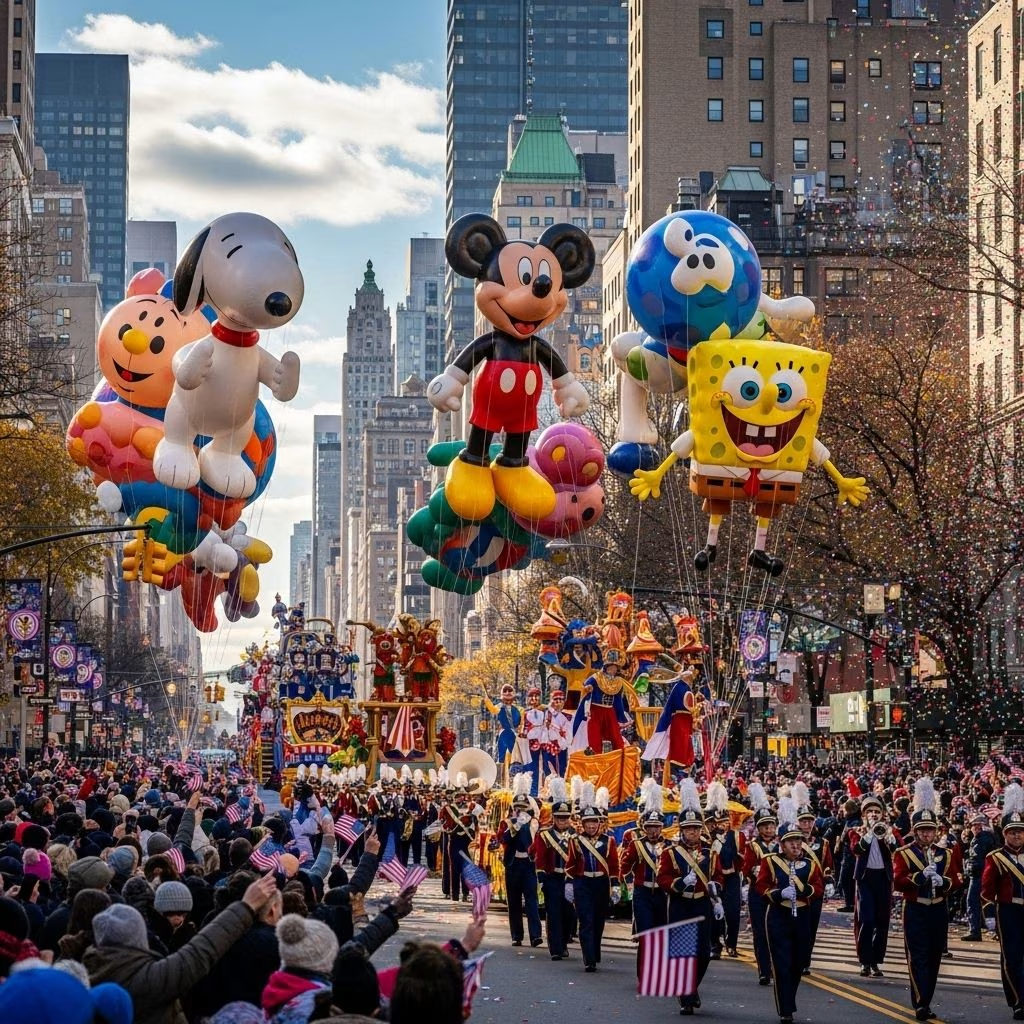
By 1927, Macy’s revolutionized the parade by introducing giant balloons—first with Felix the Cat—replacing the live animal menagerie. The dazzling spectacle of massive, helium-filled cartoon characters drifting above the city skyline quickly became the parade’s signature attraction.
- First balloons: Felix the Cat and other popular characters
- Early traditions: Balloons were once released into the sky and awarded to whomever recovered them, until safety concerns ended the practice in the early 1930s.
Iconic Balloons Over the Years
| Decade | Notable Balloons |
|---|---|
| 1920s | Felix the Cat |
| 1930s-40s | Mickey Mouse, Superman, Uncle Sam |
| 1960s-90s | Snoopy, Kermit the Frog, Bart Simpson |
| 2000s-Present | Shrek, Spider-Man, Pikachu, Grogu (‘Baby Yoda’) |
Each new balloon not only reflects the zeitgeist of its era but also requires meticulous design, engineering, and choreography, making them marvels of both art and technology.
The Parade’s Route and Planning
Though the parade’s route has evolved, its current march begins at West 77th Street and Central Park West, travels down to Columbus Circle, along Central Park South to 6th Avenue, then down 6th Avenue to 34th Street, and concludes at Macy’s Herald Square.
- Parade start time: 8:30am ET
- Route length: Approximately 2.5 miles
- Viewing: Crowds gather before dawn to secure a spot
Behind the scenes, months of planning and rehearsals go into each element, with special invitations extended to top marching bands and performance groups from across the country.
The Parade During Tough Times
The Macy’s parade is renowned for its resilience and adaptability. The Great Depression saw its scale grow even while the rest of the country suffered, and the parade continued after the somber week following President Kennedy’s assassination in 1963 to lift the spirits of children nation-wide.
- World War II: Parade suspended from 1942–1944, returning in 1945
- Weather interruptions: In 1971, extreme winds canceled the balloons, and TV networks aired clips from previous years.
- Pandemic impact: In 2020, the parade was shortened and modified with fewer people and more utility vehicles, preserving the tradition despite challenges.
Creative Evolution: Technology, Broadcast, and Celebrity
Today’s parade is both a visual spectacle and a television extravaganza, drawing tens of millions of viewers each year. The annual broadcast, first aired nationally in the 1950s, has transformed it into “the largest variety show in the history of broadcast television.”
- National TV debut: Early 1950s
- Broadcast technology: Evolving from radio to color television, now featuring live streaming
- Star performances: Famous musicians, Broadway casts, and celebrities perform atop floats
The parade is a launchpad for new entertainment, pop culture, and creative innovation. Each year, more than 25 dazzling floats, nearly 50 balloons, and scores of performers bring magic to the streets.
Community, Diversity, and Artistic Collaboration
From the very beginning, the parade has represented the diverse spirit of New York City and America. Its organizers strive to keep the event inclusive, creative, and forward-looking. The parade is a vibrant showcase for communities nationwide; local schools, marching bands, and dance troupes earn a place in the procession through rigorous competition and invitation.
- Performers: Local and national talent, representing many backgrounds and styles
- Floats: Designed by teams of artists and engineers, reflecting popular themes, seasonal cheer, and creative storytelling
- Volunteers: Thousands help organize, guide balloons, and ensure safety
Many parade volunteers and creators see their participation as both a privilege and a responsibility, maintaining ties to the original intent: creating a moment of wonder for all.
Impact on Culture and Shopping Season
Macy’s Thanksgiving Day Parade is more than just entertainment; it ushers in the holiday spirit, inspiring shopping windows, city decorations, and festivities across New York and beyond. It sparks the holiday shopping season with irresistible energy—its route passing the flagship Macy’s store is no accident, originally designed to bring crowds to Herald Square.
- Heralding the holidays: Parade marks the official start of the festive season
- Commercial impact: Millions flock to stores and local businesses post-parade
- Tourism: The parade remains one of New York’s biggest tourist draws
Modern Innovations and Safety
As the parade grows, technological advances drive the design, safety, and broadcasting of every element. Innovations include improved balloon materials, GPS tracking, and strict weather policies to ensure safety for both spectators and participants.
- Balloon fabrication: Made of specialized fabric engineered for strength and color vibrancy
- Choreography: Each balloon and float is handled by teams of trained guides
- Safety protocols: Real-time weather monitoring, mandatory harnesses, and crowd control strategies
The Parade Experience: Attending and Viewing
Whether watching in person or tuning in at home, the Macy’s parade is an accessible tradition for people of all ages. Spectators line up as early as 6:30am for ideal views along the parade route. At home, families gather around TVs, making the broadcast an integral part of Thanksgiving morning.
- Best viewing spots:
- Central Park West (near the start)
- 6th Avenue (mid-route)
- Near Herald Square (parade end)
- Tips for attendees:
- Arrive early for a good view
- Dress warmly and bring snacks
- Check official maps and schedules for route details
Celebrating the Parade’s Legacy
Now approaching its 98th year in 2024, the Macy’s Thanksgiving Day Parade captures the imagination of children and adults, evolving with the times while rooted in joyful tradition. Its blend of artistry, technical mastery, and community engagement continue to cement its place as the kickoff to the American holiday season.
Frequently Asked Questions (FAQs)
Q: When was the first Macy’s Thanksgiving Day Parade?
A: The parade debuted on November 27, 1924, inaugurated by Macy’s employees and featuring live zoo animals.
Q: Who designs the parade balloons?
A: Balloons are created by teams of artists, engineers, and designers, often collaborating with popular brands and entertainment franchises.
Q: How do you participate in the parade?
A: Bands, dance teams, and performers are invited through a competitive selection process. Volunteers apply through Macy’s to assist with balloon handling and logistics.
Q: Has the parade ever been canceled?
A: The parade was suspended during World War II (1942–1944) and balloons were canceled in 1971 due to strong winds, but the tradition persists.
Q: What are some modern safety measures for the parade?
A: Balloons feature reinforced materials; participants use harnesses, and teams monitor weather and crowd conditions continually.
Fun Facts and Trivia
- The parade was originally called the “Macy’s Christmas Parade” before switching to Thanksgiving.
- Some balloons, once released, landed as far away as Long Island and New Jersey.
- The parade routinely features more than 8,000 participants, including performers and volunteers.
- Santa Claus’s grand entrance traditionally marks the parade’s finale—and the official start of the holiday splendor in the city.
Conclusion: The Parade’s Lasting Joy
The Macy’s Thanksgiving Day Parade stands as a testament to creativity, community, and resilience—inviting generations to celebrate in awe year after year. Its vibrant traditions and brilliant spectacle continue to unite millions in gratitude and festive anticipation, making it an enduring highlight of the holiday calendar in New York City and across the United States.
References
- https://www.baruch.cuny.edu/nycdata/uniquely_nyc/macys-thanksgiving.htm
- https://www.boweryboyshistory.com/2024/11/century-of-cheer-a-history-of-the-macys-thanksgiving-day-parade.html
- https://www.nyctourism.com/articles/macys-thanksgiving-day-parade-history-nyc/
- https://en.wikipedia.org/wiki/Macy’s_Thanksgiving_Day_Parade
- https://www.smithsonianmag.com/arts-culture/macys-thanksgiving-day-parade-modest-start-american-tradition-rivaling-stuffing-pumpkin-pie-180985216/
- https://www.iloveny.com/blog/post/history-of-the-macys-thanksgiving-day-parade/
- https://www.youtube.com/watch?v=1Uq1w8ia0SI
- https://guides.loc.gov/this-month-in-business-history/november/macys-thanksgiving-parade