Columnar Trees: Transforming Small Spaces and Urban Gardens
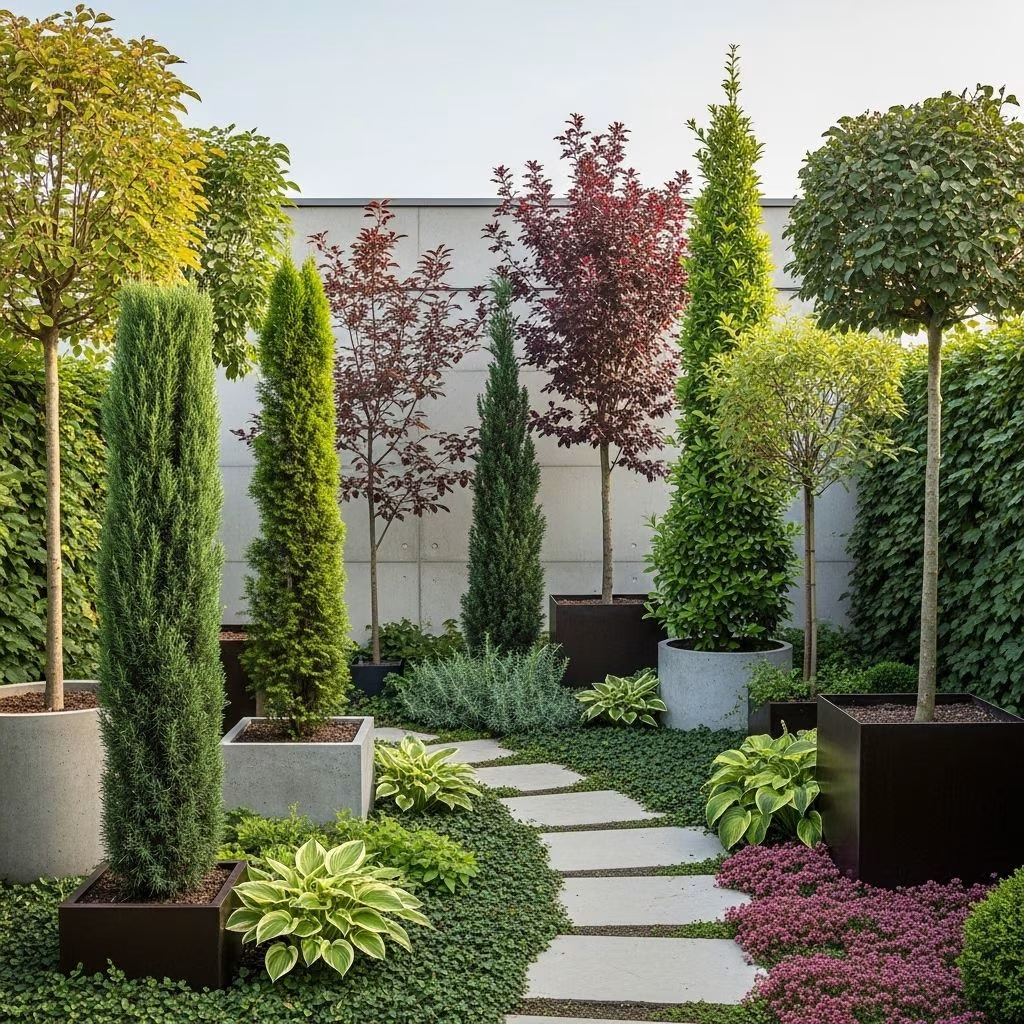
Columnar trees are renowned for their slim, upright forms, making them ideal choices for compact gardens, urban courtyards, and anywhere vertical structure is needed. With their narrow canopies and strong lines, columnar trees bring drama, privacy, and year-round interest to landscapes where space comes at a premium. This article explores 12 excellent columnar trees, examines their benefits and uses, and offers practical guidance for selecting, planting, and caring for these vertical stars.
Why Choose Columnar Trees?
- Space-saving architecture: Their slim silhouette fits into tight areas and alongside buildings.
- Privacy and windbreaks: Planting a row of columnar trees creates a living wall that shields your space and breaks harsh winds.
- Vertical accents: These trees add height and visual movement, enhancing garden design and curb appeal.
- Diverse foliage: Many types offer verdant, lush foliage or brilliant fall color.
- Low maintenance: Most require only infrequent pruning and handle urban conditions well.
12 Excellent Columnar Trees for Small Gardens
Below you’ll find profiles of 12 outstanding columnar trees, focusing on their essential properties with care and planting tips for each.
Brodie Eastern Red Cedar
| Botanical Name | Juniperus virginiana ‘Brodie’ |
|---|---|
| Sun | Full sun |
| Height | Up to 45 feet |
| Hardiness Zones | 3-9 |
The Brodie is prized for its resilience, tolerating wet to dry conditions, intense cold, and heat. Its feathery foliage forms a dense green pillar requiring little pruning, making it useful as privacy screens or focal points. Confidently plant Brodie in nearly any region for year-round structure.
Italian Cypress
| Botanical Name | Cupressus sempervirens |
|---|---|
| Sun | Full sun |
| Height | 40-70 feet |
| Hardiness Zones | 7-10 |
Renowned for iconic Mediterranean allees, the Italian cypress creates a strong vertical statement. These trees remain extremely narrow (maximum 5 feet wide) even at tall heights. They’re excellent in planters and courtyards or as dramatic entries. Suitable for warm climates, Italian cypress thrives in full sun and well-draining soil.
Blue Arrow Juniper
| Botanical Name | Juniperus scopulorum ‘Blue Arrow’ |
|---|---|
| Height | 12-15 feet |
| Foliage | Blue-green, evergreen |
| Maintenance | Low |
The Blue Arrow Juniper is celebrated for its vibrant blue-green needles and sleek, upright form. Use it for privacy screens, windbreaks, or as a bold vertical accent. It is drought-tolerant, fuss-free, and perfect for tight spaces or containers.
Sky Pencil Holly
| Botanical Name | Ilex crenata ‘Sky Pencil’ |
|---|---|
| Height | 6-10 feet |
| Width | 2 feet |
| Hardiness Zones | 5-9 |
With a pencil-thin habit, Sky Pencil Holly is perfect for formal gardens, framing walkways, or container displays. Its evergreen leaves keep color around the year. It prefers moist, well-drained soil and minimal pruning to maintain form.
Slender Hinoki Cypress
| Botanical Name | Chamaecyparis obtusa ‘Gracilis’ |
|---|---|
| Height | 10-12 feet |
| Width | 2-3 feet |
| Hardiness Zones | 5-8 |
This cypress has dark, graceful foliage and a compact, upright habit. It’s suitable as a soft vertical accent or a privacy screen and is winter hardy.
Crimson Pointe Purple Leaf Plum
| Botanical Name | Prunus cerasifera ‘Cripoizam’ |
|---|---|
| Height | 15-20 feet |
| Width | 5-6 feet |
| Hardiness Zones | 4-9 |
Offering brilliant purple foliage and white spring flowers, this slim plum brings exciting seasonal color for narrow spaces.
Parkland Pillar Birch
| Botanical Name | Betula platyphylla ‘JEFPARK’ |
|---|---|
| Height | Up to 40 feet |
| Width | 6 feet |
| Hardiness Zones | 3-7 |
This narrow Asian white birch displays beautiful white bark and golden autumn foliage. It’s fast-growing, heat and drought tolerant, producing vertical accents or screens with consistent symmetry.
Crimson Spire Oak
| Botanical Name | Quercus robur x alba ‘Crimschmidt’ |
|---|---|
| Height | 40 feet |
| Width | 10-12 feet |
| Hardiness Zones | 5-9 |
Crimson Spire Oak’s upright habit makes it one of the best oaks for alleyways or property divides. Its vibrant fall color and tolerance for urban settings make it a reliable choice.
Princeton Sentry Ginkgo
| Botanical Name | Ginkgo biloba ‘Princeton Sentry’ |
|---|---|
| Height | 40-50 feet |
| Width | 10-15 feet |
| Hardiness Zones | 4-9 |
A unique columnar ginkgo with golden fall foliage and strong vertical form. Its resilience to pollution and pests suits it for busy urban gardens.
Red Obelisk European Beech
| Botanical Name | Fagus sylvatica ‘Red Obelisk’ |
|---|---|
| Height | 30-40 feet |
| Width | 8-10 feet |
| Hardiness Zones | 5-8 |
This narrow beech features brilliant reddish-purple foliage through summer and fall, offering color and form in slim spaces.
Swedish Columnar Aspen
| Botanical Name | Populus tremula ‘Erecta’ |
|---|---|
| Height | Up to 40 feet |
| Width | 8 feet |
| Hardiness Zones | 2-6 |
The Swedish Columnar Aspen stands out for cold hardiness and ornamental trunk markings. Its dense column offers shade or screening, thriving in northern climates.
Monumentale Sugar Maple
| Botanical Name | Acer saccharum subsp. nigrum ‘Monumentale’ |
|---|---|
| Height | 30 feet |
| Width | 3 feet |
| Hardiness Zones | 3–8 |
This maple features tight, upright growth with orange fall color. It’s great for limited spots, needs minimal shaping, and handles colder climates.
Uses for Columnar Trees in the Landscape
- Privacy Screens: Plant rows beside patios, driveways, or property edges to shield against views and noise.
- Windbreaks: Dense columns mitigate high winds, offering shelter to gardens and structures.
- Vertical Accents: Use single specimens for dramatic focus points or to break up horizontal planting schemes.
- Formal Avenues: Frame walkways, paths, or entrances with evenly spaced columnar trees for symmetry and grandeur.
- Container Display: Some, like Italian cypress and Sky Pencil Holly, are well suited to large planters.
Selecting the Right Columnar Tree: Factors to Consider
- Climate compatibility: Choose trees suited to your USDA hardiness zone for longevity and growth.
- Desired height and width: Review mature sizes—some reach over 40 feet tall, while others stay below 15 feet.
- Sun and soil requirements: Match tree preference to conditions in your garden (full sun, part shade, moist or dry soil).
- Foliage type: Consider evergreen vs. deciduous for year-round privacy or seasonal interest.
- Maintenance needs: Most columnar trees require only minimal pruning, but some may need more attention to shape.
Planting & Care Tips for Columnar Trees
- Site selection: Ensure adequate sunlight and avoid crowding roots.
- Soil preparation: Enrich soil with compost and ensure good drainage.
- Watering: Water regularly after planting; most columnar conifers become drought-tolerant when established.
- Mulch: Apply organic mulch around the root zone to conserve moisture and suppress weeds.
- Pruning: Minimal pruning is generally required—remove damaged or wayward branches to maintain the columnar form.
- Fertilization: Feed in early spring if growth slows, but avoid excess fertilizer.
Comparison Table: Key Features of Popular Columnar Trees
| Tree | Height | Width | Zones | Evergreen? | Special Features |
|---|---|---|---|---|---|
| Brodie Eastern Red Cedar | Up to 45 ft | 10 ft | 3-9 | Yes | Drought/cold tolerant, very hardy |
| Italian Cypress | 40-70 ft | 3-5 ft | 7-10 | Yes | Dramatic vertical accent |
| Blue Arrow Juniper | 12-15 ft | 2-3 ft | 4-9 | Yes | Blue-green foliage, low maintenance |
| Crimson Spire Oak | 40 ft | 10-12 ft | 5-9 | No | Fast-growing, intense fall color |
| Parkland Pillar Birch | 40 ft | 6 ft | 3-7 | No | Ornamental bark, golden fall color |
| Monumentale Sugar Maple | 30 ft | 3 ft | 3-8 | No | Uniform shape, orange fall color |
| Sky Pencil Holly | 6-10 ft | 2 ft | 5-9 | Yes | Formality, containers |
| Swedish Columnar Aspen | 40 ft | 8 ft | 2-6 | No | Hardy, vertical trunk accents |
Frequently Asked Questions (FAQs)
Q: Do columnar trees need pruning to maintain their shape?
A: Most columnar trees are genetically selected for their upright growth, so little pruning is required. Occasional removal of damaged or crossing branches helps keep the form tidy.
Q: Can columnar trees thrive in pots or containers?
A: Yes. Italian cypress, Sky Pencil Holly, and Blue Arrow Juniper are especially suited for large planters, though adequate watering and root space are vital.
Q: How close should I plant columnar trees for privacy?
A: Space trees at their expected mature width (usually 2 to 6 feet apart) for solid screens. Adjust spacing for desired density and airflow.
Q: Are columnar trees susceptible to disease?
A: Most types are disease resistant, but good air circulation and avoiding overwatering reduce the risk of fungal issues. Always choose varieties suited to your local climate.
Q: Do columnar evergreens stay green in winter?
A: Yes. Evergreens such as Brodie cedar, Italian cypress, Blue Arrow Juniper, and Sky Pencil Holly maintain year-round color, while deciduous columnar trees change with the seasons.
Final Thoughts: Bringing Vertical Drama to Small Gardens
Whether used for privacy, windbreaks, or decorative purposes, columnar trees are powerful tools in modern landscape design. They fit into narrow spaces, demand minimal care, and serve both aesthetic and practical needs. By selecting the right tree for your garden’s conditions and intended use, you can enjoy vertical greenery—and a more private, wind-protected oasis—for years to come.