21 Oak Tree Varieties for Your Landscape
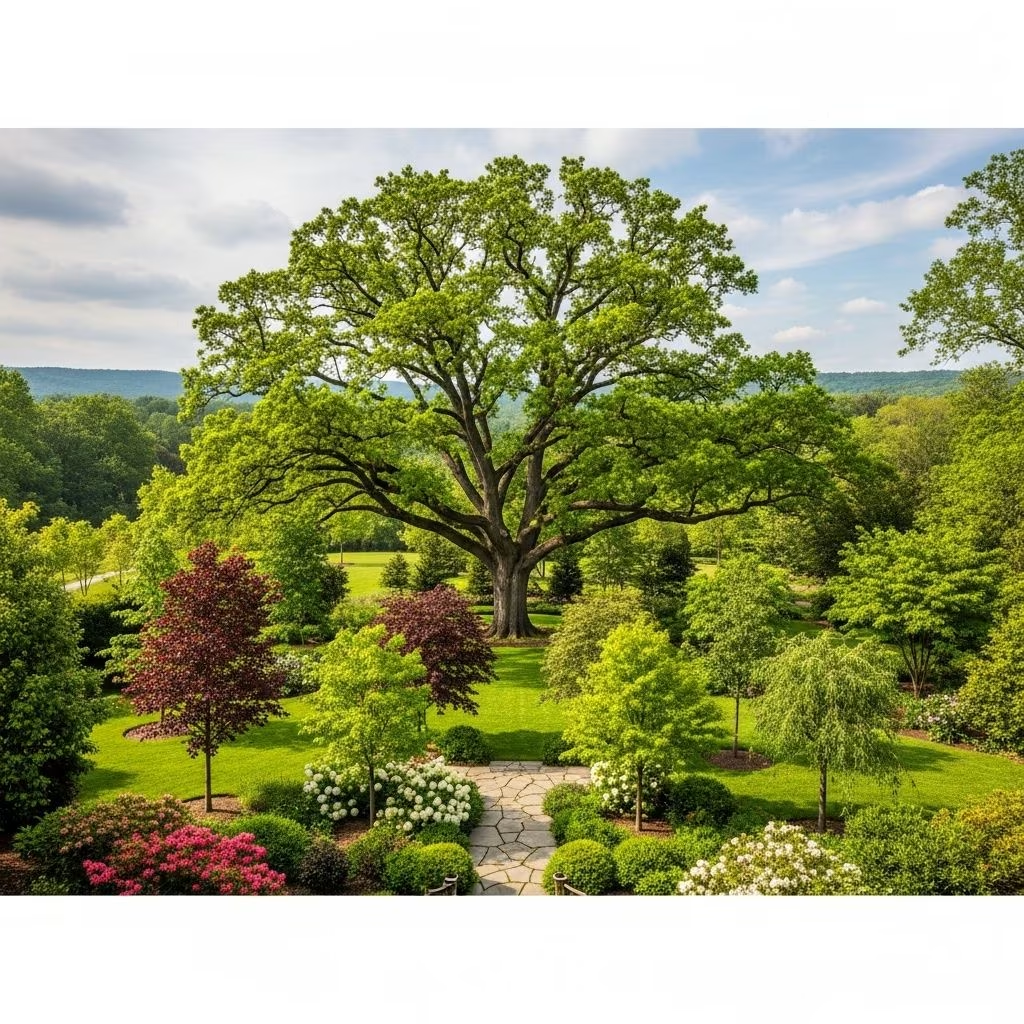
Oak trees stand as pillars of strength, beauty, and ecological value in landscapes across North America and beyond. With hundreds of oak species worldwide, each brings unique size, leaf shape, growth habits, and seasonal interest to gardens large and small. Discover 21 highly regarded oak tree varieties, their core features, and expert advice for picking the ideal oak for your space.
Understanding Oaks: Groups and Characteristics
Oaks (Quercus species) are broadly classified into two main groups:
- Red Oaks: Typically display pointed leaf lobes; acorns mature over two seasons and often have more tannins.
- White Oaks: Usually feature rounded leaf lobes; acorns mature within one season and are less bitter.
This divide impacts leaf and bark appearance, acorn production cycles, and adaptability. Most oak species thrive in full sun with well-draining soil, but some tolerate wetter or shadier conditions.
How to Use This Guide
Each oak variety below includes its botanical name, ideal sun exposure, mature height, growing zones, and standout characteristics. Use this information to match an oak species to your climate, landscape size, and intended garden purpose—whether shade, wildlife habitat, or seasonal color.
Oak Tree Varieties: Profiles and Features
Shumard Oak (Quercus shumardii)
| Botanical Name: | Quercus shumardii |
| Sun Requirements: | Full sun |
| Height: | 40–60 feet |
| Hardiness Zones: | 5–9 |
Shumard oak is native to the eastern and southeastern U.S. and southern Canada, thriving in diverse hardwood habitats. It is noted for its rapid growth and adaptability to various soils, preferring moist, well-drained sites. Its pyramidal crown and deeply lobed, pointed leaves turn a vibrant reddish orange in fall – making it a spectacular landscape specimen.
Overcup Oak (Quercus lyrata)
| Botanical Name: | Quercus lyrata |
| Sun Requirements: | Full sun to partial shade |
| Height: | 40–60 feet |
| Hardiness Zones: | 5–9 |
Native to southeastern U.S. floodplains and wetlands, the overcup oak excels in moist soils. With a rounded crown and tall, straight trunk, it’s ideal for shade or as a waterside specimen. Distinctively, most of the acorn is encased by its cap. Yellow to brown foliage lights up the landscape in autumn.
Live Oak (Quercus virginiana)
| Botanical Name: | Quercus virginiana |
| Sun Requirements: | Full sun |
| Height: | Up to 80 feet |
| Hardiness Zones: | 8–10 |
Renowned in the Southeast and Mexico, the live oak grows wide, sprawling branches—the canopy often exceeds its height, offering ample shade. It’s an evergreen, retaining leathery, glossy green leaves year-round. Ideal for warmer regions, its dramatic silhouette makes it beloved for large gardens.
- Alternating spiny or toothed leaves with light gray-green fuzzy undersides and a pale mid-rib.
- Valued for longevity and wind resistance.
Northern Red Oak (Quercus rubra)
| Botanical Name: | Quercus rubra |
| Sun Requirements: | Full sun |
| Height: | Up to 80 feet |
| Hardiness Zones: | 4–8 |
A keystone species of eastern North America, northern red oak boasts a thick, straight trunk and large, sharply pointed green leaves. In fall, its foliage becomes showy reddish-brown. Broadly adaptable and often used as a shade or street tree.
Southern Red Oak (Quercus falcata)
| Botanical Name: | Quercus falcata |
| Sun Requirements: | Full sun |
| Height: | 60–80 feet |
| Hardiness Zones: | 6–9 |
Native to southern states, this red oak tolerates dry sites and blistering heat. Its leaves are more variable, often falcate or sickle-shaped.
White Oak (Quercus alba)
| Botanical Name: | Quercus alba |
| Sun Requirements: | Full sun |
| Height: | 60–100 feet |
| Hardiness Zones: | 3–9 |
The quintessential eastern white oak, this species can reach majestic proportions with a broad crown and deeply lobed, rounded leaves. Its acorns and branches are vital habitat for wildlife, and its fall foliage varies from deep red to brown.
Bur Oak (Quercus macrocarpa)
| Botanical Name: | Quercus macrocarpa |
| Sun Requirements: | Full sun |
| Height: | 70–80 feet |
| Hardiness Zones: | 3–8 |
Burr oak features deeply lobed leaves and large, fringed acorns. It is adaptable to drier areas—including prairies—and is exceptionally drought tolerant once established. A towering, slow grower that lives centuries.
Swamp White Oak (Quercus bicolor)
| Botanical Name: | Quercus bicolor |
| Height: | 50–60 feet |
| Hardiness Zones: | 4–8 |
Native to swamps and lowlands, this oak tolerates seasonal flooding. Leaves are glossy dark green on top, velvety gray on the bottom, and turn gold in fall. Excellent for wet sites.
Chinkapin Oak (Quercus muehlenbergii)
| Botanical Name: | Quercus muehlenbergii |
| Height: | 40–50 feet |
| Hardiness Zones: | 5–8 |
This midwestern oak features coarsely toothed, oval leaves and produces sweet acorns attractive to wildlife. It thrives on limestone soils and is drought tolerant.
Pin Oak (Quercus palustris)
| Botanical Name: | Quercus palustris |
| Height: | 60–70 feet |
| Hardiness Zones: | 4–8 |
Known for its pyramidal shape and straight trunk, pin oak features deeply cut lobes with pointed tips and russet fall color. Adaptable to acidic soils; used frequently as a landscape specimen.
Southern Live Oak (Quercus virginiana, alternate form)
A regional variant with an even broader span, this cultural icon of the South provides abundant shade and supports rich biodiversity.
Black Oak (Quercus velutina)
| Botanical Name: | Quercus velutina |
| Height: | 50–60 feet |
| Hardiness Zones: | 3–9 |
Deeply furrowed bark, glossy green leaves, and yellow to red autumn foliage distinguish black oak. Prefers dry upland soils.
Scarlet Oak (Quercus coccinea)
| Botanical Name: | Quercus coccinea |
| Height: | 60–80 feet |
| Hardiness Zones: | 4–9 |
Value lies in brilliant scarlet red foliage each fall. Common in eastern states; prefers sandy, acidic soils. Fast growing.
Swamp Red Oak (Quercus shumardii, alternate)
Distinct from its upland cousins, thriving in wet lowlands with reddish fall color. Good shade tree.
Chestnut Oak (Quercus prinus)
| Botanical Name: | Quercus prinus |
| Height: | 50–70 feet |
| Hardiness Zones: | 4–8 |
Grows best in rocky uplands; features long, oval leaves with shallow lobes and thick bark suitable for fire-prone areas.
Willow Oak (Quercus phellos)
| Botanical Name: | Quercus phellos |
| Height: | 40–60 feet |
| Hardiness Zones: | 5–9 |
With narrow, willow-like leaves, this oak prefers moist lowlands and is popular along streets and parkways for its fine texture and elegant form.
Post Oak (Quercus stellata)
| Botanical Name: | Quercus stellata |
| Height: | 40–50 feet |
| Hardiness Zones: | 5–9 |
A drought-tolerant species with cross-shaped leaves, ideal for dry, rocky soils. It supports numerous butterfly larvae.
Dwarf Chinkapin Oak (Quercus prinoides)
| Botanical Name: | Quercus prinoides |
| Height: | Max 20 feet |
| Hardiness Zones: | 4–8 |
Perfect for smaller landscapes or shrub borders, this species produces acorns when only 5 feet tall. It adapts well to dry, rocky areas.
Georgia Oak (Quercus georgiana)
| Botanical Name: | Quercus georgiana |
| Height: | Up to 50 feet |
| Hardiness Zones: | 5–9 |
A rare native to Stone Mountain, Georgia, adapted for smaller garden spaces.
Sawtooth Oak (Quercus acutissima)
| Botanical Name: | Quercus acutissima |
| Height: | 40–60 feet |
| Hardiness Zones: | 5–9 |
Native to Asia and newly popular in American landscapes. Features long, narrow, saw-toothed leaves and a rounded crown. Early producer of acorns and rapid growth rate.
Ecological Benefits of Oaks
- Wildlife Value: Oaks host hundreds of butterfly and moth caterpillar species, including imperial moth, banded hairstreak, and duskywing varieties.
- Food Web Support: Oak acorns feed birds and mammals. Oak mast years—when trees produce abundant acorns—support population booms across the ecosystem.
- Habitat Creation: Dense canopies provide shelter and nesting sites for countless species.
Tips for Selecting Oaks
- Match species to climate and soil: Check USDA hardiness zones and adapt oak choice to your region (dry uplands, wetlands, or urban settings).
- Consider mature height: Some oaks reach over 80 feet, while others stay compact.
- Look for seasonal interest: Foliage color, bark texture, and acorn appearance add year-round appeal.
- Choose disease-resistant, locally adapted species for best results.
- Small yards: Try dwarf chinkapin, Georgia oak, or smaller native species.
Planting and Care Advice
- Plant in early spring or fall for best root establishment.
- Avoid heavy clay or poorly draining sites unless suited to species (e.g., overcup oak).
- Mulch heavily for the first few years to retain moisture and suppress weeds.
- Prune only to remove deadwood and maintain healthy shape.
- Protect young trees from deer and rodents.
Frequently Asked Questions (FAQs)
Q: Which oak is best for a small yard?
A: Look for compact species like dwarf chinkapin oak or Georgia oak, which remain smaller and can fit comfortably in limited spaces.
Q: Do oak trees grow quickly?
A: While some oaks are moderate to slow growers, species like Shumard oak and pin oak are known to establish more rapidly than others.
Q: Why do oak trees have “mast years”?
A: Oaks synchronously produce heavy crops of acorns in some years, supporting wildlife and ensuring successful seed dispersal. Energy conservation and population control are likely causes.
Q: How do I identify red vs. white oaks?
A: Red oaks typically have pointed leaf lobes and acorns that take two years to mature, while white oaks have rounded lobes and single-growing-season acorns.
Q: Are oak trees good for the environment?
A: Oaks are among the most ecologically valuable trees, supporting hundreds of insect, bird, and mammal species.
Summary Table: Highlights of Key Oak Varieties
| Species | Height | Zones | Notable Traits |
|---|---|---|---|
| Shumard Oak | 40–60 ft | 5–9 | Fast-growing, vibrant fall color |
| Overcup Oak | 40–60 ft | 5–9 | Moist soils, unique acorn cap |
| Live Oak | Up to 80 ft | 8–10 | Evergreen, sprawling canopy |
| Northern Red Oak | Up to 80 ft | 4–8 | Showy fall foliage, classic shade tree |
| Bur Oak | 70–80 ft | 3–8 | Drought tolerant, large acorns |
| Dwarf Chinkapin Oak | Max 20 ft | 4–8 | Small stature, wildlife-friendly |
Conclusion
The oak tree family offers landscape options for every gardener. Whether your goal is shade, wildlife support, or a living monument to natural history, there is an oak species to suit your needs. From stately white oaks to compact dwarf varieties, selecting the right oak brings lasting value to your garden—and the broader environment.