Mother of Millions vs. Mother of Thousands: What’s the Difference?
Among succulent enthusiasts, the Mother of Millions (Kalanchoe delagoensis) and Mother of Thousands (Kalanchoe daigremontiana, also known as Kalanchoe laetivirens) stand out for their unique, prolific propagation and striking appearance. Despite sharing the generational prowess of producing countless plantlets, they showcase essential differences in growth habit, leaf shape, care requirements, and ecological impact. This comprehensive guide explores their distinctions, similarities, and best practices for cultivation.
Overview of Mother of Millions and Mother of Thousands
Both of these plants are succulent members of the genus Kalanchoe and the Crassulaceae family. Native to Madagascar’s arid climates, they demonstrate remarkable adaptability, rapidly forming new plantlets that root wherever they find a suitable environment. Their ability to thrive in hot, dry conditions and spread easily has made them both ornamental favorites and, in some conditions, invasive species.
- Mother of Thousands (
Kalanchoe daigremontiana / Kalanchoe laetivirens), commonly known as Alligator Plant or Mexican Hat Plant. - Mother of Millions (
Kalanchoe delagoensis), sometimes called Chandelier Plant or Devil’s Backbone.
How to Identify: Leaves and Plantlet Arrangement
Key Distinguishing Features
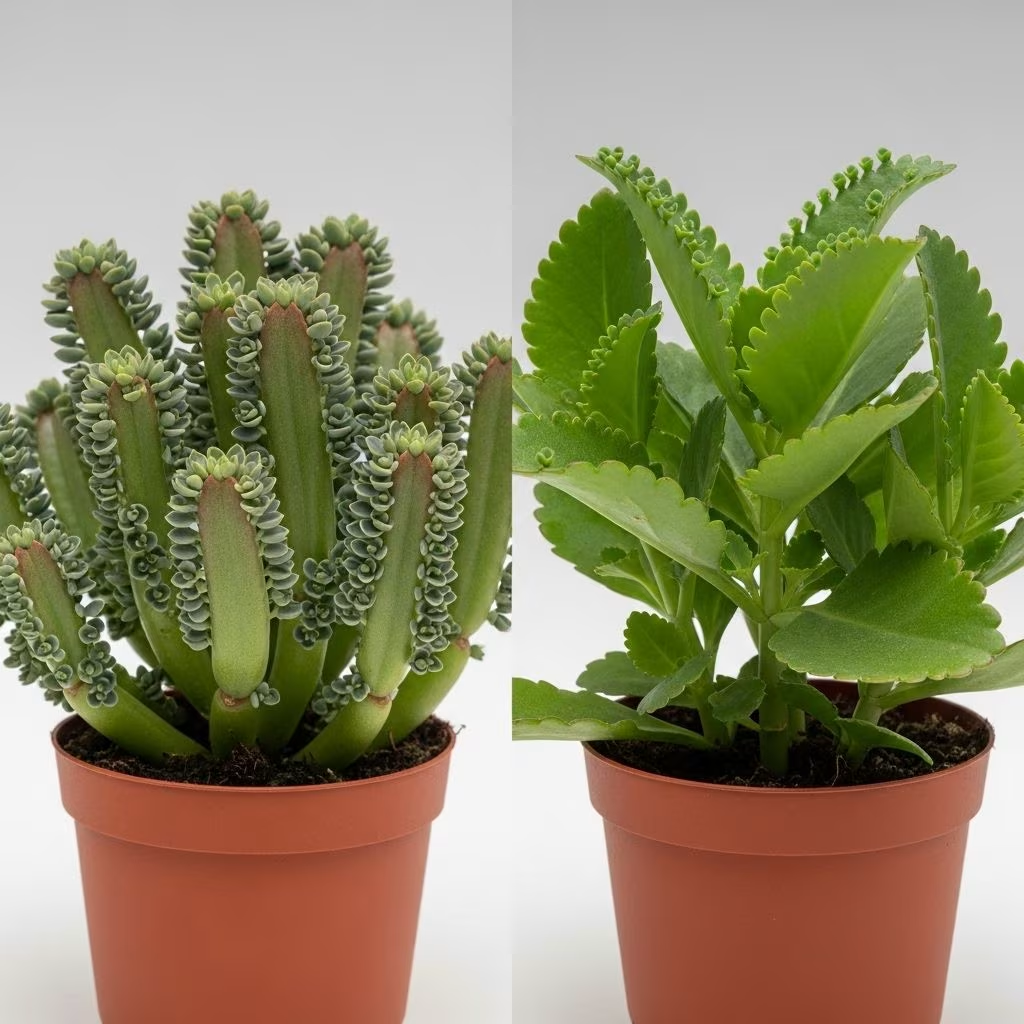
Though these species can look similar at first glance, leaf shape and the location of plantlets provide clear identification.
- Mother of Thousands:
- Leaves: Broad, lance- or boat-shaped, succulent, and typically thick with a glossy or waxy appearance.
- Plantlets: Form in rows all along the serrated leaf edges, often in pairs.
- Color: Leaves usually bright or medium green; some varieties (notably K. daigremontiana) have purple markings on the underside.
- Growth Habit: Bushier appearance due to the wide leaves.
- Mother of Millions:
- Leaves: Narrow, cylindrical, or slightly rounded leaves, often with a more delicate texture, lacking a strong waxy coating.
- Plantlets: Develop only at the tips (ends) of the leaves, not along the sides.
- Color: Frequently more muted—greenish-grey, pinkish, reddish, or brownish hues.
- Growth Habit: More upright and columnar, less bushy.
Varieties of Mother of Thousands
- Kalanchoe daigremontiana: Narrower, triangular leaves, typically with dark purple stripes on the leaf undersides.
- Kalanchoe laetivirens: Broader, rounder bright green leaves lacking purple markings; often appears more vibrant and slightly larger.
Flowers: Color and Structure
Both species produce beautiful, cascading inflorescences reminiscent of floral chandeliers. Yet, their flower color and arrangement offer more cues for identification.
- Mother of Millions:
- Produces clusters of bell-shaped or tubular flowers at the ends of tall, upright stems.
- Colors range from yellow to orange and red.
- Flowers bloom in late winter into spring and hang in delicate, dangling clusters.
- Mother of Thousands:
- Flowers are also tubular, growing in clusters on long stems, drooping *like chandeliers*.
- Range in color from gray-pink to purple.
- Blooms typically appear in late winter or early spring, similar to Mother of Millions.
Growth Habit and Propagation
Plantlets are the signature feature that has lent these kalanchoes their maternal monikers. Each plant’s method of producing offspring ensures both easy propagation and tremendous persistence.
- Mother of Thousands—Plantlets sprout prolifically along the margin (edges) of the leaves. When mature, they drop to soil and quickly root, often forming dense clusters if unchecked.
- Mother of Millions—Plantlets develop at the very tips of the leaves. While fewer in number compared to the ‘thousands,’ they germinate and establish with equal vigor wherever they land.
Both species are considered aggressive propagators—their ability to spread makes them easy to grow, but also invasive in some regions where they escape cultivation.
Propagation Tips
- Collect plantlets gently from mature leaves or leaf tips and place them on moist, well-draining succulent soil.
- Water lightly; avoid oversaturating the soil during early rooting stages.
- Provide bright, indirect sunlight until new roots establish, then gradually increase sun exposure.
- Both can also be propagated from stem cuttings if desired.
Growing and Caring for Mother of Millions and Mother of Thousands
Both kalanchoes thrive in hot, dry, and sunny conditions. Understanding their care is key to healthy, manageable growth.
Light
- Bright, direct sunlight is ideal—full sun to partial shade outdoors; at least 6-8 hours of direct light indoors.
- Legginess or pale color may signal inadequate light; move plants to a sunnier location.
Soil
- Use well-draining, sandy or cactus mix to prevent root rot.
- Avoid heavy, moisture-retentive soils.
Watering
- Allow soil to dry fully between waterings. Overwatering is the most common cause of decline.
- During their active growth (spring and summer), water moderately. In winter, reduce frequency drastically.
Temperature & Humidity
- Optimal temperatures: 65–85°F (18–29°C). Can tolerate higher heat once established.
- Protect from frost: extended cold can damage or kill these plants.
Fertilizing
- Use a diluted, balanced succulent fertilizer during the growing season (spring/summer) for robust growth.
- Do not fertilize in winter.
Potting and Repotting
- Choose containers with excellent drainage.
- Repot annually or when plants become crowded, removing excess plantlets as needed.
Toxicity, Invasiveness, and Caution
Mother of Millions and Mother of Thousands are toxic to pets and humans if ingested. All parts contain a potent cardenolide-type steroid that can cause severe gastrointestinal distress and, in rare cases, more severe effects.
- Keep plants out of reach of children, cats, dogs, and livestock.
- Wash hands after handling, or wear gloves to avoid skin irritation.
Invasiveness: In warm, arid climates, both plants can escape cultivation and become invasive. Control the spread by:
- Removing stray plantlets promptly.
- Properly disposing of garden waste containing plantlets or seeds.
- Growing in contained pots or indoors where practical.
Mother of Thousands vs. Mother of Millions: A Side-by-Side Comparison
| Feature | Mother of Thousands | Mother of Millions |
|---|---|---|
| Botanical Name | Kalanchoe daigremontiana / laetivirens | Kalanchoe delagoensis |
| Common Names | Alligator Plant, Mexican Hat Plant | Chandelier Plant, Devil’s Backbone |
| Leaf Shape | Broad, boat-shaped, thick, serrated | Narrow, cylindrical, rounded |
| Plantlet Location | All along leaf edges | Only at leaf tips |
| Flower Color | Pale pink, gray, or purple | Yellow, orange, or red |
| Growth Habit | Bushy, wide | Upright, columnar |
| Toxicity | Toxic to pets and humans | |
| Invasive Potential | High, especially in suitable climates | |
Frequently Asked Questions (FAQs)
Q: What is the main difference between Mother of Thousands and Mother of Millions?
A: Mother of Thousands features wide, serrated leaves with plantlets all along the edges, while Mother of Millions has narrow, tube-like leaves with plantlets only growing at their tips.
Q: Are these plants safe to have around pets and children?
A: No, both species are toxic if ingested and should be kept out of reach of pets, children, and livestock.
Q: Why is my plant becoming leggy or pale?
A: These kalanchoes need ample sunlight. Prolonged low light causes legginess and pale leaves. Move to a spot with at least six hours of direct sun daily.
Q: How do I control the spread of plantlets?
A: Remove and dispose of unwanted plantlets regularly, grow plants in containers, and avoid planting them in regions where they are considered invasive.
Q: Do Mother of Thousands or Millions need regular fertilizing?
A: Fertilize sparingly, only during the active growing season using a diluted succulent fertilizer. Avoid over-fertilizing, which can cause excessive growth but weak plants.
Q: Can I grow these plants outdoors?
A: Yes, in zones with minimal frost and dry conditions. In colder climates, they should be grown in pots and brought indoors over winter.
Final Tips for Success
- Grow in bright light and well-drained soil for compact, healthy foliage.
- Monitor for unwanted spread, especially if growing outdoors in mild climates.
- Keep away from areas accessible to pets and children due to toxicity.
- Enjoy these kalanchoes’ unique ability to produce new life and architectural beauty in the garden or home!
References
- https://planetdesert.com/blogs/news/mother-of-thousands-plants-care
- https://thenextgardener.com/blogs/news/whats-the-difference-between-mother-of-thousands-and-mother-of-millions
- https://succulentplantcare.com/mother-of-thousands-invasive-or-harmless/
- https://www.epicgardening.com/mother-of-millions-vs-thousands/
- https://www.youtube.com/watch?v=DkiiOK9MBTs