Spreader Sticker: What Is It and Why Should You Use It?
If you’ve ever wondered why some garden sprays just don’t seem to work as well as promised—despite perfect timing and careful application—the answer might be missing spreader stickers. These often-overlooked additives can dramatically enhance the effectiveness of pest control, weed management, and even foliar fertilizers by ensuring that your spray product spreads over—and sticks to—plant surfaces, rather than rolling off and going to waste.
What Is a Spreader Sticker?
A spreader sticker is a type of adjuvant—an additive mixed into liquid garden products—to improve their performance. By helping chemicals like herbicides, fungicides, and insecticides adhere better to plants and spread more evenly across leaves and stems, spreader stickers ensure greater coverage and allow active ingredients more time to penetrate plant tissues or surfaces. Unlike soap or detergent, which can help lift dirt or debris, spreader stickers primarily work by increasing wetting and adhesion for maximum contact effectiveness.
- Spreader: Improves the ability of a spray to evenly coat plant surfaces.
- Sticker: Enhances adhesion, preventing solutions from washing or rolling off.
- Combined, these functions allow products to work more efficiently, reducing waste and improving results.
How Spreader Stickers Work
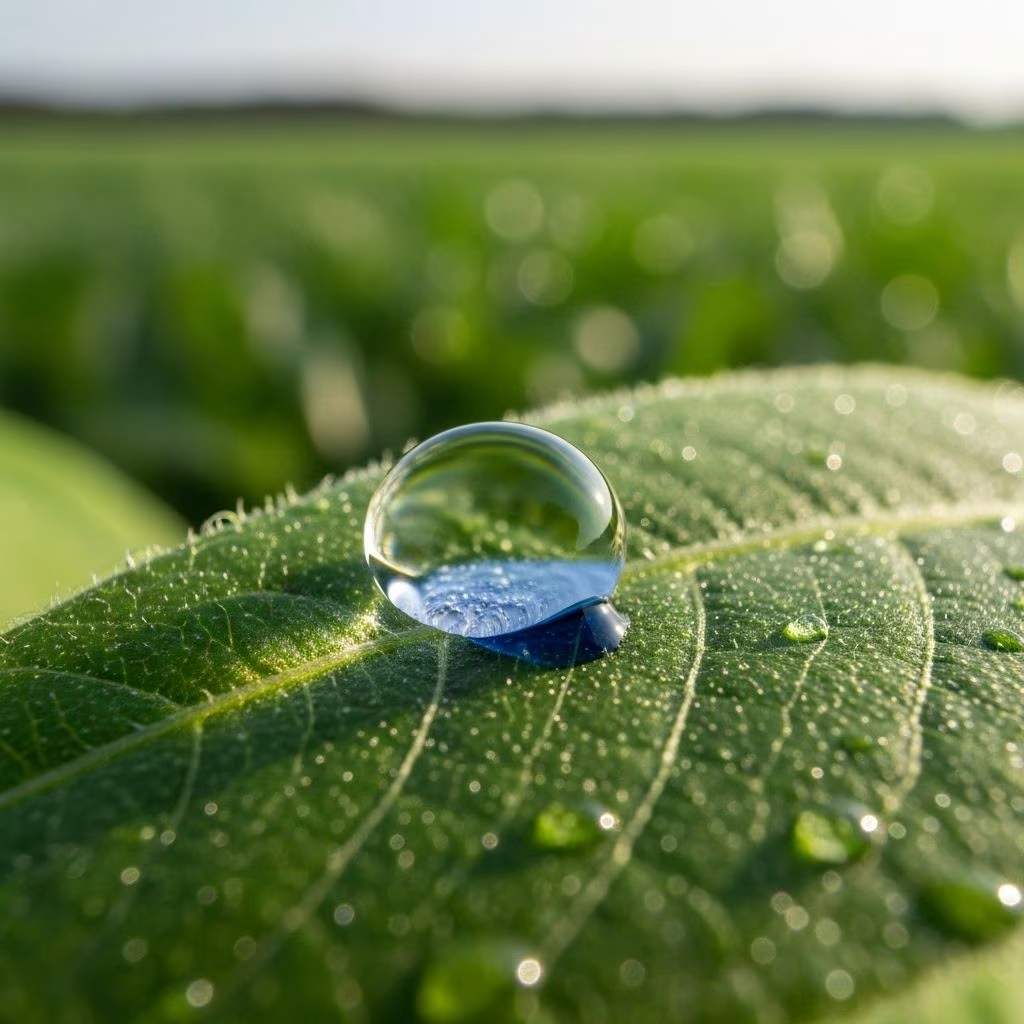
Thanks to the presence of surfactants and other film-forming agents, spreader stickers change the surface tension of water-based spray solutions. Instead of forming beads or droplets that slide off (especially on waxy or hairy plant leaves), sprays mix with the spreader sticker will form thin, even layers that adhere tightly upon contact. Some stickers even create a semi-permeable film, slowing down evaporation and keeping the active ingredient on the leaf longer for better absorption and efficacy.
- Allow sprays to stick to hard-to-wet, waxy, or hairy leaf surfaces.
- Promote faster, deeper penetration of chemicals into plant tissues.
- Reduce runoff, saving money and minimizing environmental impact.
- Enable weather-resistance—some stickers help sprays withstand light rain or dew.
Why Use Spreader Stickers?
Adding a spreader sticker to your spray tank can instantly boost the efficacy of control products, particularly where full coverage and lasting contact are crucial. For gardeners, lawn care professionals, and farmers alike, the key benefits include:
Improved Pest and Weed Control
Many insects and weeds possess natural defenses—waxy coatings, hairy surfaces, or complex leaf structures—that allow them to shed sprays. Without a sticker, your chemical application may simply bead up and roll off, failing to reach its target. Spreader stickers help chemicals:
- Spread over and cling to all parts of the plant, including difficult-to-reach undersides of leaves and stems.
- Penetrate waxy coatings or hairy foliage for direct contact with target tissues.
- Increase knockdown rates: Users often observe faster and more complete control of targeted pests or weeds.
Enhanced Fertilizer Efficacy
Foliar fertilizers (nutrients applied to plant leaves) benefit from stickers as well. By increasing contact time and surface coverage, nutrients are more likely to be absorbed, especially in adverse weather or with hard-to-wet plant varieties.
Longevity and Rainfastness
Some stickers form a weather-resistant film over plants, meaning sprayed chemicals can withstand dew, light rain, and irrigation, so they don’t have to be reapplied as often. This saves time and reduces chemical use.
Common Uses for Spreader Stickers
Spreader stickers are especially useful when applying:
- Herbicides (weed killers): For maximum leaf coverage and penetration, resulting in better weed kill rates.
- Insecticides (bug killers): To ensure contact with pests hiding on the undersides of leaves or within dense plant canopies.
- Fungicides: For even coating, lowering disease risk by reaching every part of the plant surface.
- Foliar fertilizers: To promote uptake in plants with waxy or water-repellent foliage.
While spreader stickers are most commonly added to sprays aimed at foliage, they can, in certain instances, be added to liquid fertilizers and soil drenches. However, since fertilizer often targets the root zone rather than plant surfaces, they’re less frequently used in this context.
Types of Spreader Sticker Products
Not all spreader stickers are the same. Commercially, these products include various surfactants, emulsifiers, resins, latexes, or plant-derived compounds. Let’s break down what you might see on a label:
| Type | Common Additive Ingredients | Main Benefit |
|---|---|---|
| Non-ionic surfactants | Polydimethylsiloxane, alkyl polyglucosides | Broad compatibility, minimal plant damage, improved wetting |
| Natural resins/latex | Pine-derived terpenes, synthetic latex | Weatherproofing, durability, eco-friendly options |
| Fatty acids | Oleic or lauric acids | Stronger adhesion, biodegradable |
| Proprietary blends | Polysiloxanes, polyalkylene oxides | Enhanced penetration, longer-lasting effects |
Some spreader stickers are available as stand-alone additives, while others are included in ready-to-use sprays. Always read your product label carefully; if it already includes a spreader sticker, adding more may not be necessary and could even reduce effectiveness.
How to Correctly Use Spreader-Sticker Additives
Spreader stickers must never be applied on their own. They’re designed as a mix-in for other sprayable garden products. Follow these general steps for best results:
- Check product compatibility: Most labels specify whether a spreader sticker is safe for mixing with your chosen chemical. Some pesticides already have adjuvants included.
- Mix in proper proportions: Use only the recommended amount—typically a small percentage of the spray solution (often 0.25–1% by volume).
- Combine with spray: Mix your pesticide, herbicide, or fertilizer as usual, then add the measured amount of spreader sticker last.
- Apply thoroughly: Sprays containing a spreader sticker should coat all plant surfaces, especially the undersides of leaves where pests may hide.
- Clean equipment afterward: Stickers can leave residue in sprayers if not rinsed well after use.
Where and When Should You Use Spreader-Sticker?
You’ll get the most benefit when:
- Spraying pests or weeds on plants with thick, waxy, or hairy leaves.
- Treating crops or turf with heavy canopy or dense growth where sprays may otherwise miss hidden surfaces.
- Applying products likely to run off, evaporate, or wash away before they can be effective.
Some situations do not require spreader stickers:
- If your product already contains an adjuvant or sticker (check the label).
- When using soil-only fertilizers that aren’t intended to contact leaves or pests directly.
Spreader Sticker Safety Tips and Best Practices
- Wear gloves, goggles, and protective clothing when mixing and spraying chemicals, especially with stickers that increase skin or eye contact risk.
- Test spreader sticker mixes on a small area first to check for potential plant sensitivity or phytotoxic reactions.
- Avoid spraying in windy conditions to prevent drift and maximize coverage.
- Follow all pesticide, herbicide, and sticker label directions for concentration and application timing.
- Clean spray equipment thoroughly after each use to prevent residue buildup or unwanted chemical interactions.
Choosing the Right Spreader Sticker for Your Garden
There’s a wide variety of spreader stickers available on the market. Here’s how to select the best one for your needs:
- Purpose: Are you applying herbicide, fungicide, insecticide, or fertilizer? Some stickers are formulated for specific applications.
- Active ingredients compatibility: Non-ionic surfactants are generally safe for most pesticides, but always check compatibility charts or product labels.
- Organic or conventional: If you’re gardening organically, look for spreader stickers approved for organic use, such as those based on natural plant resins or pine-derived terpenes.
- Weather resistance: For rainfastness or long-lasting action, choose stickers that form a weatherproof film.
Environmental Considerations
By ensuring that chemicals stay where they’re needed and are absorbed more efficiently, spreader stickers can help reduce the overall amount of pesticides and fertilizers that end up in soil, waterways, or the broader environment. Be mindful, however, of the following points:
- Avoid overuse of stickers; more isn’t always better, and excessive use can cause unwanted residue or plant damage.
- Always follow local environmental guidelines for disposal of spray tank rinsates and chemical containers.
- Choose biodegradable or natural-based stickers if sustainability is a priority in your gardening practices.
Spreader Stickers in Professional and Home Use
Professional growers, lawn-care operators, and even golf courses rely on spreader stickers to:
- Save on chemical costs by reducing the frequency and quantity of applications.
- Achieve better results with fewer sprayings, thanks to improved chemical performance.
- Minimize visible residue and runoff problems compared to untreated sprays.
For home gardeners, adding a spreader sticker can help maximize the impact of every treatment, reduce wasted product, and achieve healthier, more resilient plants.
Frequently Asked Questions (FAQs)
Q: Can I use dish soap as a spreader sticker?
A: While some DIY gardeners use mild dish soap as a surfactant, true spreader stickers are specifically formulated to maximize both spreading and adhesion, providing better performance and compatibility with most pesticides. Dish soap can damage some plant species and won’t offer the same rainfast qualities.
Q: Do all pesticides and fertilizers need a spreader sticker?
A: No. Many commercial sprays already contain adjuvants that provide spreader or sticker functions. Always check the product label before adding extra chemicals, as overdosing may harm plants or reduce efficacy.
Q: Are spreader stickers harmful to plants?
A: Most spreader stickers are safe when used as directed. However, some sensitive plants may show leaf burn, especially under hot or sunny conditions or if overdosed. Always perform a trial application and adhere strictly to the recommended rates.
Q: How long does a spreader sticker last on plants?
A: The duration varies by product and environmental conditions. Some stickers offer only temporary adhesion (a few days), while others form a semi-permanent film lasting through rain or irrigation events.
Q: Can spreader stickers be used in organic gardening?
A: Yes—there are organically-approved spreader stickers derived from natural latex, pinene, or other plant-based materials. Choose an OMRI-listed or certified organic option when needed.
Summary Table: Spreader Sticker Key Points
| Aspect | Details |
|---|---|
| Primary Role | Increase coverage and adhesion of sprays |
| Main Uses | Herbicides, insecticides, fungicides, foliar fertilizers |
| Benefits | Greater efficacy, improved rainfastness, reduced runoff |
| Potential Drawbacks | Phytotoxic risk if overdosed, unnecessary if already included |
| Organic Options | Available; look for plant-derived or OMRI-listed stickers |
Conclusion
Incorporating a spreader sticker into your garden maintenance routine is a simple, cost-effective way to maximize the power of every spray application. By ensuring complete, lasting coverage and optimal absorption, you minimize waste and effort while achieving stronger, more reliable results in weed, pest, or nutrient management. Always select your adjuvants carefully, mix only as directed, and enjoy the improved health and vigor of your plants.
References
- https://www.youtube.com/watch?v=9GHCBfZn2vc
- https://www.epicgardening.com/spreader-sticker/
- https://agprosystems.com/products/spreader-sticker/
- https://www.youtube.com/watch?v=2aYO1nLzdY0
- https://www.guildsomm.com/public_content/features/articles/b/samantha-cole-johnson/posts/viticultural-spray-programs-beyond-sulfur