


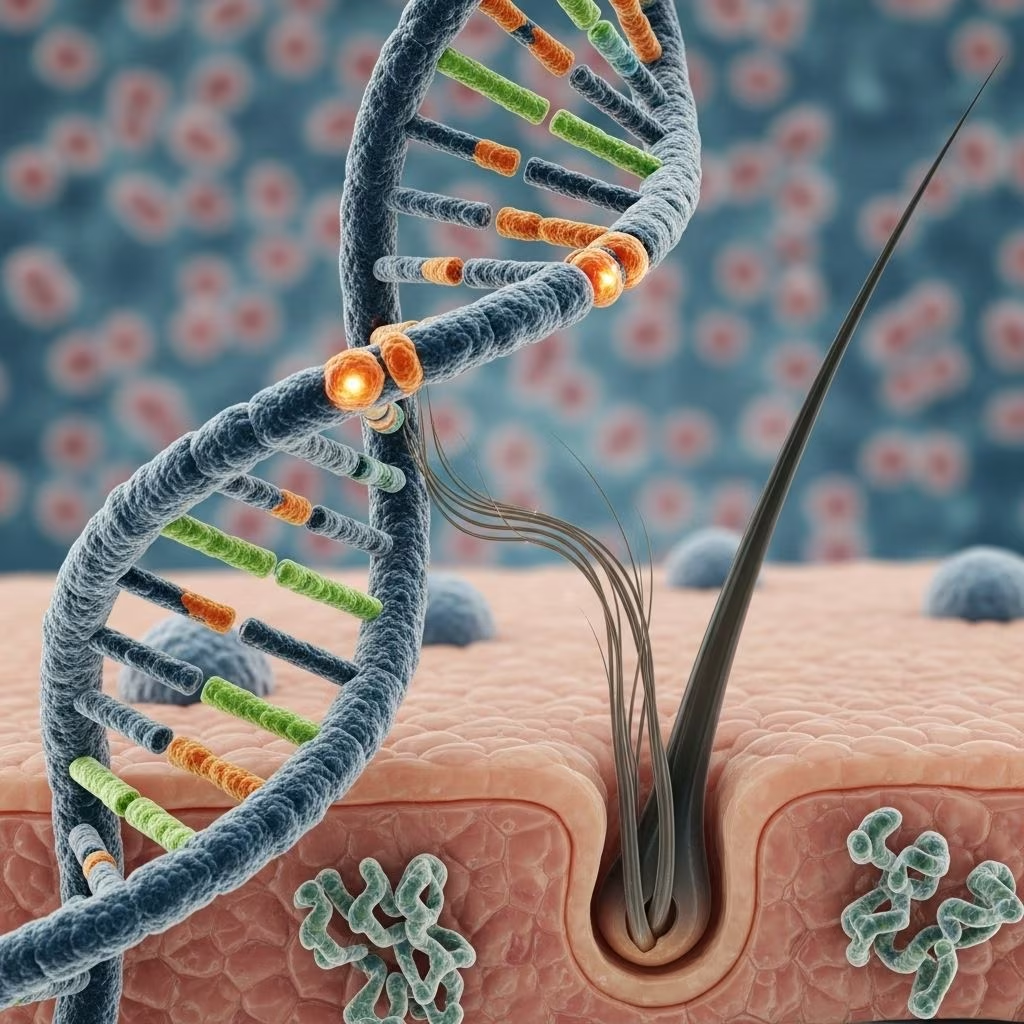
Genetics of Androgen Receptor Sensitivity Baldness
Pattern baldness, or androgenetic alopecia (AGA), is a highly common form of hereditary hair loss driven by genetic sensitivity of hair follicles to androgens. This article provides a comprehensive overview of how genetic variations—particularly affecting the androgen receptor (AR)—shape the risk, molecular dynamics, and clinical presentation of baldness.
Introduction
Androgenetic alopecia (AGA), often termed male or female pattern baldness, affects nearly 50% of males and a substantial proportion of females globally. The development of this condition is dictated by inherited genetic factors and their interactions with circulating androgens, especially dihydrotestosterone (DHT). At the heart of this process lies sensitivity—altered by genetic variation—of hair follicle cells to androgens via the androgen receptor (AR).
The Genetic Basis of Baldness
Baldness is overwhelmingly heritable, with twin studies attributing up to 80% of hair loss risk to genetic factors. The inheritance pattern is polygenic, involving contributions from multiple genes with varying levels of penetrance. Both maternal and paternal genes play a role, and familial predisposition significantly increases the likelihood of developing AGA.
- Polygenic inheritance: multiple genes contribute, unlike classic single-gene disorders.
- Males whose fathers experienced baldness have a five to sixfold increased risk.
- Females also experience genetic forms of baldness, with unique patterns of hair thinning.
Genetic scores built from DNA sequence variations—including single nucleotide polymorphisms (SNPs), microsatellite repeats, and indels—can predict the risk and likely severity of baldness across age groups.
Molecular Mechanisms and Androgen Receptor
The progression of AGA hinges on the interaction between androgens and their receptor, the AR. The androgen receptor is a nuclear hormone receptor that, when activated by DHT, triggers molecular changes causing hair follicle miniaturization and shortened anagen (growth) phases.
Androgen Receptor Activation
- High-affinity binding of DHT (stronger than testosterone) to AR.
- Stimulation of gene expression that promotes follicular miniaturization.
- Premature transition from anagen (growth) to catagen (regression) phase in hair cycle.
This increased receptor sensitivity and corresponding pathway activation launches the process responsible for the patterned thinning seen in balding scalps.
Key Genes Involved in Androgenetic Alopecia
Multiple genes have been investigated for their role in androgen receptor sensitivity and baldness susceptibility.
- Androgen Receptor (AR) gene – Central to cellular response to androgens. Located on the X chromosome (Xq11-12).
- 5-alpha reductase (SRD5A1 & SRD5A2) – Enzymes that convert testosterone to DHT. Distinct roles for Type 1 and Type 2 isoforms.
- EDA2R (ectodysplasin A2 receptor) – Frequently co-associated with AR on X chromosome, implicated via GWAS.
- PGDS (prostaglandin D synthase) – Overexpressed in balding follicles, inhibits growth by inducing catagen phase.
Summary Table: Pertinent Genes in AGA
| Gene | Chromosome | Role in Baldness |
|---|---|---|
| AR | X(q11-12) | Androgen receptor, main risk locus |
| SRD5A1 | 5 | Type 1 5-alpha reductase, extrascalp DHT conversion |
| SRD5A2 | 2 | Type 2 5-alpha reductase, in hair follicle and prostate |
| EDA2R | X | Coadjunct locus influencing AR |
| PGDS | 9 | Prostaglandin-mediated inhibition of growth phase |
Genetics of Androgen Receptor Sensitivity
Genetic variation within the AR gene profoundly affects receptor sensitivity and the scalp’s susceptibility to androgen-induced miniaturization. Key AR-related genetic influences include:
- SNPs (Single Nucleotide Polymorphisms): Certain SNPs, especially in AR, strongly correlate with AGA risk.
- CAG Triplet Repeats: The number of CAG repeats in the AR gene alters receptor activity. Fewer repeats usually raise the risk, associated with earlier hair loss and other androgen-dependent conditions.
- Stu 1 Polymorphism: A specific polymorphism in exon 1 of AR gene, linked to high sensitivity but not affecting protein structure.
Mechanistic Implications
- High AR expression found in balding regions compared to non-balding areas of the same scalp.
- Increased receptor density and activity means DHT is more effective at inducing miniaturization.
- Variability in AR sensitivity helps explain differing baldness patterns even among individuals with similar androgen levels.
Polygenic Inheritance and Genome-wide Association Studies
Genome-wide association studies (GWAS) have mapped numerous independent loci tied to baldness risk. Notably, the AR locus on the X chromosome emerges as the most significant marker, but at least seven other loci contribute.
- Eight independent genetic loci linked to varying severity and age of onset for baldness.
- New genetic scores allow prediction based on thousands of SNPs, helping stratify population risk.
- Polygenic scores predict baldness in men more effectively than in women, whose baldness tends to be less androgen-dependent.
Pathophysiology of Androgen-Sensitive Baldness
The genetic predisposition for baldness manifests via changes to the hair follicle’s life cycle and structure:
- Anagen phase shortening: Reduces hair length and follicle size.
- Follicular miniaturization: Successive cycles create thinner, shorter, and weaker hairs.
- Altered anagen/telogen ratio: In AGA, the normal 12:1 ratio drops to 5:0.
- Increased DHT production and 5-alpha-reductase levels: Exacerbates androgenic effect in sensitive scalp areas.
Hair Growth Cycle
| Phase | Description | Normal Duration | Impact in Baldness |
|---|---|---|---|
| Anagen | Active growth | 2-6 years | Shortened, miniaturized follicles |
| Catagen | Regression | Weeks | Premature induction |
| Telogen | Resting | 3-4 months | Higher proportion |
| Exogen | Shedding | Variable | More frequent shedding |
Diagnostic and Predictive Applications
Advances in genetic screening now allow for early identification of individuals at risk for severe or early-onset baldness.
- Polygenic risk scores (PRS) using SNP data tailor personal probabilities for developing AGA.
- Genetic testing is helpful in cases of ambiguous diagnosis or for predicting familial risk.
- Molecular studies—such as global transcriptomic analyses—identify regional gene expression, helping guide future therapies.
Sex Differences and Inheritance Patterns
Despite the central role of androgens, there are notable differences between male and female pattern baldness:
- Males: Baldness tends to affect the vertex and frontotemporal scalp, often beginning after puberty due to androgen surges.
- Females: Hair thinning is typically diffuse and preserves the frontal hairline, often with less severe androgen sensitivity.
- X-linked inheritance: The AR gene’s location on the X chromosome contributes to sex-limited patterns; males inherit their single X from their mother, and thus maternal family history is especially relevant.
Novel Genetic Findings and Future Directions
Recent discoveries are shedding light on the complexity of androgen receptor sensitivity and its contribution to baldness:
- Overexpression of PGDS, leading to increased synthesis of prostaglandin D2 (PGD2), inhibits hair growth by prematurely triggering catagen phase.
- Variants in different genes may offer new drug targets; inhibition of 5-alpha-reductase remains the foundation for pharmacologic treatment (e.g., finasteride).
- Personalized medicine approaches, such as genotype-guided therapy, hold promise for optimizing interventions for at-risk individuals.
- Further elucidation of non-coding variants and regulatory elements in AR and related loci could uncover new mechanisms of sensitivity.
Frequently Asked Questions
Q: Is baldness always inherited through the mother’s side?
A: While the main AR gene is on the X chromosome (which men inherit from their mothers), baldness is polygenic and influenced by genes from both parents.
Q: Can women have androgen receptor sensitivity baldness?
A: Yes, though the pattern differs. Women typically experience diffuse thinning rather than receding hairlines and are less likely to have the severe forms seen in men.
Q: Are there laboratory tests to detect androgen receptor sensitivity?
A: Genetic screening panels can detect risk variants in AR and other related genes, offering prediction but not diagnosis of baldness. Scalp biopsy with expression analysis can confirm higher AR density in affected areas.
Q: What treatments target androgen receptor sensitivity?
A: Finasteride and dutasteride inhibit 5-alpha-reductase, reducing DHT. New therapies may soon target AR activity or prostaglandin pathways—including PGDS inhibition.
Q: Does baldness indicate presence of other androgen-related disorders?
A: Certain AR variants (shorter CAG repeats) appear linked to risks for conditions like prostate cancer or acne, but genetics varies widely and most individuals with AGA do not develop other androgen-related disorders.
Conclusion
Genetics—especially variation in the androgen receptor—forms the cornerstone of risk for androgenetic alopecia. Ongoing research is deepening our understanding of how AR sensitivity, polygenic inheritance, and regional gene expression combine to guide hair follicle fate. Personalized diagnostics and therapies based on genetic profiles promise new hope for those affected by this common condition.
References
- https://ijdvl.com/genetic-and-molecular-aspects-of-androgenetic-alopecia/
- https://www.ncbi.nlm.nih.gov/books/NBK430924/
- https://pmc.ncbi.nlm.nih.gov/articles/PMC11305502/
- https://onlinelibrary.wiley.com/doi/10.1111/exd.12024
- https://ishrs.org/androgenetic-alopecia/
- https://www.droracle.ai/articles/12868/how-is-the-ar-gene-related-to-the-development-of-male-pattern-baldness-and-how-does-testosterone-play-into-it-


