


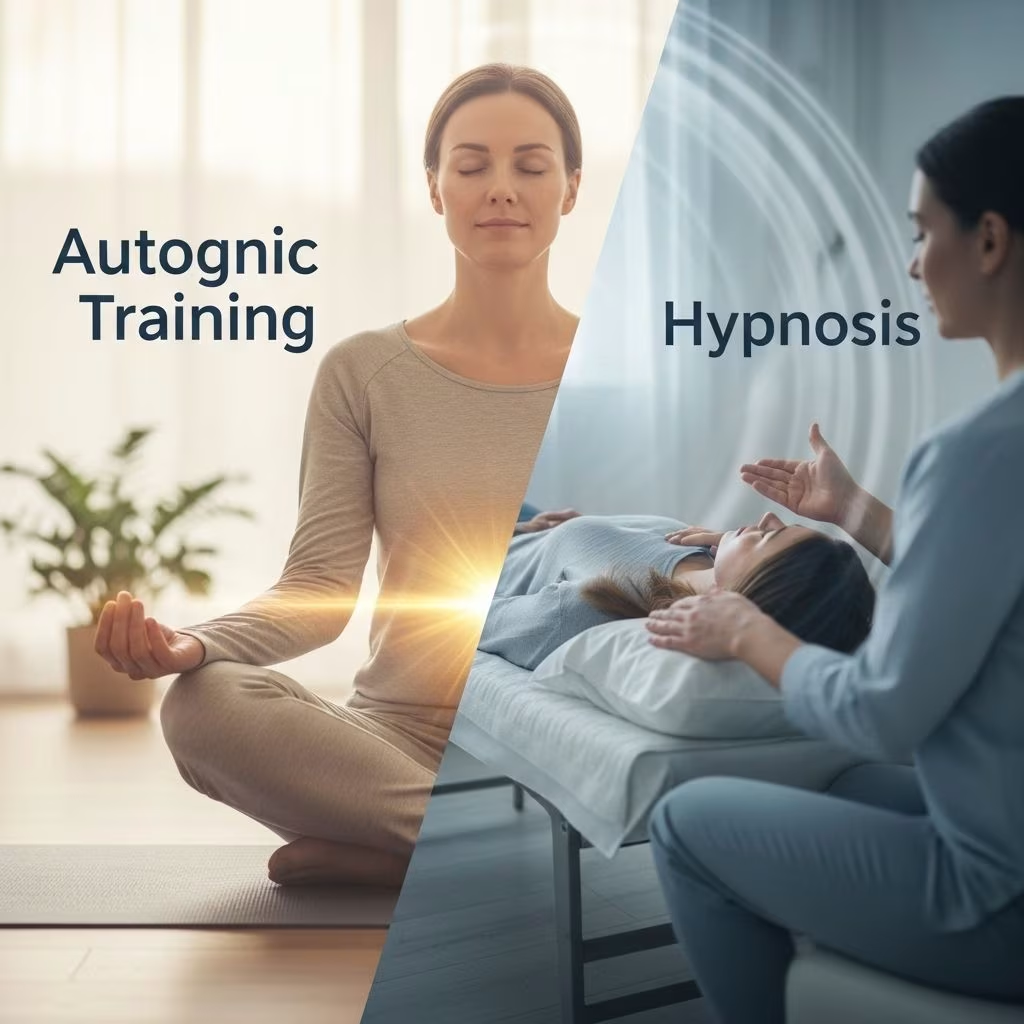
What is Autogenic Training?
Autogenic Training (AT) is a scientifically developed relaxation technique that encourages the body’s natural relaxation response through a series of mental exercises focused on bodily sensations, such as warmth and heaviness in the limbs, calm and regular breathing, and a cool forehead. Developed by German psychiatrist Johannes Heinrich Schultz in the early 20th century, AT is often described as a form of self-hypnosis or self-directed relaxation.
During AT, individuals repeat specific verbal cues—either silently or aloud—to induce a state of deep relaxation. These cues typically follow a standardized sequence:
- “I am completely calm”
- “My right arm is heavy”
- “My right arm is warm”
- “My heart beats calmly and regularly”
- “My breathing is calm and regular… it breathes me”
- “My abdomen is warm”
- “My forehead is cool”
Each step is repeated several times, and the process is ended with a “cancellation” phrase, such as “Arms firm—Breathe deeply—Open eyes”.
What is Hypnosis?
Hypnosis is a therapeutic technique that induces a trance-like state of focused attention and heightened suggestibility. Unlike autogenic training, which is self-directed, hypnosis is typically guided by a therapist, though self-hypnosis is also possible. Hypnosis often involves the use of imagery, suggestions, and deep relaxation to help individuals achieve mental and physical calm, manage pain, reduce anxiety, and even change unwanted behaviors.
Origins and Development
Autogenic Training
AT was developed by Johannes Heinrich Schultz, a Berlin-based neurologist and psychiatrist, in the 1930s. Schultz was influenced by his experiences with hypnosis and sought to create a method that allowed patients to achieve similar states of relaxation without direct hypnotic suggestion. AT has since become a cornerstone of psychosomatic medicine and is widely used in Europe and increasingly in the United States.
Hypnosis
Hypnosis has a long history, with roots in ancient healing practices and animal magnetism theories. In the 18th and 19th centuries, figures like Franz Mesmer and James Braid laid the groundwork for modern hypnotherapy. Today, hypnosis is recognized as a valid therapeutic tool for a range of conditions, including anxiety, chronic pain, and habit disorders.
How Autogenic Training Works
AT works by harnessing the body’s natural ability to relax through passive concentration on specific bodily sensations. The process involves:
- Assuming a comfortable posture (sitting, reclining, or lying down)
- Focusing attention sequentially on different parts of the body
- Repeating standardized verbal formulas that suggest sensations of heaviness, warmth, and calm
- Allowing these sensations to occur without forced effort—a state known as “passive concentration”
With practice, individuals learn to enter a deeply relaxed state quickly and reliably, which can help reduce stress, anxiety, and physical symptoms related to tension.
How Hypnosis Works
Hypnosis typically begins with an induction phase, where the therapist guides the individual into a relaxed, focused state. Suggestions are then given to promote relaxation, pain relief, or behavior change. The mechanisms behind hypnosis are not fully understood, but it is believed to involve changes in attention, perception, and the brain’s response to suggestions. Hypnosis can be tailored to the individual’s needs and may incorporate imagery, metaphors, and direct suggestions.
Comparative Effectiveness for Relaxation
Both AT and hypnosis aim to reduce arousal and induce relaxation, but they differ in method, training requirements, and, to some extent, outcomes.
Research Findings
A comparative study of AT and Progressive Relaxation (PR, a muscle-based relaxation technique) found that AT was significantly superior in reducing physiological arousal (as measured by EMG) and was perceived as easier to learn by patients with anxiety-related disorders. While this study did not directly compare AT to hypnosis, it highlights AT’s effectiveness as a relaxation tool.
Another study directly compared an abbreviated form of AT to hypnotherapy (using future-oriented hypnotic imagery) in the treatment of tension headaches. At post-treatment, both methods were equally effective. However, at a six-month follow-up, hypnotherapy (explicitly presented as hypnosis) was superior to AT in maintaining benefits. This suggests that the context and presentation of hypnosis may influence its long-term effectiveness.
| Feature | Autogenic Training | Hypnosis |
|---|---|---|
| Self-directed | Yes, once learned | Usually therapist-guided, but self-hypnosis is possible |
| Training Required | Structured, gradual learning | Can be immediate, but mastery varies |
| Focus | Bodily sensations, passive concentration | Imagery, suggestion, focused attention |
| Evidence Base | Strong for anxiety, stress, some pain conditions | Strong for pain, anxiety, habit change |
| Long-term Benefits | Good, especially with regular practice | Can be superior in some contexts (e.g., chronic pain) |
Clinical Applications and Research
Autogenic Training
AT has been used to treat a variety of conditions, including:
- Anxiety disorders
- Stress-related physical symptoms
- Insomnia
- Mild to moderate hypertension
- Certain chronic pain conditions
Research supports its efficacy in reducing physiological arousal and subjective stress, particularly in individuals with anxiety. AT is especially valued for its simplicity and the fact that, once learned, it can be practiced independently.
Hypnosis
Hypnosis has a broad range of applications, including:
- Pain management
- Anxiety and stress reduction
- Treatment of phobias and habits (e.g., smoking cessation)
- Enhancement of performance and well-being
Clinical trials have shown that hypnosis can be as effective as other relaxation therapies, including AT, for certain conditions, but may offer superior long-term benefits in specific contexts, such as chronic pain or when the therapeutic relationship is emphasized.
Practical Considerations
Learning and Practice
Autogenic Training requires regular practice to master. It is typically taught over several weeks, with each session building on the last. The structured nature of AT makes it accessible to many people, and its self-directed format allows for flexibility in practice.
Hypnosis can be experienced in a single session, but lasting benefits often require multiple sessions or regular self-hypnosis practice. The quality of the therapeutic relationship and the skill of the practitioner can significantly influence outcomes.
Suitability
Both AT and hypnosis are generally safe for most people. However, individuals with certain psychiatric conditions (e.g., psychosis) should consult a healthcare provider before beginning either technique.
Pros and Cons of Each Method
Autogenic Training
- Pros: Self-directed, portable, evidence-based for stress and anxiety, minimal side effects, easy to integrate into daily routine.
- Cons: Requires initial training and regular practice, may be less effective for complex or entrenched conditions.
Hypnosis
- Pros: Can produce rapid relaxation, highly customizable, effective for pain and habit change, potential for deep therapeutic work.
- Cons: Usually requires a skilled practitioner, effectiveness varies by individual, some stigma or misunderstanding persists.
Frequently Asked Questions (FAQs)
Q: Can I practice autogenic training and hypnosis at home?
A: Yes, both can be practiced at home. AT is designed for self-practice once learned, while self-hypnosis requires some initial guidance or training.
Q: Which is better for chronic pain?
A: Both have shown benefit, but some research suggests hypnosis may have an edge for long-term pain management, especially when guided by a skilled therapist.
Q: How long does it take to learn autogenic training?
A: Basic proficiency typically requires several weeks of structured training and daily practice.
Q: Are there any risks to hypnosis or autogenic training?
A: Both are generally safe when practiced as directed. Individuals with certain mental health conditions should consult a professional before beginning.
Q: Can children use these techniques?
A: Yes, both methods can be adapted for children, often with the guidance of a trained professional.
Conclusion
Autogenic training and hypnosis are both powerful tools for inducing relaxation, reducing stress, and managing a variety of physical and psychological conditions. AT offers a structured, self-directed approach focused on bodily sensations, making it particularly accessible for individuals with anxiety or stress-related disorders. Hypnosis, while often therapist-guided, provides rapid and sometimes deeper relaxation, with strong evidence for pain management and habit change.
Choosing between them depends on individual preferences, the nature of the condition being addressed, and the availability of trained practitioners. For many, combining elements of both—or alternating between them—may offer the greatest benefit. Regardless of the method, consistent practice and a supportive therapeutic environment are key to achieving lasting relaxation and improved well-being.
References
- https://sleepandhypnosis.org/wp-content/uploads/2024/07/9b2c38fd8dcc47fa926a99323f88627a.pdf
- https://pubmed.ncbi.nlm.nih.gov/1564674/
- https://www.goodtherapy.org/learn-about-therapy/types/autogenic-training
- https://www.va.gov/WHOLEHEALTHLIBRARY/docs/Autogenic-Training.pdf
- https://socialwork.wayne.edu/blog/autogenictraining
- https://zhealtheducation.com/blog/mindfulness-vs-relaxation-training-which-is-better-why/
- https://pubmed.ncbi.nlm.nih.gov/3717052


