


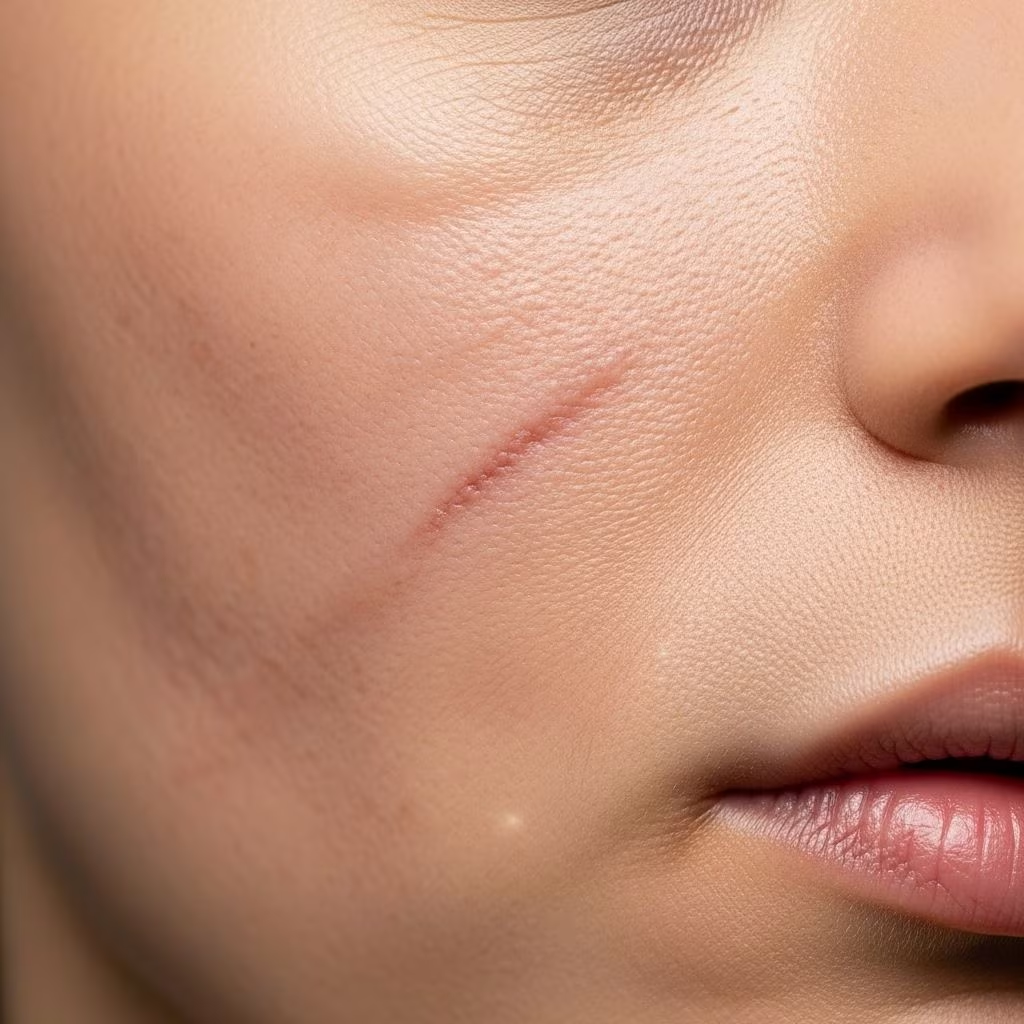
Acne scars are a common consequence of moderate to severe or persistent acne, affecting individuals both physically and emotionally. As over-the-counter options often come up short, in-office procedures performed by dermatologic professionals are the gold standard for minimizing acne scars and improving skin texture, tone, and confidence. This article offers an extensive comparison of the leading in-office treatments, outlining their mechanisms, suitability for different scar types and skin tones, efficacy, side effects, recovery times, and latest advancements.
Understanding Acne Scars
Acne scars result from the skin’s attempt to heal itself after inflammatory acne. They generally fall into two categories:
- Atrophic (depressed) scars: Most common, including ice pick, boxcar, and rolling scars.
- Hypertrophic (raised) scars and keloids: Less common, more typical on the chest, back, or jawline.
The scar type, individual’s skin tone, scar depth and history all influence treatment choice and outcomes.
Overview of In-Office Acne Scar Treatments
Professional, in-office acne scar treatments include a range of modalities, each suitable for specific scar types and skin profiles. The primary goals are to stimulate collagen production, release tethered scars, remove damaged tissue, and smooth skin contour. The most widely used in-office procedures include:
- Microneedling (including RF Microneedling and Microneedling with PRP)
- Laser resurfacing (fractional, ablative, and non-ablative lasers)
- Chemical peels and the CROSS method
- Subcision
- Dermal fillers
- Steroid injections
- Surgical excision and punch grafting
Microneedling and RF Microneedling
How It Works
Traditional microneedling employs fine needles to create controlled micro-injuries in the skin, stimulating natural collagen and elastin production. Variants include:
- Microneedling with Platelet-Rich Plasma (PRP): PRP, derived from a patient’s own blood, is applied topically or injected to enhance healing, accelerate recovery, and improve results.
- Radiofrequency (RF) Microneedling: Integrates heat delivered via microneedles to stimulate deeper skin remodeling, offer skin tightening, and is especially useful for bound-down or deeper scars.
Ideal For
- Mild to moderate atrophic scars (including rolling and boxcar scars, some ice pick scars)
- All skin types (especially RF for darker skin types, as risks of post-inflammatory hyperpigmentation (PIH) are lower with non-heat techniques)
Benefits
- Minimal downtime (1–7 days of redness or peeling)
- Improves skin texture and tone
- Safe for various skin types
- Can be combined with PRP for faster healing
Considerations
- Multiple sessions (typically 3–6)
- Temporary redness, mild discomfort, rare swelling or bruising
Laser Resurfacing Treatments
How It Works
Laser resurfacing uses focused light to remove damaged skin layers, stimulating new tissue production. Laser options include:
- Ablative Lasers (CO2, Er:YAG): Remove outer skin layers for pronounced resurfacing.
- Non-Ablative Lasers: Heat the underlying skin to boost collagen without removing layers.
- Fractional Lasers: Create microthermal zones for targeted healing with faster recovery[10].
Ideal For
- Atrophic scars: especially boxcar and rolling scars
- Treatment of post-inflammatory hyperpigmentation (PIH) and discoloration from old acne
Benefits
- Noticeable improvement often after 1–3 sessions
- Improvements in both texture and pigmentation
Considerations
- Moderate downtime (redness, swelling, peeling for up to 1–2 weeks)
- Risk of pigmentation changes, especially for darker skin (higher with ablative lasers)
- Requires sun protection post-procedure
Chemical Peels and the CROSS Technique
How Chemical Peels Work
Chemical peels use acids (such as TCA or glycolic acid) to exfoliate the skin, improve texture, and fade discoloration. Superficial or medium-depth peels may be used for mild boxcar, rolling, or pigmented scars.
CROSS Technique
The Chemical Reconstruction of Skin Scars (CROSS) technique uses high-concentration acid (commonly carbolic acid or TCA) to precisely treat ice pick and deep boxcar scars by stimulating collagen at the scar base. Recent studies favor carbolic acid over TCA for fewer side effects and minimal risk of scar widening.
Ideal For
- Ice pick and narrow-depth boxcar scars (CROSS)
- Darker skin tones (when carbolic acid is used, risk of PIH is lower than with traditional TCA peels)
Benefits
- Targeted treatment for stubborn, deep scars
- Minimal downtime for CROSS applied as spot treatment
Considerations
- Temporary redness, mild stinging
- Potential for hypopigmentation (usually transient)
- Multiple sessions may be needed
Subcision
How It Works
Subcision is a minor surgical procedure where a needle or blunt cannula is used to break up fibrous tissue beneath atrophic scars, releasing bound-down areas and allowing the skin to lift and flatten. Sometimes, dermal fillers or PRP are injected to enhance the outcome.
Ideal For
- Moderate-to-severe rolling and boxcar scars
- Patients with tethered, depressed scars
- Appropriate for darker skin types (very low risk for PIH)
Benefits
- Permanent mechanical release of scar tissue
- Can be combined with other procedures for enhanced results
- Quick procedure (outpatient, local anesthesia)
Considerations
- Temporary bruising, swelling, minor bleeding
- Recovery 3–7 days; sometimes repeated sessions
Dermal Fillers
How They Work
Dermal fillers (hyaluronic acid, collagen stimulators, or autologous fat) are injected under depressed scars to raise their base and smooth the skin’s surface. Fillers are best for sparse, shallow, or atrophic scars and are often used in combination with subcision.
Ideal For
- Shallow, sparse atrophic or rolling scars
- Patients wanting immediate results
Benefits
- Instant improvement in treated scars
- Non-surgical, minimal discomfort
- Natural results (especially with fat or collagen-stimulating fillers)
Considerations
- Not suitable for large areas or very deep scars
- Temporary effects (6–18 months for hyaluronic acid fillers)
- Bruising or swelling may occur
Steroid Injections
How They Work
Steroid injections (commonly using triamcinolone or Kenalog) reduce inflammation and flatten raised, thickened, or hypertrophic scars. Careful dosing is required to avoid atrophy or skin thinning.
Ideal For
- Hypertrophic or keloid acne scars
- Patients with raised, inflamed areas
Benefits
- Scar flattening over repeated sessions
- Rapid, outpatient procedure
Considerations
- Risk of overcorrection or atrophy if dosed too aggressively
- Multiple treatments needed for optimal effect
Surgical Excision and Punch Grafting
How It Works
Surgical excision involves cutting out individual deep scars and closing the wound with tiny stitches or replacing with a skin graft (punch grafting). These methods are reserved for deep, narrow, or clustered scars unresponsive to other treatments.
Ideal For
- Ice pick and very deep boxcar scars
- Isolated, stubborn lesions
Benefits
- Permanent removal of the scar
- Precision treatment, suitable for individual or few scars
Considerations
- Results in a new, typically smaller scar
- May require grafting or combination with laser/microneedling
- Mild downtime (swelling, stitches for 5–7 days)
Combination Treatments: Multimodal Approaches
Research shows combining two or more modalities achieves better outcomes, especially for patients with multiple types of scars or those with darker skin where some treatments (like lasers) pose higher risks. Common multimodal strategies include:
- CROSS + Subcision + Microneedling: For atrophic mixed-type facial scars, offers fast recovery and high satisfaction, especially in darker skin tones.
- Microneedling + PRP or Microneedling + RF: Enhances collagen production, shortens healing time.
- Subcision + Fillers: Lifts tethered scars, then fills volume loss for a smoother look.
- Laser + Chemical Peel: First resurfacing, then pigment correction, or vice versa.
Combination treatments are always tailored to individual needs, scar types, skin tone, lifestyle and desired downtime.
Choosing the Right Procedure: Factors to Consider
Selecting the optimal in-office procedure for acne scars requires evaluation by an experienced dermatologist and consideration of several critical factors:
- Scar type and severity: Different techniques suit different scar shapes, depths, and distributions.
- Skin type and tone: Darker skin has higher sensitivity to some energy-based modalities (risk of PIH); mechanical or chemical options may be safer.
- Downtime and recovery tolerance: More aggressive treatments may cause redness, peeling, or social downtime.
- Patient expectations: Realistic goals and understanding of gradual improvement rather than overnight transformation.
- Budget and treatment frequency: Some modalities or combinations require several sessions and ongoing maintenance.
Comparison Table: Effectiveness, Downtime, Pros & Cons
| Treatment | Best For | Sessions Needed | Downtime | Main Pros | Main Cons |
|---|---|---|---|---|---|
| Microneedling (±PRP) | Mild-moderate atrophic scars All skin types | 3–6 | Redness 1–7 days | Safe, minimal downtime Improves texture/tone | Gradual improvement Multiple sessions |
| RF Microneedling | Tough, tethered scars Darker skin types | 3–6 | Redness, swelling, bruising up to 1 week | Smoother, tighter skin Deeper collagen boost | Painful (requires numbing) Higher cost |
| Laser Resurfacing | Boxcar/rolling scars PIH/hyperpigmentation | 1–3 | Social downtime 7–14 days (ablative) | Texture & pigment correction Pronounced results | Risk of PIH in dark skin Redness, peeling |
| CROSS | Ice pick, deep boxcar | 2–4 | Minimal | Targets stubborn scars Low PIH risk (carbolic acid) | Mild, transient hypopigmentation |
| Subcision | Rolling/boxcar (depressed) | 1–3 | Bruising up to 7 days | Permanent release Quick recovery | Swelling/bleeding Best in combo |
| Dermal Fillers | Sparse, mild-moderate atrophic | 1–2 | Mild, 1–3 days | Instant effect Minimal discomfort | Temporary (6–18 months) Not for large areas |
| Steroid Injections | Raised/hypertrophic scars | 2–6 | Minimal | Flattens raised scars Outpatient | Possible atrophy Multiple sessions |
| Surgical Excision/Punch Grafting | Deep, isolated scars | 1 | 5–7 days | Permanent removal Precise | Potential new scar Local anesthesia |
Frequently Asked Questions (FAQs)
Do in-office procedures permanently remove acne scars?
No treatment can guarantee complete removal of all acne scars, but modern in-office procedures can significantly diminish their appearance—sometimes up to 80% improvement—depending on the scar type, treatment consistency, and individual healing response[10].
Is one procedure better than others for all skin types?
No single procedure suits everyone. For darker skin types, mechanical and chemical techniques (microneedling, subcision, CROSS) usually carry a lower risk of hyperpigmentation compared to lasers. Personal assessment by a dermatologist is critical.
How many sessions are usually required?
Most treatments require a series of 2–6 sessions spaced weeks apart for optimal results. Improvement is gradual, and combination treatments may reduce the total number needed.
Can I go back to work immediately?
Downtime varies by procedure. Superficial chemical peels, fillers, and steroid injections have minimal recovery. Ablative lasers or RF microneedling may require a week or more of healing before social or professional engagements.
What is the cost of in-office acne scar treatments?
Costs vary widely by location, provider expertise, and procedure. Microneedling and chemical peels may start at $200–$500/session, while lasers, RF, and surgical procedures typically range higher. Multiple sessions and maintenance may be needed.
Are there risks?
All procedures have some risks, including temporary redness, swelling, pigment changes, infection risk, or scar worsening. Seeing an experienced, board-certified dermatologist minimizes these risks.
References
- https://aesthetic-solutions.com/blog/acne-scar-treatments/
- https://pmc.ncbi.nlm.nih.gov/articles/PMC7380695/
- https://www.goodrx.com/conditions/acne/how-to-get-rid-of-acne-scarring
- https://www.brynmawrdermatology.com/the-best-treatments-for-acne-scars-a-dermatologists-guide/
- https://pmc.ncbi.nlm.nih.gov/articles/PMC4570086/
- https://aedit.com/aedition/best-professional-treatments-for-acne-and-acne-scars
- https://www.aad.org/public/diseases/acne/derm-treat/scars/treatment
- https://www.spaatspringridge.com/blog/scar-treatments-types-procedures-and-results/
- https://www.mdcsnyc.com/post/the-best-treatments-for-acne-scars-why-subcision-stands-out
- https://drbiesman.com/acne-scarring-treatment-options/


