


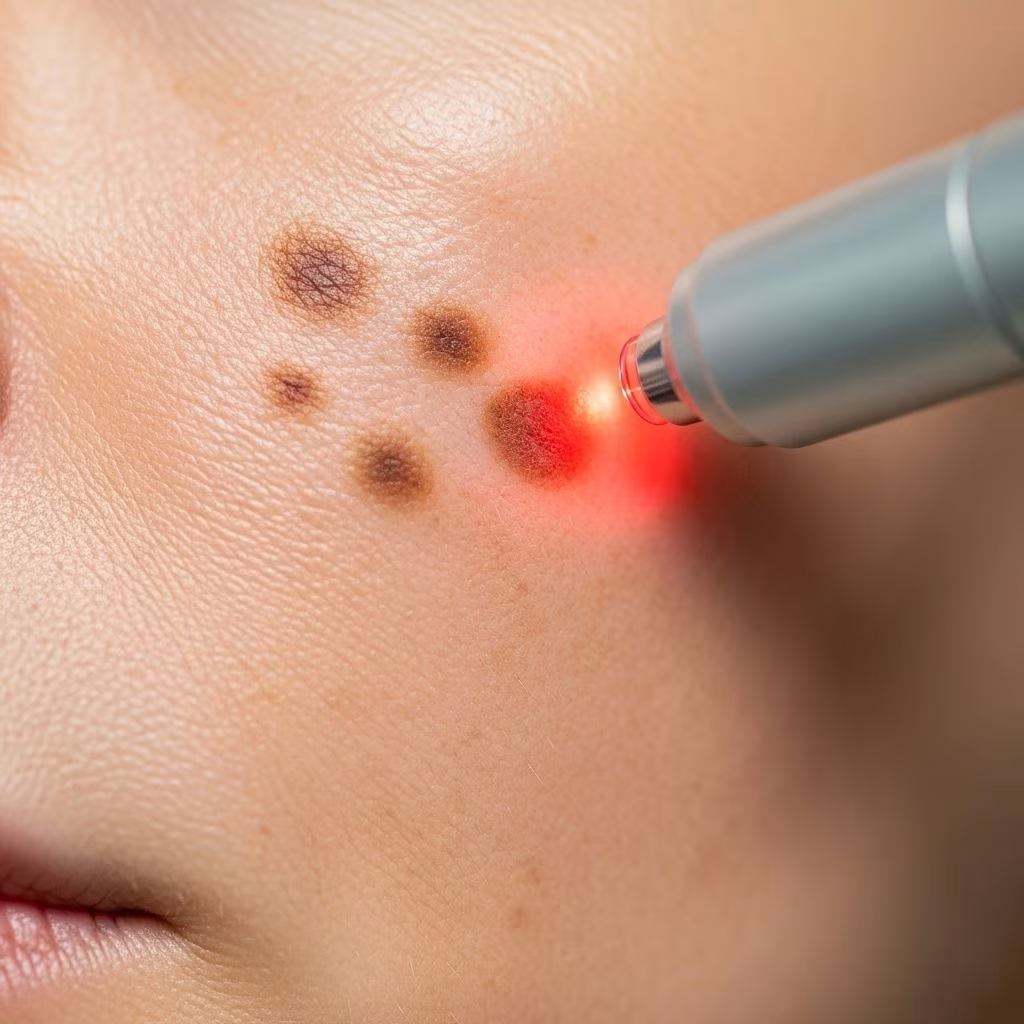
Sunspots, also known as solar lentigines or liver spots, are flat, brown patches that appear on sun-exposed skin due to prolonged ultraviolet (UV) radiation. While sunspots are benign, many people seek professional treatment to achieve an even-toned complexion. This guide delves into the most effective dermatologist-recommended options—exploring the procedures, science, effectiveness, recovery, and choosing what’s best for different skin types.
What Are Sunspots?
Sunspots (solar lentigines) are small, flat, darkened sections of skin. They often appear in clusters on areas frequently exposed to sunlight, such as the face, hands, shoulders, and arms. They are generally harmless and not a cancer risk, but they can be cosmetically bothersome for many individuals.
Causes and Risk Factors
- Prolonged, repeated sun exposure, particularly without adequate UV protection
- Use of tanning beds
- Aging—skin loses ability to repair UV-induced damage over time
- Lighter skin tones, which are more susceptible to pigmentation changes
Sunspots are the skin’s way of defending itself against excessive sun by increasing melanin production in concentrated areas.
Overview of Professional Sunspot Treatments
Professional treatment options for sunspots are designed to target and disperse excess melanin. They provide faster, more predictable, and longer-lasting results compared to over-the-counter products. Most treatments can be tailored by a board-certified dermatologist to your skin type and preferences.
Primary categories of professional sunspot removal options include:
- Laser therapies
- Intense pulsed light (IPL)
- Chemical peels
- Cryotherapy
- Microdermabrasion
- Photodynamic therapy (PDT)
Laser Therapies
Laser therapy is among the most popular and effective professional treatments for sunspots. It works by selectively targeting pigmented cells with concentrated beams of light, breaking them down so the body can eliminate them naturally :
| Laser Type | Mechanism | Typical Sessions | Recovery | Best For |
|---|---|---|---|---|
| Fraxel Laser | Fractional non-ablative laser targets water and pigment for skin resurfacing and spot reduction | 1–3 | Redness, swelling for up to a week; skin bronzes and peels off | Widespread sun damage, uneven skin tone, and fine lines |
| Q-switched Laser (Alexandrite, Nd:YAG) | Short bursts destroy pigment selectively without harming surrounding skin | 1–3 | Mild redness, swelling, transient darkening | Individual or clustered sunspots, safe for deeper skin tones |
| Pulsed Dye Laser | Targets vascular and pigmented lesions; mainly for lighter brown sunspots | 1–3 | Temporary redness, swelling | Superficial sunspots and redness |
Advantages: Precision, often rapid results, minimal downtime. Laser treatments also stimulate collagen, improving overall skin texture .
Considerations: Some downtime (redness, swelling), rare pigment changes. Not all lasers are suitable for deeper skin tones—consultation is essential.
Intense Pulsed Light (IPL) Therapy
Intense pulsed light (IPL) is sometimes called a “photofacial.” Unlike true lasers, IPL emits multiple wavelengths, allowing it to address hyperpigmentation, fine vessels, and sunspots simultaneously :
- Light energy is absorbed by excess melanin, causing spots to darken and flake off naturally over 7-10 days
- Minimal discomfort, often compared to a mild rubber band snap
- Usually requires 2–4 sessions, spaced several weeks apart
- No significant downtime—patients often return to normal activities the same day
Who is IPL Best For? Fair to medium skin tones with isolated sunspots; not always recommended for very dark or very tan skin due to risk of pigment changes.
Chemical Peels
Chemical peels use controlled acids to exfoliate the top layers, removing pigmented cells and triggering regeneration of healthy, new skin :
- Common acids include glycolic, salicylic, lactic (for lighter peels), and trichloroacetic acid (TCA) for deeper peels
- May induce mild stinging or burning during the procedure—usually well-tolerated
- Downtime depends on peel depth; redness, peeling can last from a few days (superficial) to 1-3 weeks (medium/deep)
- Risks include temporary color changes, especially for medium to deep peels
Ideal Candidates: Superficial to moderate sunspots, patients wanting overall skin refinement in texture and tone.
Cryotherapy
Cryotherapy involves applying liquid nitrogen or nitrous oxide to freeze the sunspot, destroying pigment-containing cells :
- Quick procedure (under 5 minutes per spot), minimal pain
- The frozen spot blisters, scabs, and peels away in 1–2 weeks
- Best for isolated, stubborn sunspots (smaller areas)
- Main risk is transient or permanent skin pigment changes, especially in darker skin types
Microdermabrasion
Microdermabrasion uses an abrasive tip and suction to gently remove the outermost skin layer, revealing fresher, less-pigmented skin :
- Virtually no downtime; mild redness may last several hours
- Best suited for mild, shallow sunspots and overall skin brightening
- Usually performed in a series (4 to 6 sessions) for best results
- Improves skin texture but is less effective for deep pigmentation
Photodynamic Therapy (PDT)
Photodynamic therapy (PDT) combines a light-sensitive topical agent (photosensitizer) with visible light, initiating a reaction that removes abnormal skin cells, including sun-damaged spots :
- Especially beneficial for individuals with extensive sun damage or precancerous spots
- Requires avoidance of sunlight for several days after procedure to prevent skin irritation
- May cause redness, swelling, and peeling for up to two weeks
Combination Approaches
Dermatologists often combine two or more modalities for challenging or extensive sunspots, increasing effectiveness and minimizing risks. Examples include:
- IPL plus microdermabrasion for texture and tone
- Laser therapy followed by topical fading agents
- Layered chemical peels with microneedling for stubborn pigmentation
A personalized approach ensures treatment addresses all layers and causes of pigmentation.
Safety, Risks, and Side Effects
When performed by experienced professionals, these treatments are generally safe. However, possible side effects depend on the method and may include:
- Temporary redness, swelling, stinging, or peeling (most common)
- Transient hyperpigmentation or hypopigmentation—more likely in medium-to-dark skin tones, or if aftercare instructions aren’t followed
- Infection (very rare), scarring (rare, mainly with aggressive or improperly administered treatments)
To minimize risks, always consult a qualified dermatologist, disclose any history of pigment disorders, and follow all post-treatment care instructions meticulously.
Choosing a Qualified Provider
For best results and safety, it is essential to:
- Seek board-certified dermatologists or licensed practitioners with extensive sunspot removal experience
- Ask to see before-and-after patient photos
- Request a patch test for treatments like lasers or peels, especially for darker skin tones
- Discuss your medical history, current medications, and skin care routine to rule out contraindications
Aftercare and Maintenance
Proper aftercare reduces complications and prolongs your results. Dermatologists commonly recommend:
- Avoiding direct sun exposure for 2-4 weeks post-treatment
- Applying broad-spectrum sunscreen (SPF 30 or higher) daily, year-round
- Moisturizing regularly to repair the skin barrier
- Gentle cleansing and non-irritating skin care products during recovery
- Avoiding picking or scratching treated areas as they heal
Results from professional treatments are long-lasting, but ongoing sun protection is crucial to prevent new sunspots from forming.
Frequently Asked Questions (FAQs)
Q: How quickly will I see results from professional sunspot treatments?
A: Many in-office procedures show visible improvement within 1–2 weeks, though multiple sessions may be needed for optimal clearance, especially with laser or IPL treatments.
Q: Are professional treatments painful?
A: Most patients experience only mild discomfort—most describe a slight stinging or snapping sensation during lasers or IPL. Chemical peels may cause burning for a few minutes, usually managed with topical cooling. Anesthetic creams can be used for sensitive patients.
Q: Will sunspots come back after treatment?
A: Treated sunspots are unlikely to recur unless exposed to further unprotected sun. However, new spots can appear with repeated UV exposure, so diligent sun protection is essential for lasting results.
Q: Is there a risk of scarring or permanent discoloration?
A: When performed by experienced professionals, risk of permanent scarring or color loss is very low. Temporary changes are most common and usually resolve with proper aftercare. Choosing a skilled dermatologist minimizes these risks.
Q: Can people with dark skin get professional sunspot treatments?
A: Yes, but treatment selection and settings must be carefully chosen. Some lasers and deep peels can cause unwanted pigmentation changes in darker skin, so a board-certified dermatologist will tailor your regimen for both safety and efficacy.
Key Takeaways
- Professional sunspot treatments offer fast, effective, and long-lasting removal compared to home remedies.
- Lasers, IPL, chemical peels, cryotherapy, microdermabrasion, and photodynamic therapy can be tailored for various skin types and sunspot severity.
- Only trained dermatologists or licensed practitioners should perform these treatments to minimize risks.
- Long-term results rely on diligent sun protection and skin care maintenance.
Consult a qualified dermatologist to create a treatment plan best suited to your individual skin type, sunspot severity, and cosmetic goals.
References
- https://www.healthline.com/health/sunspots-on-face
- https://www.schweigerderm.com/skin-care-articles/spots/best-dark-spot-removal-treatments/
- https://www.newjerseyplasticsurgery.com/blog/top-laser-treatments-what-is-the-best-laser-treatment-for-sun-and-age-spots/
- https://www.michelegreenmd.com/removing-sun-spots-on-the-face
- https://www.aad.org/public/cosmetic/age-spots-marks/get-rid-spots
- https://www.mayoclinic.org/diseases-conditions/age-spots/diagnosis-treatment/drc-20355864
- https://rocklincaderm.com/sun-spots-treatment/


