


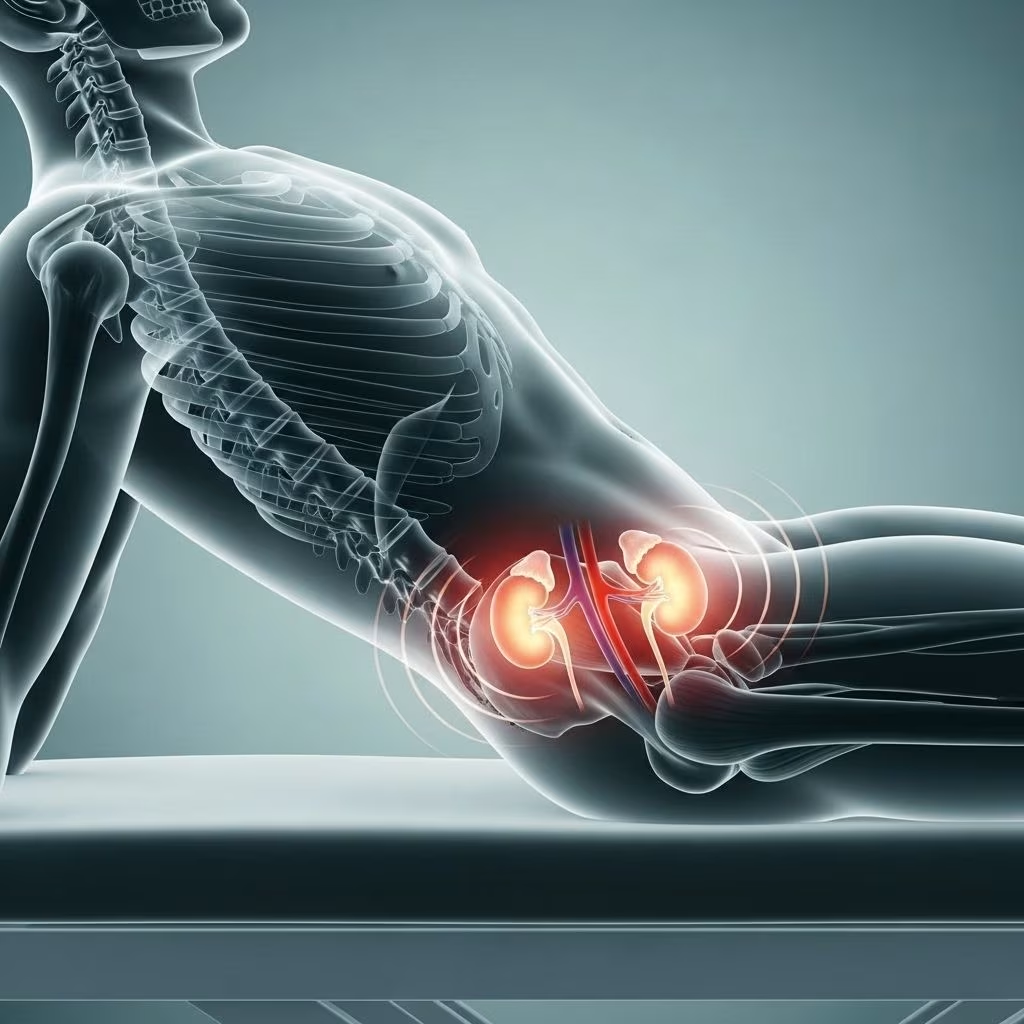
Bilateral Flank Pain Only When Lying on Side: A Comprehensive Guide
Bilateral flank pain that occurs exclusively when lying on your side is a complex symptom with diverse potential causes. Flank pain refers to discomfort in the area between the upper abdomen and the back, just below the ribs and above the pelvis. Understanding why such pain may occur and how to approach it can be crucial for obtaining relief and adequate care. This article presents a detailed exploration of the possible origins, diagnostic pathways, and management strategies for bilateral flank pain manifesting during side-lying positions.
Introduction to Bilateral Flank Pain
Bilateral flank pain means discomfort on both sides of the body between the ribs and pelvis that typically occurs when lying on either side. While flank pain is common and usually experienced on one side, bilateral presentations—especially those tied to body position—are less typical and may signal musculoskeletal, renal, or referred pain from other sources. Recognizing positional triggers helps clinicians and individuals narrow possible causes and guide further evaluation.
Anatomy of the Flank Region
The flank area encompasses structures such as:
- Muscles: including the obliques, latissimus dorsi, and back muscles
- Kidneys: situated against the posterior abdominal wall, below the ribs
- Nerves: transversing the region and possibly subject to compression or irritation
- Spine: vertebrae and associated discs impacting nerve roots
- Adjacent organs: liver, spleen (mostly affecting one side, but sometimes both)
Common Causes of Bilateral Flank Pain
Pain on both flanks, specifically when lying on the side, is often caused by issues affecting paired structures or symmetric body regions. The leading categories include:
1. Musculoskeletal Causes
- Muscle Strain or Spasm: Overuse, strain, or injury of the muscles can trigger pain, especially if these muscles are compressed during side-lying.
- Poor Sleep Posture: Maintaining an awkward position for hours may cause muscle tension or spasm on both sides.
- Arthritis or Spine Issues: Conditions like spinal arthritis, herniated discs, or degenerated discs may radiate pain bilaterally. Nerve root irritation can intensify with pressure during side-lying.
- Obesity or Sedentary Lifestyle: Weak core muscles and prolonged immobility increase risk of positional pain.
2. Renal Causes
- Bilateral Kidney Issues: Diseases like polycystic kidney disease, bilateral kidney infections, or systemic conditions affecting both kidneys could trigger flank discomfort.
- Kidney Stones: While typically unilateral, multiple stones or stones affecting both kidneys or ureters may present as bilateral pain. Positioning may increase ureteral pressure, manifesting as pain upon lying.
- Bilateral Hydronephrosis or Congestion: Swelling or fluid retention may exacerbate pain when the kidneys are compressed in certain positions.
3. Nerve-Related Causes
- Pinched Nerve or Radiculopathy: Nerve roots emerging from the spine may be compressed by discs or bone spurs, often worsening in body positions that stretch or compress the flanks.
- Peripheral Neuropathy: Some systemic conditions lead to symmetrical nerve pain.
4. Other Causes
- Shingles: Usually affects one side, but rare bilateral presentation is possible, especially before the rash appears.
- Referred Pain: Chronic conditions such as pancreatitis (less common) or gastrointestinal disorders may occasionally radiate pain to both flanks.
- Liver or Gallbladder Disease: Typically unilateral, but diffuse inflammation may rarely affect both sides.
Why is Pain Worse When Lying on the Side?
Positional pain is clinically significant. Bilateral flank pain that worsens with side-lying can be explained by:
- Direct Pressure: Lying on the side compresses muscles, nerves, or kidney tissue, exacerbating existing pain or triggering latent symptoms.
- Gravity and Fluid Shifts: Fluid accumulation around organs and tissues may move or increase pressure during side-lying, intensifying pain.
- Nerve Tension: Spinal or peripheral nerves may be stretched more in certain positions, particularly on soft mattresses.
- Organ Mobility: Some organs shift slightly when lying, increasing contact with adjacent pain-sensitive structures.
Individuals who sleep exclusively on their sides may repeatedly compress or strain affected tissues overnight, causing pain that is present only or primarily in that position.
Diagnosis and Evaluation
The diagnostic approach to bilateral flank pain that presents only during side-lying involves a combination of history-taking, physical examination, and targeted investigations.
Key Questions in History
- Onset, duration, and character of pain
- Any recent trauma, intense exercise, or changes in activity
- Associated symptoms: fever, urinary changes, weight loss, numbness, tingling, etc.
- Past medical history: kidney disease, spine disorders, autoimmune conditions
- Medication use: including NSAIDs, diuretics, nephrotoxic agents
- Sleep habits and mattress type
Physical Examination
- Inspection for skin signs: rash, bruising, muscle wasting
- Palpation: tenderness over flanks, muscle spasm, kidney enlargement
- Range of motion: spinal mobility and muscle function
- Nerve testing: sensation, strength, reflexes
Laboratory and Imaging Studies
- Urine Analysis: Tests for infection, blood, protein
- Serum Markers: Kidney function, inflammation, electrolytes
- Imaging: Ultrasound, CT scan, or MRI to visualize kidneys, spine, or other structures
- Special Tests: Nerve conduction studies if neuropathy suspected
| Test | Purpose |
|---|---|
| Urinalysis | Detect kidney infection, stones, hematuria |
| Blood panel | Assess kidney function, inflammation |
| MRI/CT scan | Identify anatomical or structural problems |
| Physical exam | Pinpoint musculoskeletal or neurological cause |
| Ultrasound | Detect kidney stones, cysts, or enlargement |
Treatment and Management Strategies
Treatment is guided by the underlying cause:
- Muscle Injury: Stretching, physical therapy, rest, ice, and compression are beneficial for minor injuries.
- Kidney Infection or Stones: Antibiotics for infection; treatment or removal of stones via medication, surgery, or procedures.
- Nerve Impingement: Physical therapy, NSAIDs, or, in severe cases, surgical decompression or epidural steroid injection.
- Spinal Arthritis: Medications such as NSAIDs or disease-modifying agents, physical therapy, and occasionally surgery.
- Systemic Causes: Management varies—includes restoring hydration, treating infections, and managing underlying disease.
- Lifestyle Adjustments: Improving mattress firmness, pillows for support, and correcting sleep posture.
Table: Positional Therapy Tips
| Sleep Position | Recommendation |
|---|---|
| Side-lying | Use pillow between knees; support torso with extra pillows to avoid direct compression |
| Back-lying | May reduce flank compression; consider placing pillow under knees |
| Mattress | Select medium-to-firm mattress to ensure even support |
Preventive Measures
- Regular Physical Activity: Maintains muscle strength and spinal alignment.
- Healthy Weight: Reduces strain and risk of musculoskeletal pain.
- Good Sleep Hygiene: Ensures spine and muscles rest in optimal position overnight.
- Stay Hydrated: Supports kidney health and reduces risk of stones.
- Avoid Prolonged Immobility: Regular movement prevents stiffness and nerve entrapment.
Frequently Asked Questions
Q: Is bilateral flank pain when lying on the side always a sign of kidney disease?
No, while kidney diseases are a common source of flank pain, musculoskeletal and neurological causes are also frequent, especially if pain occurs specifically with side-lying.
Q: When should flank pain be considered an emergency?
If pain is severe, accompanied by fever, vomiting, urinary symptoms, blood in urine, or neurological signs (numbness, weakness), seek immediate medical attention.
Q: Can posture or mattress type affect bilateral flank pain?
Yes, poor sleep posture or unsuitable mattresses may trigger or worsen musculoskeletal flank pain due to inadequate support and pressure points.
Q: Are there self-care options for mild bilateral flank pain?
Yes. Gentle stretching, ergonomic adjustments, and anti-inflammatory medications may relieve mild symptoms, but persistent or severe pain requires evaluation.
When To Seek Medical Attention
Bilateral flank pain, especially when limited to or worse during side-lying, should be medically assessed if:
- Pain lasts longer than one week
- There are associated systemic symptoms (fever, chills, blood in urine, urinary urgency)
- Pain is severe or suddenly worsens
- History of kidney disease or spine problems
- Nonresponse to basic home care
Additional Resources
- Consult nephrology or urology resources for kidney-related flank pain
- Visit physical therapy organizations for musculoskeletal pain guidance
- Access online pain management communities for patient experiences and support
Key takeaway: Bilateral flank pain experienced only when lying on the side may result from musculoskeletal strain, nerve compression, or rarely, kidney-related disorders. A careful evaluation with attention to positional triggers, associated symptoms, and targeted investigation is essential for proper management.
References
- https://www.medicalnewstoday.com/articles/324592
- https://www.healthline.com/health/flank-pain
- https://www.mountsinai.org/health-library/symptoms/flank-pain
- https://www.merckmanuals.com/home/kidney-and-urinary-tract-disorders/symptoms-of-kidney-and-urinary-tract-disorders/flank-pain
- https://www.keckmedicine.org/blog/5-reasons-you-might-have-flank-pain/
- https://www.ncbi.nlm.nih.gov/books/NBK292/
- https://www.kidneyfund.org/all-about-kidneys/other-kidney-problems/kidney-pain


