


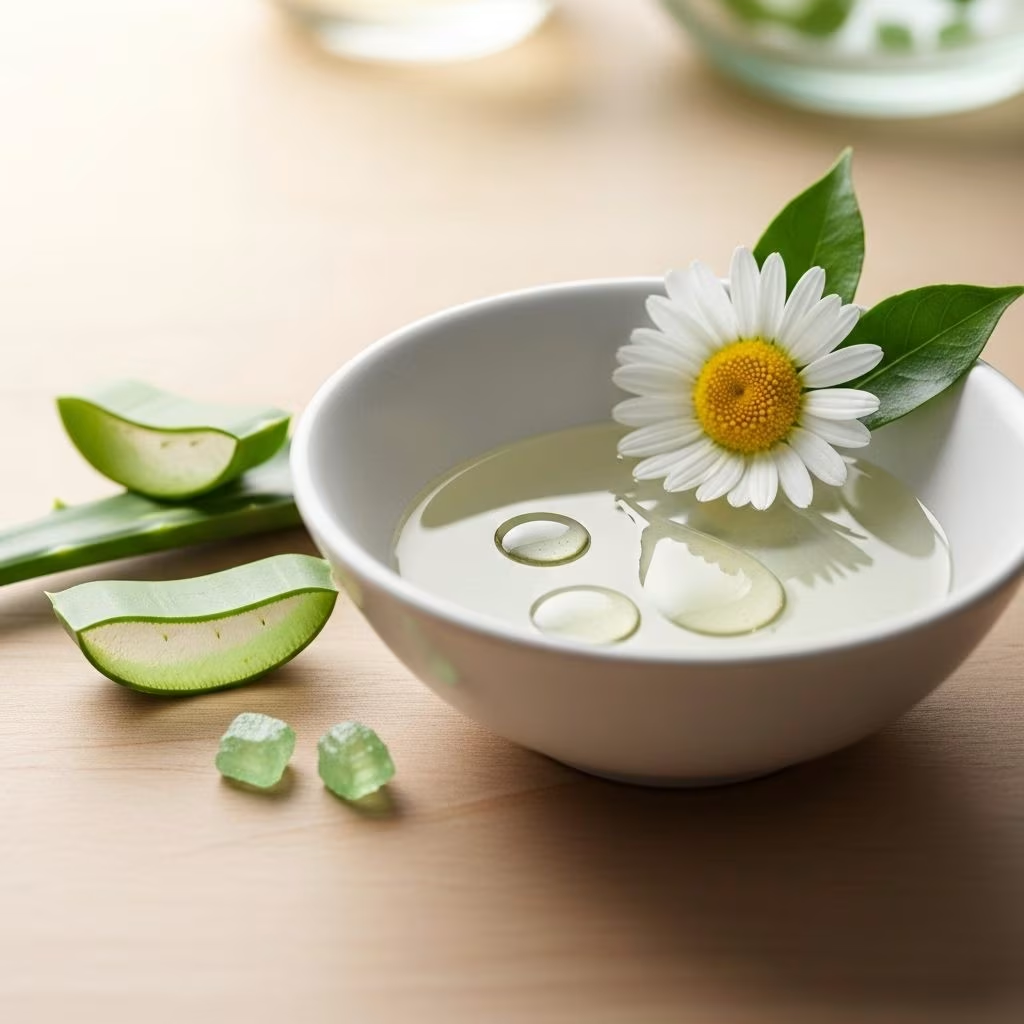
Modern skincare science puts significant emphasis on ingredients that soothe, protect, and heal the skin—especially for those with sensitive or inflamed skin conditions. Among the most celebrated and widely researched anti-inflammatory actives are bisabolol and allantoin. This article delves deep into the scientific background, functional benefits, applications, and synergistic effects of these cornerstone ingredients. Whether you are a skincare enthusiast, formulator, or someone looking to alleviate red, irritated skin, understanding bisabolol and allantoin can transform your approach to skin wellness.
Introduction
Inflammatory skin conditions such as acne, eczema, rosacea, and dermatitis affect millions of people globally. Symptoms like redness, discomfort, itching, and compromised barrier function present a daily challenge for those afflicted. To address these concerns, the skincare industry turns to actives with proven anti-inflammatory and soothing effects. Bisabolol, a key compound from chamomile, and allantoin, a plant-sourced and lab-synthesized multitasker, have rapidly gained prominence due to their demonstrated abilities to suppress inflammation, calm irritation, and accelerate skin healing.
What is Bisabolol?
Bisabolol is a naturally occurring monocyclic sesquiterpene alcohol, most commonly extracted from the essential oil of chamomile (Matricaria recutita) and sometimes from the Candeia tree. Highly regarded for its skin-calming and regenerating potential, it appears in various forms, with the alpha isomer (α-bisabolol) being the most bioactive. Bisabolol is a colorless, viscous oil with a delicate floral aroma and a strong safety record.
- Origin: Primarily derived from chamomile and the Candeia tree.
- Chemical nature: Monocyclic sesquiterpene alcohol.
- Main isomer: Alpha-bisabolol ensures optimal activity in skin formulations.
What is Allantoin?
Allantoin is a naturally occurring compound found in comfrey root, chamomile, and other plant sources, but it’s most often used in its synthetically produced form in modern skincare. Allantoin has been praised for centuries in folk medicine for its healing and soothing properties. Today, it is widely acknowledged as a multifunctional ingredient—renowned not only for its anti-inflammatory effects but also its ability to stimulate cell proliferation and repair skin damage.
- Origin: Found in comfrey, wheat sprouts, chamomile, and synthesized for stability.
- Chemical nature: Ureide derivative (“diureide of glyoxylic acid”).
- Modern use: Popular in products for sensitive, damaged, or dehydrated skin.
How Do Bisabolol and Allantoin Work?
Both bisabolol and allantoin target the core mechanisms behind inflammation and skin barrier dysfunction. Their activity is based on distinct—but sometimes complementary—biological pathways:
Bisabolol
- Inhibits key enzymes and mediators implicated in inflammation, including the downregulation of pro-inflammatory cytokines such as Interleukin-6 (IL-6) and Tumor Necrosis Factor-α (TNF-α).
- Reduces the synthesis of prostaglandin E2 (PGE2), which is involved in erythema (redness) and swelling.
- Scavenges free radicals and reduces oxidative stress, protecting skin cells from environmental damage.
- Promotes skin barrier repair and keratinocyte migration, accelerating wound healing.
Allantoin
- Acts as a keratolytic agent: softens and loosens the outer layer of dead skin, supporting exfoliation and skin renewal.
- Stimulates cell division and epithelization, promoting the regeneration of damaged tissue.
- Reduces inflammatory mediators such as Immunoglobulin E (IgE), IL-4, and IL-5; this decreases allergic and inflammatory responses.
- Improves hydration and skin barrier integrity, alleviating dryness and preventing transepidermal water loss.
Key Benefits for the Skin
Both bisabolol and allantoin deliver a range of clinical and cosmetic benefits for the skin. Their effects are particularly valued in formulas designed for sensitive, reactive, or compromised skin. Below, their main benefits are detailed.
- Anti-inflammatory effects: Reduce redness, swelling, and discomfort associated with inflammatory skin conditions.
- Soothing properties: Help relieve irritation caused by environmental factors, skincare actives, or skin disorders.
- Accelerated healing: Aid in skin repair after injury, cosmetic procedures, sunburn, or acne lesions.
- Enhanced skin barrier recovery: Restore and strengthen the skin’s protective functions.
- Reduction of UV-induced damage: Diminish erythema and support resilience after sun exposure.
- Improved skin appearance: Promote a calmer, more even-toned, and supple complexion.
- Antimicrobial effects (bisabolol): Help defend against pathogenic bacteria and fungi, reducing risk of infection.
Scientific and Clinical Evidence
The benefits and mechanisms of action of bisabolol and allantoin are well-supported by laboratory, clinical, and in-vivo studies:
- A 2014 study demonstrated that bisabolol reduced levels of several pro-inflammatory cytokines, notably IL-6 and TNF-α, leading to a measurable decrease in skin irritation and redness.
- Clinical research on UVB-exposed keratinocytes showed that a combination of allantoin, bisabolol, D-panthenol, and dipotassium glycyrrhizinate (formulation AB5D) robustly downregulated inflammatory mediators such as PGE2, IL-1α, IL-6, and TNF-α. This effect supports the use of both actives in treating redness and inflammation associated with sun exposure.
- Mouse model studies found allantoin reduced IgE, IL-4, and IL-5 levels, leading to clinical improvements in atopic dermatitis lesions.
- Bisabolol’s ability to diminish UV-induced erythema was confirmed in clinical trials, showing a 16.4% reduction in redness 24 hours after application of a 0.1% bisabolol emulsion.
- Both ingredients demonstrate significant antioxidant activity, neutralizing free radicals and preventing downstream inflammation.
Uses in Skin Care Formulations
Due to their safety, mildness, and efficacy, bisabolol and allantoin are employed in a variety of skincare products:
- Moisturizers—to soothe, hydrate, and repair compromised skin.
- Serums and ampoules—for targeted action in sensitive or inflamed areas.
- After-sun and post-procedure care—reduce redness and accelerate healing after sunburn, lasers, or peels.
- Acne treatments—diminish post-inflammatory erythema and calm breakouts.
- Products for rosacea, eczema, psoriasis, and dermatitis—combat chronic inflammation.
- Razor burn creams and intimate care—soothe, reduce irritation and support skin repair.
Synergistic Effects: Bisabolol & Allantoin Together
Research increasingly points to heightened benefits when bisabolol and allantoin are used in combination.
- A blend containing both actives, along with D-panthenol and dipotassium glycyrrhizinate (AB5D), delivered notable reductions in inflammatory cytokines, mitigated oxidative stress, and led to visible decreases in redness and irritation in cell culture.
- Allantoin complements bisabolol by enhancing epithelial regeneration and keratinocyte renewal, leading to faster healing and restoration of damaged or inflamed skin.
- The combination supports not only rapid relief but more sustained improvements in skin resilience and appearance.
Real-World Applications and Suitable Skin Types
Both ingredients are considered well-tolerated, hypoallergenic, and safe for all skin types, including:
- Sensitive and reactive skin: For soothing care and reduction of redness or irritation.
- Dry, rough, or flaky skin: To restore softness and comfort.
- Problematic skin: Acne-prone, rosacea, eczema, or contact dermatitis sufferers benefit from their calming and restorative effects.
- Mature or aging skin: Combat oxidative damage and maintain barrier integrity.
- General post-procedure care: After shaving, waxing, chemical peels, or laser treatment.
Comparison Table: Bisabolol vs. Allantoin
| Characteristic | Bisabolol | Allantoin |
|---|---|---|
| Origin | Chamomile, Candeia tree | Comfrey, wheat sprouts, synthetically produced |
| Main Actions | Anti-inflammatory, antioxidant, antimicrobial, skin healing | Anti-inflammatory, keratolytic, moisturizing, cell proliferation |
| Key Skin Benefits | Calms irritation, reduces redness, heals wounds | Soothes, softens, repairs, accelerates renewal |
| Best For | Sensitive, inflamed, or reactive skin | Dry, damaged, or post-injury skin |
| Bioactivity | Reduces cytokine and PGE2 production | Keratolytic, stimulates epithelization, reduces IgE |
| Typical Safety | Generally regarded as safe, non-irritating | Hypoallergenic, non-sensitizing |
Frequently Asked Questions (FAQs)
Q: Are bisabolol and allantoin safe for all skin types?
Yes, both ingredients are considered safe for most skin types, including sensitive skin. They are generally non-irritating and hypoallergenic, but as with any skincare active, patch testing is advisable for extremely sensitive individuals.
Q: Can bisabolol or allantoin treat chronic inflammatory skin conditions?
While both can significantly improve symptoms such as redness, irritation, and discomfort, they are best used as supportive treatments alongside medical therapies for chronic issues like eczema, psoriasis, or rosacea. They help restore skin comfort and function but are not cures for underlying medical conditions.
Q: How quickly do these ingredients work to reduce redness or irritation?
In clinical trials, reductions in redness have been observed as early as 24 hours post-application for bisabolol. Allantoin’s effects on comfort and barrier repair typically become noticeable within a few days of regular use.
Q: Can these actives be used together with other ingredients?
Yes, they are compatible with a wide variety of skincare actives, including humectants, emollients, antioxidants, and even mild exfoliants. Their stabilizing and soothing properties make them ideal for complex and multi-ingredient formulas.
Q: What products typically contain bisabolol and allantoin?
You’ll find them in moisturizers, serums, creams, after-sun care, acne relief products, baby care, post-procedure lotions, and even makeup for sensitive skin types.
Summary and Key Takeaways
Bisabolol and allantoin represent the gold standard in soothing skincare actives—safe, effective, and scientifically validated. Both work via different but complementary mechanisms to reduce inflammation, hasten healing, strengthen the skin barrier, and restore comfort. Individually, each delivers targeted benefits; combined, their effects are amplified, making them a powerful duo for any product targeting sensitive, reactive, or compromised skin. With a robust body of scientific support, these ingredients will continue to play a vital role in advanced skin care science aimed at calming and protecting the skin.
References
- https://www.korelu.de/en/blogs/the-skincare-journal/bisabolol-effects-in-skincare
- https://doctorecksteinusa.com/blogs/verena-eckstein-blog/how-bisabolol-works-to-reduce-signs-of-irritation-and-support-skin-repair
- https://pubmed.ncbi.nlm.nih.gov/38433250/
- https://junoandme.de/en/pages/bisabolol
- https://onlinelibrary.wiley.com/doi/full/10.1111/ics.12951
- https://pmc.ncbi.nlm.nih.gov/articles/PMC11685320/
- https://lotioncrafter.com/products/bisabolol-natural
- https://dauphineorganics.com/shop/bisabolol-natural/
- https://www.dermatologytimes.com/view/facial-redness-reduction-cosmetics
- https://cityskinclinic.com/bisabolol-benefits-skin/


