


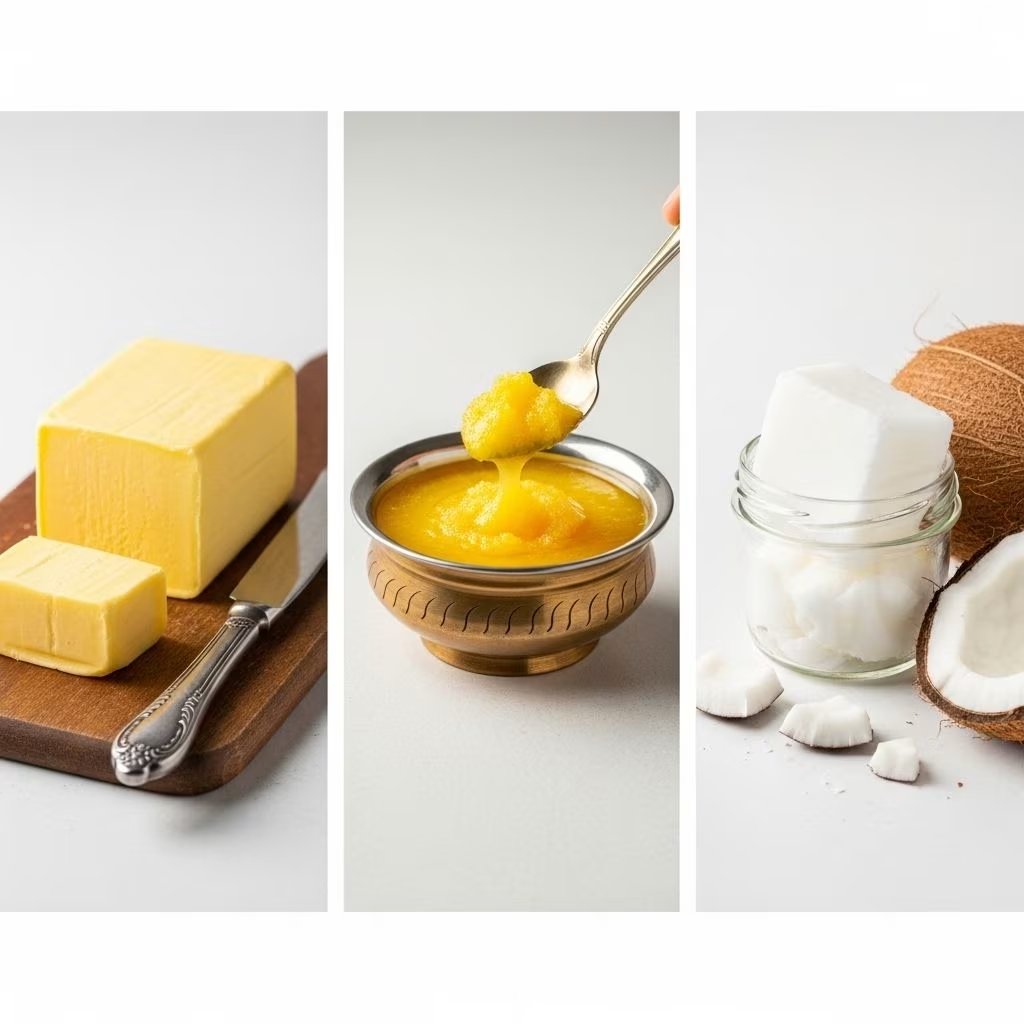
Butter vs. Ghee vs. Coconut Oil: Impacts on Heart Health
With rising interest in the role of dietary fats in cardiovascular well-being, butter, ghee, and coconut oil are among the most debated options in both traditional and modern diets. Understanding their chemical profiles, evidence from clinical trials, and recommendations by heart health experts is essential for making well-informed dietary choices.
Introduction to Butter, Ghee, and Coconut Oil
Butter has long been a staple in Western diets, made by churning cream and containing both saturated and monounsaturated fats. Ghee, clarified butter popular in South Asian cuisines, contains fewer milk solids and lactose, resulting in a higher smoke point and unique nutritional profile. Coconut oil, extracted from coconut flesh, is used extensively in tropical regions for both cooking and medicinal purposes. All three offer distinct flavors, culinary uses, and health implications, especially for heart health.
Nutritional Profiles and Types of Fats
Butter
- About 66% saturated fat (notably palmitic and stearic acids)
- Contains vitamin A, vitamin D, and small amounts of calcium
- About 30% monounsaturated fat, low in polyunsaturated fat
Ghee
- Primarily saturated fat, similar to butter but composition varies by milk source and production
- High in butyric acid and short-chain fatty acids
- Contains vitamins A, E, and K
- Lactose and casein removed—suitable for some people with dairy intolerance
Coconut Oil
- About 90% saturated fat, predominantly lauric acid (approx. 48%)
- Very high in medium-chain triglycerides (MCTs)
- Some vitamin E; no cholesterol, no lactose
Scientific Evidence: Impacts on Heart Health
Summary of Clinical Studies and Reviews
- Butter consumption consistently raises LDL cholesterol (“bad” cholesterol) more significantly than coconut oil or olive oil in randomized trials.
- Coconut Oil raises HDL cholesterol (“good” cholesterol) significantly compared to both butter and olive oil, but does not raise LDL levels as much as butter.
- Despite coconut oil’s high saturated fat content, its unique composition (mainly lauric acid, a medium-chain fatty acid) differs from the saturated fats in butter, which are longer chain (palmitic and stearic acids).
- Ghee is considered more nutrient-dense than coconut oil, offering beneficial short- and medium-chain fatty acids, but like butter, it is high in saturated fats.
- Most studies have not found significant differences among these fats in terms of effects on weight, body mass index, glucose, or blood pressure over short-term interventions.
Overall, while saturated fats have traditionally been associated with elevated cardiovascular risk, recent research highlights that not all saturated fats have identical effects on blood lipids and heart health. The specific fatty acid profile is crucial.
Effects on Cholesterol and Blood Lipids
| Fat Type | LDL Cholesterol Impact | HDL Cholesterol Impact | Cholesterol/HDL Ratio |
|---|---|---|---|
| Butter | Raises LDL more than coconut oil and olive oil | Raises HDL, but less than coconut oil | Raises cholesterol/HDL ratio significantly |
| Ghee | Similar LDL impact to butter; variable depending on preparation | Raises HDL; contains butyric acid which may benefit HDL metabolism | Potentially less impact on ratio than butter but data limited |
| Coconut Oil | Raises LDL less than butter, similar to olive oil | Raises HDL significantly more than butter or olive oil | No significant difference compared to olive oil in cholesterol/HDL ratio |
Higher HDL often indicates a protective effect for heart disease, but an increase in LDL is considered a risk factor. Coconut oil is unique in that it can markedly raise HDL, but should still be used cautiously due to its saturated fat content.
Beneficial Fatty Acids and Nutrients
Butter
- Contains conjugated linoleic acid (cla), a fatty acid with some anti-inflammatory benefits
- Rich in vitamin A and D
Ghee
- High in butyric acid, beneficial for gut lining repair
- Contains vitamins A, E, and K
- Short and medium-chain fatty acids may be easier to digest
Coconut Oil
- Rich in medium-chain triglycerides (MCTs) for quick energy and possibly fat burning
- Lauric acid has antimicrobial and immune-boosting effects
Traditional Usage and Cultural Perspectives
- Butter has been used in European, North American, and Middle Eastern cuisines, primarily for baking and as a spread.
- Ghee is central to Indian, Pakistani, and South Asian culinary and medicinal traditions, often considered beneficial in Ayurveda for digestion and neural health.
- Coconut Oil is widely used in Southeast Asian, Pacific Island, and tropical cuisines and traditional remedies, for its antimicrobial and digestive properties.
Dietary Recommendations & Moderation
- Leading health organizations advise limiting saturated fat intake (including butter and ghee) and prioritizing unsaturated fats for heart health.
- Recent research suggests that small amounts of coconut oil or ghee in a diverse, plant-based diet may not pose significant risk and can offer unique health benefits.
- The quality of these fats matters; minimally processed, grass-fed butter or ghee offers higher nutrient content than processed forms.
- Coconut oil, because of its high MCTs, may be particularly useful in ketogenic or low-carb diets, but should not replace unsaturated oils like olive oil for general heart health.
- Regardless of the fat type, portion control and dietary balance are key to mitigating cardiovascular risk.
Comparison Table: Butter vs. Ghee vs. Coconut Oil
| Feature | Butter | Ghee | Coconut Oil |
|---|---|---|---|
| Saturated Fat (%) | ~66 | ~60-65 | ~90 |
| Dominant Fatty Acid | Palmitic/Stearic | Butyric/Short-chain | Lauric (MCT) |
| HDL Impact | Moderately increases | Increases | Significantly increases |
| LDL Impact | Significantly increases | Similar to butter | Less than butter |
| Lactose Content | Present | Absent | Absent |
| Best Culinary Use | Baking, spreads | High-heat cooking, Indian recipes | Frying, tropical cuisine, dressings |
| Additional Health Notes | Contains Vitamin A, D | Gut repair, rich in A, E, K | Antimicrobial, boosts HDL |
Frequently Asked Questions (FAQs)
- Q: Does coconut oil lower cholesterol?
Coconut oil can increase HDL (good) cholesterol and, in many studies, raises LDL (bad) cholesterol less than butter but more than unsaturated oils. It should not be relied upon to lower total cholesterol, but may improve the HDL:LDL ratio.
- Q: Is ghee or coconut oil better for heart health?
Both can offer benefits when used in moderation. Ghee is nutrient-rich, especially in fat-soluble vitamins, while coconut oil influentially raises HDL. Neither should be consumed excessively due to their saturated fat content; quality and individualized tolerance are important.
- Q: Is butter more harmful than coconut oil for the heart?
Randomized trials show butter raises LDL cholesterol more than coconut oil, which is associated with increased heart risk. Coconut oil increases HDL substantially, but should still be consumed moderately.
- Q: Can people with lactose intolerance eat ghee?
Ghee is free from lactose and casein, making it generally safe for those with lactose intolerance or sensitivities.
- Q: How should these fats fit into a healthy diet?
Include a range of fats—ghee, coconut oil, and butter—in small amounts alongside unsaturated fats like olive oil and omega-3-rich oils. Prioritize minimally processed sources and practice portion control.
- Q: Does coconut oil have other health benefits?
Lauric acid in coconut oil has antimicrobial and immune-boosting properties, and MCTs may support energy and fat metabolism, especially in low-carb diets.
Key Takeaways
- Butter, ghee, and coconut oil offer distinct nutritional profiles, benefits, and risks for heart health.
- Butter raises LDL cholesterol more than coconut oil or olive oil; coconut oil boosts HDL but may still increase LDL versus unsaturated fats.
- Ghee is nutrient-dense and suitable for some dairy-intolerant individuals.
- Diversity, moderation, and quality are crucial for minimizing heart risk and maximizing dietary benefits.
References
- https://pmc.ncbi.nlm.nih.gov/articles/PMC5855206/
- https://www.republicworld.com/health/coconut-oil-vs-ghee-what-is-better-for-your-health-and-why
- https://fullmoonghee.com/comparing-coconut-oil-and-ghee-which-one-is-better-for-you/
- https://twobrothersfood.com/blogs/all-blogs/clarified-butter-vs-healthy-fats
- https://timesofindia.indiatimes.com/life-style/health-fitness/health-news/coconut-oil-vs-ghee-a-comparison-of-nutritional-composition-and-health-effects/articleshow/107555699.cms
- https://www.healthline.com/nutrition/ghee
- https://www.heartandstroke.ca/healthy-living/healthy-eating/fats-and-oils
- https://steelsupplements.com/blogs/steel-blog/ghee-vs-coconut-oil-vs-mct-oil


