


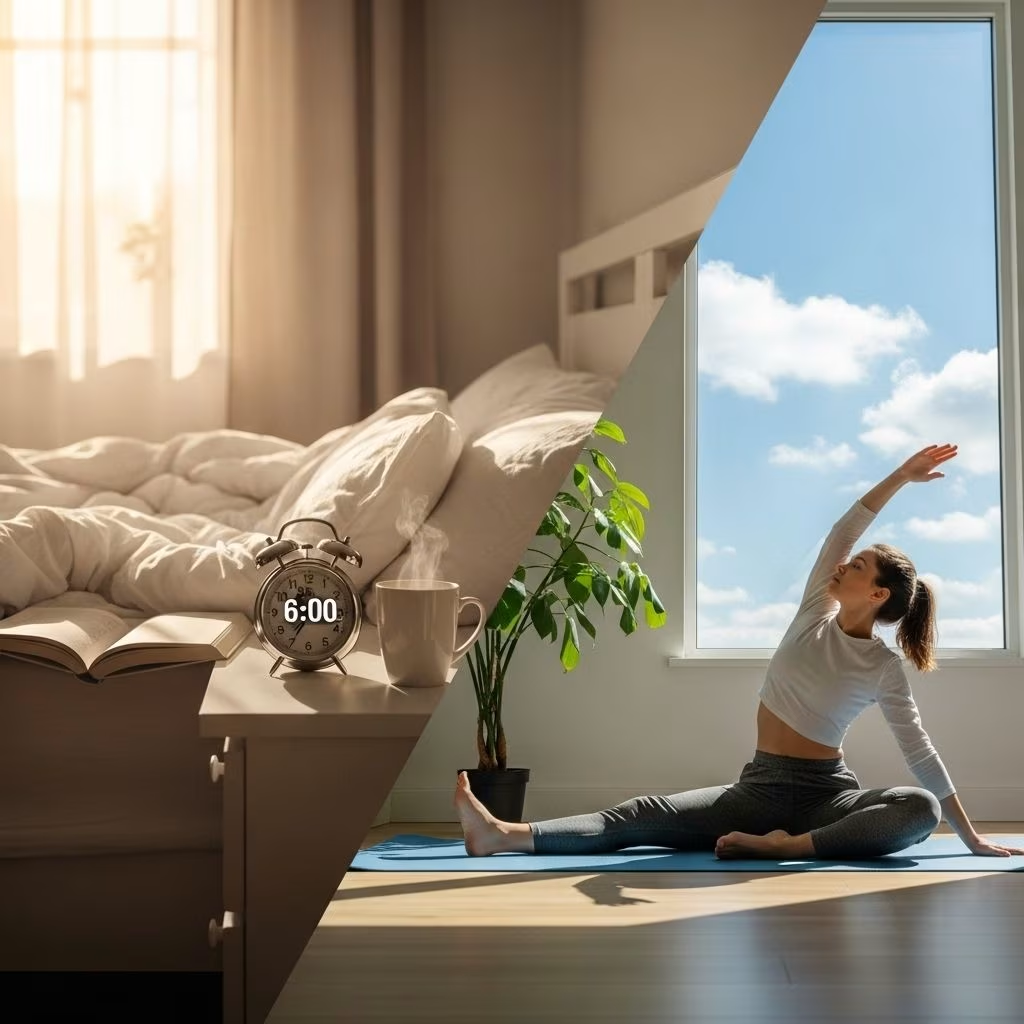
Morning Routine & Daylight Savings Time (DST): How Time Changes Impact Your Health, Habits, and Productivity
Daylight saving time (DST) is a biannual event designed to maximize daylight hours, but studies reveal that these clock changes cause widespread disruptions to sleep patterns, health, and morning routines. While the promise of extra evening daylight appeals to many, the sudden loss or gain of an hour can create ripple effects, from sleep debt and grogginess to heightened risks of heart attack and accident. This article explores the intersection of DST and morning routines, synthesizing current research and offering actionable strategies to thrive through time changes.
- Table of Contents
- Introduction
- The Science: DST and Your Circadian Rhythm
- Health Risks Associated with Daylight Saving Time
- How DST Disrupts Morning Routines
- Proven Strategies to Adapt Your Morning Routine for DST
- Long-term Solutions: Policy Alternatives and Public Health
- Frequently Asked Questions (FAQs)
- Conclusion
Introduction
Daylight saving time, observed in more than 70 countries, shifts clocks forward by one hour in spring and back in autumn. The practice aims to conserve energy and align active hours with extended evening daylight. However, scientific investigations overwhelmingly show that DST’s effect on human health and daily routines is more disruptive than beneficial. Most notably, the “spring forward” transition forces millions to lose an hour of sleep, resulting in widespread fatigue, reduced alertness, and increased risk of medical adverse events in the days that follow . How does DST specifically impact morning routines, and what can you do to cope? This guide explores the answers in depth.
The Science: DST and Your Circadian Rhythm
The foundation of healthy sleep and alertness is the circadian rhythm, a natural 24-hour cycle regulated in large part by exposure to light and darkness. The human brain contains a master clock, the suprachiasmatic nucleus, which synchronizes body functions like sleep-wake cycles, hormone release, and metabolism to predictable environmental cues—primarily sunlight .
- Morning light is essential for resetting the circadian rhythm and triggering wakefulness.
- Evening darkness signals the release of melatonin, a hormone that induces sleepiness .
- Shifted daylight during DST delays melatonin production and can create “circadian misalignment,” making morning wake-ups more difficult and evening sleep less restorative .
Circadian disruption during the DST transition can accumulate as sleep debt, defined as the difference between the sleep you need and what you actually get . Over time, chronic sleep debt impairs cognitive function, immunity, and metabolic health, placing additional strain on heart health and mood regulation.
Table: DST and Sleep Impact
| Aspect | Effect During DST | Scientific Evidence |
|---|---|---|
| Sleep Duration | Average loss of 40 minutes after the spring transition | |
| Alertness in the Morning | Reduced, with higher grogginess and slower reaction times | |
| Melatonin Onset | Delayed due to increased evening light | |
| Sleep Debt | Builds up over days to weeks, increasing risk of chronic fatigue |
Health Risks Associated with Daylight Saving Time
The time shift during DST is not just an inconvenience—it can be a genuine health hazard. Medical research documents increases in various adverse health outcomes immediately following DST transitions:
- Heart Attacks: Incidence of heart attacks rises 24% on the Monday after springing forward, as the combination of sleep deprivation and abrupt circadian change exacerbates cardiovascular risk factors, especially in those already at risk .
- Strokes: Rates of ischemic stroke increase by up to 8% in the 2 days after DST transitions .
- Traffic Accidents: Fatal car crashes spike in the first three days after DST begins, primarily due to reduced alertness and slower reaction times in the morning .
- Weight Gain & Slowed Metabolism: DST is associated with slowed metabolism and an increased risk of obesity due to sleep disruption and hormone imbalance .
- Mood Disorders: People are more vulnerable to depression, anxiety, and even suicidal ideation around biannual clock changes .
Other negative effects include missed medical appointments, increased emergency room visits, and general upticks in fatigue, stress, and cognitive impairment . Cumulatively, these risks illustrate the significant public health concern DST presents, particularly for vulnerable populations such as shift workers, the elderly, and people with pre-existing health conditions.
How DST Disrupts Morning Routines
For many, the onset of DST transforms their morning routine into a struggle. The sudden shift in time causes:
- Darker mornings, making wake-ups harder due to decreased natural light .
- Difficulty feeling alert, as sleep debt impairs mental clarity and motivation .
- More reliance on stimulants, such as coffee, which can create cyclical dependency on caffeine for alertness.
The impact is particularly pronounced in the first week after “springing forward.” People may experience:
- Grogginess and irritability
- Sluggishness getting started with daily tasks
- Poor memory and reduced productivity at work or school
- Increased risk of errors in commuting, driving, or using equipment
Significantly, some individuals never fully acclimate to clock changes, suffering from ongoing circadian misalignment after the transition . For parents, children, and night-shift workers, the DST impact may stretch from mild inconvenience to major disruption, depending on individual sleep needs and schedule flexibility.
Proven Strategies to Adapt Your Morning Routine for DST
While the challenges of DST are substantial, research suggests several practical methods to buffer its impact on your morning routine. Both short-term adjustment and long-term sleep health can be supported using the following approaches:
Preparation: Anticipate the Time Change
- Gradually shift your bedtime earlier by 10–15 minutes per night for 2–3 days before DST begins, minimizing the “sleep subtraction” on Sunday .
- Avoid intense physical activity or stimulating screens late in the evening during the days preceding DST.
Morning Light Exposure
- Get bright sunlight as early in the day as possible. Morning light exposure re-aligns your circadian clock and boosts wakefulness and mood .
- If natural light is unavailable, consider light therapy lamps designed to mimic sunlight. These are especially helpful in regions with overcast weather or darker mornings.
Optimize Sleep Hygiene
- Go to bed and wake up at the same time—even during the DST transition—to stabilize your circadian rhythm.
- Avoid caffeine consumption after 2 p.m., and limit alcohol or heavy meals close to bedtime, which can disrupt sleep quality .
- Create a dark, cool, and quiet sleeping environment, reducing artificial light exposure before bed.
Streamline Your Morning Routine
- Prepare for the day the night before: set out clothes, plan breakfast, and organize your schedule to minimize morning stress.
- Begin with gentle movement or stretching to counteract sluggishness and stimulate blood flow.
- Refrain from hitting the snooze button, as fragmented sleep compounds grogginess.
Practice Self-Compassion and Flexibility
- Accept that you may feel less energetic for several days; allow yourself time to adjust and avoid overscheduling high-pressure tasks during the transition.
Long-term Solutions: Policy Alternatives and Public Health
Growing evidence from leading health organizations and academic researchers suggests that biannual clock changes are unnecessary and even harmful. According to Stanford Medicine, maintaining permanent standard time (or, to a lesser degree, permanent DST) would prevent hundreds of thousands of strokes annually and dramatically reduce obesity rates nationwide .
Leading experts advocate for the abolition of seasonal clock changes, a move supported by the American Academy of Sleep Medicine, the American Heart Association, and numerous sleep scientists . Permanent standard time is preferable for human health since it most closely aligns artificial time with the natural light-darkness cycle.
- Permanent Standard Time: Maximizes morning light, supporting healthy circadian rhythms and more stable sleep-wake times .
- Permanent DST: Reduces evening accidents but can perpetuate misalignment for morning routines and health.
- Biannual Shifting: Has the worst health outcomes, fostering year-round disruption and sleep loss.
Until policy changes are enacted, individuals can support their health by advocating for better sleep habits and educating communities and lawmakers on the science behind time change impacts.
Frequently Asked Questions (FAQs)
Q: Why does DST make waking up so difficult?
A: DST shifts the clock ahead, meaning you lose sleep and get less exposure to morning light, which delays your body’s natural wakefulness signals and makes getting up harder .
Q: How long does it take to adjust to the time change?
A: Most people adjust within several days to a week, but some never fully acclimate, especially if they have rigid work schedules or sleep disorders .
Q: Are there lasting health effects beyond sleepiness?
A: Yes, research documents increased risk for heart attacks, strokes, accidents, weight gain, and depression around DST changes .
Q: What can I do if DST consistently disrupts my sleep?
A: Practice gradual bedtime adjustments, maximize morning light, maintain consistent routines, and seek professional advice if symptoms persist .
Q: Is changing clocks twice a year necessary?
A: Scientific consensus increasingly supports eliminating biannual time changes in favor of permanent standard time for optimal health .
Conclusion
Daylight saving time extends daylight hours, but its toll on sleep health and morning routines is both immediate and long-lasting. By understanding the science of circadian rhythms, assessing personal vulnerability, and applying evidence-based strategies, individuals can mitigate the negative effects and optimize their productivity and well-being. As public debate over time policy continues, prioritizing healthful routines and informed adaptation remains vital for thriving through each transition.
References
- https://www.ap.org/news-highlights/spotlights/2025/how-springing-forward-to-daylight-saving-time-could-affect-your-health-and-how-to-prepare/
- https://www.sleepfoundation.org/circadian-rhythm/daylight-saving-time
- https://med.stanford.edu/news/all-news/2025/09/daylight-saving-time.html
- https://newsroom.heart.org/news/heres-your-wake-up-call-daylight-saving-time-may-impact-your-heart-health
- https://publichealth.jhu.edu/2023/7-things-to-know-about-daylight-saving-time
- https://www.ucsf.edu/news/2024/03/427246/how-daylight-saving-impacts-your-sleep-and-what-do-about-it
- https://www.nm.org/healthbeat/healthy-tips/daylight-savings-time-your-health
- https://pmc.ncbi.nlm.nih.gov/articles/PMC7954020/
- https://utswmed.org/medblog/daylight-saving-time-sleep-health/


