


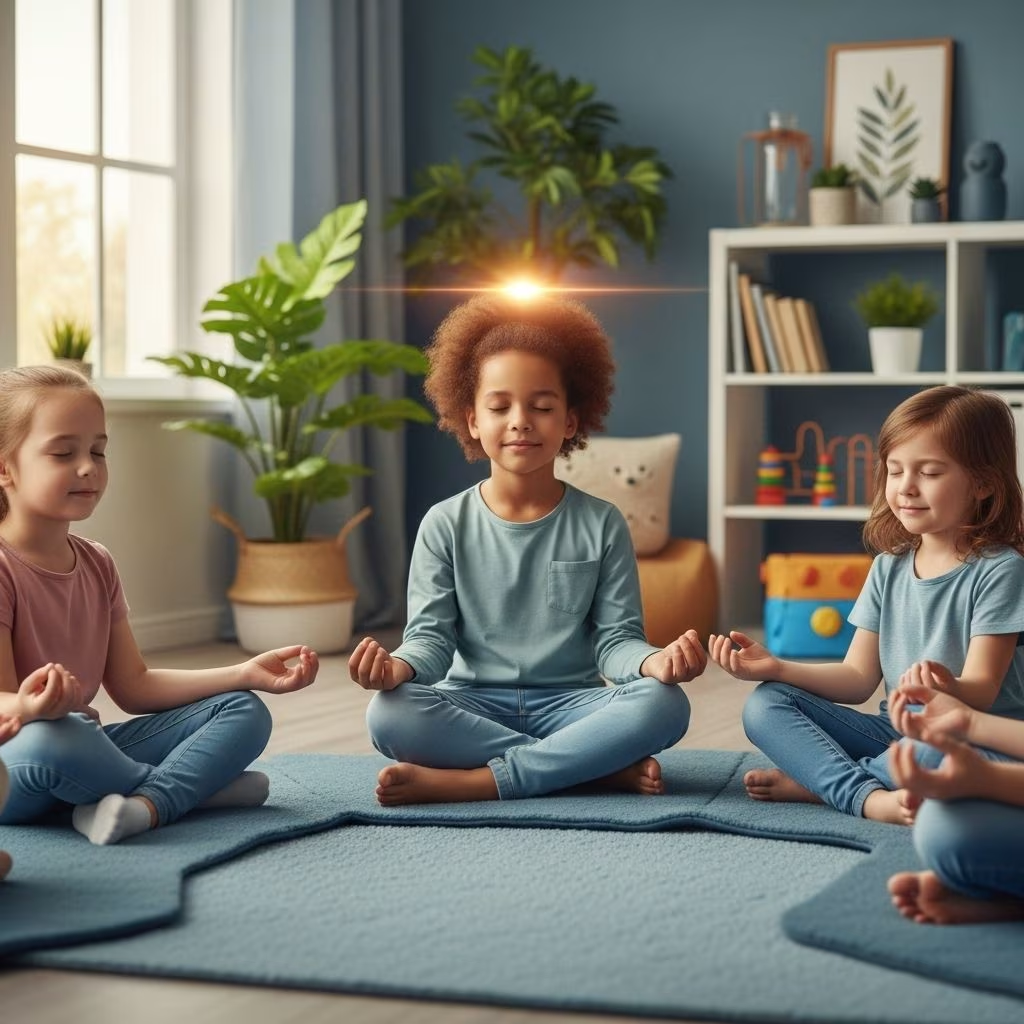
When a child becomes upset, overwhelmed, or anxious, the simple instruction to “take a deep breath” has been passed down through generations of parents and teachers. But this age-old wisdom is now backed by groundbreaking scientific research showing that just a few slow, deep breaths can significantly reduce physiological arousal in young children. Deep breathing exercises offer children an accessible, effective tool for self-regulation that they can use anywhere, anytime they need to find calm in the midst of emotional storms.
Research from Stanford University has demonstrated for the first time that taking just four slow, deep breaths can measurably reduce stress responses in young children, even in naturalistic settings like playgrounds and day camps rather than controlled laboratory environments. This finding validates what caregivers have intuitively known while providing a scientific foundation for teaching children these essential coping skills. The beauty of deep breathing lies in its simplicity—no special equipment, no quiet room, no lengthy training required. Yet the impact on a child’s ability to manage stress, anxiety, and overwhelming emotions can be transformative.
The Science Behind Deep Breathing for Children
Understanding why deep breathing works helps parents and educators appreciate its power as a calming tool. When children experience stress, fear, or anger, their sympathetic nervous system activates, triggering the fight-or-flight response. Heart rate increases, breathing becomes shallow and rapid, muscles tense, and stress hormones flood the body. This physiological state makes it nearly impossible for children to think clearly, make good decisions, or regulate their emotions effectively.
Deep breathing exercises activate the parasympathetic nervous system, which functions as the body’s natural calming mechanism. This system slows the heart rate, lowers blood pressure, and signals to the brain that it is safe to relax. When children engage in slow, deliberate breathing, they increase oxygen supply to the brain while stimulating this relaxation response. The result is a measurable decrease in physiological arousal—the racing heart slows, tense muscles relax, and the emotional intensity begins to diminish.
What makes deep breathing particularly valuable for children is its dual action on both body and mind. The physical act of breathing deeply creates immediate physiological changes, while the mental focus required to control breathing redirects attention away from distressing thoughts or situations. This combination makes breathing exercises exceptionally effective for helping children navigate everything from everyday frustrations to more significant stressors like medical procedures, academic pressures, or social conflicts.
Understanding Belly Breathing: The Foundation Technique
The most effective breathing for calming purposes is belly breathing, also called diaphragmatic breathing. This technique differs fundamentally from the shallow chest breathing that many children naturally do, especially when stressed. In belly breathing, the diaphragm—a dome-shaped muscle beneath the lungs—contracts downward during inhalation, allowing the lungs to fully expand and the belly to rise. During exhalation, the diaphragm relaxes upward, the lungs deflate, and the belly naturally falls.
Teaching children to recognize the difference between chest and belly breathing is crucial. Place a hand on the chest and another on the belly. During shallow chest breathing, the chest moves while the belly remains relatively still. During proper belly breathing, the belly expands noticeably with each inhale and contracts with each exhale, while the chest remains relatively stable. This distinction matters because belly breathing engages the full lung capacity and maximizes the calming effects.
To help children learn belly breathing, have them lie down on a flat surface and place a stuffed animal on their belly. Instruct them to breathe in slowly through the nose, watching the stuffed animal rise as their belly expands. Then have them breathe out slowly, watching the animal fall as their belly contracts. This visual and tactile feedback helps children understand and master the technique. Once they grasp the concept lying down, they can practice sitting or standing, which makes the skill portable and usable in any situation.
Creative Breathing Exercises That Kids Actually Enjoy
While understanding the mechanics of deep breathing is important, children respond best to exercises that engage their imagination and feel more like play than work. The following techniques transform breathing practice into enjoyable activities that children will actually want to use when they need to calm down.
The Flower Breath
This exercise invites children to imagine smelling their favorite flower. Instruct them to breathe in slowly through the nose as if inhaling the sweet fragrance of a rose or daisy. Then they exhale gently through the mouth, as if blowing flower petals into the air. The imagery makes the exercise appealing while ensuring slow, controlled breathing. This technique works particularly well for younger children who respond to simple, pleasant visualizations.
The Bunny Breath
Children take three quick sniffs through the nose, like a bunny smelling for food, followed by one long, slow exhale through the nose. As they become comfortable with the pattern, encourage them to make each exhale progressively slower and longer. The playful animal imagery and the distinctive breathing pattern make this exercise memorable and fun for young children.
The Snake Breath
In this exercise, children inhale slowly through the nose, then exhale through the mouth while making a long, slow hissing sound like a snake. The audible component helps children naturally extend their exhale, which enhances the calming effect. Many children find making the snake sound enjoyable, which increases their willingness to practice this technique regularly.
Blow Out the Candle
Ask children to imagine a birthday candle in front of them. They take a deep breath in through the nose, then exhale slowly through the mouth as if blowing out the candle. For variety, suggest blowing out multiple candles one at a time, which requires several controlled exhales. This familiar imagery from birthday celebrations makes the exercise relatable and easy to remember.
Smell the Rose, Blow Out the Candle
This combination technique merges the flower breath with the candle breath. Children hold up their pointer finger to their nose and breathe in slowly, imagining they are smelling a rose. Then they drop their finger to their mouth level and breathe out slowly, imagining they are blowing out a candle. The physical hand movement adds a kinesthetic element that reinforces the breathing pattern and gives children something concrete to focus on during the exercise.
Props and Tools to Enhance Breathing Practice
Physical objects can make breathing exercises more tangible and engaging for children, particularly younger ones who benefit from concrete, visual feedback. These props transform abstract breathing concepts into observable, interactive experiences.
Bubbles for Breath Control
Blowing bubbles naturally encourages the slow, gentle exhale that characterizes effective deep breathing. Children quickly learn that blowing too hard pops the bubble film before it forms, while blowing too softly produces no bubbles. This immediate feedback teaches them to find the right pace—a slow, steady stream of air that creates beautiful floating bubbles. The playful nature of bubble-blowing makes it ideal for introducing breathing exercises to young children who might resist more formal instruction.
Pinwheels for Variable Speed
Pinwheels provide visual feedback about breathing speed and force. Children can experiment with blowing fast to make the pinwheel spin rapidly or blowing slowly for gentle rotation. This experimentation helps them discover which breathing pace feels most calming. The colorful, spinning pinwheel captivates attention while teaching breath control, making it an excellent tool for both practice and actual calming situations.
Feathers for Gentle Breathing
A feather responds to the subtlest breath, making it perfect for teaching controlled, gentle breathing. Children can practice keeping a feather aloft with steady breaths or watching it drift slowly downward as they exhale. The delicate nature of feathers encourages the soft, sustained breathing that produces optimal calming effects.
Stuffed Animals for Belly Awareness
As mentioned earlier, placing a stuffed animal on the belly creates unmistakable visual feedback about proper belly breathing. Children become invested in making their stuffed friend rise and fall, which naturally guides them toward deeper, fuller breaths. Weighted stuffed animals add additional sensory input that some children find particularly grounding and calming.
Age-Appropriate Breathing Techniques
Different breathing exercises suit different developmental stages. Matching techniques to a child’s age and cognitive abilities increases success and makes practice more enjoyable.
For Young Children (Ages 3-5)
Young children benefit from simple, imagery-rich exercises that feel like games. The Flower Breath, Bunny Breath, Snake Breath, and Blow Out the Candle techniques all work well for this age group. Keep instructions minimal and focus on the fun, playful aspects. Do not worry excessively about perfect technique—even shallow breathing with focused attention provides some calming benefit. The goal at this age is building familiarity and positive associations with breathing exercises. Props like bubbles and pinwheels particularly appeal to younger children and maintain their interest during practice.
For School-Age Children (Ages 6-11)
Older children can handle more complex techniques and understand the reasoning behind breathing exercises. Introduce belly breathing with clear explanations about how it calms the body. The Take-Five Breathing exercise works wonderfully for this age group. Children hold one hand out with fingers spread, then use the index finger of their other hand to trace up and down each finger. They breathe in while tracing up to the fingertip and breathe out while tracing back down to the base. This technique combines breath awareness with a simple physical action that discretely signals breathing practice—useful when a child needs to calm down in public settings like classrooms.
For Teenagers (Ages 12+)
Teenagers can master sophisticated breathing patterns and appreciate the science behind the techniques. Introduce the 4-7-8 breathing method: inhale through the nose for four seconds, hold the breath for seven seconds, then exhale through the mouth for eight seconds. This extended exhale particularly activates the parasympathetic nervous system. Teens can also practice the Five Senses exercise, pausing throughout the day to breathe deeply while noticing what they see, hear, touch, smell, and taste. This mindfulness component adds depth to breathing practice and helps teens develop present-moment awareness. The modified Take-Five technique—gently squeezing each fingernail as a breathing reminder—allows teens to use breathing exercises discreetly before presentations, tests, or athletic performances.
Practical Applications for Common Childhood Challenges
Deep breathing exercises prove valuable across numerous everyday situations that children find stressful or overwhelming. Understanding when and how to deploy these techniques maximizes their effectiveness.
Before Medical Procedures
Vaccine appointments, blood draws, and other medical procedures trigger significant anxiety in many children. Teaching breathing exercises beforehand and practicing them during the procedure can substantially reduce distress. The combination of distraction and physiological calming helps children tolerate necessary medical care with less trauma. Healthcare providers increasingly recognize this benefit, with some pediatric settings incorporating breathing exercises and props like bubbles and pinwheels into standard procedure protocols.
During Emotional Outbursts
When children experience intense anger, frustration, or sadness, breathing exercises can help them regain emotional equilibrium. The phrase “breathe in the good, breathe out the bad” or “blow the pain away” adds meaningful imagery that supports emotional processing. Breathing creates a pause between feeling and reaction, giving children space to choose more constructive responses than immediate acting out. However, children need practice during calm times to effectively use breathing during emotional storms—trying to teach a new skill mid-meltdown rarely succeeds.
At Bedtime for Better Sleep
Incorporating deep breathing into bedtime routines promotes calmness and prepares the body for sleep. The physiological relaxation induced by breathing exercises helps children transition from the activity of the day to the stillness of night. Consistent practice as part of the bedtime ritual makes breathing feel natural and automatic. Children may even begin using breathing spontaneously when they have trouble falling asleep.
During School Stress
Tests, presentations, social conflicts, and academic pressures create significant stress for school-age children. Brief breathing exercises before challenging situations can improve performance by reducing anxiety and increasing focus. A few deep breaths before answering a difficult question or taking a test helps clear the mind and access knowledge more effectively. Teachers who build breathing breaks into the school day report improved classroom atmosphere and student focus.
For Frequent Physical Complaints
Many children experience stress-related physical symptoms like headaches and stomachaches. Deep breathing addresses these complaints by reducing overall stress levels and teaching children they have some control over their physical comfort. While breathing exercises should never replace medical evaluation for persistent symptoms, they provide a valuable self-help strategy that children can use independently.
Teaching Children Deep Breathing: Effective Strategies
Simply telling children to take a deep breath often falls short. Effective teaching requires scaffolding—breaking the skill into manageable steps and providing support until children can practice independently.
Model the Behavior
Children learn powerfully through observation. When you encounter stress or frustration, verbalize your use of breathing exercises: “I am feeling frustrated right now, so I am going to take some deep breaths to calm down.” Then demonstrate the breathing while your child watches. This modeling shows children that everyone needs calming strategies and that using them is a sign of strength, not weakness.
Practice During Calm Times
The middle of an emotional crisis is the worst time to introduce a new coping skill. Practice breathing exercises during neutral, relaxed moments—perhaps as part of bedtime routine, during a quiet afternoon, or as a brief morning activity. Regular practice during calm times builds familiarity and competence, making the techniques accessible when stress actually hits. Aim for daily practice, even if just for a minute or two.
Make It Fun and Playful
Frame breathing exercises as games rather than work. Use silly voices, funny imagery, and playful props. Challenge children to see who can make their stuffed animal rise the highest or who can blow the biggest bubble. The more enjoyable practice feels, the more willingly children will engage. Avoid turning breathing exercises into another demand or expectation—this defeats their purpose as voluntary, self-directed coping tools.
Let Children Choose Their Favorites
Introduce multiple breathing techniques and allow children to select the ones that resonate most with them. Some children love animal-themed breaths, others prefer more straightforward approaches, and some respond best to prop-based exercises. Honoring individual preferences increases buy-in and makes children feel ownership over their calming strategies.
Use Visual Supports
For visual learners, consider using videos, posters, or cards that illustrate breathing techniques. Animated guides that show breathing patterns can help children grasp the rhythm and pace. Free resources available online, including the Stanford-developed video mentioned in research, provide professionally created tools that simplify teaching.
Creating a Breathing Practice Routine
Consistency transforms breathing from an occasional activity into a reliable coping skill. Establishing regular practice routines embeds these techniques into daily life.
Morning Breathing to Start the Day
Begin each day with one to two minutes of deep breathing. This sets a calm, centered tone and primes children to use breathing later when stress arises. Morning practice can occur at the breakfast table, during the car ride to school, or as part of getting dressed.
Transition Time Breathing
Build breathing breaks into transitions—before leaving for school, when arriving home, before starting homework, between activities. These brief pauses help children mentally and emotionally shift gears while providing regular practice opportunities throughout the day.
Bedtime Breathing Ritual
End each day with deep breathing as part of the bedtime routine. This not only provides practice but also helps children decompress from the day and prepare for sleep. The calming effects make falling asleep easier and may improve sleep quality overall.
Family Breathing Sessions
Occasionally practice breathing together as a family. This shared experience normalizes the practice, provides mutual support, and creates positive associations. Family breathing sessions might last just three to five minutes but create meaningful connection while building skills.
Troubleshooting Common Challenges
Even with the best instruction, children sometimes struggle with breathing exercises. Understanding common obstacles helps parents and educators provide effective support.
Child Resists or Refuses Practice
If a child resists breathing exercises, examine your approach. Are you pushing too hard? Is practice feeling like work or punishment? Scale back expectations, make it more playful, or try different techniques. Sometimes resistance stems from feeling controlled—offering choices and allowing the child to lead practice can shift dynamics. Other times, resistance reflects difficulty with the skill itself. Simplify further, use more props and visual supports, and ensure practice sessions are very brief.
Child Hyperventilates or Gets Dizzy
If breathing exercises cause hyperventilation or dizziness, the child is likely breathing too quickly or too deeply. Slow down the pace significantly. Focus on gentle, natural breathing rather than forcing large breaths. For some children, simply breathing normally while paying attention to the breath works better than deliberately trying to breathe deeply. Never force breath-holding or rapid breathing patterns that could cause discomfort.
Child Cannot Focus or Sit Still
Some children, particularly those with ADHD or high energy levels, struggle to sit still for breathing practice. Incorporate movement—practice walking while breathing, use active props like pinwheels, or keep sessions extremely short (30 seconds initially). The goal is breath awareness, which can happen in motion as effectively as in stillness.
Technique Seems Ineffective
If breathing exercises do not seem to help, evaluate several factors. Has the child practiced enough during calm times to make the skill automatic? Are you attempting to use breathing during such intense emotional states that the child cannot access the skill? Is the chosen technique a good fit for the child’s age and preferences? Sometimes persistence is required—benefits may not appear immediately but accumulate with regular practice. Other times, adjusting the approach or trying different techniques solves the problem.
Frequently Asked Questions
Q: How young can children start learning deep breathing exercises?
A: Children as young as three years old can begin learning simple breathing exercises using imagery and props. Start with very basic techniques like the Flower Breath or blowing bubbles. Focus on making practice playful rather than technically perfect. Even if young children do not master proper belly breathing immediately, the act of paying attention to breath and associating breathing with calming provides valuable benefits.
Q: How many breaths does it take for a child to calm down?
A: Research shows that just four slow, deep breaths can significantly reduce physiological arousal in children. However, the number varies by individual and situation. Some children need just a few breaths, while others benefit from continuing for several minutes. Encourage children to repeat breathing exercises until they feel noticeably calmer or until they feel ready to talk about their feelings and problem-solve.
Q: What if my child refuses to do breathing exercises when upset?
A: Children often resist new coping strategies during emotional crisis, especially if they have not practiced during calm times. Never force breathing exercises, as this creates negative associations. Instead, model the behavior yourself—visibly take deep breaths while remaining present with your child. After the situation resolves, return to practicing during calm moments. With time and repetition, children become more willing to use breathing when upset.
Q: Should breathing exercises replace other forms of discipline or emotional support?
A: No, breathing exercises complement but do not replace appropriate discipline, emotional validation, and problem-solving. View breathing as one tool in a comprehensive approach to supporting children’s emotional development. After a child calms down using breathing techniques, still address the underlying issue, teach appropriate behaviors, provide consequences if necessary, and help develop other coping skills.
Q: Can breathing exercises help children with anxiety disorders?
A: Deep breathing can be a helpful component of managing childhood anxiety, but it should not substitute for professional treatment when anxiety significantly impacts daily functioning. For children with diagnosed anxiety disorders, breathing exercises work best when integrated into a comprehensive treatment plan that may include therapy and, in some cases, medication. Consult with a pediatrician or child mental health professional for appropriate guidance.
Q: How long should breathing practice sessions last?
A: For young children, one to two minutes is sufficient. Older children and teens can practice for three to five minutes. During actual calming situations, continue breathing until the child feels noticeably calmer, which might take anywhere from 30 seconds to several minutes. Quality matters more than quantity—a few focused breaths beat lengthy, distracted sessions.
Q: Do breathing exercises work for children with special needs?
A: Yes, though adaptations may be necessary. Children with developmental disabilities, sensory processing differences, or autism may need modified approaches, additional visual supports, more concrete props, or alternative techniques. Work with therapists familiar with your child’s specific needs to develop appropriate breathing strategies. Some children benefit from more structured, routine-based practice, while others need greater flexibility and accommodation.
Q: What is the difference between chest breathing and belly breathing?
A: Chest breathing involves shallow breaths that expand only the upper chest, while belly breathing involves deeper breaths that engage the diaphragm and cause the abdomen to rise and fall. Belly breathing is more effective for calming because it fully engages the lungs, increases oxygen intake, and more effectively activates the parasympathetic nervous system. You can identify which type of breathing is occurring by placing one hand on the chest and one on the belly—in belly breathing, the belly hand moves more than the chest hand.
Deep breathing exercises represent one of the most accessible, effective, and scientifically validated tools for helping children manage stress, regulate emotions, and find calm amid the inevitable challenges of growing up. From the playful imagery of smelling flowers and blowing out candles to the sophisticated techniques that teenagers can master, breathing practices scale across all developmental stages. The investment of just a few minutes daily practicing these simple yet powerful techniques pays dividends in children’s emotional resilience, self-regulation capacity, and overall wellbeing. By teaching children that they possess an internal calming tool available anytime and anywhere, parents and educators gift them with skills that will serve them throughout their lives.
References
- https://greatergood.berkeley.edu/article/item/how_four_deep_breaths_can_help_kids_calm_down
- https://www.kindercare.com/content-hub/articles/2016/october/mindful-breathing-for-kids
- https://copingskillsforkids.com/deep-breathing-exercises-for-kids
- https://www.mayoclinichealthsystem.org/hometown-health/speaking-of-health/tips-to-help-children-relax
- https://www.cedars-sinai.org/blog/five-deep-breathing-exercises-for-kids-and-teens.html
- https://www.youtube.com/watch?v=RiMb2Bw4Ae8
- https://www.canr.msu.edu/news/breath_play_has_many_benefits_for_children
- https://pmc.ncbi.nlm.nih.gov/articles/PMC10743274/
- https://www.chop.edu/news/health-tip/power-yoga-breathing-children


