


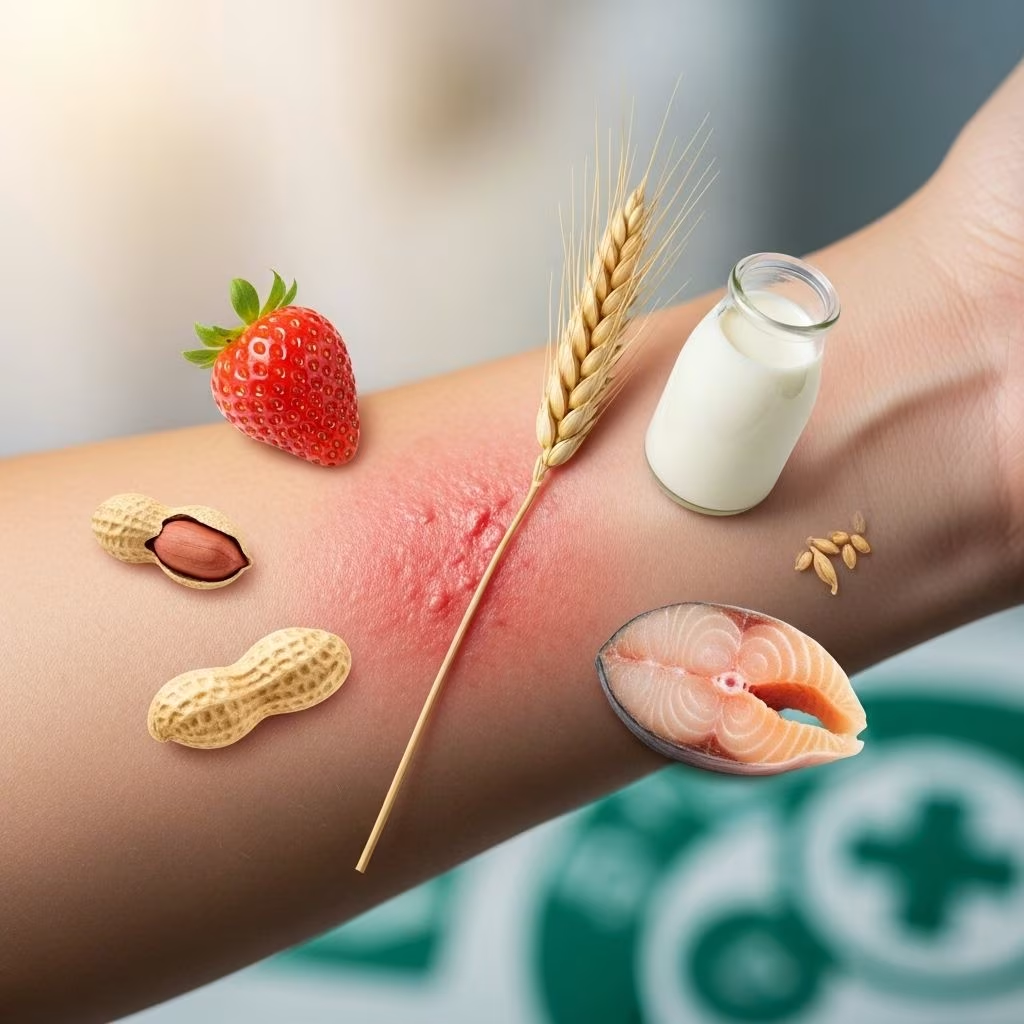
Eczema (atopic dermatitis) and food allergies are two increasingly common health concerns—especially in children—raising important questions about their relationship and the impact of diet on skin flare severity. Research continues to uncover a multifaceted connection involving genetics, environment, skin barrier health, immune responses, and dietary factors. This comprehensive guide explores current insights and practical advice for managing eczema and food allergies through evidence-based diet considerations.
Introduction: Eczema and Food Allergies at a Glance
Eczema, or atopic dermatitis, is a chronic skin disorder characterized by dry, itchy, and inflamed skin. Food allergies involve an abnormal immune response to specific food proteins, potentially causing a range of immediate or delayed symptoms. These conditions often overlap, particularly in young children, prompting ongoing studies about underlying mechanisms and best practices for management.
Mechanisms Linking Eczema and Food Allergies
The connection between eczema and food allergies is multifaceted, with current research elucidating several pivotal mechanisms:
- Impaired Skin Barrier: In eczema, the skin’s barrier is weakened, allowing allergens such as food proteins, environmental particles, or microbes to penetrate more easily. The immune system, in response, can become sensitized, producing immunoglobulin E (IgE) antibodies that lead to allergic reactions.
- Immune System Crosstalk: There is emerging evidence that skin injury or chronic inflammation may trigger immune responses that can affect distant organs, including the gut, potentially leading to the development of food allergies even when events happen at different sites.
- Genetic Predisposition: Individuals with eczema often have a genetic background that favors the development of both atopy (a tendency toward allergic hypersensitivity) and defective skin barrier function.
Key Research Finding
Recent animal studies demonstrate that skin injury can act as a sensitizing event, meaning that if new foods are introduced to the gut shortly after skin damage, food allergies become more likely. Timing appears crucial in this process—a finding offering new directions for prevention and intervention strategies.
Prevalence and Risk Factors
| Population | Eczema Prevalence | Food Allergy Prevalence |
|---|---|---|
| General Children | 10-20% | ~8% |
| Children with Eczema | — | Up to 30% |
| Infants with Severe Eczema | Variable | Significantly elevated risk |
- Children who develop eczema early in life, particularly before 12 months, are at the highest risk for developing food allergies.
- The severity of eczema correlates with an increased likelihood of developing food allergies; the more severe the eczema, the higher the risk.
How Diet Influences Eczema and Flare Severity
Diet can influence eczema in several ways, but it is not typically the root cause of the condition. Instead, for some individuals, particular foods can trigger flares or worsen symptoms.
- Immediate reactions: Up to 30% of children with eczema may experience immediate allergy symptoms (hives, itching, swelling, gastrointestinal or respiratory issues) after ingestion of a food allergen.
- Delayed skin symptoms: In some cases, eczema flares may occur hours or days after consuming allergenic foods, complicating identification of triggers.
- Chronic exposure: When a known food allergen is consumed regularly, it can contribute to poorly controlled eczema or persistent flares, particularly in severe cases.
However, it is important to note that not all cases of eczema are influenced by diet, and not all food allergies will worsen eczema. Each case should be approached individually, best in consultation with an allergist or dermatologist.
Common Food Allergens Affecting Eczema
Certain foods are most frequently implicated in exacerbating eczema flares, especially in infants & children:
- Milk
- Egg
- Peanut
- Soy
- Wheat
- Tree nuts
- Fish
- Shellfish
- Sesame
These foods account for the majority of IgE-mediated food allergies and are most commonly screened when food allergy is suspected as a contributor to eczema activity.
Diagnosis and Management of Food-Related Eczema Flares
If food allergy is suspected as a cause of eczema flares, proper diagnostic steps and personalized management approaches are essential:
- Allergy Testing: Performed via skin prick tests, blood tests for food-specific IgE, or supervised oral food challenges. Specialist input is vital as tests are not always conclusive and false positives are common.
- Elimination Trials: In cases where a strong link between a food and flares is observed, temporary elimination under medical supervision may be trialed to assess improvement. Unsupervised elimination is discouraged due to nutritional risks.
- Medical Management: Independent of diet, maintaining optimal eczema control through prescribed emollients, topical corticosteroids, and other therapies is critical to limit skin barrier dysfunction and reduce allergy risk.
- Reintroduction: Confirmed allergenic foods are reintroduced under supervision, especially when tolerance may develop over time, as with egg or milk in some children.
Elimination Diets: Efficacy and Risks
The concept of removing certain foods from the diet to improve eczema has gained popularity but is highly nuanced:
- Lack of evidence for general elimination: For children without a documented food allergy, routine elimination of foods has not been shown to reliably improve eczema.
- Potential for nutritional deficiencies: Restrictive diets can stunt growth, cause poor nutrition, and lead to disordered eating, especially in young children.
- Targeted exclusion: Only when a food is proven—via allergy testing and supervised challenge—to contribute to flares, may elimination be warranted, under medical supervision.
- Parental misconceptions: Parents often overestimate the value of elimination diets, sometimes to the child’s detriment. Education is key.
One study found that elimination diets improved eczema in only about one-third of participants, usually those with, or at high risk for, food allergies.
Other Dietary Approaches and Controversies
Beyond food allergy testing and elimination, several dietary strategies are promoted for eczema. However, scientific support varies:
- No universal “eczema diet”: Most experts agree there is no single diet for eczema. A balanced, varied, minimally processed diet is generally recommended.
- Anti-inflammatory approaches: Some evidence suggests minimizing highly processed foods, excess sugar, and artificial additives may reduce overall body inflammation, though proof of direct eczema improvement is limited.
- Supplements: The role of probiotics, omega-3s, or vitamin D in eczema management remains under investigation; results so far are inconclusive or modest at best.
- Gut-skin connection: Emerging research focuses on the gut microbiome’s balance, with some studies suggesting that promoting healthy gut flora may positively influence eczema symptoms.
Gut Health, Microbiome, and Their Role
A healthy gut microbiome is increasingly recognized for its role in immune regulation and skin health:
- Imbalanced microbiota: Disruption in healthy gut bacteria may predispose some individuals to atopic disorders, including eczema and food allergies.
- Prebiotics and probiotics: Some evidence indicates that dietary interventions supporting gut health, particularly in early life, could reduce allergy risk or assist in eczema management, but findings are not definitive for routine clinical recommendations.
Prevention Strategies: Early Introduction & Skin Care
Recent breakthroughs suggest opportunities to reduce food allergy risk in high-risk babies—those with eczema or strong family histories:
- Early allergen introduction: Introducing allergenic foods (e.g., egg, peanut) as early as 4 months of age, when the baby is developmentally ready, may help reduce the risk of developing food allergies.
- British and international guidelines recommend against delaying the introduction of such foods. No allergy testing is needed before introduction in most cases.
- Optimal eczema control: Proactive skin care with regular emollients and inflammation-reducing therapies may preserve the skin barrier and decrease the risk of sensitization.
- Close specialist monitoring: High-risk children benefit from regular follow-up with dermatologists and allergists to guide both skin and dietary management.
Frequently Asked Questions (FAQs)
Q: Do all children with eczema have food allergies?
A: No. Although children with eczema have a higher risk for developing food allergies, the majority do not have true food allergies that affect their skin directly.
Q: Can changing my child’s diet cure their eczema?
A: No. Eczema is a complex condition with genetic and environmental factors. While some dietary triggers may worsen flares in certain individuals, diet is not a cure. Maintaining good skin care is crucial.
Q: Should I remove certain foods from the diet as soon as eczema appears?
A: No. Elimination diets should only be considered after consultation with a healthcare provider and proper diagnostic evaluation. Unnecessary restrictions can cause harm.
Q: How will I know if a food allergy is causing my (or my child’s) eczema?
A: If food allergies are suspected, consult an allergist, who can perform targeted testing and, if appropriate, conduct a supervised oral food challenge to confirm or rule out food-related skin symptoms.
Q: Is there a “best diet” for people with eczema?
A: No single diet is universally recommended. Emphasis on a healthy, balanced, nutrient-rich diet and minimizing processed foods is key for overall wellness and skin health.
Further Reading and Resources
- Consult the National Eczema Association and local allergy organizations for updated guidelines and patient handouts.
- Peer-reviewed medical studies and recent reviews on the skin-gut axis, diet, and eczema/allergy prevention offer deeper dives into ongoing research.
- Talk with board-certified dermatologists and allergists for individualized management plans based on the latest evidence.
References
- https://www.skinhealthinfo.org.uk/wp-content/uploads/2024/06/Food-allergy-and-eczema-PIL-June-2024.pdf
- https://allergyasthmanetwork.org/news/ask-the-allergist-the-food-allergy-eczema-connection/
- https://medicine.yale.edu/news-article/skin-injury-may-bring-on-food-allergies/
- https://nationaleczema.org/eczema-management/diet-nutrition/
- https://pmc.ncbi.nlm.nih.gov/articles/PMC3970830/
- https://www.ncbi.nlm.nih.gov/books/NBK424896/
- https://opendermatologyjournal.com/VOLUME/18/ELOCATOR/e18743722306189/FULLTEXT/
- https://acaai.org/news/study-parents-understanding-of-atopic-dermatitis-may-influence-childs-diet/


