


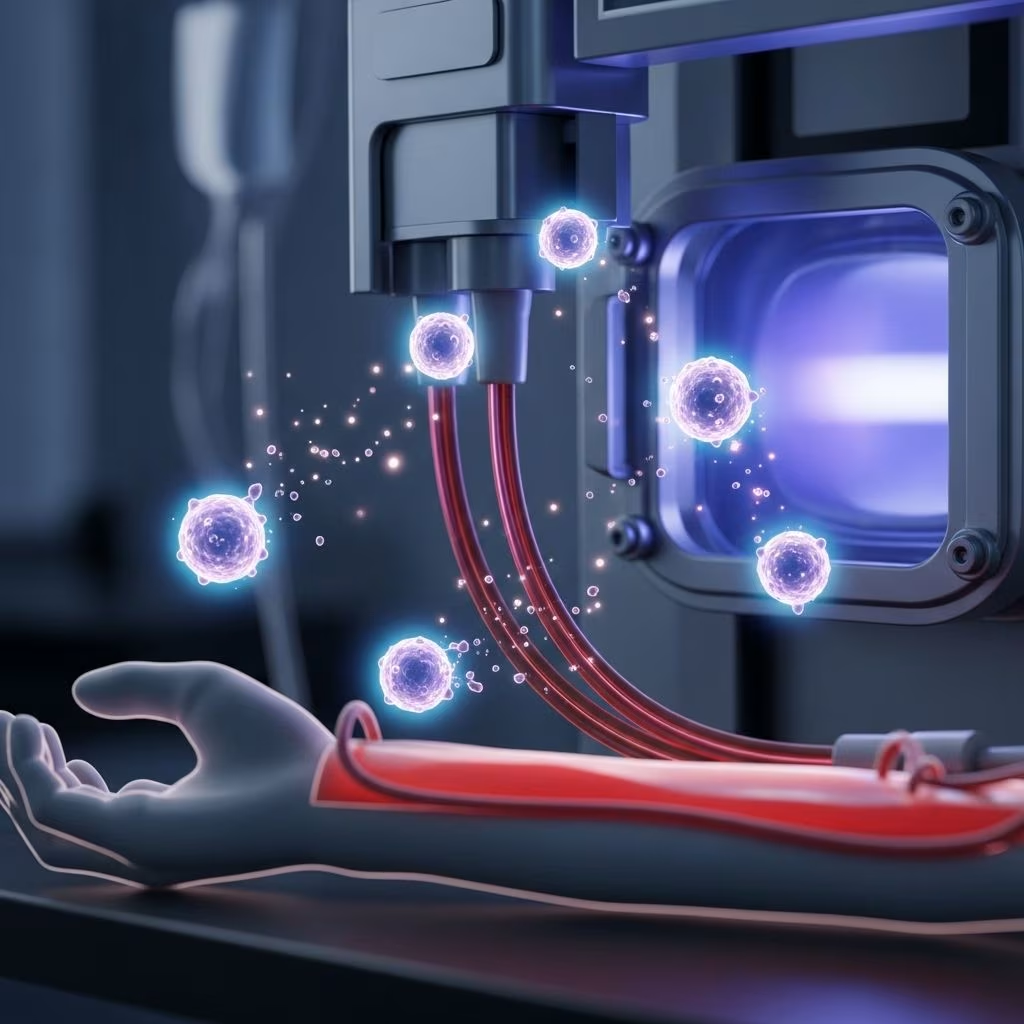
T-cell lymphoma represents a challenging class of hematologic malignancies, notable for their diverse clinical behaviors and relative resistance to conventional immunochemotherapy. Extracorporeal photopheresis (ECP), also termed extracorporeal photochemotherapy, has emerged as a unique and valuable immunomodulatory therapy, particularly for cutaneous T-cell lymphoma (CTCL) and its variants, such as Sézary syndrome. This article provides a comprehensive, evidence-based overview of ECP’s role in T-cell lymphoma, addressing mechanisms of action, clinical indications, procedures, outcomes, safety, and ongoing research directions.
Introduction to Extracorporeal Photopheresis
Extracorporeal photopheresis is a specialized medical procedure first established in the 1980s to treat advanced CTCL. Unlike systemic chemotherapy, ECP harnesses a unique combination of immunomodulation and targeted cell death, offering clinical benefits in hematologic malignancies and immune-mediated disorders.
- Definition: ECP is a leukapheresis-based therapy involving ex vivo photoactivation of white blood cells using a photosensitizing agent (most often 8-methoxypsoralen, 8-MOP) and ultraviolet A (UVA) irradiation, followed by reinfusion of the treated cells back into the patient.
- History: The first FDA-approved indication for ECP was for CTCL’s leukemic form, Sézary syndrome, in 1988.
- Expansion of Indications: Over three decades, ECP’s use has broadened to include graft-versus-host disease (GVHD), organ transplant rejection, and selected autoimmune disorders, but it remains a mainstay for refractory T-cell lymphomas.
Mechanisms of Action
The biological mechanisms underlying ECP are complex and not yet fully defined, but several key immunomodulatory and cytotoxic effects have been demonstrated:
- Cellular Targeting and Apoptosis: Upon exposure to UVA in the presence of 8-MOP, DNA within lymphocytes is cross-linked, inducing programmed cell death (apoptosis) in both malignant and reactive lymphocytes.
- Antigen Presentation Enhancement: The interaction with extracorporeal surfaces during processing activates monocytes, which differentiate into immature dendritic cells (iDCs). These iDCs phagocytose apoptotic T-cells and present tumor-specific antigens upon maturation, thereby stimulating an effective anti-tumor immune response.
- Immunomodulation (Transimmunization): The altered immune milieu following reinfusion favors immune tolerance and can down-modulate autoreactive or malignant T-cell clones while supporting regulatory T-cell populations.
- Absence of Mutagenicity: Long-term studies demonstrate no increased risk of mutagenesis or chromosomal instability from ECP.
Recent consensus supports the central role of dendritic antigen-presenting cells and a process termed transimmunization, wherein presentation of tumor antigens by maturing dendritic cells induces a systemic anti-tumor effect.
Summary Table: Mechanisms of Action
| Step | Key Event | Therapeutic Role |
|---|---|---|
| Leukapheresis | Isolation of peripheral blood mononuclear cells | Obtains target cells (including malignant T-cells) |
| Photoactivation | 8-MOP/UVA-induced DNA cross-linking | Triggers lymphocyte apoptosis |
| Antigen Uptake | iDCs phagocytose apoptotic cells | Stimulates immune response via antigen presentation |
| Reinfusion | Return of treated cells to patient | Initiation of immune modulation and cytotoxicity |
ECP Procedure: Clinical Process and Protocols
The ECP process involves several coordinated steps, generally repeated on a regular schedule across treatment cycles:
- Vascular Access: Venous blood is obtained via peripheral veins or a central line, depending on patient age, condition, and vascular status.
- Leukapheresis: Blood is processed in a dedicated ECP machine that separates leukocytes (white blood cells, including T-cells) from plasma, red cells, and platelets, often using a centrifuge mechanism.
- Photosensitizer Addition: The collected leukocyte fraction is mixed with 8-methoxypsoralen (8-MOP), sensitizing nucleated cells to subsequent UVA exposure.
- UVA Irradiation: The mixture is irradiated with UVA light (320100 nm), inducing irreversible DNA cross-linking in susceptible cells.
- Reinfusion: The treated leukocyte fraction is reinfused into the patient intravenously. This cycle may be repeated on two consecutive days, typically every 24 weeks, over several months, depending on clinical response and indication.
Types of ECP Systems
- Closed-System ECP: The entire process (leukocyte separation, photoactivation, and reinfusion) occurs within a single, FDA-approved sterile device. Reduces infection risk and procedural error.
- Open-System ECP: Leukapheresis and UVA irradiation are performed using separate devices or manual steps. More common outside the US; may increase efficiency but also procedural complexity.
Clinical Indications in T-Cell Lymphoma
ECP is most established for the treatment of cutaneous T-cell lymphoma (CTCL), especially advanced or refractory cases and Sézary syndrome. Additional emerging indications in T-cell lymphoma include:
- Relapsed or refractory CTCL after failure of standard therapies
- Sézary syndrome: leukemic variant of CTCL
- Maintenance therapy in responders to systemic treatment
- Potential use for other peripheral T-cell lymphomas (limited data; under investigation)
In select cases, ECP may be combined with other modalities—such as interferons, retinoids, or systemic agents—for synergistic benefit in T-cell lymphomas.
Summary Table: ECP Indications by T-Cell Lymphoma Subtype
| Subtype | Evidence Base | Role of ECP |
|---|---|---|
| Cutaneous T-cell lymphoma | Large case series, clinical trials | FDA-approved; primary for refractory/advanced disease |
| Sézary syndrome | FDA approval, expert consensus | First-line or adjunctive therapy in many cases |
| Other T-cell lymphomas | Anecdotal/early-phase studies | Secondary/experimental role |
Efficacy, Outcomes, and Evidence
ECP has been shown to induce partial and complete responses in T-cell lymphomas, with its best evidence in CTCL and especially Sézary syndrome. ECP’s response rates vary depending on disease subtype, extent, prior treatments, and duration of therapy.
- Response Rates: In large series, overall response rates in advanced CTCL range from 30% to 60%, with durable remissions reported, especially when therapy is sustained for 612 months or more.
- Time to Response: Clinical improvements may take several months (often 36 months) to manifest; continued treatment and patient selection are key.
- Combination Strategies: ECP is often integrated with other therapies, such as interferon-α, bexarotene, or histone deacetylase inhibitors, for maximized efficacy.
Importantly, ECP is associated with minimal cumulative toxicity and is often utilized in elderly or medically complex patients. Its unique mechanism means it can succeed even where other systemic therapies have failed.
Safety and Tolerability
ECP demonstrates an excellent safety profile, in sharp contrast to conventional cytotoxic chemotherapies:
- Minimal Systemic Toxicity: Most adverse effects are mild and related to venous access (e.g., infection risk, thrombosis).
- No Increased Mutagenic Risk: ECP does not induce cytogenetic or mutational changes, even with prolonged use.
- Potential Mild Side Effects: Fatigue, lightheadedness, and risk of photosensitivity due to 8-MOP.
- Rare Serious Events: Severe allergic reactions or hypotensive episodes may occur but are uncommon.
This profile makes ECP suitable for long-term or maintenance treatment regimens, even in pediatric, geriatric, and frail populations.
Practical and Logistical Considerations
- Treatment Frequency: Usually two treatments per cycle, repeated every two to four weeks. Duration is individualized based on response and tolerance.
- Venous Access: Peripheral intravenous access is preferred, but central catheters may be necessary for patients with poor veins or chronic therapy needs.
- Outpatient Administration: Most procedures are performed in specialized outpatient infusion centers.
- Patient Monitoring: Regular skin assessments, hematologic monitoring, and ongoing oncologic follow-up are essential.
Future Directions and Research
- Mechanistic Research: Ongoing studies aim to further delineate immunologic pathways and optimize antigen presentation dynamics, potentially improving efficacy and expanding indications.
- Combination Immunotherapies: Integration of ECP with biologics, checkpoint inhibitors, and next-generation immunomodulators are being investigated.
- Personalized Approaches: Developing biomarkers for response prediction and patient selection is an active area of research.
Frequently Asked Questions (FAQs)
Q: What is the main difference between ECP and traditional chemotherapy?
A: ECP is an immunomodulatory therapy with targeted effects on malignant lymphocytes and the immune system, whereas chemotherapy acts through systemic cytotoxicity. ECP’s side-effect profile is substantially better and does not induce the same immunosuppression or long-term organ toxicity.
Q: How long does a typical ECP treatment session last?
A: Each session of ECP may last from 2 to 4 hours, depending on patient size, vascular access, and system utilized. Two consecutive sessions are typically performed per cycle.
Q: When can clinical benefits of ECP be expected?
A: Clinical response often requires 36 months of therapy, and maximal skin or hematologic improvements may take up to a year in CTCL.
Q: Can ECP be combined with other therapies?
A: Yes, ECP is frequently used alongside systemic agents, topical treatments, and phototherapy, particularly in refractory or advanced-stage T-cell lymphoma.
Q: Are there contraindications for ECP?
A: Relative contraindications include severe hemodynamic instability, inability to tolerate extracorporeal circulation, or allergy to psoralen compounds. Absolute contraindications are rare.
Q: What is the prognosis for patients with T-cell lymphoma treated with ECP?
A: Prognosis depends on disease stage, subtype, response to therapy, and patient comorbidities. For advanced CTCL and Sézary syndrome, ECP can induce durable remissions and improve quality of life.
References and Further Reading
- Review articles and consensus guidelines on ECP in T-cell lymphomas from peer-reviewed medical literature
- Manufacturer-provided procedure manuals for closed and open ECP systems
- Clinical trial data and summary statements from U.S. Food and Drug Administration


