


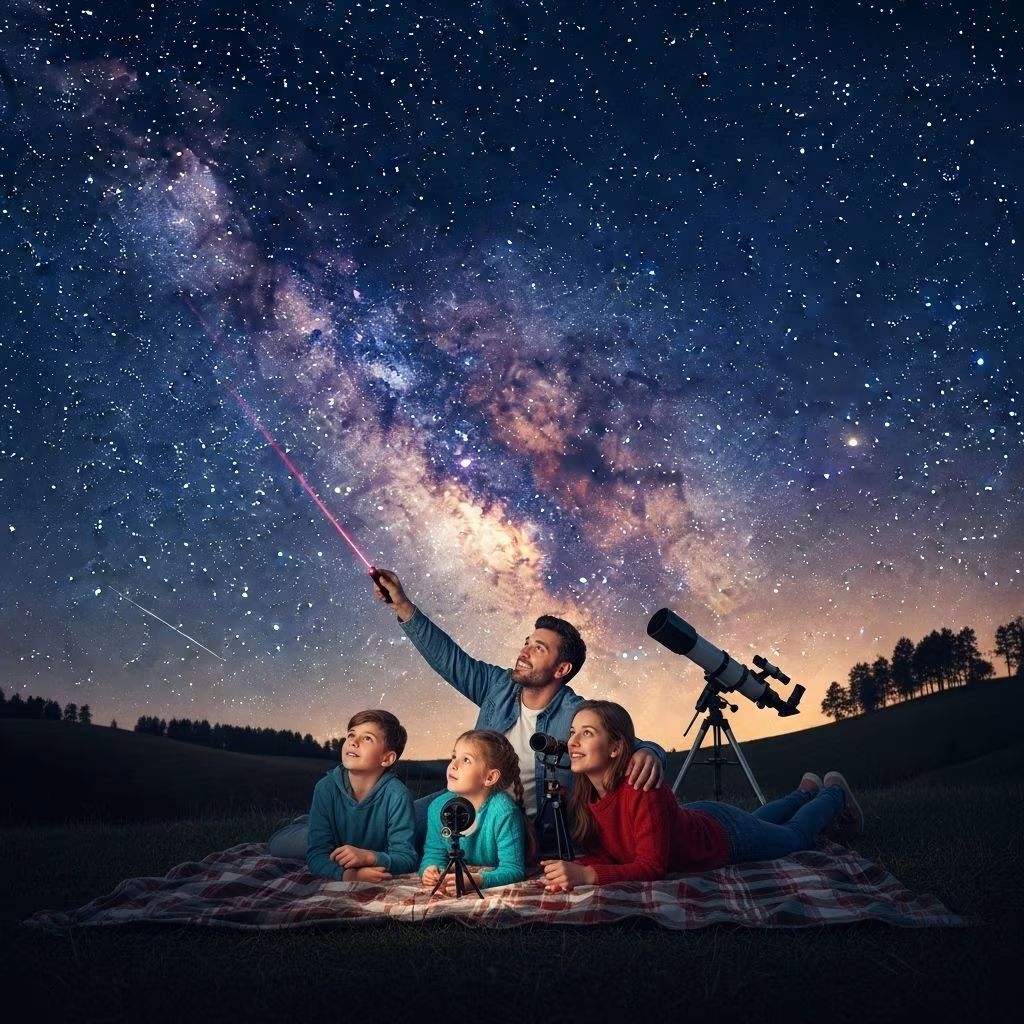
Family Star-Gazing Routine for Science & Bonding
Night after night, our sky offers spectacular wonders on display — planets, stars, nebulae, and stories centuries old. By making star-gazing a regular family activity, you can unlock both scientific curiosity and meaningful moments together, blending fun, learning, and togetherness in ways few indoor hobbies can match.
Why Stargazing Is the Perfect Family Routine
Stargazing goes far beyond simply looking upward. A regular star-gazing night offers:
- Educational enrichment: Kids (and adults) learn key astronomy concepts and how science is explored in the real world.
- Uninterrupted quality time: Families share awe together, away from screens and distractions.
- Curiosity and wonder: Questions about stars and space encourage discussion, questioning, and discovery.
- Memories and traditions: Rituals like monthly meteor shower viewing or journaling experiences create lasting bonds.
How to Plan Your Family Star-Gazing Routine
A little preparation can make your star-gazing routine enjoyable and sustainable.
Step-by-Step Guide
- Choose a regular schedule
Decide how often you want to meet for stargazing — weekly, monthly, or around special celestial events (like full moons, meteor showers, or planet conjunctions). - Pick your spot
Select a spot with minimal light pollution. This could be your backyard, a local park, or a field. Consider safety, accessibility, and comfort. - Prepare ahead
Check weather forecasts and moon phases (a bright moon can wash out dim stars). Charge devices, print star maps, and download astronomy apps if needed. - Consider comfort
Bring blankets, chairs, bug spray, red-light flashlights (to preserve night vision), and snacks. - Make it low-pressure
Not every session needs a major goal. Sometimes just chatting about the night sky is enough.
Scientific Learning Through Star-Gazing
Each time you look up, you engage with foundational science skills and concepts:
- Pattern recognition: Spotting constellations and star clusters helps children see and understand patterns in nature.
- Astronomical knowledge: Discover planets, moons, stars, galaxies, and the stories behind their names.
- Critical thinking: Asking why things move in the sky, or why some stars are brighter, connects observation to scientific reasoning.
- Spatial awareness: Understanding how objects move across the sky or appear in relation to each other aids spatial reasoning and navigation.
- Technological literacy: Learning tools and apps encourages comfort with digital exploration.
- Storytelling and mythology: Constellations are woven into myths from every culture, blending science, history, and imagination.
- Environmental awareness: Discussions about light pollution tie astronomy to caring for the environment.
Tools & Equipment: What You Need and What You Don’t
Stargazing is accessible. While educators or hobbyists use advanced telescopes, many families can enjoy the sky with simple tools:
| Essential Tools | Optional Enhancements |
|---|---|
|
|
Consider borrowing or renting telescopes, or joining a local astronomy group or public event for hands-on experience and mentorship.
Fun & Engaging Stargazing Activities
Keep children (and adults!) engaged by varying your activities:
Identify Constellations
- Use star charts or apps to spot the Big Dipper, Orion, Cassiopeia, and Southern Cross.
- Challenge your family to locate new constellations each session, and read the myths associated with them.
Spot Planets
- Venus, Mars, Jupiter, and Saturn can often be seen with the naked eye.
- Discuss planet characteristics and how to identify them.
Meteor Showers
- Plan special nights around annual showers like the Perseids (August) or Geminids (December).
- Make a wish, count meteors, and track them in a journal.
Moon Watching
- Track moon phases over a month, discuss their meaning and mythologies.
- Try drawing what you see or craft salt-paint moon phase art projects.
Space Journal
- Create a family log to record observations, questions, and drawings.
- Write stories or poems inspired by your star-gazing night.
Hands-On Projects
- Edible Constellations: Build star patterns with marshmallows, toothpicks, crackers, or candies for fun and learning.
- DIY Backyard Compass: Use creative activities to introduce navigation concepts.
- Track Satellites: Use ISS tracking apps for a real-time connection to modern space exploration.
- Meteor Cataloguing: Log meteor trails and compare annual events.
Games and Creative Play
- Stargazing Pictionary: Sketch constellation shapes for others to guess.
- Storytime Under the Stars: Read books or retell constellation myths outdoors.
Life Skills and Bonding Benefits
Stargazing’s rewards are both academic and social:
- Critical thinking & problem-solving: Recognizing patterns and deciphering stories in the sky promotes analytical thought.
- Persistence & patience: Waiting for meteors and tracking planets builds endurance.
- Teamwork & communication: Sharing what you see, discussing scientific ideas, and helping each other with equipment enhances cooperation.
- Historical and cultural awareness: Linking mythology and astronomy broadens a child’s view of human history.
- Environmental stewardship: Observing firsthand the impact of light pollution fosters a sense of responsibility.
- Creative thinking: Imagining space travel, making up sky stories, and drawing what you see feeds artistic growth.
- Mathematical skills: Calculating angles, learning about scales, and plotting star positions connect astronomy to math.
Overcoming Common Challenges
Weather and Light Pollution
- Prepare backup activities (books, crafts, videos) for cloudy nights.
- Travel to less light-polluted locations periodically; use apps to find dark-sky sites.
Short Attention Spans
- Let kids lead the way and ask questions; playful activities can help sustain interest.
- Don’t overload sessions — keep it fun, not formal.
Cost and Accessibility
- Start with naked-eye observations and simple tools. Binoculars are usually enough for beginners.
- Borrow, rent, or share equipment in community groups.
Knowledge Gaps
- When you don’t know an answer, look it up together! Model curiosity and discovery.
Frequently Asked Questions (FAQs)
Q: What’s the best age to start star-gazing with kids?
A: Any age! Preschoolers enjoy moon-watching and star-spotting, while older kids benefit from deeper science and equipment use.
Q: Do we need a telescope?
A: No. Many wonders of the night sky — constellations, planets, meteors, and even satellites — can be seen with the naked eye or through binoculars. Telescopes add value for deeper exploration but are not essential.
Q: How do I keep kids engaged on chilly or cloudy nights?
A: Focus on storytelling, space-oriented snacks, crafts, or watching astronomy videos. Consider keeping a star journal or researching upcoming celestial events indoors.
Q: Where can I find resources to help my family stargaze?
A: Try free star map printouts, astronomy apps (like Stellarium or Star Walk), children’s books, and joining local astronomy clubs for events and mentorship.
Q: What are some easy constellations for beginners?
A: The Big Dipper, Orion, Cassiopeia, Cygnus, and Southern Cross are prominent, easy-to-spot constellations for most locations.
Start Your Family Star-Gazing Adventure Tonight
Making regular star-gazing a family activity brings together scientific exploration and heartfelt connection. With every session, you open doors to new questions, skills, and traditions that can last a lifetime. So pick a clear evening, gather your loved ones, and gaze upward — the universe awaits.
References
- https://www.astrophiliaedu.com/blogs/news/the-ultimate-beginner-s-guide-to-stargazing-for-families-astrophilia
- https://onlypassionatecuriosity.com/life-skills-through-stargazing/
- https://www.imthecheftoo.com/blogs/stem-for-kids/starry-stem-fun-engaging-astronomy-activities-for-kids
- https://www.skyatnightmagazine.com/advice/skills/stargazing-for-kids
- https://scienceshepherd.com/blogs/science-shepherd-homeschool-curriculum/astronomy-day-ideas
- https://www.startwithabook.org/summer-science/diy-science-camp-night-sky
- https://www.connectionsacademy.com/support/resources/article/7-quick-astronomy-questions-and-answers-for-kids/
- https://journeyhomeschoolacademy.com/astronomy-activities-for-kids-old/


