


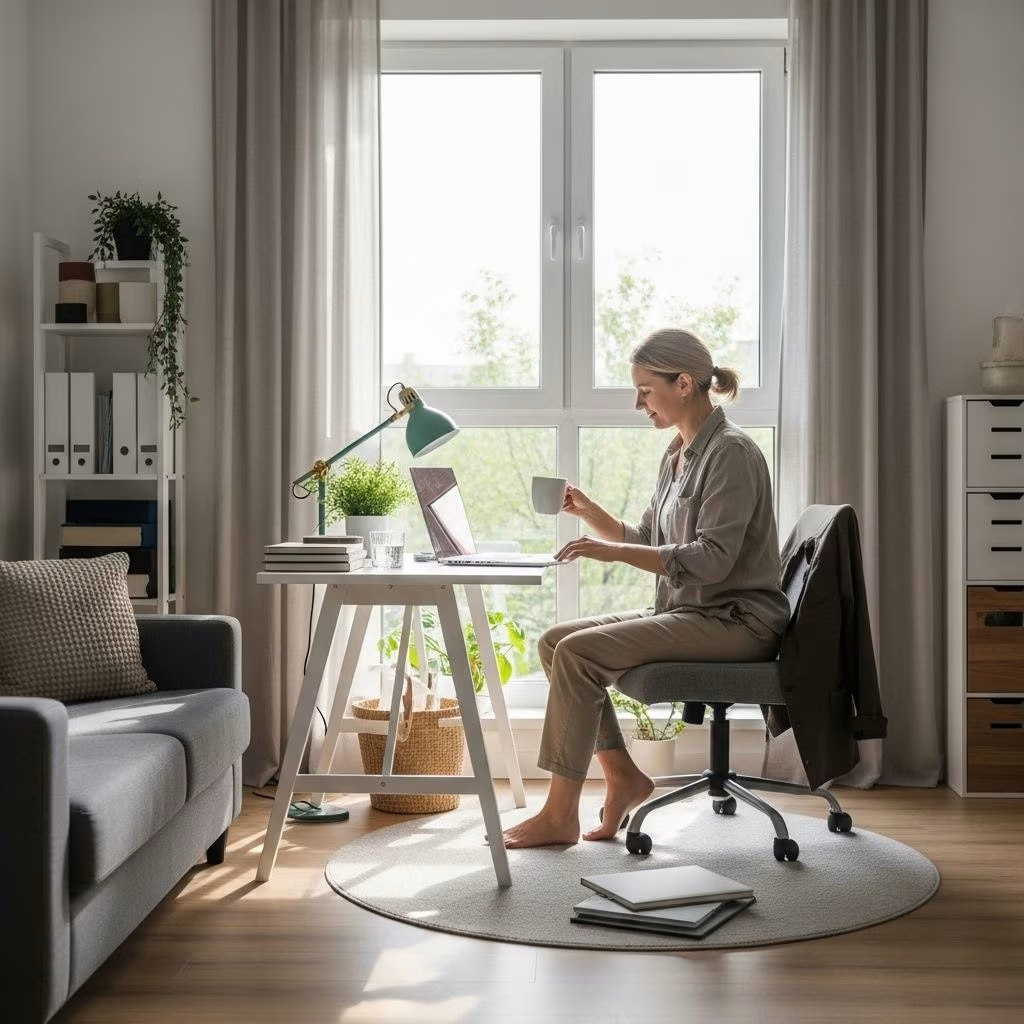
Working as a freelancer offers flexibility, autonomy, and the comfort of home. However, the lines between personal life and work can easily blur, undermining both productivity and well-being. Establishing a structured morning routine is an essential strategy for setting boundaries and preparing your mind and environment for a focused, productive workday. This guide provides in-depth, practical approaches to building an effective freelancer morning routine—helping you confidently separate work from home and start every day with intention.
Why a Morning Routine Matters for Freelancers
A consistent morning routine helps freelancers leverage the first hours of the day—often their most focused and least interrupted—to maximize their work output, set intentions, and reinforce the separation between home and professional life. Rather than waking up chaotically or starting work in pajamas, a strong routine signals the transition from personal to work mode, increases accountability, and helps regulate energy throughout the day .
- Reduces decision fatigue by automating early-day choices
- Minimizes distractions that creep in from an unstructured start
- Aids mental clarity and emotional balance
- Establishes professional boundaries especially when working from home
The Psychology of Rituals: Separating Spaces and Mindsets
Rituals signal the brain to shift gears. For freelancers, morning rituals create a definitive borderline between relaxation (home mode) and focused productivity (work mode). Supported by psychological research, intentional routines:
- Train the mind to anticipate specific activities (like deep work or meetings).
- Reduce anxiety about open-ended to-do lists by embedding a sense of progress.
- Encourage the brain to “leave home” mentally—even if physically, you stay put .
Key Elements of an Effective Freelancer Morning Routine
| Element | Description | Purpose |
|---|---|---|
| Calm and Mindfulness | Begin your day with quiet reflection, meditation, or deep breathing. Avoid digital noise (no emails, social media, or news in the first hour). | Sharpens focus, lowers stress, fosters intentionality |
| Movement | Engage in physical activity—stretching, walking, yoga, or exercise. | Boosts energy and cognitive performance, wakes up the body |
| Hydration & Nutrition | Drink water, enjoy a nutritious breakfast without screens. | Supports metabolic health and sustained energy |
| Journaling/Planning | Write down goals, intentions or gratitudes; review your day’s priorities. | Clarifies focus, creates accountability |
| Creative Stimulation | Engage the mind with non-work creativity (reading, sketching, puzzles). | Primes the brain for problem-solving and inspiration |
| Setting the Work Zone | Transition physically—change clothes, tidy workspace, open work tools. | Signals ‘work mode’ to yourself and others |
Step-by-Step Freelancer Morning Example
Below is a researched, time-stamped freelancer morning routine synthesizing best practices from experienced remote professionals :
- 7:00 AM – Wake up with a classic (not phone-based) alarm for minimal digital distraction.
- 7:05 AM – Hydrate immediately: two glasses of water awaken the body.
- 7:10 AM – Engage in 15-30 minutes of movement: jog, yoga, or stretching. If possible, go outside for sunlight and fresh air.
- 7:40 AM – Cool down and shower. Use this transition to mentally prepare for the day.
- 8:00 AM – Eat a healthy breakfast, ideally with minimal screens. Practice intentional eating—focus on the meal.
- 8:20 AM – Meditate or practice mindfulness for 10-20 minutes. Apps like Headspace or Calm may assist.
- 8:40 AM – Journal. List 3-5 things you’re grateful for and key goals for the day. Organize and prioritize tasks.
- 9:00 AM – Do something creatively stimulating—read, sketch, solve a puzzle, or work on a passion project unrelated to paid work.
- 9:30 AM – Change into dedicated work clothes if possible. Set up your work-only space: tidy desk, turn on task lighting, launch productivity apps.
- 9:35 AM – Officially “arrive at work” by beginning your first focused task. No email/news/social media prior unless work-essential.
Customizing Your Routine: Personalization Essentials
No one-size-fits-all solution exists for freelancer routines. Key factors to consider when adapting the above template include:
- Chronotype: Are you a morning lark or a night owl? Adjust wakeup and deep-focus time accordingly.
- Household dynamics: If you share your home, waking up earlier can provide uninterrupted quiet .
- Physical and mental health needs: Tailor activities to your body’s capabilities and emotional state.
- Type of freelance work: Prioritize focus activities for creative, writing, or design roles; logistical tasks first for administrative or project-based work.
- Time-budget: Even a 20-minute mini-routine can be impactful if consistently practiced.
Common Obstacles and Solutions
| Obstacle | Solution |
|---|---|
| Difficulty waking up early | Gradually shift bedtime earlier; use an “opportunity clock” mindset |
| Temptation to check phone | Leave phone outside bedroom; use analog alarm and designate “unplugged hours” |
| Lack of motivation/energy | Start with low-barrier actions (hydration, light stretching); celebrate completion of small tasks |
| Persistent home distractions | Invest in noise-cancelling headphones; use workspace boundaries (desk, sign, or room divider) |
| Routine boredom | Rotate creative, movement, or meal elements weekly to stay engaged |
Work-Life Boundaries: Essential Actions
- Dress the part: Even if not leaving home, changing into work-specific clothing indicates a shift in role.
- Physical workspace: Dedicate a specific area—desk, corner, or even a different chair—as “the office.” Avoid working in bed or on the couch if possible.
- “Commute” ritual: Simulate a transition (brief walk outdoors, listening to a morning podcast, or a literal lap around your block) to mark the start of the workday.
- Clear start and stop times: Establish official work hours, even if flexible. Communicate availability to household members.
- Technology boundaries: Use different browser profiles, set auto-responders, or disconnect from work email outside your defined hours.
Tools and Environment to Optimize Separation
- Noise management – Headphones, white noise apps, and “do not disturb” settings
- Lighting – Place your workspace near natural light or use quality desk lights
- Time management – Use planners, scheduling apps, and task lists for structure
- Workspace cues – Keep work and leisure objects apart. Store devices, notebooks, and other supplies at your “office” only
- Healthy breaks – Plan micro-breaks, short walks, or simple breathing exercises to reset periodically
Frequently Asked Questions (FAQs)
Q: Why should freelancers avoid checking emails and social media first thing in the morning?
A: Email and social media introduce external demands, stress, and comparisons, hijacking your attention and mood before you’ve anchored your priorities. Waiting until your workday officially starts protects your focus .
Q: What if my home is too small for a dedicated office?
A: Even a small desk, specific chair, or portable lap desk can serve as your work zone. The key is consistency—use the same spot only for work to train your mind that this space = professional mode.
Q: Is it really necessary to get out of pajamas?
A: Yes. Changing clothes, even casually, cues your brain that it’s time to work, increasing alertness and confidence. Save loungewear for post-work hours to reinforce psychological separation .
Q: How long should a morning routine be?
A: Ideally 45-90 minutes, but something as short as 20-30 minutes can be powerful if you focus on quality over quantity and include core elements: calm, movement, and intention-setting .
Q: How do I stay consistent with a routine?
A: Start small, build gradually, and adjust if your routine feels forced or overwhelming. Use habit trackers or reminders, and link routines to rewards (like your favorite coffee after journaling or exercise).
Conclusion
The key to thriving as a freelancer isn’t more work—it’s smarter, more intentional rituals that reinforce the boundary between life and workday. A carefully crafted morning routine gives you the tools to maximize energy, focus, and separation—setting the foundation for sustainable success and joy in both worlds. Take your time to experiment, modify, and iterate; your ideal morning routine is unique to you, but its dividends will ripple throughout every area of your freelance journey.
References
- https://monikadavies.com/blog/morning-routine
- https://www.calendar.com/blog/9-routine-hacks-freelancers-use-for-productive-mornings/
- https://dianakelly.com/morning-routines-of-freelance-writers-and-creatives-who-work-from-home/
- https://www.youtube.com/watch?v=a-fG7NxTDWk
- https://notsomoderngirl.com/2023/11/01/build-the-right-freelance-routine-for-you-guide/
- https://writingcooperative.com/my-morning-routine-as-a-freelance-writer-aa35ef2d0d58
- https://www.voiset.io/blog/top-tips-for-freelancers-to-optimize-their-daily-routine


