


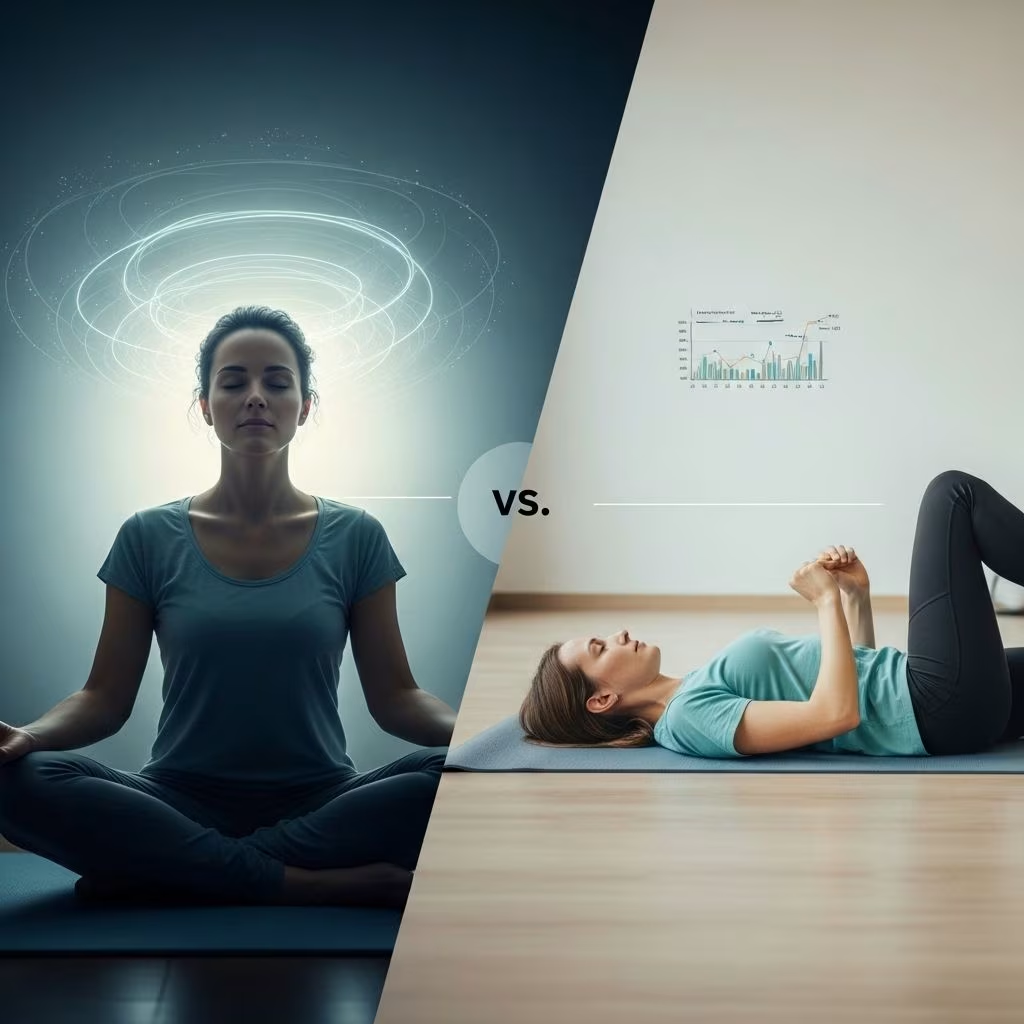
Psoriasis and eczema are chronic inflammatory skin conditions that affect millions worldwide. While topical and systemic medications are foundational in management, mind-body therapies—especially guided imagery and progressive muscle relaxation (PMR)—are gaining recognition as complementary approaches for improving both skin symptoms and psychological wellbeing. This article explores and compares guided imagery and PMR, examining their mechanisms, evidence, and practical applications in psoriasis and eczema care.
Introduction
Psoriasis and eczema (atopic dermatitis) often involve more than just physical discomfort; they can trigger emotional distress, sleep disruption, and social isolation. Recent clinical research suggests that psychological interventions may reduce disease severity and improve quality of life. Among these, guided imagery and PMR stand out for their accessibility and potential effectiveness.
The Mind-Skin Connection: Stress, Psoriasis, and Eczema
Both psoriasis and eczema are significantly influenced by psychological stress. Stress can:
- Increase inflammation and immune dysregulation, worsening flare-ups
- Elevate sensation of itching and discomfort
- Contribute to sleep disturbances, anxiety, and depression
Integrative dermatology leverages mind-body therapies to improve outcomes by targeting these stress-related pathways.
What is Guided Imagery?
Guided imagery is a mind-body technique using one’s imagination to evoke calming and healing images that engage all the senses. In a therapeutic setting, an instructor’s voice or an audio recording guides the individual through scenarios that promote relaxation and detachment from distressing sensations.
Specifics include:
- Visualization of serene environments (e.g., peaceful forests, cool waterfalls)
- Imagining skin as healthy, unblemished, or cool and comfortable
- Incorporating multisensory details (sounds, smells, textures)
- Sessions may last from 10 to 30 minutes; home practice recommended
The mechanism involves activating the parasympathetic nervous system, lowering stress hormones, and disrupting the itch–scratch cycle.
Benefits of Guided Imagery
- Deep relaxation and reduced anxiety
- Improved mood and sleep
- Potential reduction in perception of itch and skin discomfort
- Enhanced sense of control over symptoms
What is Progressive Muscle Relaxation (PMR)?
Progressive muscle relaxation (PMR) is a structured physical relaxation method that involves systematically tensing and relaxing major muscle groups. PMR was originally developed to counteract the physiological effects of stress:
- Tense a specific muscle group for 5–10 seconds
- Release and focus on the sensation of relaxation for 10–20 seconds
- Progress sequentially from feet to head or vice versa
PMR can be delivered in-person (by therapists), through audio recordings, or app-based programs. Over time, users learn to recognize and interrupt tension, which contributes to symptom relief in skin conditions.
Benefits of PMR
- Effective physical relaxation
- Reduction of anxiety and depressive symptoms
- Potential decrease in itch and sleep disruption
- Improved overall quality of life in chronic skin conditions
Evidence for Guided Imagery in Skin Conditions
Scientific research examining guided imagery for psoriasis and eczema is promising but limited by small sample sizes. Key studies and findings:
- Case studies in eczema showed a reduction in itching and improved skin symptoms among individuals practicing combined guided imagery and relaxation over several weeks.
- Research into mind-body therapies for atopic dermatitis notes guided imagery and self-hypnosis are well-tolerated and may contribute to overall distress reduction and improved sleep.
One randomized trial in psoriasis found that meditation and imagery together reduced symptom severity compared to a control, but did not show additional benefit of imagery alone over meditation.
Although evidence is still emerging, guided imagery is considered safe and a helpful adjunct for:
- Reducing subjective distress, particularly related to itching (pruritus)
- Improving sleep and psychological wellbeing
- Complementing conventional treatments
Evidence for PMR in Skin Conditions
PMR boasts a broader research foundation in dermatology, particularly in eczema and psoriasis. Highlights include:
- Randomized Controlled Trial (RCT) in eczema: PMR combined with standard care led to statistically significant reductions in eczema severity (measured by EASI), itching, and sleep loss compared to standard care alone.
- Improvements in psychological symptoms: PMR groups showed significant reductions in depression and anxiety indices not seen in control groups.
- Studies in psoriasis: PMR and other relaxation techniques showed improvements in PASI score (Psoriasis Area and Severity Index), quality of life, and emotional stress over periods of 4–8 weeks.
- Relapse prevention: Patients who continued home PMR practice maintained improvement, while those who discontinued saw symptoms return.
Summary Table: Clinical Evidence for Guided Imagery vs. PMR
| Therapy | Psoriasis Support | Eczema Support | Key Benefits | Limitations |
|---|---|---|---|---|
| Guided Imagery | Some evidence; adjunctive with meditation/relaxation for reducing symptoms | Case reports and small studies; helps reduce stress & itch | Easy self-practice; helps anxiety, mood, possibly itch | Few large RCTs; less direct evidence for significant objective skin improvement |
| PMR | Supported in several studies; reduces PASI; improves QOL | Strong evidence from RCT; improves EASI, pruritus, sleep, depression & anxiety | Physical relaxation, sleep improvement, objective skin benefits | Requires learning technique; initial therapist guidance often needed |
Guided Imagery vs. PMR: Comparing Benefits & Limitations
Both therapies share common goals—reducing stress, managing symptoms, supporting healing—but differ in technique, evidence strength, and suitability for individuals.
Guided Imagery: Pros & Cons
- Pros: Accessible anywhere; no physical exertion; appeals to those responsive to visualization; can be adapted (with audio, therapist, or self-guided).
- Cons: Evidence is less robust than for PMR; effectiveness may depend on individual imagination and engagement; not a standalone cure.
Progressive Muscle Relaxation: Pros & Cons
- Pros: Well-studied for both physical and psychological symptom management; objective improvements in skin metrics; teaches awareness of bodily tension, which can empower broader stress management.
- Cons: Requires initial guidance to learn correct technique; may not suit individuals with certain physical limitations (e.g., musculoskeletal restrictions).
For many, a combination of both techniques—alternating or practicing together—yields the best results.
How to Use Guided Imagery and PMR for Psoriasis & Eczema
Integrating these mind-body techniques into your daily routine can enhance resilience, reduce flares, and improve quality of life. Here’s how to get started:
Guided Imagery Practice
- Select a quiet, comfortable place. Sit or lie down.
- Use a guided audio or script, or imagine a scene that evokes calmness (e.g., a cool, soothing stream embracing your skin).
- Engage your senses: What do you see, hear, feel, smell?
- Picture your skin healing, calm, and itch-free.
- Practice daily for 10–20 minutes; consistency is key for benefits.
Progressive Muscle Relaxation Steps
- Sit or lie comfortably.
- Begin at your feet: tense muscles for 5–10 seconds, then release and notice the sensation of relaxation for 10–20 seconds.
- Move sequentially through calves, thighs, abdomen, hands, arms, shoulders, neck, and face.
- Focus on soft, slow breathing throughout.
- Practice once or twice daily, especially during periods of higher stress or before sleep.
Expert Tips for Integrating Mind-Body Therapies
- Combine both approaches, or adapt practices to suit your preferences and physical abilities.
- Discuss with your dermatologist or a psychodermatology specialist; these professionals can recommend resources or refer you to trained therapists.
- View mind-body therapies as complements, not replacements, for prescribed medical treatments.
- Persistence and regular practice are crucial for noticeable improvements.
- Consider digital mental health apps offering guided imagery or relaxation audio for convenience.
Frequently Asked Questions (FAQs)
Q: Are guided imagery and PMR safe for everyone?
A: Both techniques are considered very safe. Individuals with severe psychiatric conditions or certain physical limitations should check with their clinician before starting.
Q: How quickly can I expect to see results?
A: Benefits (such as improved sleep or reduced itching) may occur within a few weeks, but consistent daily practice for at least one month is recommended for best results.
Q: Can I use these mind-body therapies instead of medications?
A: No. While helpful, guided imagery and PMR are meant to complement—not replace—topical or systemic medications as prescribed by your healthcare provider.
Q: Is there any scientific evidence that guided imagery or PMR can cure psoriasis or eczema?
A: No current studies show a cure, but both techniques have been shown to reduce symptoms, psychological distress, and improve quality of life for many people. They help manage—not eradicate—these chronic conditions.
Conclusion
Guided imagery and PMR represent two accessible, low-risk mind-body techniques that can reduce distress and enhance wellbeing for individuals with psoriasis and eczema. While PMR has stronger supporting evidence—especially for itch and sleep disruption—guided imagery offers unique value for those drawn to visualization. Used alongside medical therapy and under professional guidance, either or both techniques can help patients take a proactive role in their skin health journey.
References
- https://www.jintegrativederm.org/index.php/joid/article/download/61/51
- https://pmc.ncbi.nlm.nih.gov/articles/PMC9760032/
- https://journals.sagepub.com/doi/10.2190/PQKE-CMAM-T4MT-QVBL
- https://www.medicaljournals.se/acta/content/html/10.2340/00015555-2177
- https://pmc.ncbi.nlm.nih.gov/articles/PMC8480446/
- https://dpcj.org/index.php/dpc/article/view/dermatol-pract-concept-articleid-dp1104a091/1366
- https://www.theeducatedpatient.com/view/integrating-mind-body-therapies-to-improve-outcomes-in-atopic-dermatitis
- https://dpcj.org/index.php/dpc/article/view/dermatol-pract-concept-articleid-dp1104a091
- https://www.apa.org/monitor/2015/02/cover-skin


