


Introduction
Active pharmaceutical ingredients (APIs) and various chemicals are highly sensitive to environmental conditions such as light and temperature. These factors can significantly affect their stability, leading to degradation and altering their intended biological activities. Understanding the impact of light and temperature on these active ingredients is crucial for maintaining their quality and efficacy throughout their shelf life.
Light Degradation
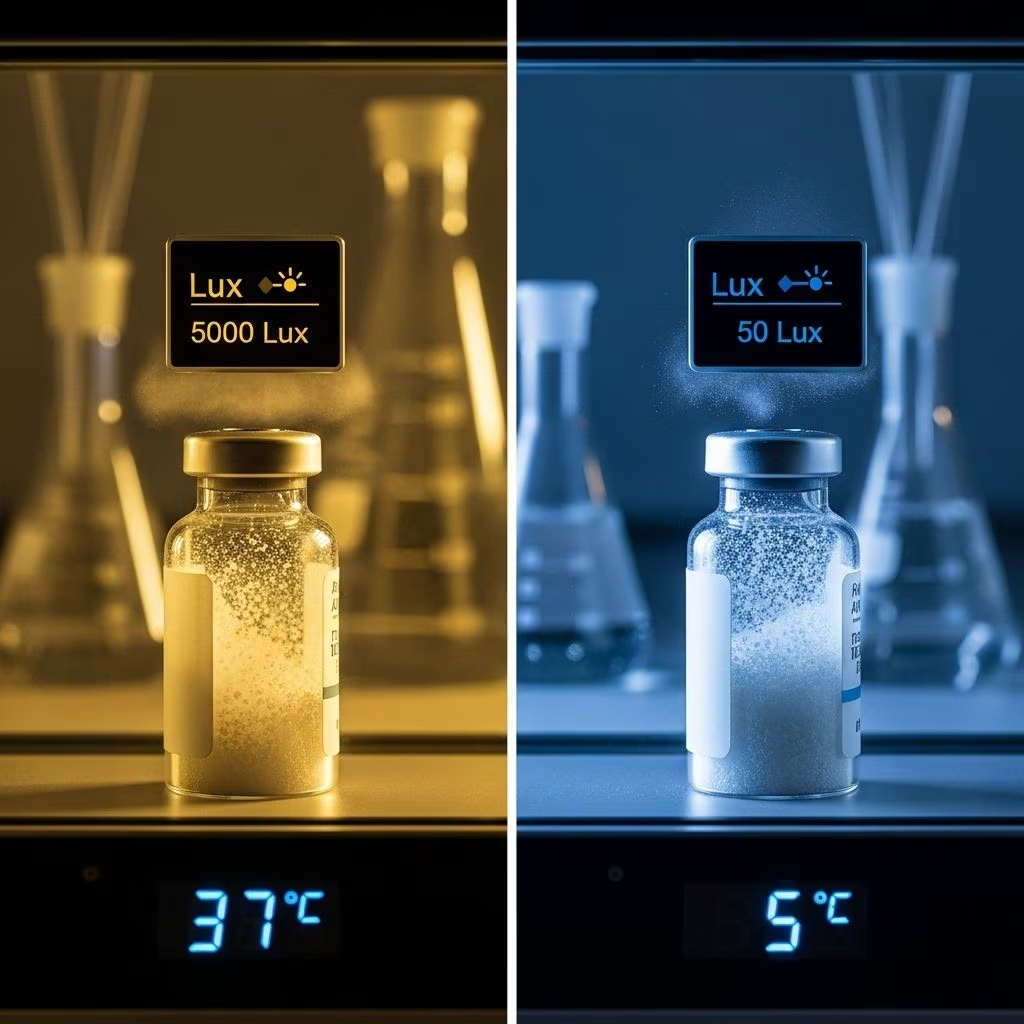
Light exposure can cause photodegradation, which alters the chemical structure of active ingredients. This process compromises their quality and performance, making stability testing essential before market release. For instance, (E)-artepillin C, a key component in Brazilian Green Propolis, requires protection from light to maintain its integrity and biological activity.
Temperature Degradation
Temperature is another critical factor influencing the stability of APIs. High temperatures can accelerate chemical reactions that lead to degradation, while low temperatures may cause structural changes in active ingredients that irreversibly alter their properties. Storage at controlled temperatures, such as refrigeration at 5°C, is often recommended to maintain the stability of sensitive compounds like those found in *Piper betle*.
Stability Testing
Stability testing plays a vital role in determining how environmental factors affect the quality of pharmaceuticals over time. Common methods include long-term stability testing and accelerated aging tests. Long-term testing involves storing products under controlled conditions for extended periods to observe their performance, while accelerated aging exposes products to extreme conditions to simulate long-term effects quickly.
Essential Equipment for Stability Testing
Stability chambers are crucial for maintaining precise temperature and humidity conditions necessary for reliable testing. These chambers use advanced cooling and heating systems to achieve and sustain the desired temperature range. Additionally, monitoring devices track conditions in real-time, ensuring compliance with regulatory standards and providing live data for analysis.
Kinetic Models of Degradation
Kinetic models, such as zero-order and first-order kinetics, are used to describe the degradation process of active ingredients over time. These models help in predicting the shelf life and stability under different storage conditions. For *Piper betle*, the zero-order kinetic model provided a better fit for describing the degradation kinetics of antioxidant activity under optimal storage conditions.
Storage Conditions for Specific Compounds
Different compounds have varying storage requirements based on their susceptibility to light and temperature:
- *Piper betle* Extracts: These extracts should be stored at low temperatures (5°C) in the dark to maintain more than 95% of their total phenolic content and antioxidant activity.
- (E)-Artepillin C: Requires storage below -2.5°C and protection from light to maintain its stability.
- (E)-p-Coumaric Acid: Can be stored at room temperature due to its higher stability compared to (E)-artepillin C.
Handling Temperature Excursions
Temperature excursions can occur during storage or transport, potentially leading to degradation of sensitive products. Manufacturers must have strategies to handle such excursions, including maintaining accurate documentation and understanding the consequences of temperature deviations on product quality.
Conclusion
In conclusion, the storage of active pharmaceutical ingredients requires careful consideration of light and temperature conditions to prevent degradation. Understanding how these factors affect different compounds is essential for maintaining their quality and efficacy. By implementing appropriate storage strategies and utilizing stability testing methods, manufacturers can ensure that their products remain effective throughout their shelf life.
Frequently Asked Questions (FAQs)
Q: What is photodegradation, and how does it affect active ingredients?
A: Photodegradation is the process of chemical degradation caused by light exposure. It can alter the chemical structure of active ingredients, compromising their quality and biological activity.
Q: Why is stability testing important for pharmaceuticals?
A: Stability testing is crucial for determining how environmental factors affect the quality of pharmaceuticals over time. It helps in establishing shelf life and ensuring that products maintain their efficacy until expiration.
Q: How do kinetic models help in understanding degradation?
A: Kinetic models, such as zero-order and first-order kinetics, are used to describe and predict the rate of degradation of active ingredients under different storage conditions. This helps in optimizing storage conditions and predicting shelf life.
References
- https://pmc.ncbi.nlm.nih.gov/articles/PMC6017861/
- https://pubmed.ncbi.nlm.nih.gov/31679843/
- https://www.pharmoutsourcing.com/Featured-Articles/146648-Handling-Temperature-Excursions-and-the-Role-of-Stability-Data/
- https://vicihealthsciences.com/stability-chambers-explained/
- https://aocs.onlinelibrary.wiley.com/doi/10.1007/s11746-013-2270-8


