


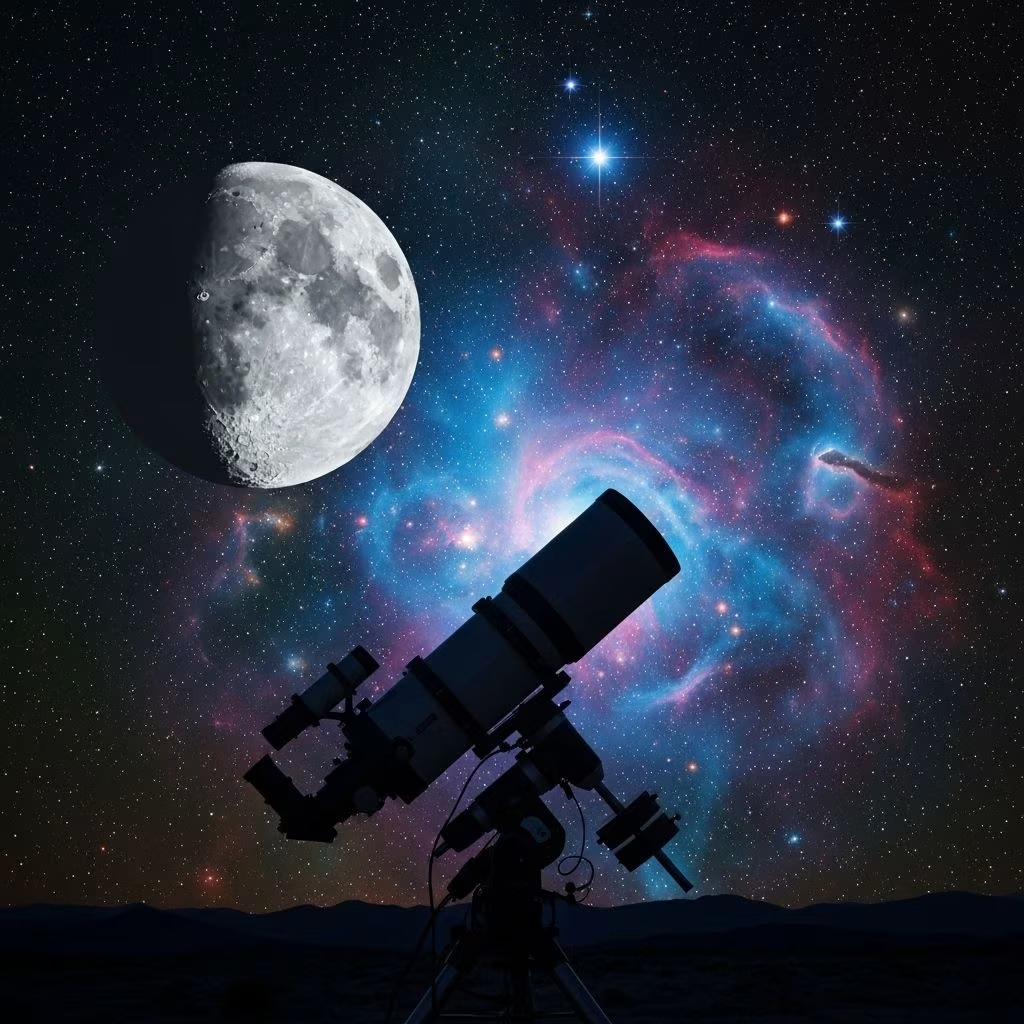
Introduction: The Window to the Universe
Observing the moon and celestial bodies offers one of humanity’s most profound experiences, providing a tangible connection to the vast cosmos that surrounds us. This ancient practice has evolved from simple naked-eye observations to sophisticated telescopic studies, yet the fundamental sense of wonder and perspective it provides remains unchanged. When we turn our gaze skyward, we embark on a journey that transcends our earthly concerns and connects us with the infinite expanse of space and time.
The practice of celestial observation serves multiple purposes beyond mere scientific curiosity. It cultivates patience, develops observational skills, and most importantly, provides a humbling perspective on our place in the universe. The moon, being our closest celestial neighbor, serves as the perfect starting point for this cosmic journey, offering detailed surface features that can be observed even with modest equipment.
Mastering Lunar Observation
Understanding Lunar Phases and Their Significance
The moon’s predictable cycle through its phases creates a rhythmic pattern that has guided human civilization for millennia. Each phase presents unique observational opportunities, from the dramatic shadows cast during crescent phases to the fully illuminated surface during the full moon. The waxing and waning periods offer the most rewarding viewing experiences, as the interplay between light and shadow reveals the moon’s three-dimensional topography with stunning clarity.
The terminator, the boundary line between the illuminated and dark portions of the moon, provides the most spectacular viewing opportunities. This region experiences perpetual sunrise or sunset, creating extreme lighting angles that cast deep shadows across the lunar landscape. Mountains, craters, and valleys become dramatically pronounced along this boundary, offering observers a constantly changing tableau of celestial geology.
Lunar Features and What They Reveal
The moon’s surface tells the story of billions of years of cosmic history. The dark gray regions, known as maria or \”seas,\” are ancient lava flows that filled massive impact basins. These smooth plains contrast sharply with the bright, heavily cratered highlands that represent the moon’s original crust. Each crater visible through a telescope represents a moment in cosmic history when an asteroid or comet collided with the lunar surface.
Prominent features like the crater Tycho, with its spectacular ray system visible during full moon, or the towering peaks of the lunar Apennine Mountains, provide excellent targets for detailed observation. The absence of atmosphere on the moon means these features remain pristine, offering us a window into the violent early history of our solar system.
Beyond the Moon: Exploring Celestial Bodies
Planetary Observations
The planets of our solar system offer diverse observational challenges and rewards. Venus, often called the morning or evening star, appears as a brilliant point of light that cycles through phases similar to the moon. Mars reveals seasonal changes in its polar ice caps and dust storms that can engulf the entire planet. Jupiter displays its famous Great Red Spot and four largest moons, discovered by Galileo over 400 years ago.
Saturn presents perhaps the most spectacular sight in the amateur astronomer’s repertoire with its magnificent ring system. These observations connect us directly with the pioneering astronomers of the past while revealing the dynamic nature of our solar system neighborhood.
Deep Sky Objects and Their Perspective Value
Star clusters, nebulae, and galaxies represent the next level of celestial observation, each offering unique insights into cosmic scales and processes. The Orion Nebula showcases stellar birth, while the Andromeda Galaxy reminds us that our Milky Way is just one of billions of galaxies in the observable universe. These objects require darker skies and more advanced techniques but provide unparalleled perspective on our cosmic insignificance and the incredible beauty of the universe.
Essential Equipment for Celestial Observation
Choosing Your First Telescope
The selection of observational equipment depends largely on your goals, budget, and observing conditions. For lunar observation, almost any telescope will provide excellent results. Refracting telescopes with apertures of 70mm or larger offer sharp, high-contrast images ideal for lunar and planetary work. Reflecting telescopes, particularly those with mirrors 100mm or larger, provide excellent value and performance for all types of celestial observation.
Catadioptric telescopes, such as Schmidt-Cassegrain or Maksutov-Cassegrain designs, offer compact, versatile solutions that excel in both lunar and deep-sky observation. These instruments combine the advantages of both refracting and reflecting designs while maintaining portability.
Essential Accessories
| Accessory | Purpose | Recommendation |
|---|---|---|
| Eyepieces | Magnification options | 25mm, 10mm, and 6mm focal lengths |
| Moon Filters | Reduce lunar brightness | Neutral density or polarizing filters |
| Star Charts | Navigation and identification | Planisphere or astronomy apps |
| Red Flashlight | Preserve night vision | Adjustable brightness LED |
| Barlow Lens | Double magnification | 2x or 3x quality Barlow |
Alternative Equipment Options
Binoculars represent an often-overlooked tool for celestial observation. Models with 7×50 or 10×50 specifications provide wide-field views perfect for scanning the lunar surface or observing star clusters. Larger binoculars, such as 15×70 or 20×80 models, bridge the gap between handheld instruments and telescopes, though they typically require tripod mounting for steady viewing.
Advanced Observation Techniques
Maximizing Image Quality
Successful celestial observation requires mastering several key techniques. Proper focusing is crucial and often requires patience and practice. The moon’s brightness can make precise focusing challenging, so many observers use lunar filters to reduce glare and improve contrast. High magnification should be used judiciously, as atmospheric turbulence often limits the effective magnification regardless of telescope capability.
The concept of \”steady seeing\” becomes critical when pushing magnification limits. Atmospheric disturbances cause celestial objects to appear to shimmer and dance. Experienced observers learn to wait for moments of exceptional stability to capture fine details, particularly when observing planetary features or lunar formations.
Systematic Observation Methods
Developing systematic observation techniques enhances both the learning experience and the scientific value of your observations. Start with low magnification to orient yourself, then gradually increase magnification to examine specific features. Use lunar maps and charts to identify and name the features you observe, building familiarity with lunar geography.
Progressive observation sessions, where you return to the same features under different lighting conditions, reveal how dramatically appearance can change. This technique works particularly well with prominent craters and mountain ranges, showing how shadows and illumination angles affect visibility and appearance.
Optimal Timing and Atmospheric Conditions
Understanding Atmospheric Effects
Earth’s atmosphere significantly impacts celestial observation quality. Atmospheric turbulence, humidity, and thermal currents all affect image stability and clarity. The best observing conditions typically occur when the atmosphere is stable, often after the passage of weather fronts or during high-pressure systems.
Temperature differentials between day and night can create thermal currents that degrade image quality. Many experienced observers prefer to wait several hours after sunset for the atmosphere to stabilize, particularly when observing at high magnifications.
Seasonal Considerations
Different seasons offer varying advantages for celestial observation. Winter months often provide the clearest, steadiest skies in many locations, though cold temperatures can create equipment challenges. Spring and fall typically offer comfortable observing conditions with reasonably stable atmospheres. Summer may provide warm, comfortable nights but often comes with increased atmospheric turbulence.
The moon’s path through the sky changes throughout the year, affecting optimal viewing times and telescope positioning. Understanding these patterns helps observers plan successful viewing sessions and avoid awkward telescope positions.
How Celestial Observation Changes Perspective
Emotional and Psychological Impact
Regular observation of celestial bodies creates profound shifts in perspective that extend far beyond astronomical knowledge. The direct, visceral experience of seeing lunar mountains and valleys, planetary phases, and distant galaxies creates an emotional connection to the cosmos that textbooks and images cannot replicate. This connection often results in a sense of cosmic humility and wonder that influences how observers view their place in the universe.
The practice develops patience and mindfulness as observers learn to slow down and carefully examine celestial phenomena. The meditative quality of long observing sessions provides respite from daily stresses while fostering deep concentration and present-moment awareness.
Scientific and Educational Benefits
Celestial observation provides hands-on experience with fundamental astronomical concepts. Watching the moon’s phases progress reinforces understanding of orbital mechanics, while planetary observations demonstrate the diversity of worlds within our solar system. These direct observations create lasting memories that enhance comprehension of astronomy and space science concepts.
The practice also develops critical thinking skills as observers learn to distinguish between atmospheric effects and actual celestial phenomena, understand the limitations of their equipment, and make accurate observations despite challenging conditions.
Recording and Documenting Your Observations
Sketching and Note-Taking
Creating sketches and detailed notes during observations serves multiple important purposes. Sketching forces careful attention to detail and helps observers notice subtle features they might otherwise overlook. Even simple drawings capture the observer’s personal perspective and create lasting records of particularly memorable viewing sessions.
Detailed notes should include date, time, atmospheric conditions, equipment used, and specific observations. This documentation becomes increasingly valuable over time, allowing observers to track their developing skills and return to particularly interesting or challenging targets.
Photography and Digital Documentation
Modern digital cameras and smartphones enable observers to capture images of their telescope views, though lunar photography presents unique challenges due to the moon’s brightness. Simple smartphone adapters allow beginners to take reasonable lunar photographs through their telescopes, while more advanced astrophotography techniques can produce stunning detailed images.
Digital documentation tools, including astronomy software and mobile apps, help observers plan sessions, identify features, and maintain observation logs. These tools enhance the traditional observing experience while providing modern conveniences for navigation and documentation.
Frequently Asked Questions
Q: What is the best time to observe the moon?
A: The best times are during the waxing and waning phases, particularly around first and third quarter when the terminator line creates dramatic shadows. Avoid the full moon for detailed observation as the lack of shadows reduces surface contrast.
Q: Do I need an expensive telescope to see lunar details?
A: No, even modest telescopes with 60-80mm apertures reveal impressive lunar details. The moon is bright and large enough that almost any telescope will show craters, mountains, and surface features clearly.
Q: Why do I need a moon filter?
A: Moon filters reduce the moon’s brightness, improving contrast and reducing glare. This makes it easier to see subtle details and prevents eye fatigue during extended observing sessions.
Q: Can I observe celestial bodies from the city?
A: Yes, the moon and bright plants are easily visible from urban locations. However, deep-sky objects like star clusters and nebulae require darker skies away from city lights for optimal viewing.
Q: How does celestial observation change one’s perspective?
A: Regular observation creates a deep appreciation for cosmic scales and our place in the universe. It fosters patience, mindfulness, and scientific curiosity while providing a humbling reminder of the vastness beyond Earth.
Q: What should I observe after mastering lunar observation?
A: Progress to observing planets like Jupiter and Saturn, then explore double stars, star clusters, and bright nebulae. Each type of object presents unique challenges and rewards that build upon lunar observing skills.
Observing the moon and celestial bodies offers a transformative journey that connects us with the cosmos while developing patience, scientific understanding, and cosmic perspective. Whether using simple binoculars or sophisticated telescopes, this ancient practice continues to inspire wonder and provide profound insights into our place in the universe. The key lies not in having the most expensive equipment, but in developing the patience and technique to truly see and appreciate the celestial wonders that surround us each night.
References
- https://astronomysource.com/observe-planets/moon-with-a-telescope/
- https://www.astronomy.com/observing/10-tips-for-observing-the-moon/
- https://astrotelescopios.com/en-us/blogs/telescopios/consejos-para-la-observacion-de-la-luna-con-un-telescopio
- https://www.celestron.com/blogs/knowledgebase/the-ultimate-guide-to-observing-the-moon
- https://www.astronomy.com/astronomy-for-beginners/michaels-miscellany-tips-for-observing-the-moon-part-2/
- https://www.cloudynights.com/topic/770182-how-to-observe-the-moon/
- https://www.cloudynights.com/topic/638291-observing-techniques/
- https://rasc.ca/observing/explore-the-moon-observing-certificate


