


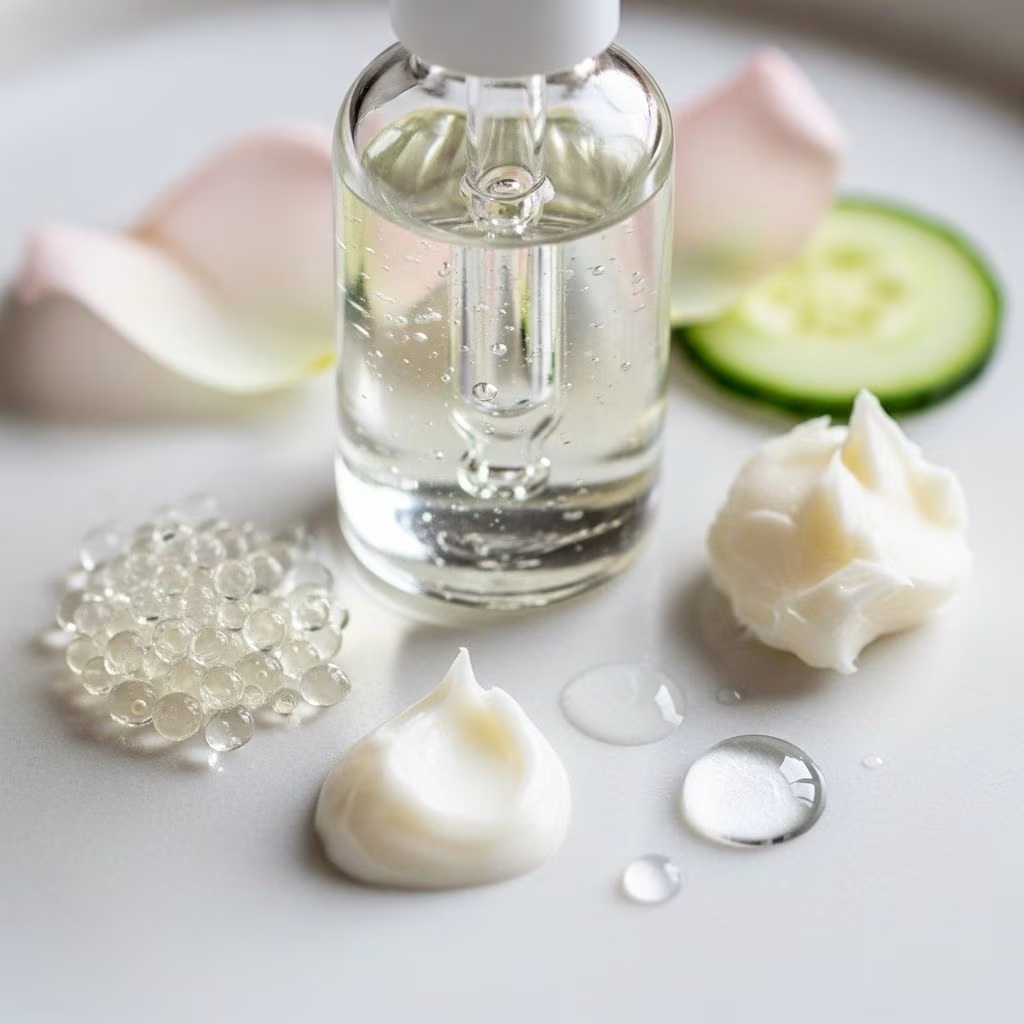
Humectants & Occlusives in Hydrating Essences: Foundations of Advanced Skin Hydration and Barrier Protection
Hydrating essences are at the heart of contemporary skincare routines, especially the widely coveted multi-step regimens inspired by Asian beauty rituals. The efficacy of these lightweight but potent liquids hinges on two major ingredient classes: humectants and occlusives. Understanding their mechanisms and interplay in hydrating essences unlocks deeper, lasting skin hydration and improved barrier resilience.
Table of Contents
- Introduction to Hydrating Essences
- What Are Humectants?
- What Are Occlusives?
- Roles of Humectants and Occlusives in Essences
- Key Humectant and Occlusive Ingredients in Hydrating Essences
- Formulation Strategies and Layering
- Matching Essences to Skin Types
- Integrating Hydrating Essences into Your Routine
- Benefits: Immediate and Long-Term Effects
- Frequently Asked Questions (FAQs)
Introduction to Hydrating Essences
Hydrating essences—sometimes called pre-serums—are featherlight liquids, typically used after cleansing and before serum application. With origins in Asian (especially Korean and Japanese) skincare, essences have grown popular worldwide for their ability to deliver hydration, prep the skin, and facilitate absorption of subsequent actives.
Essences stand apart due to their focus on deep hydration and skin barrier support, mainly achieved through the right balance of humectants and occlusives.
Textural Attributes: Essences are generally water-based, with a low molecular weight to penetrate the skin’s outermost layers, leaving skin feeling supple—not greasy. They bridge the gap between toner and serum, yet offer unique benefits by targeting hydration more efficiently than either alone.
What Are Humectants?
Humectants are ingredients that attract and bind water molecules, drawing moisture from the environment and underlying layers into the skin.
They act like magnets for water, giving skin a plump, dewy, and hydrated appearance. In Hydrating Essences, humectants are prized for:
- Increasing skin hydration by attracting moisture.
- Softening and smoothing the skin surface.
- Enhancing penetration of other actives by prepping the skin’s microenvironment.
Common humectants you may find in essences:
- Hyaluronic Acid/Sodium Hyaluronate
- Glycerin
- Betaine
- Sodium PCA (Pyrrolidone Carboxylic Acid)
- Panthenol
- Urea
- Propylene Glycol
- Aloe Vera Juice
Humectants can be synthetic or naturally derived. Their effectiveness depends on concentration, supporting ingredients, and the surrounding humidity.
In essence formulations: Humectants are the backbone for immediate hydration and skin plumping.
What Are Occlusives?
Occlusives are substances that form a barrier on the skin, preventing water loss by physically blocking evaporation from its surface.
They do not add moisture per se, but they help the skin retain what it already has—especially when layered over humectants to seal hydration.
Primary functions of occlusives:
- Preventing transepidermal water loss (TEWL).
- Protecting and reinforcing the skin barrier.
- Locking in hydration provided by humectants underneath.
Common occlusive ingredients:
- Petrolatum
- Lanolin
- Mineral Oil
- Dimethicone and other Silicones
- Plant Oils (e.g., sunflower, grapeseed, rose essential oil)
- Beeswax
- Squalane
While heavier occlusives may be reserved for creams and balms, many essences opt for lightweight plant-derived oils or silicone-based ingredients to offer a breathable, non-greasy feel suitable for layering.
Roles of Humectants and Occlusives in Essences
| Ingredient Type | Primary Mechanism | Examples | Benefits in Essences |
|---|---|---|---|
| Humectant | Draws water into the skin | Hyaluronic acid, Glycerin, Betaine, Sodium PCA | Hydration, Plumping, Softening |
| Occlusive | Locks moisture within the skin | Plant oils, Silicones, Squalane | Barrier protection, Reduced water loss |
Synergy: The most advanced hydrating essences combine multiple humectants for different molecular weights—some penetrate deeply while others hydrate the surface—then follow with occlusives that lock in the benefits for longer-lasting hydration and skin comfort.
Key Humectant and Occlusive Ingredients in Hydrating Essences
Humectant Stars
- Hyaluronic Acid: Found in different molecular sizes; low weights penetrate deeper for profound hydration, while higher weights stay on the surface for an instant plump.
- Glycerin: A classic, affordable, and efficient humectant that softens, hydrates, and enhances elasticity.
- Betaine: Natural amino acid derivative found in sugar beets, provides soothing hydration and helps maintain skin balance.
- Sodium PCA: Part of the skin’s own natural moisturizing factor; pulls moisture from the air and deeper layers for extended comfort.
Modern Occlusive Choices
- Sunflower Oil & Grapeseed Oil: Lightweight, non-comedogenic occlusives, rich in antioxidants and fatty acids, offering protection with breathability.
- Rose Essential Oil: Adds aromatic and anti-inflammatory benefits, gently sealing in moisture.
- Dimethicone: Non-irritating silicone that locks hydration and helps smooth skin texture without heaviness.
- Squalane: Balancing, lightweight occlusive; mimics skin’s sebum to maintain comfort and barrier function.
Formulation Strategies and Layering
Modern hydrating essences typically combine multiple humectants with lightweight occlusives, rarely using heavier barrier ingredients seen in ointments or creams. This permits:
- Rapid absorption and a non-sticky finish.
- Layering under serums and moisturizers for personalized hydration.
- Micro-dosing potent actives, such as vitamin C or fermented botanicals, without irritation.
Formulators’ focus: Use appropriate humectants for both immediate plumping and long-term hydration, then complement with occlusives that reinforce the skin barrier. Especially with dual-phase essences, such as those blending water and lipid phases, the synergy is pronounced (e.g., Lancôme’s Clarifique Dual Essence which fuses French Beech Bud Extract with nourishing oils and vitamin E).
Matching Essences to Skin Types
- Dry Skin: Benefits from potent humectant blends (multiple hyaluronic acids) with gentle plant-based occlusives for enduring moisture lock.
- Oily/Combination Skin: Prefers lighter humectants, careful occlusives (non-comedogenic), and possible pore-refining actives like glycolic acid.
- Sensitive Skin: Utilizes soothing humectants (betaine, panthenol) and non-irritating occlusives (squalane, dimethicone); enhanced barrier protection and calm.
- Mature Skin: Requires a blend of deep humectants and barrier-repair occlusives, possibly paired with actives supporting cell regeneration (e.g., fermented extracts).
Tip: Always assess ingredient compatibility and patch-test, especially for sensitive or acne-prone skin.
Integrating Hydrating Essences into Your Routine
- Use after cleansing and toning, before serums and moisturizers.
- Apply to damp skin to optimize absorption.
- Pat in gently with hands for better penetration; avoid cotton pads which may absorb product unnecessarily.
- Layering: Hydrating essences add a foundational moisture layer, amplifying the effects of serums and creams that follow.
Benefits: Immediate and Long-Term Effects
| Immediate Effects | Long-Term Benefits |
|---|---|
|
|
Frequently Asked Questions (FAQs)
Q: Is it necessary to use both humectants and occlusives in one essence?
A: While some hydrating essences focus primarily on humectants for immediate hydration, inclusion of lightweight occlusives helps lock in those benefits, reducing water loss and optimizing skin barrier health—especially in drier climates or for dehydrated skin.
Q: Are hydrating essences suitable for oily or acne-prone skin?
A: Yes, provided the occlusives used are lightweight and non-comedogenic (like sunflower oil or squalane). Humectant-based essences can improve hydration without making the skin greasy; pore-refining actives may amplify their suitability for combination types.
Q: How do humectants differ from moisturizers?
A: Humectants are ingredients that draw water into the skin. Many moisturizers combine humectants, occlusives, and emollients; however, hydrating essences focus on the first two, enabling better layering and absorption of subsequent products.
Q: Can hydrating essences replace serums?
A: No; serums are typically formulated for targeted treatment (e.g., anti-aging, brightening), often with actives at higher concentrations. Essences mostly hydrate and prep the skin for deeper serum absorption.
Q: How soon will I see results after using a hydrating essence with humectants and occlusives?
A: Many users report softer, more hydrated skin immediately after application, with cumulative improvements in radiance, resilience, and barrier function over 2–4 weeks of regular use.
Final Thoughts: Science-Driven Skin Comfort
Modern hydrating essences harness the synergistic powers of humectants and occlusives, offering tailored solutions for a range of skin types and needs. Their well-balanced formulas deliver a deeply moisturized, fortified complexion that stands up to environmental stressors and time. By integrating a science-driven approach to ingredient selection and mindful layering, you can unlock the full spectrum of hydration and protection for resilient, glowing skin.
References
- https://emmas.com/inspiration/hydratingessence
- https://jurlique.com/blogs/news/everything-you-need-to-know-about-face-essences
- https://www.lancome.com.au/beauty-magazine/benefits-facial-essence.html
- https://theordinary.com/en-us/blog/what-is-skincare-for-essence.html
- https://www.shiseido.com/us/en/eudermine-activating-essence-9990000000221.html


