


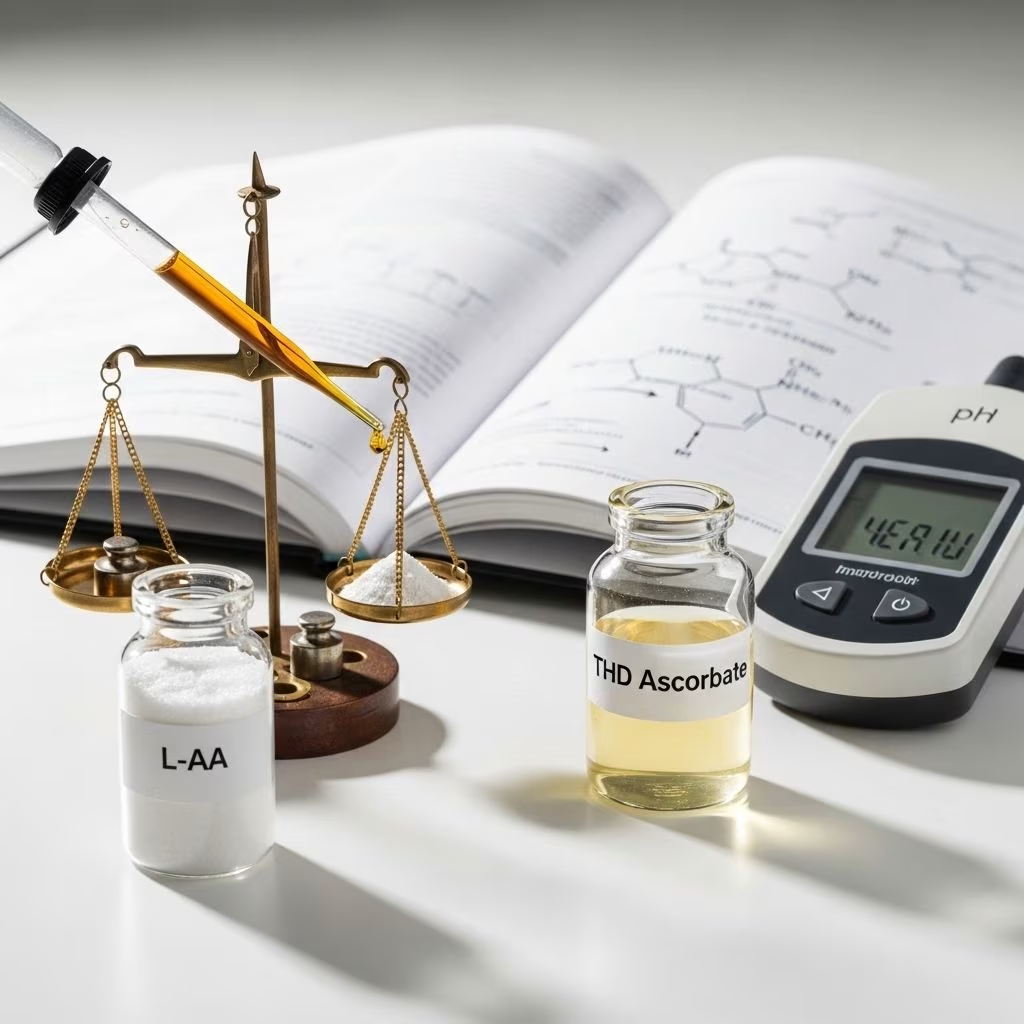
L-AA vs THD Ascorbate: Stability & Efficacy in Modern Skincare
Vitamin C remains a gold-standard ingredient in skincare, celebrated for its potent antioxidant properties and ability to brighten skin, boost collagen synthesis, and fight signs of aging. However, not all vitamin C molecules are created equal. This comprehensive guide explores the science behind two leading vitamin C ingredients—L-ascorbic acid (L-AA) and tetrahexyldecyl ascorbate (THD ascorbate)—focusing on their stability and efficacy in cosmetic formulations.
Introduction
With increased awareness of oxidative stress, photoaging, and environmental damage, the demand for effective vitamin C skincare products has skyrocketed. Yet, not every formula can guarantee stability, adequate skin absorption, and enduring efficacy. L-ascorbic acid (L-AA) is the pure, water-soluble form of vitamin C found naturally in foods, while THD ascorbate (tetrahexyldecyl ascorbate) is a newer, oil-soluble derivative designed for improved stability and absorption. This article examines their properties, strengths, weaknesses, and how they measure up for long-term skincare goals.
Vitamin C Forms Overview
Vitamin C in skincare can be delivered as either the pure molecule (ascorbic acid) or through molecular derivatives, which are engineered to be more stable and skin-friendly. The most common forms:
- L-Ascorbic Acid (L-AA): The unmodified, water-soluble version. Highly researched. Rapidly degrades when exposed to light, air, and water.
- THD Ascorbate: Also called tetrahexyldecyl ascorbate, this is an oil-soluble derivative. Notably more stable, less irritating, and can penetrate deeper skin layers.
- Other derivatives include sodium ascorbyl phosphate, magnesium ascorbyl phosphate, ascorbyl glucoside, ascorbyl tetraisopalmitate amongst others.
Each has unique chemical properties impacting their performance and compatibility with skin.
L-Ascorbic Acid: Properties and Drawbacks
L-AA is synonymous with vitamin C and is revered for its high bioactivity. Its proven skin benefits include:
- Powerful antioxidant action
- Stimulation of collagen synthesis
- Reduction of pigmentation and improvement of skin radiance
- Protection from photoaging via enhancing sun protection
- Repair of skin barrier properties
- Support of anti-inflammatory pathways
However, L-AA faces major challenges as a topical ingredient:
- Stability: L-AA is notoriously unstable. It oxidizes quickly in contact with air, moisture, and light, losing potency and efficacy.
- Penetration: Being water-soluble, it struggles to traverse the lipid-rich outer skin barrier effectively.
- Formulation: Products must be carefully packaged and pH-balanced (typically between 2.5 and 3.5) to preserve L-AA and facilitate absorption—making it expensive and technologically demanding to formulate.
- Irritation Risk: At high strengths, L-AA may cause stinging or redness, especially in sensitive skin.
THD Ascorbate: Scientific Advances in Formulation
THD Ascorbate represents an innovative approach to vitamin C delivery. It is an oil-soluble, esterified form of L-ascorbic acid, created by linking ascorbic acid to tetrahexyldecyl (a branched-chain fatty acid molecule). This molecular change offers multiple benefits:
- Enhanced Stability: THD ascorbate resists oxidation and maintains potency even in the presence of light and air, unlike L-AA.
- Improved Penetration: Its oil-solubility means that THD easily integrates into cell membranes and passes through the lipophilic stratum corneum, reaching deeper skin layers.
- Lower Irritation Potential: Less likely to cause stinging or redness, making it suitable for sensitive or reactive skin.
- Effective at Lower Concentrations: Studies indicate it can be active at concentrations as low as 3–10%, while L-AA is often applied in 10–20% formulations.
THD is considered a vitamin C pro-drug: once inside skin cells, it undergoes enzymatic conversion to L-ascorbic acid, preserving essential biological activity. This conversion is facilitated by carboxylesterase-2, an enzyme prevalent in epidermal tissues.
Stability: L-AA vs THD Ascorbate
| Property | L-Ascorbic Acid (L-AA) | THD Ascorbate |
|---|---|---|
| Chemical Stability | Degrades rapidly with exposure to air, water, and light. Requires protected packaging. | Highly stable against oxidation and photodegradation. Maintains activity in standard skincare formats. |
| Formulation Life | Short shelf-life unless buffered by pH and antioxidants. Needs air-tight containers. | Longer shelf-life; stable in conventional packaging and compatible with a wider pH range. |
| Irritation Potential | Higher risk, particularly at potent concentrations (10–20%). | Low risk. Suitable for sensitive skin at active doses (3–10%). |
Key Insights: THD ascorbate outperforms L-AA in terms of chemical stability and tolerance, reducing the risk of premature degradation and application irritation. However, THD’s in vivo stability can diminish in the presence of reactive oxygen species (ROS), with some studies indicating its antioxidant capacity is weaker compared to L-AA unless stabilized with co-ingredients like acetyl zingerone (AZ) .
Skin Penetration & Bioavailability: Comparing Performance
The ability to penetrate skin and be available for biological activity is critical for vitamin C efficacy. Here’s how L-AA and THD ascorbate differ:
- L-AA: Absorbed only through aqueous pathways. Limited by the skin’s lipid-rich barrier. Requires acidic pH to facilitate entry.
- THD Ascorbate: Oil-soluble, so it integrates smoothly with skin’s lipid matrix. This allows it to be delivered to deeper skin layers without requiring harsh acidity. It is then enzymatically converted to biologically active L-AA where needed.
THD has shown superior penetration in laboratory studies, and its conversion to active L-AA within skin cells means it can realize the full spectrum of vitamin C benefits without barrier limitations.
Effects, Results, and Clinical Outcomes
Both L-AA and THD ascorbate have demonstrated visible improvements in skin health, though their outcome profiles differ based on formulation and dose:
- L-AA Benefits:
- Maximal antioxidant activity
- Visible reduction in fine lines, wrinkles, pigmentation
- Potent support for collagen synthesis
- Improved skin radiance and texture
- THD Ascorbate Benefits:
- Long-lasting antioxidant protection
- Effective skin brightening and reduction of photodamage
- Reduced hyperpigmentation and improved skin tone continuity
- Enhanced penetration leads to superior support of cell membrane resilience and hydration
- Lower irritation makes it suitable for daily use in sensitive skin
Clinical studies have shown THD ascorbate to promote endogenous collagen production and decrease signs of aging such as wrinkling and uneven pigmentation. Its stability also allows sustained antioxidant protection over time, especially when formulated with stabilizing agents like acetyl zingerone.
Formulation Considerations
- L-AA:
- Requires careful pH buffering (optimal range: 2.5–3.5).
- Needs air-tight, opaque packaging to prevent oxidation.
- Can be fortified with additional antioxidants for extended shelf life.
- Typically formulated at higher concentrations (10–20%).
- THD Ascorbate:
- Stable under standard conditions; compatible with emulsions and oils.
- Effective at lower concentrations (3–10%) so formulation costs may be lower.
- Can be combined with antioxidants like acetyl zingerone for improved protection against ROS-induced breakdown.
- Suited for sensitive or compromised skin requiring gentle care.
Manufacturers often choose THD for formulas requiring long-term shelf stability and gentle application. L-AA remains a preferred choice for clinical-strength actives and rapid, visible results when properly stabilized.
Potential Side Effects and Precautions
| Form | Common Side Effects | Precautions/Recommendations |
|---|---|---|
| L-AA | Redness, stinging, tingling, dryness (especially at high concentrations) | Patch test before use; select formulas with buffered pH; avoid in compromised skin. |
| THD Ascorbate | Generally well tolerated. Rare sensitivity reactions possible. | Choose reputable brands; monitor for irritation if you have extremely sensitive skin; combine with antioxidants for best results. |
Frequently Asked Questions (FAQs)
- Q: Which form of vitamin C is more effective for skin brightening?
A: Both L-AA and THD ascorbate show excellent results. L-AA may demonstrate faster effects, but THD ascorbate maintains efficacy over longer periods and at lower irritation risk. - Q: Is THD ascorbate safer for sensitive skin?
A: Yes, its oil-solubility and lower irritant potential make it a preferred option for sensitive or reactive skin types. - Q: Can THD ascorbate replace L-ascorbic acid?
A: THD is converted into L-AA within skin cells, so it offers the same core biological actions, but with greater stability. For targeted, clinical-strength changes (such as post-procedure skin), L-AA may still be superior. - Q: What concentration range is best for THD ascorbate?
A: Clinical results support efficacy at 3–10%, whereas L-AA is typically used at 10–20%. - Q: Does THD ascorbate need to be stabilized?
A: It is inherently stable, but its antioxidant capacity and in vivo half-life improve with added stabilizers like acetyl zingerone.
Conclusion
L-ascorbic acid and tetrahexyldecyl ascorbate represent two leading forms of topical vitamin C, each with distinct advantages. L-AA boasts maximum potency and direct action but at the cost of instability and higher irritation risk. THD ascorbate offers remarkable stability, enhanced skin penetration, and high tolerability, making it ideal for sensitive or long-term use. Combining THD with stabilizing antioxidants such as acetyl zingerone can further extend its benefits, ensuring sustained antioxidant protection and visible anti-aging outcomes. Ultimately, choosing between L-AA and THD ascorbate depends on individual skin needs, formulation preference, and the desired balance between rapid results and gentle care.
References
- https://pmc.ncbi.nlm.nih.gov/articles/PMC8395926/
- https://www.findyourageless.com/which-vitamin-c-is-right-for-optimal-skin-care/
- https://obagiuk.com/differences-in-vitamin-c
- https://chemistconfessions.com/blogs/which-vitamin-c-derivative-is-the-best-for-my-skin
- https://dermsolutionstx.com/the-abcs-of-vitamin-c-choosing-the-best-form-for-your-skin/
- https://cityskinclinic.com/types-vitamin-c-skincare/


