


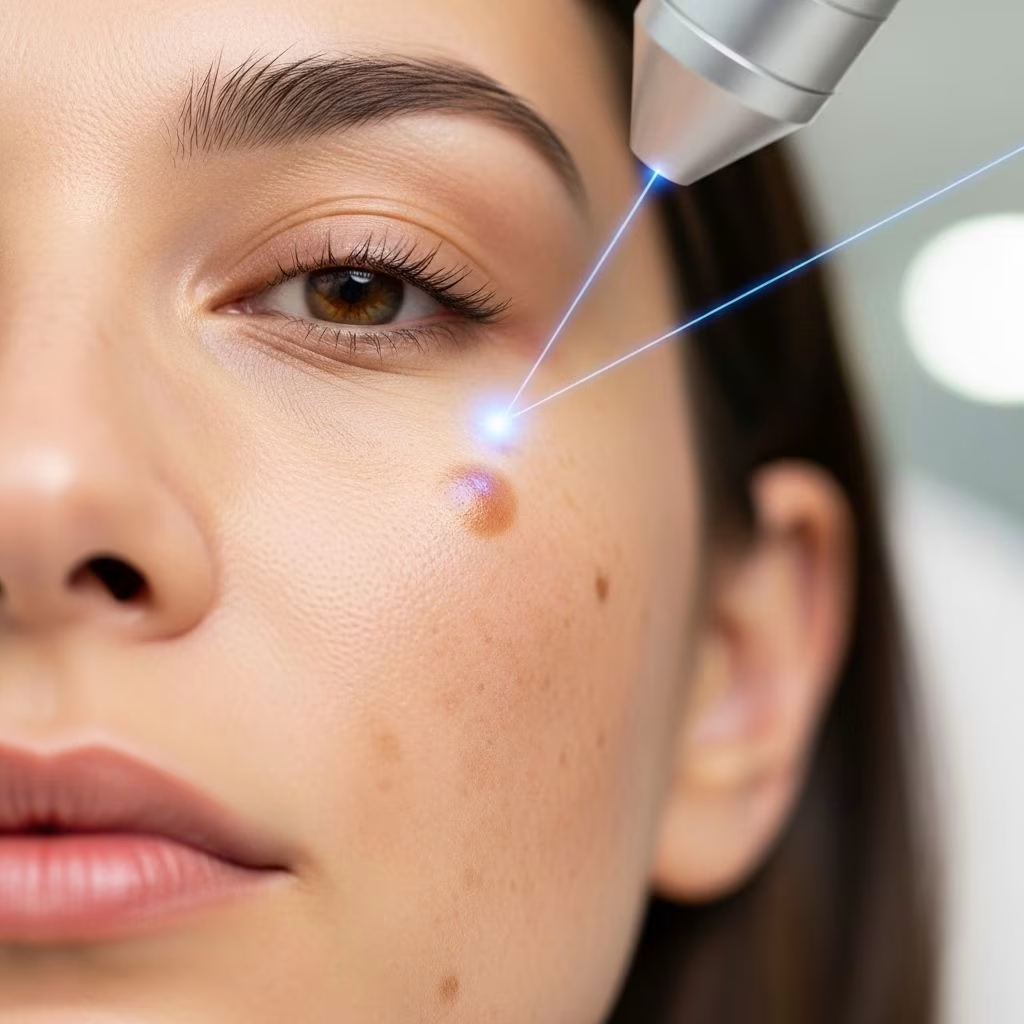
Hyperpigmentation disorders like sun spots and melasma affect millions of people worldwide, causing significant cosmetic concerns and impacting quality of life. While these conditions pose no direct health risks, understanding the scientific mechanisms behind their formation and treatment has revolutionized dermatological care. Laser therapy has emerged as one of the most effective treatments for these pigmentation disorders, offering targeted, precise, and scientifically-validated solutions that work at the cellular and subcellular levels.
The science of laser treatment for sun spots and melasma is rooted in sophisticated photobiological principles that allow practitioners to selectively target excess melanin while preserving surrounding healthy tissue. This comprehensive exploration examines the scientific foundations, mechanisms, and innovations that make laser therapy a cornerstone of modern pigmentation treatment.
Understanding Hyperpigmentation: Sun Spots and Melasma
Hyperpigmentation represents a common dermatological condition characterized by darker patches of skin resulting from excessive melanin production. Melanin serves as the primary determinant of skin pigmentation and hair color, and when overproduced in specific areas, it creates visible discoloration that can range from light brown to dark black.
Sun spots, also known as solar lentigines or age spots, develop from prolonged ultraviolet radiation exposure. These discrete, well-defined patches typically appear on sun-exposed areas like the face, hands, shoulders, and arms. The ultraviolet radiation triggers melanocytes to produce excess melanin as a protective response, but this pigment accumulates unevenly, creating visible spots.
Melasma represents a more complex form of hyperpigmentation, manifesting as symmetrical brown or tan patches primarily on facial areas. This condition involves multiple triggers including hormonal fluctuations during pregnancy or contraceptive use, sun exposure, genetic predisposition, and certain medications. Melasma often appears on the cheeks, forehead, upper lip, and chin in characteristic patterns. The condition affects deeper skin layers than sun spots, making it particularly challenging to treat with conventional topical therapies alone.
Both conditions result from melanocyte dysfunction, where specialized cells called melanocytes produce excessive amounts of melanin pigment. Understanding these cellular mechanisms provides the foundation for comprehending how laser treatments achieve their therapeutic effects.
The Science Behind Laser Treatment
Laser technology for pigmentation treatment operates on sophisticated photobiological principles that enable targeted destruction of excess melanin while minimizing collateral damage to surrounding tissues. The scientific foundation rests on understanding how different wavelengths of light interact with chromophores, the light-absorbing molecules in skin.
Melanin possesses a broad absorption spectrum spanning approximately 630 to 1100 nanometers, allowing various laser wavelengths to effectively target pigmented lesions. This wide absorption range provides dermatologists with multiple laser options, each offering distinct advantages based on wavelength characteristics, pulse duration, and energy delivery patterns.
The fundamental mechanism involves delivering targeted wavelengths of light into the skin to break down excess melanin deposits. When laser energy reaches melanin-containing structures, it converts light energy into thermal or mechanical energy, disrupting pigmented cells and fragmenting melanin particles into smaller components that the body’s immune system can naturally eliminate through phagocytosis.
Laser treatments also penetrate deeper skin layers compared to topical treatments or chemical peels, directly targeting melanocytes responsible for melanin production. This direct cellular interaction distinguishes laser therapy from surface-level treatments that cannot adequately address dermal pigmentation or deeply embedded melanin deposits.
Selective Photothermolysis: The Foundation
The principle of selective photothermolysis forms the cornerstone of modern laser dermatology and pigmentation treatment. This concept, which revolutionized cosmetic dermatology, involves using laser light at specific wavelengths to selectively target chromophores like melanin without damaging surrounding healthy skin structures.
Selective photothermolysis requires three critical parameters working in concert. First, the laser wavelength must match the absorption spectrum of the target chromophore—in this case, melanin. Second, the pulse duration must be shorter than or equal to the thermal relaxation time of the target structure, preventing heat diffusion to surrounding tissues. Third, sufficient energy fluence must be delivered to achieve the desired therapeutic effect while remaining below the damage threshold for adjacent structures.
For melanin-containing structures, melanosomes possess remarkably short thermal relaxation times ranging from 50 to 500 nanoseconds. This brief timeframe means lasers must deliver energy in extremely short pulses to confine thermal damage exclusively to pigmented targets. Q-switched lasers, producing nanosecond-duration pulses, align perfectly with these thermal relaxation requirements.
The selective photothermolysis approach delivers short pulses of high-intensity light that melanin absorbs preferentially. The absorbed energy breaks down pigment into smaller particles, which the body’s lymphatic system and macrophages gradually clear over subsequent weeks. This precision ensures that only affected skin areas receive treatment, leaving surrounding tissue intact—particularly crucial for delicate facial treatments where precision prevents unnecessary complications.
Subcellular Selective Photothermolysis
A revolutionary advancement in melasma treatment emerged with the concept of subcellular selective photothermolysis, introduced through research utilizing transmission electron microscopy to study ultrastructural changes within melanosomes following laser treatment. This refined approach represents a paradigm shift from traditional selective photothermolysis.
Traditional laser treatments based on conventional selective photothermolysis resulted in complete destruction and death of pigment-containing cells. While effective at removing pigmentation initially, cell death triggered inflammatory responses that frequently led to complications including repigmentation, recurrence, postinflammatory hyperpigmentation, rebound hyperpigmentation, and mottled depigmentation. These adverse effects stemmed from laser-induced basal layer damage and dermal inflammation.
Subcellular selective photothermolysis addresses these limitations by targeting only the melanin within cells while preserving the melanocyte itself. This technique employs high-peak power, ultrashort pulse durations around 5 nanoseconds, and flat-top beam profiles to achieve precise subcellular targeting. Research demonstrates that this approach causes selective photothermolysis specifically on Stage IV melanosomes—the mature, melanin-filled organelles—while melanocytes remain intact and viable.
Studies reveal that laser toning using this subcellular approach reduces epidermal melanocyte dendrites and destroys only melanosomes, leaving the parent cells alive. Since treatment fluence remains relatively low and cell death does not occur, inflammation and tissue heating minimize significantly, substantially reducing recurrence chances and complications. This represents the scientific basis for the popular laser toning technique that gained prominence in Southeast Asia and worldwide.
The laser toning protocol typically employs a low fluence, multipass technique over multiple sessions at weekly intervals, gradually reducing pigmentation while maintaining cellular integrity and minimizing inflammatory responses that trigger pigmentation recurrence.
Types of Lasers for Pigmentation Treatment
Multiple laser systems and wavelengths offer effective treatment options for sun spots and melasma, each with distinct scientific characteristics and clinical applications. Understanding these differences allows practitioners to select optimal treatments based on pigmentation depth, skin type, and specific patient characteristics.
| Laser Type | Wavelength | Pulse Duration | Primary Mechanism | Best For |
|---|---|---|---|---|
| Q-Switched Nd:YAG | 1064 nm | 5-10 ns | Subcellular photothermolysis | Deeper pigment, darker skin tones |
| Q-Switched Ruby | 694 nm | 20-40 ns | Selective photothermolysis | Superficial pigmentation, lighter skin |
| Q-Switched Alexandrite | 755 nm | 50-100 ns | Selective photothermolysis | Sun spots, epidermal melasma |
| Picosecond Lasers | 532-1064 nm | Picoseconds | Photoacoustic effect | Stubborn pigmentation, all skin types |
| Fractional Lasers | Various | Milliseconds | Controlled thermal zones | Combined texture and pigmentation |
The Q-Switched Nd:YAG laser operating at 1064 nanometers represents one of the most versatile and scientifically validated options for melasma treatment. This wavelength penetrates deeper into skin compared to shorter wavelengths, effectively targeting dermal pigment while maintaining safety for darker skin tones. The longer wavelength reduces melanin absorption in the epidermis, minimizing superficial thermal damage that could trigger postinflammatory hyperpigmentation in darker-skinned individuals. Research consistently identifies Q-Switched Nd:YAG laser therapy among the most effective monotherapies for melasma, with combination approaches yielding even better outcomes.
Picosecond lasers represent the latest technological advancement, delivering ultra-short pulses measured in trillionths of a second. These systems, including PicoWay technology, create photoacoustic rather than photothermal effects. Instead of relying primarily on heat to fragment pigment, picosecond lasers generate pressure waves that shatter melanin deposits into extremely fine particles more efficiently cleared by the immune system. This photomechanical mechanism reduces thermal damage, potentially lowering complication risks while improving efficacy for resistant pigmentation.
Wavelength selection depends significantly on treatment goals. Longer wavelengths penetrate deeper to address dermal pigment, while shorter wavelengths offer superior melanin absorption for epidermal pigmentation. The ideal laser selection balances penetration depth requirements with absorption efficiency and safety considerations specific to each patient’s skin type and pigmentation characteristics.
How Laser Treatment Works at the Cellular Level
Understanding the cellular and molecular mechanisms underlying laser treatment provides insight into why this approach achieves superior results compared to many conventional therapies. The treatment process involves multiple biological responses occurring at different timeframes following laser exposure.
Immediate Phase: During laser application, photons penetrate the skin and encounter melanin molecules within melanosomes. Melanin’s chromophore properties cause it to absorb laser energy preferentially. This absorption converts light energy into thermal energy in conventional nanosecond lasers, or into mechanical pressure waves in picosecond systems. The rapid energy transfer causes melanosomes to fragment or explode, breaking large melanin aggregates into microscopic particles.
Inflammatory Phase: Following pigment fragmentation, the body initiates a controlled inflammatory response. Damaged cellular debris triggers chemotactic signals that recruit macrophages and other immune cells to the treatment site. This inflammatory phase typically manifests as temporary redness and mild swelling, usually resolving within several days when proper laser parameters are employed.
Clearance Phase: Over subsequent weeks, the immune system’s phagocytic cells engulf and digest fragmented melanin particles. Macrophages transport this debris through lymphatic channels for eventual elimination from the body. This gradual clearance explains why optimal results typically develop progressively over several weeks following treatment rather than appearing immediately.
Remodeling Phase: Beyond pigment reduction, laser treatment stimulates dermal remodeling processes. The controlled thermal effect in the dermis activates fibroblasts and triggers collagen synthesis through heat shock protein expression and growth factor release. This dual action simultaneously reduces pigmentation while improving overall skin texture, tone, and firmness. Increased collagen production helps diminish fine lines and wrinkles, providing comprehensive skin rejuvenation alongside pigmentation correction.
The precise cellular preservation achieved through subcellular selective photothermolysis prevents the extensive cell death and subsequent inflammation that traditionally caused treatment complications. By maintaining melanocyte viability while eliminating excess melanin, modern laser protocols achieve lasting results with reduced recurrence rates.
Scientific Benefits and Advantages
Laser therapy for sun spots and melasma offers numerous evidence-based advantages derived from its sophisticated scientific mechanisms and technological precision.
Precise Targeting: Laser systems enable unprecedented spatial precision, allowing practitioners to treat only hyperpigmented areas while sparing surrounding normal skin. Advanced beam delivery systems with flat-top profiles ensure uniform energy distribution across treatment zones, preventing hot spots that could cause inadvertent damage. This precision proves particularly valuable for facial treatments where cosmetic outcomes demand exacting accuracy.
Depth Selectivity: Unlike topical agents limited to superficial penetration, lasers reach deeper skin layers where dermal melanin resides. This capability makes laser treatment uniquely effective for mixed-type melasma involving both epidermal and dermal components. The wavelength selection determines penetration depth, allowing customization based on pigmentation location confirmed through Wood’s lamp examination or other diagnostic tools.
Minimal Invasiveness: Laser therapy requires no incisions, injections, or surgical intervention. The non-invasive nature translates to minimal downtime, lower complication risks, and faster recovery compared to surgical approaches. Most patients resume normal activities immediately or within days following treatment, making laser therapy compatible with busy lifestyles.
Broad Applicability: Modern laser systems accommodate various skin types and tones when properly selected and calibrated. The Q-Switched Nd:YAG laser, in particular, demonstrates safety and efficacy across diverse populations, including individuals with darker complexions who face elevated risks with some other laser modalities. This versatility makes laser treatment accessible to broader patient populations.
Time Efficiency: Individual treatment sessions typically require only 10 to 20 minutes depending on the treatment area size. This convenience allows easy incorporation into patients’ schedules without significant time commitment, improving treatment compliance and completion rates.
Controlled Side Effect Profile: When performed by experienced practitioners using appropriate laser parameters, side effects remain typically minimal and transient. Common temporary effects include mild erythema and edema resolving within several days. Serious complications remain rare with proper patient selection, pre-treatment preparation, and post-treatment care protocols.
Long-Lasting Results: Laser treatment delivers durable pigmentation reduction when combined with proper photoprotection and maintenance skincare. While melasma may recur with hormonal changes or sun exposure, the extended remission periods achieved with laser therapy significantly exceed results from topical treatments alone. Many patients maintain clear skin for months to years following successful laser treatment courses.
Collagen Stimulation: The secondary benefit of enhanced collagen synthesis provides comprehensive skin rejuvenation beyond simple pigment removal. Improved dermal architecture, elasticity, and texture complement the cosmetic improvements from pigmentation reduction, delivering holistic anti-aging benefits.
Treatment Considerations and Skin Types
Despite significant scientific advances, laser treatment for pigmentation requires careful consideration of multiple factors to optimize outcomes and minimize complications. The scientific literature emphasizes several critical considerations for successful treatment.
Skin Type Assessment: Fitzpatrick skin type classification guides laser selection and parameter optimization. Darker skin types (IV-VI) contain higher epidermal melanin concentrations that compete with target lesion chromophores for laser energy absorption. This competition increases risks of epidermal injury and postinflammatory hyperpigmentation. Longer wavelengths like the 1064-nanometer Nd:YAG demonstrate superior safety profiles for darker skin by reducing epidermal absorption while maintaining adequate dermal penetration.
Pigmentation Depth: Accurately determining whether pigmentation resides primarily in the epidermis, dermis, or both layers informs treatment planning. Wood’s lamp examination provides valuable diagnostic information, with epidermal melasma showing enhanced contrast under ultraviolet light while dermal pigmentation appears unchanged. Dermal and mixed melasma generally require more aggressive treatment protocols or combination approaches compared to purely epidermal presentations.
Risk of Complications: Post-inflammatory hyperpigmentation represents the most common adverse effect, particularly in darker-skinned individuals. Poor patient selection, inappropriate laser choice, or excessive treatment parameters commonly cause this complication. Other potential adverse effects include hypopigmentation, textural changes, and paradoxical darkening. Comprehensive pre-treatment assessment, conservative initial parameters with gradual escalation, and rigorous sun protection minimize these risks.
Treatment Protocol Design: Optimal protocols typically employ multiple sessions spaced several weeks apart rather than single aggressive treatments. This gradual approach allows monitoring of treatment response, parameter adjustment, and healing between sessions while reducing complication risks. Most protocols involve 4 to 8 sessions for melasma, with maintenance treatments as needed.
Combination Strategies: Scientific evidence increasingly supports combination approaches integrating laser treatment with topical agents, chemical peels, or other modalities. Pre-treatment with hydroquinone, tretinoin, or other depigmenting agents may enhance laser efficacy and reduce complication risks. Post-treatment topical therapy helps maintain results and prevent recurrence.
Sun Protection: Rigorous photoprotection remains absolutely essential throughout the treatment course and maintenance phase. Ultraviolet exposure triggers melanogenesis, potentially causing treatment failure or pigmentation recurrence. Patients must commit to daily broad-spectrum sunscreen application, sun avoidance during peak hours, and protective clothing to preserve treatment results.
Frequently Asked Questions
Q: How does laser treatment differ scientifically from topical treatments for melasma?
A: Laser treatment works through selective photothermolysis, directly targeting melanin at cellular and subcellular levels by converting light energy into heat or pressure waves that fragment pigment. Topical treatments like hydroquinone work by inhibiting tyrosinase enzyme activity to reduce new melanin synthesis but cannot eliminate existing deep pigment deposits. Lasers reach dermal pigmentation that topical agents cannot penetrate, making them more effective for mixed-type melasma with both epidermal and dermal components.
Q: What is subcellular selective photothermolysis and why is it important?
A: Subcellular selective photothermolysis represents an advanced technique that targets only melanosomes (melanin-containing organelles) within melanocytes while preserving the cells themselves. This contrasts with traditional selective photothermolysis that destroys entire pigment-containing cells. By maintaining cell viability, subcellular targeting minimizes inflammation and reduces complications like postinflammatory hyperpigmentation, rebound pigmentation, and recurrence that occur when extensive cell death triggers inflammatory responses.
Q: Why is the Q-Switched Nd:YAG laser particularly effective for melasma in darker skin types?
A: The Q-Switched Nd:YAG laser operates at 1064 nanometers, a longer wavelength that penetrates deeper into skin while being less absorbed by epidermal melanin compared to shorter wavelengths. This reduces superficial thermal damage that could trigger postinflammatory hyperpigmentation in darker-skinned individuals who have higher epidermal melanin concentrations. The 10-nanosecond pulse duration matches melanosomes’ thermal relaxation time, enabling precise targeting of dermal pigment with enhanced safety.
Q: How many laser treatment sessions are typically needed for sun spots versus melasma?
A: Sun spots generally respond more quickly than melasma, often requiring 1 to 3 treatment sessions for significant clearance due to their more superficial location and simpler pathophysiology. Melasma typically requires 4 to 8 sessions or more because it involves deeper pigmentation, vascular components, and complex hormonal triggers. The laser toning approach for melasma employs low fluence over multiple sessions at weekly intervals, gradually reducing pigmentation while minimizing inflammation and recurrence risks.
Q: Can laser treatment permanently cure melasma?
A: Melasma is a chronic, recurrent condition influenced by hormones, genetics, and sun exposure, making permanent cure unlikely. However, laser treatment can achieve extended remission periods lasting months to years when combined with rigorous photoprotection and maintenance skincare. The scientific approach focuses on managing melasma as a chronic condition rather than expecting permanent elimination, with maintenance treatments helping sustain results over time.
Q: What is the difference between photothermal and photoacoustic mechanisms in laser treatment?
A: Photothermal mechanisms, used by traditional nanosecond lasers, rely on converting absorbed light energy into heat that destroys pigmented structures through thermal damage. Photoacoustic mechanisms, employed by newer picosecond lasers, generate ultra-rapid pressure waves that shatter pigment through mechanical force rather than heat. The photoacoustic approach produces less thermal damage to surrounding tissues, potentially reducing complication risks while efficiently fragmenting melanin into smaller particles more easily cleared by the immune system.
Q: Why do results from laser treatment develop gradually over several weeks?
A: Laser treatment fragments melanin into microscopic particles that must be cleared by the body’s immune system through phagocytosis. Macrophages and other immune cells require time to engulf fragmented pigment, transport it through lymphatic channels, and eliminate it from the body. This biological clearance process occurs progressively over 4 to 8 weeks following treatment, explaining why optimal results appear gradually rather than immediately. Multiple treatment sessions build upon previous pigment clearance for cumulative improvement.
Q: What role does collagen stimulation play in laser treatment for pigmentation?
A: Beyond breaking down melanin, laser treatment stimulates fibroblast activity and collagen synthesis in the dermis through controlled thermal effects. This secondary mechanism improves overall skin texture, firmness, and appearance while reducing fine lines and wrinkles. The dual action of pigment reduction plus collagen remodeling provides comprehensive skin rejuvenation, addressing both discoloration and aging-related textural concerns simultaneously for enhanced cosmetic outcomes.
References
- https://metropolisdermatology.com/benefits-of-sunspot-removal-and-melasma-treatments-improving-skin-tone-and-clarity/
- https://pmc.ncbi.nlm.nih.gov/articles/PMC5724305/
- https://eternalwellnessmedicalspa.com/blog/laser-treatments-for-hyperpigmentation-and-melasma/
- https://www.michelegreenmd.com/post-laser-hyperpigmentation
- https://pmc.ncbi.nlm.nih.gov/articles/PMC10932414/
- https://onlinelibrary.wiley.com/doi/full/10.1155/2024/2206130
- https://laviemd.us/melasma-vs-sun-spots-causes-treatment-differences/


