


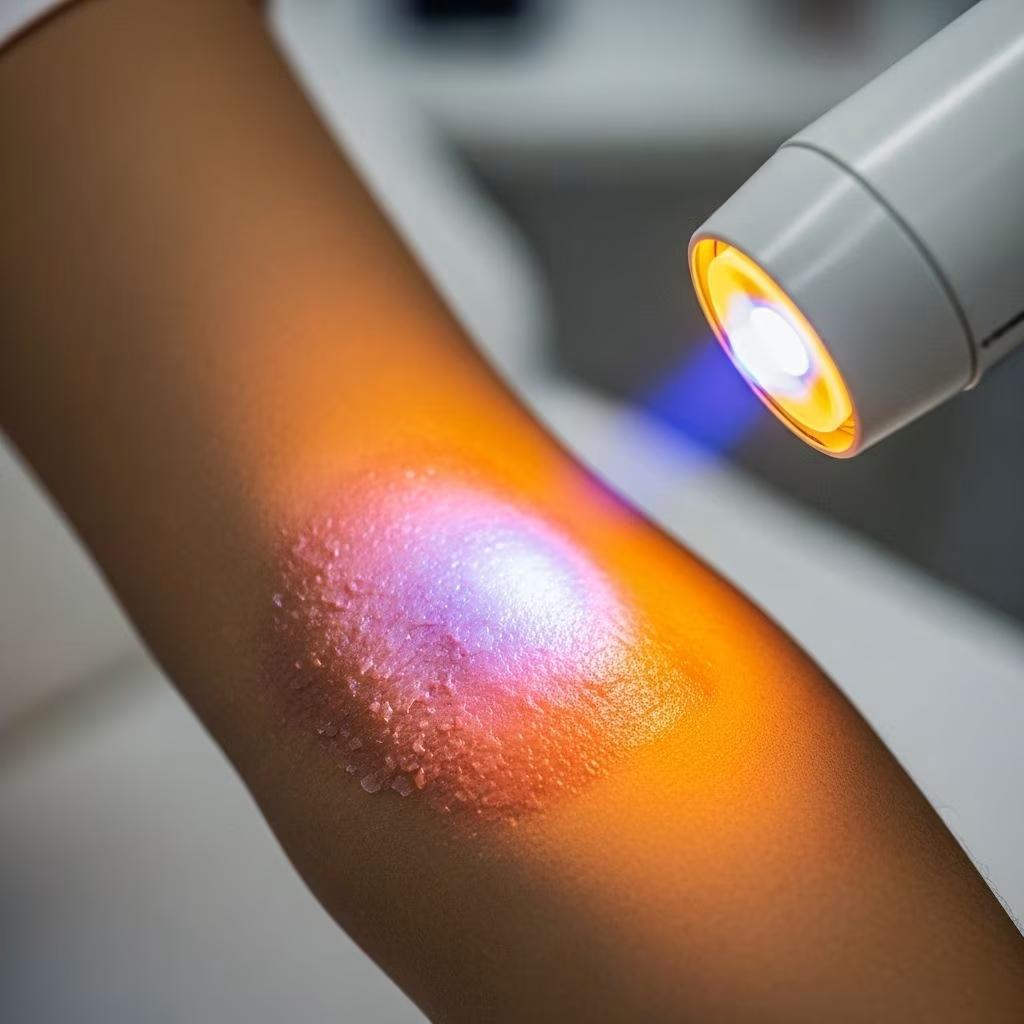
Psoriasis is a chronic, immune-mediated skin condition characterized by rapid proliferation of skin cells, resulting in thick, scaly plaques that can cause significant discomfort and impact quality of life. As many as 2-3% of the global population are affected by psoriasis, with severity ranging from small local patches to full-body involvement. Light therapy, also called phototherapy, has emerged as a cornerstone treatment for moderate to severe cases and for patients unresponsive to topical agents.
Overview of Light Therapy in Psoriasis
Light therapy has been used as a medical intervention for skin diseases for over a century. In psoriasis, it is particularly valuable for moderate to severe cases or when other therapies fail. The procedure uses ultraviolet (UV) light at specific wavelengths to slow down rapid skin cell growth, reduce inflammation, and alleviate symptoms such as itching and scaling. Light therapy can be delivered in various forms, often under the supervision of a dermatologist or with specialized equipment for home use.
- Target group: Suitable for moderate to severe psoriasis, or for localized but persistent plaques (like hands or scalp) not responding to topical treatments.
- Not a cure: Phototherapy controls symptoms and induces remission, but does not permanently cure psoriasis.
- Quality of life impact: Many patients report substantial improvement and better quality of daily life following a course of light therapy.
How Does Light Therapy Work?
Light therapy exposes the skin to carefully controlled doses of ultraviolet light, primarily using UVB (ultraviolet B) or UVA (ultraviolet A) wavelengths. UV light penetrates the skin and alters immune cell activity, slowing keratinocyte (skin cell) proliferation and reducing the inflammatory response that drives psoriasis.
- Slows skin cell growth, reducing plaque thickness.
- Suppresses immune-mediated inflammation, dampening cytokine signals that cause inflammation.
- Promotes skin healing and lessens itching and redness.
Certain forms, such as PUVA (psoralen + UVA), require a light-sensitizing medication or bath that enhances the effect, while newer laser and LED-based options target specific wavelengths for better safety or convenience.
Types of Light Therapy for Psoriasis
There are several key phototherapy modalities used in clinical practice. Each varies in mechanism, effectiveness, and side effect profile.
1. Narrowband UVB (NB-UVB) Phototherapy
- Uses a narrow range of UVB light (311-313 nm).
- Most commonly used and best-studied for plaque psoriasis.
- Effective for all skin types and most psoriasis presentations.
- Treatments typically 2–3 times per week, often for several weeks.
2. Broadband UVB Phototherapy
- Older, less specific technique using wider UVB range (280-320 nm).
- Effective, but higher risk of burns and side effects compared to NB-UVB.
3. PUVA (Psoralen + UVA)
- Combines UVA light (320-400 nm) with psoralen, a photosensitizing agent (oral, topical, or bath).
- More effective in stubborn cases, but has more side effects (like skin aging, cancer risk, and nausea from psoralen).
- Used less frequently today due to safety concerns and the advent of NB-UVB.
4. Excimer Laser/Targeted Phototherapy
- Delivers high-intensity, focused UVB light (often 308 nm) to localized plaques.
- Suitable for small areas or difficult-to-treat locations (e.g., scalp, elbows, knees).
5. Low-Level Light Therapy (LLLT) and LEDs
- Includes blue light (400-480 nm) and red light (620-770 nm), as well as near-infrared LED panels.
- Blue light reduces keratinocyte proliferation and modulates immune activity, showing efficacy in mild to moderate cases.
- Red or near-infrared wavelengths reduce inflammation and may also speed healing.
Comparison Table: Phototherapy Modalities
| Type | Typical Indication | Main Wavelength(s) | Common Side Effects |
|---|---|---|---|
| Narrowband UVB | Plaque & Guttate Psoriasis | 311-313 nm | Redness, burning, tanning |
| Broadband UVB | Plaque Psoriasis | 280-320 nm | Burning, increased risk of side effects |
| PUVA | Severe or resistant cases | 320-400 nm (+ psoralen) | Nausea, phototoxicity, long-term cancer risk |
| Excimer Laser | Small, stubborn plaques | 308 nm | Redness, blistering in treated area |
| LLLT / LED | Mild/Localized Psoriasis | 400-1070 nm | Minimal; rare local irritation |
Efficacy: What Do Studies Show?
Phototherapy is highly effective for controlling psoriasis in many individuals. Robust clinical studies provide key insights:
- Approximately 50–90% of patients show noticeable improvement or complete remission with light therapy.
- Narrowband UVB achieves clear or almost clear skin in up to 62% of patients over a standard 12-week course.
- PUVA (oral/tablet or bath) is even more effective for some, but its safety profile is less favorable than NB-UVB.
- Home-based NB-UVB phototherapy is non-inferior to office-based regimens, as demonstrated by large randomized trials such as the LITE study, and may reduce patient burden.
- LED-based blue light therapy, though less studied, offers significant improvement in some patients over a period of 4 to 6 weeks with minimal side effects.
Phototherapy is especially useful for:
- Large surface area involvement
- Palmoplantar (hand/foot) psoriasis
- Scalp, nail, and inverse (skin fold) psoriasis with adjunctive targeting
Clinical Protocols and Administration
Phototherapy protocols are optimized to maximize skin clearance while minimizing adverse reactions.
General Treatment Protocol (NB-UVB and Broadband UVB)
- Frequency: 2–3 sessions per week, spaced at least 48 hours apart.
- Total duration: Most regimens last 8–12 weeks for induction; maintenance therapy may continue with reduced frequency.
- Session length: Usually starts with very low exposure (a few seconds to minutes), increasing gradually per individualized protocols.
- Protect sensitive areas: Genitals and eyes must be shielded. Unaffected skin can be covered.
- Monitoring: Physicians monitor skin response and adjust dose to avoid burns or excessive irritation.
PUVA Protocols
- Psoralen administered orally, topically, or via bath 1–2 hours before UVA exposure.
- Sessions 2–3 times weekly, with incremental increase in UVA dose.
- PUPA baths: Add psoralen to bathwater; affected areas soaked then exposed to UVA.
- Eye protection mandatory for 24 hours post-treatment due to cataract risk.
Excimer Laser and Targeted Therapy
- Used 1–2 times weekly for small, treatment-resistant plaques.
- Short (<5 minute) sessions; minimizes exposure of healthy skin.
Home Phototherapy Protocols
- Uses prescribed equipment (lamp or cabinet) with guided or preset dosage increments.
- Requires careful education and routine follow-up to ensure safety and avoid overexposure.
Home-Based vs. Office-Based Phototherapy: Findings
The landmark LITE study and several recent trials provide solid evidence:
- Home phototherapy is as effective (non-inferior) as clinic-based treatment for plaque and guttate psoriasis for all skin types.
- Home-based treatment leads to better adherence, lower indirect costs, and reduced treatment burden for patients, even though there is a slightly higher rate of mild, persistent erythema (redness).
- All treatments require proper training and ongoing communication with a healthcare provider.
This development has major implications for patient convenience, access to care, and health policy, especially in regions with limited dermatology resources.
Risks and Side Effects
While generally safe and well-tolerated when monitored, phototherapy can produce side effects:
- Acute side effects: Redness (erythema), burning, blistering, tanning of skin.
- Long-term risks: Premature skin aging and an increased risk of skin cancer, particularly squamous cell carcinoma, especially with PUVA or extended cumulative exposure.
- PUVA-specific side effects: Nausea (from psoralen), photosensitivity, itch, headache, and long-term risk of cataract (requires eye protection for 24 hours after oral psoralen ingestion).
- Rarely, exacerbation of cold sores or other photodermatoses.
The risk-benefit balance should be discussed with a dermatologist, particularly regarding cancer risk in patients with history of extensive phototherapy or family/personal skin cancer risk.
Combining Phototherapy with Other Treatments
Combining phototherapy with systemic or topical agents can enhance efficacy and allow for reduced dosages, lowering cumulative side effects.
- Topical corticosteroids, coal tar, tazarotene, or vitamin D analogues are often continued during phototherapy (except salicylic acid prior to UVB exposure, which can reduce treatment effectiveness).
- PUVA + retinoids (RePUVA) can increase clearance rates but require vigilant monitoring for toxicity.
- Oral systemic therapies (like methotrexate) or biologics may also be used concomitantly in difficult refractory cases, though close safety monitoring is essential.
Frequently Asked Questions (FAQs)
Q: How quickly does light therapy work for psoriasis?
A: Symptom improvement is often seen in 2–4 weeks, with maximal benefit after 8–12 weeks of consistent treatment.
Q: Is light therapy safe for all skin types?
A: Yes; recent studies confirm equal efficacy and safety when protocols are followed for all Fitzpatrick skin phototypes I–VI. Individualized dosing reduces the risk of burns.
Q: Can I use home light therapy devices?
A: Home phototherapy is an effective, first-line option for many suitable patients, requiring prescription, patient education, and ongoing monitoring by a healthcare provider.
Q: What should I avoid before a phototherapy session?
A: Avoid applying salicylic acid to treated areas before UVB, as this may reduce treatment effectiveness. Notify your physician of any new medications or supplements.
Q: Will phototherapy cure my psoriasis?
A: No; it induces remission and controls symptoms, but ongoing treatment or maintenance may be necessary. Relapses can occur if therapy stops.
Summary
Light therapy remains a cornerstone treatment for psoriasis, supported by strong evidence of safety and efficacy across all skin types and disease severities. Emerging technologies and home-based protocols are boosting patient convenience and adherence, but judicious use and proper supervision are crucial to minimize risks. With individualized protocols and careful combination with adjunctive therapies, phototherapy can dramatically improve skin health and patient quality of life. Discuss your candidacy and options with a dermatologist to determine the safest, most effective regimen for your needs.
References
- https://www.medicalnewstoday.com/articles/323593
- https://www.psoriasis.org/lite-study-home-phototherapy-aad/
- https://www.ajmc.com/view/home-based-phototherapy-for-psoriasis-as-effective-as-office-based-treatment-with-less-patient-burden
- https://pmc.ncbi.nlm.nih.gov/articles/PMC5756569/
- https://jamanetwork.com/journals/jamadermatology/fullarticle/2823901
- https://www.ncbi.nlm.nih.gov/books/NBK435696/
- https://www.psoriasis.org/phototherapy/
- https://dermatologyseattle.com/phototherapy-as-a-breakthrough-for-eczema-and-psoriasis-what-to-know/


