


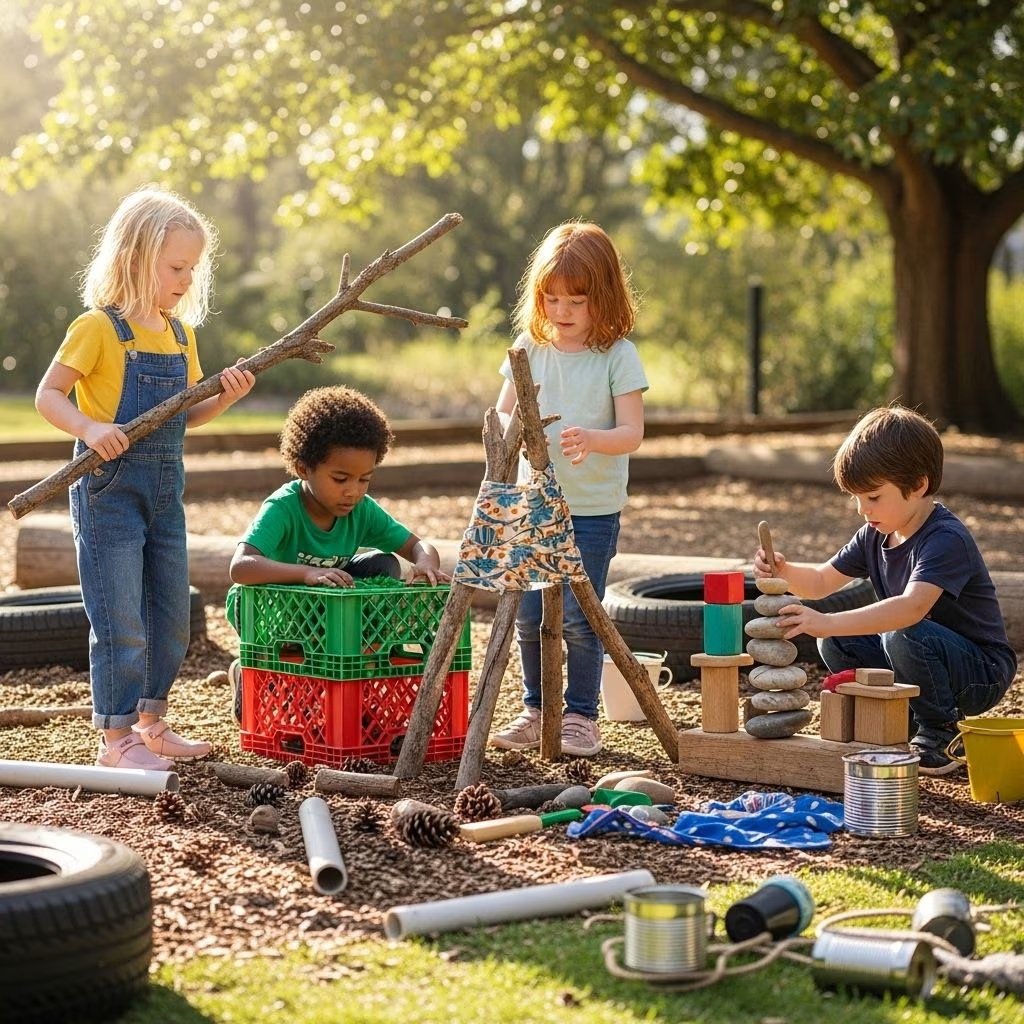
Loose parts—simple, movable objects without a fixed use—have become a catalyst for radical shifts in outdoor play and child development. Unlike traditional toys, these materials invite children to manipulate, combine, and invent, maximizing opportunities for creativity, social growth, and problem-solving. This in-depth guide uncovers how loose parts transform outdoor play into a launchpad for imagination and lifelong skills.
Introduction to Loose Parts Play
In recent years, educators and parents alike have rediscovered the transformative power of loose parts play. Unlike fixed playground structures or prescriptive toys, loose parts provide open-ended resources that empower children to take charge of their own learning and play. This approach encourages children to create, construct, and collaborate—not within limitations, but with the freedom to imagine and explore the world on their own terms .
What Are Loose Parts?
Loose parts are defined as objects—natural or man-made—that can be moved, combined, redesigned, and repurposed in countless ways. They may be large or small, found or manufactured, and are typically without specific instruction or predetermined use .
- Natural loose parts: Sticks, stones, pinecones, leaves, acorns, logs, shells, sand, and water.
- Man-made loose parts: Tyres, planks, crates, cable reels, pipes, bricks, buckets, fabric, ropes, and cardboard boxes.
- Everyday recyclables: Bottle caps, tubes, corks, lids, utensils, and other safe, repurposed objects.
What sets loose parts apart from other play materials is their open-ended nature: a plank can become a bridge, a tower, a ramp, or a mountain, limited only by a child’s imagination .
The Benefits of Loose Parts Outdoor Play
The shift from passive entertainment to active, creative engagement is one of the hallmarks of loose parts play. Research and observations reveal a wide array of developmental and educational benefits, including:
- Maximized creativity and imagination
- Problem-solving and critical thinking skills
- Physical activity and motor skill development
- Improved concentration and focus
- Social and emotional growth
- Increased confidence, risk-taking, and resilience
- Understanding of sustainability and upcycling
The unique format of loose parts play—unfixed, self-directed, outdoors—acts as a springboard for holistic development. Below, each benefit is explored in detail.
Cognitive and Creative Growth
At its core, loose parts outdoor play fuels creativity by removing the “instructions” that come with most toys and games. Children invent their own rules, turning sticks into swords, planks into bridges, or stones into treasure.
- Imagination: The variety and ambiguity of loose parts spark pretend play, where any object is only as limited as the child’s imagination.
- Problem-solving: Building structures, trails, or obstacle courses requires planning, experimentation, and adaptation—all vital cognitive skills .
- Focus and persistence: Because play arises from a child’s interest, children become deeply absorbed, practicing concentration and adaptive thinking .
Research highlights that the open-endedness of loose parts makes it a more authentic, meaningful type of play, which leads to stronger engagement and learning outcomes .
Comparison Table: Loose Parts vs. Traditional Toys
| Aspect | Loose Parts | Traditional Toys |
|---|---|---|
| Usage | Open-ended, invented by child | Often predetermined by manufacturer |
| Creativity | Unlimited, fuels imagination | Limited to designed purpose |
| Cost | Often low/free (recycled/natural items) | Usually higher (store-bought) |
| Skill Development | Cognitive, social, motor, emotional | Usually limited to one type (e.g. fine motor) |
Physical and Motor Skill Development
Loose parts in outdoor settings naturally invite physical activity. Lifting logs, dragging planks, balancing branches, and manipulating buckets all strengthen large muscle groups (gross motor skills), while handling smaller pieces (stones, bottle caps) hones fine motor skills .
- Gross motor benefits: Carrying, lifting, moving large loose parts builds strength, coordination, and balance.
- Fine motor benefits: Arranging, stacking, and connecting small items develops finger and hand dexterity and hand-eye coordination.
Unlike structured playgrounds, loose parts allow children to set their own challenges—modifying the difficulty to match their developmental level and learning through experimentation. This active learning is vital for both physical health and intellectual growth .
Social and Emotional Learning
Because loose parts play is often shared, children develop strong social skills such as:
- Negotiation: Deciding who uses which parts, what to build, and how to play together.
- Communication: Expressing and listening to ideas as plans evolve.
- Cooperation: Working towards a common goal or building a structure together.
- Emotional intelligence: Navigating pride in achievements, frustration with setbacks, or joy in shared discovery .
Studies have shown that children engaged in loose parts play exhibit positive social behaviors and inclusivity, regardless of gender or age .
Implementing Loose Parts in Outdoor Spaces
Creating a loose parts-rich outdoor environment is less about expense and more about opportunity. Here are steps and recommendations to support successful implementation:
- Identify safe, open outdoor areas where children can manipulate, combine, and spread out materials.
- Curate a diverse collection of natural and recycled materials, considering variety in size, weight, and texture.
- Engage children in setup: Let children help source or select materials, boosting ownership and curiosity.
- Ensure regular rotation: Frequently add or swap out items to keep the environment novel and inspiring.
- Prioritize safety: Inspect for sharp edges, splinters, and check for age appropriateness. Supervise where necessary, but encourage autonomy.
- Balance structure and freedom: Offer invitations to play (e.g., “What could we build with these crates?”) but avoid dictating outcomes.
Loose parts settings are highly adaptable and require little more than creativity, willingness to experiment, and risk-aware supervision .
Loose Parts Outdoor Play Activity Ideas
Loose parts play is most powerful when inspired by children’s interests. Below are tried-and-tested activity ideas to get started or spark new adventures:
- Outdoor Construction: Build boats, castles, cars, or towers with crates, planks, and wood offcuts. Collaborative projects foster teamwork and problem-solving .
- Water Channeling: Experiment with gravity and flow using pipes and gutters placed at different heights. Children learn scientific principles while having fun.
- Obstacle Courses: Design and rearrange courses using tyres, logs, crates, and planks. Adjust complexity for age and ability—fosters gross motor skills and independence.
- Nature Art: Create patterns, mandalas, or ephemeral sculptures with leaves, stones, and sticks. These activities blend creativity with appreciation for the natural world.
- Balancing and Weighing: Use planks over tyres to explore balance; compare weights of different materials for introduction to physics concepts .
- Imagination Play: Any set of loose parts can underpin dramatic play—castles under siege, rocket ships, or forest villages, all powered by the child’s narrative invention.
Risk-Taking, Confidence, and Resilience
Outdoor loose parts play naturally incorporates appropriate risk, an essential component of healthy child development. Climbing, stacking, or constructing encourages children to assess and manage physical and creative risks:
- Self-assessment: Children learn to judge their own abilities and comfort levels.
- Resilience: When plans collapse or fail, children must adapt, fostering perseverance.
- Independence and empowerment: Owning outcomes—successes and failures—fuels confidence and agency .
Research links early opportunities for managed risk-play to greater independence and problem-solving later in life.
Sustainability and Upcycling in Loose Parts Play
Loose parts play is not only good for children—it’s also good for the planet. Many loose parts are everyday items given a second life, promoting upcycling and environmental awareness:
- Teaching sustainability: Children learn to repurpose and value resources, connecting play to real-world environmental challenges .
- Budget-friendly: Loose parts often cost little or nothing, making creative play accessible to all families and settings.
Frequently Asked Questions
Q: What types of materials are best for loose parts outdoor play?
A: A mix of natural objects (sticks, stones, leaves, pinecones) and safe, repurposed man-made items (planks, pipes, tyres, crates) works best. Prioritize variability in size and texture for maximum creativity.
Q: Is loose parts play safe?
A: When age-appropriate materials are provided, and occasional supervision is factored in, loose parts play is safe and supports healthy risk-taking. Regularly inspect materials for hazards and involve children in safety discussions.
Q: How does loose parts outdoor play differ from indoor play?
A: Outdoor play enables larger-scale construction, greater exploration of natural elements (like water and mud), and more opportunity for gross motor development. The open environment also heightens the sense of freedom and possibility.
Q: Does loose parts play work for all age groups?
A: Yes. With careful choice of objects, loose parts play can be adapted for toddlers through to older children. The degree of complexity grows in line with the child’s age and interests.
Q: How can educators or parents encourage loose parts play?
A: Celebrate open-ended questions (“What could this be?”); provide a rotating supply of interesting items; and most importantly, step back to allow child-led creativity to flourish.
References
- https://littlekiwisnatureplay.com/loose-parts-and-outdoor-play/
- https://www.earlyyearsresources.co.uk/blog/7-outdoor-loose-parts-play-activity-ideas-and-benefits/
- https://www.myteachingcupboard.com/blog/benefits-of-loose-parts-play
- https://www.oac.edu.au/news-views/loose-parts-play/
- https://extension.psu.edu/programs/betterkidcare/early-care/tip-pages/all/loose-parts-what-does-this-mean
- https://www.communityplaythings.com/resources/articles/loose-parts
- https://blog.kaplanco.com/loose-parts-benefits
- https://illinoisearlylearning.org/blogs/growing/nature-play/
- https://naturalearning.org/42-loose-parts-settings


