


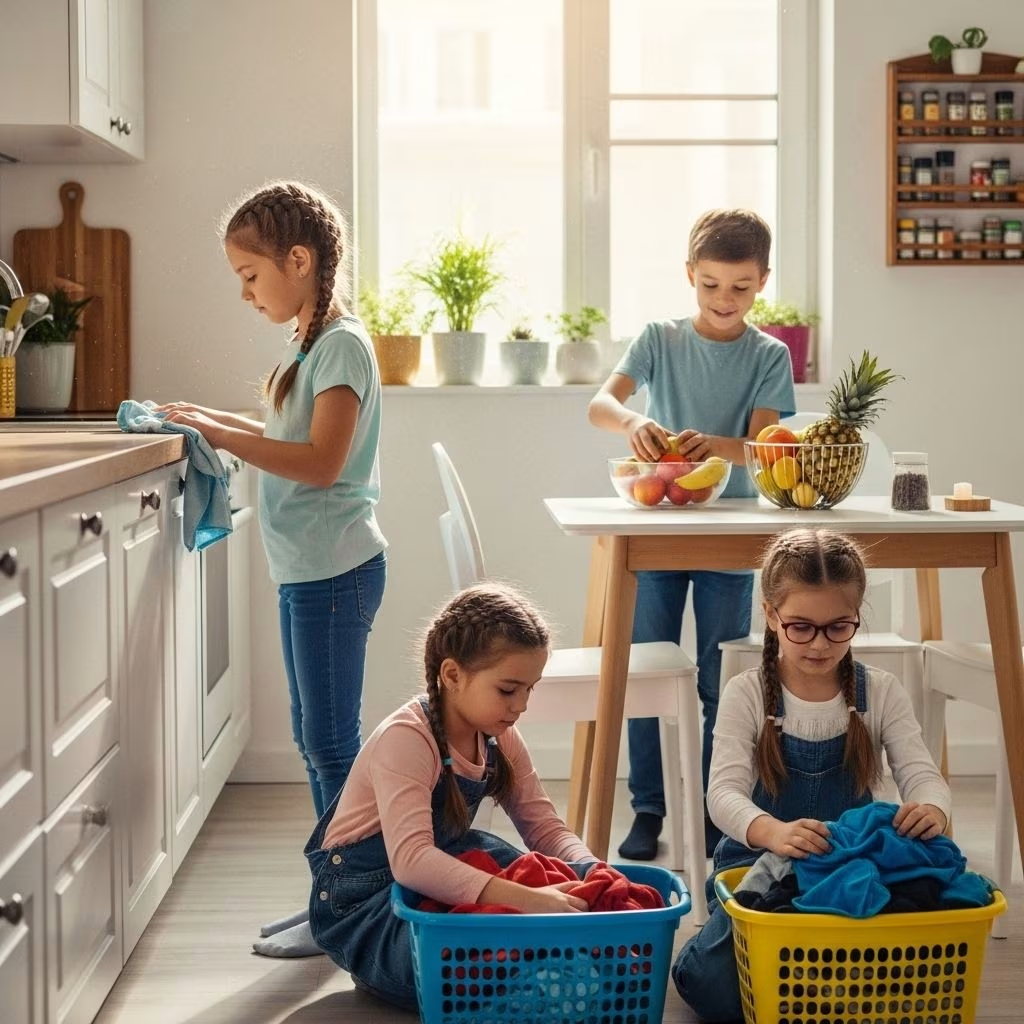
Children today grow up in a world filled with distractions, busy schedules, and a constant buzz of digital information. But what if everyday activities—like chores—could become powerful opportunities for children to build focus, emotional intelligence, and a sense of calm? Mindful movement through chores offers a practical, evidence-based approach to fostering mindfulness in children, laying the groundwork for lifelong well-being.
Understanding Mindful Movement for Kids
Mindfulness for children is the practice of guiding their attention to the present moment, helping them notice their thoughts, emotions, and sensations without judgment. When applied to movement—such as yoga, dance, or simple chores—mindfulness encourages active engagement with physical sensations and task-based awareness. This concept, sometimes described as experiential learning, allows children to strengthen focus and awareness through doing rather than passive observation .
Key features of mindful movement include:
- Focused attention on bodily sensations, breathing, or sensory experiences during an activity.
- Nonjudgmental awareness—noticing successes and mistakes without harsh self-criticism.
- Sensory engagement—paying attention to smell, touch, sound, or sight involved in a chore.
Why Mindfulness Matters for Children
Research demonstrates that mindfulness is foundational for healthy development. Its practice leads to improvements in focus, emotional self-regulation, compassion, social relationships, and even academic performance .
Core benefits for kids:
- Increased concentration & attention: Children who practice mindfulness are better able to block distractions and focus on tasks—for school, chores, or playtime .
- Improved self-regulation: Mindfulness helps kids identify emotions and manage them, avoiding impulsive or disruptive reactions .
- Greater resilience to stress: Learning to notice and accept feelings lessens anxiety and depression in children .
- Empathy and emotional intelligence: Recognizing their own feelings helps children relate empathetically to others .
- Essential executive function skills: Mindfulness builds working memory, planning ability, flexibility, and impulse control, crucial for success in both school and life .
Examples of Mindful Movement Activities:
- Mindful breathing: Focusing attention on breath while performing simple movements.
- Yoga or tai chi: Gentle, flowing movements coordinated with breath and awareness .
- Chores as movement: Paying close attention to the physical process of sweeping, folding laundry, or making the bed .
- Mindful observation: Noticing colors and textures while dusting or cleaning windows .
How Chores Serve as Opportunities for Mindful Movement
Chores are more than tasks for household upkeep—they are powerful, practical vehicles for teaching kids how to be present, attentive, and resilient. Everyday chores demand repetitive, sensory-rich movements that anchor attention in the present, making them ideal for mindful practice .
Why chores make excellent mindfulness exercises:
- Repetitive movement engages the body and mind.
- Sensory feedback: Touch, smell, and sound stimulate awareness in the moment.
- Clear, achievable outcomes help children focus on one step at a time.
- Built-in opportunities for reflection: Pausing to consider how the body feels or how the task unfolds can reinforce mindful awareness.
Turning chores into mindfulness practice means intentionally guiding children to observe, move slowly, and notice each phase of the task, helping them tap into a deep sense of calm and accomplishment .
Cognitive & Emotional Benefits: What Science Shows
Multiple studies highlight the dual cognitive and emotional gains for children who engage in mindful movement and household chores:
| Benefit Area | Research Insights | Supporting Source |
|---|---|---|
| Executive Function | Children responsible for regular chores show improved working memory, task-switching, and time management. | |
| Self-Regulation & Behavior | Mindful movement interventions, such as yoga or tai chi, reduce disruptive behaviors and impulsivity and boost motor control. | |
| Mental Health | Chores help reduce anxiety and depressive symptoms, providing structure, a sense of agency, and mood regulation. | |
| Academic & Social Skills | Mindfulness, including mindful chores, is linked to improved classroom conduct, participation, and peer relationships. | [10] |
Practicing mindfulness in movement translates to being able to concentrate, shift attention flexibly, plan, and engage positively in daily life—essential capacities for success at home and school .
Practical Strategies for Turning Chores into Mindful Moments
Parents and educators can intentionally cultivate mindful practice within daily routines. Here’s how to get started:
- Slow Down the Process: Encourage children to take their time with each chore. For example, ask them to focus on each fold while folding laundry or every sweep while using the broom .
- Incorporate Senses: Invite kids to notice the fluffy texture of towels, the scent of clean sheets, the sound of dirt being swept, or the temperature of water.
- Use Gentle Prompts: Guide children with questions: “What do you feel?” “What sounds do you notice?” “Can you feel your feet on the floor as you move?”
- Practice Mindful Breathing: Before starting, do 2–3 deep, slow breaths to anchor attention. During the chore, revisit this breath when distracted.
- Encourage Nonjudgment: Remind children there are no perfect results—focus on the process, not just the outcome.
- Reflect Together: After the chore, ask how their body and mind feel, discussing any changes in mood or focus.
Sample Mindful Chore Routine
Let’s take dishwashing as an example:
- Begin with three centering breaths.
- Feel the warm water on hands. Notice the sensation of bubbles.
- Pay attention to the patterns in dirty-to-clean transformation.
- Breathe slowly, smiling at the final result—noticing any sense of satisfaction or calm.
Age-Appropriate Mindful Chores and Activities
| Age Group | Examples of Mindful Chores | Key Mindfulness Skills Developed |
|---|---|---|
| Preschool (3–5 years) | Putting away toys, matching socks, wiping spills | Body awareness, focus, simple sequencing |
| Early Elementary (6–8 years) | Feeding pets, setting the table, folding towels, watering plants | Attention to detail, sensory awareness, empathy |
| Older Kids (9–12 years) | Sweeping, mopping, vacuuming, preparing snacks, making bed | Task planning, sequencing, emotional regulation |
| Teens | Laundry, meal prep, grocery list planning, yard work | Executive function, leadership, independent problem-solving |
Even simple responsibilities, done with attention and intention, plant seeds for stronger focus and self-confidence in every stage of development [10].
Overcoming Challenges: Tips for Families
Starting a household mindfulness practice can feel daunting. These strategies can help:
- Start Small: One chore per day is enough for children to build early habits of mindful awareness.
- Empower Choice: Give children a voice in selecting their chores, fostering a sense of ownership and motivation .
- Normalize Mistakes: Focus on learning and self-compassion, not perfection.
- Make it Routine: Consistency turns mindfulness into a natural part of daily life.
- Model Mindfulness: Practice mindful movement yourself to set a powerful example.
Chores as mindful movement do not require expensive training or materials. All that’s needed is a little patience, gentle prompting, and the willingness to slow down.
Frequently Asked Questions (FAQs)
Q: How do I get my child interested in mindful chores?
A: Begin with age-appropriate tasks, offer choices, and focus on the fun sensory aspects—like feeling bubbles or listening to the hum of a vacuum. Keep it short, positive, and offer praise for effort, not just the finished product.
Q: Can mindfulness through chores benefit children with ADHD or anxiety?
A: Yes. Research suggests that mindful movement—including chores—can reduce inattentiveness, impulsivity, and anxiety by providing structure and tools for emotional regulation and self-control .
Q: Are certain chores better for mindfulness than others?
A: Tasks that involve repetitive movements, sensory feedback (like touch or smell), and require focus are especially effective. Examples include folding laundry, dishwashing, or watering plants.
Q: How much time should children spend on mindful chores?
A: Short, regular periods—such as 5 to 15 minutes—can make a difference. The goal is consistent engagement, not lengthy sessions.
Q: What if my child resists chores?
A: Normalize their feelings, involve them in the process, and celebrate small wins. Allow participation in choosing some chores or playing calming music during routines.
Further Resources & Literature
- Books: “Mindful Monkey, Happy Panda” by Lauren Alderfer; “Sitting Still Like a Frog” by Eline Snel
- Websites: Mindful.org, University Hospital blog, Mental Health Center Kids Blog
- Research Papers: National Institutes of Health – “Mindful Movement Intervention for At-Risk Youth”
- Apps: “Smiling Mind” (for children’s mindfulness guidance)
By integrating mindful movement into the most familiar routines, families give children a powerful foundation: the ability to manage their own attention, emotions, and sense of calm—skills for a lifetime.
References
- https://morphoses.io/blog/the-benefits-of-mindfulness-for-children
- https://pmc.ncbi.nlm.nih.gov/articles/PMC9887233/
- https://www.uhhospitals.org/blog/articles/2025/07/chores-are-good-for-kids
- https://www.mindful.org/mindfulness-for-kids/
- https://mentalhealthcenterkids.com/blogs/articles/research-shows-that-household-chores-benefit-children-s-executive-function
- https://www.parent.com/blogs/conversations/2017-turn-mundane-chores-mindful-moments-kids
- https://mypacifichealth.com/mindfulness-for-kids-activities-benefits/
- https://aimhigheraba.com/the-benefits-of-yoga-and-mindfulness-for-children-with-autism/
- https://funandfunction.com/blog/chores-for-kids-benefits-for-every-age
- https://youthfirstinc.org/raising-responsible-kids-the-value-of-chores/


