


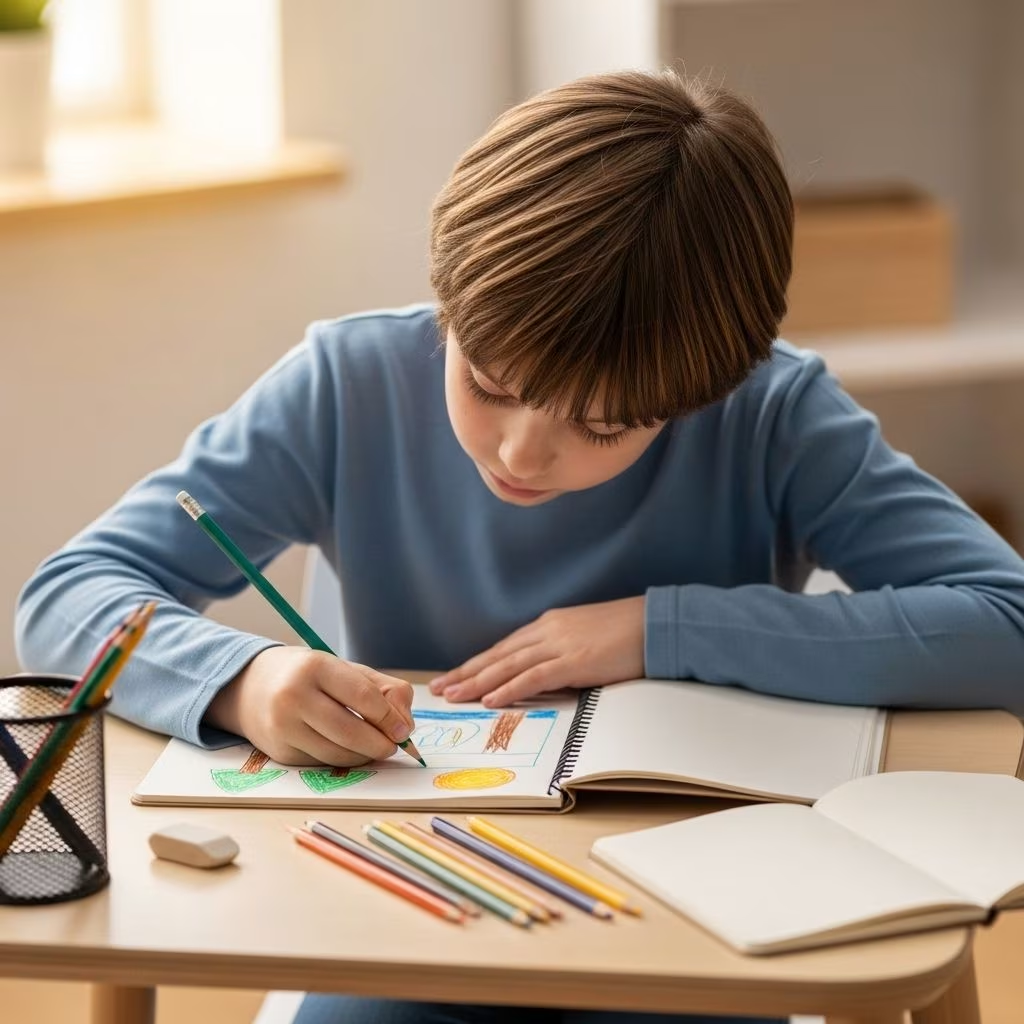
Disruptive behavior remains one of the most prolific challenges in educational and therapeutic settings with children and adolescents. This article explores the role of mindful drawing—an intervention blending mindfulness practice with creative expression—in mitigating aggression and improving self-regulation, based on a case study and comprehensive review of current evidence in the field.
Introduction
Misbehavior, aggression, impulsivity, and social conflicts can disrupt learning and well-being. Traditional behavioral interventions yield mixed results, prompting educators and clinicians to seek innovative, evidence-based alternatives. Mindfulness-based practices—especially those incorporating drawing and art—are gaining recognition for their potential to foster emotional regulation and reduce disruptive tendencies in children and adolescents.
Understanding Disruptive Behavior in Youth
Disruptive behavior encompasses a range of actions such as:
- Verbal outbursts and defiance
- Aggression towards peers or adults
- Impulsivity and inattentiveness
- Destructive or self-defeating behaviors
These behaviors often negatively impact classroom climate, peer relationships, and academic performance. Underlying causes may include attention-deficit/hyperactivity disorder (ADHD), emotional dysregulation, trauma, and environmental stress. Interventions must therefore address both symptom management and underlying emotional needs.
The Science of Mindfulness and Art
What Is Mindful Drawing?
Mindful drawing is a therapeutic activity that combines principles of mindfulness—intentional, non-judgmental awareness of the present moment—with the creative, expressive potential of drawing. Unlike traditional art classes, the focus is not on artistic skill or outcomes, but on the experience and process of creating.
Benefits of Mindfulness and Art-Based Interventions
- Emotional regulation: Mindfulness anchors attention, reducing reactivity to stressors.
- Self-awareness: Art allows for the safe expression of feelings and thoughts.
- Impulse control: Structured drawing routines foster patience, planning, and delay of gratification.
- Social skills: Group-based mindful art enhances empathy and perspective-taking.
Recent studies have found that mindfulness-based art therapy (MBAT) can improve both emotional and behavioral outcomes in diverse populations, including children with ADHD and at-risk adolescents transitioning to new educational environments.
Case Study: Mindful Drawing in a Classroom Setting
Participants and Setting
A recent school-based intervention targeted 6 eighth-grade students at risk for disruptive behavior during transition to high school. Many participants exhibited impulsivity, poor social adaptation, and frequent classroom disruptions.
Intervention Design
- Students participated in weekly 45-minute mindful drawing sessions for 8 weeks.
- Sessions began with a breathing exercise and body scan to establish mindful awareness.
- Guided drawing prompts encouraged expression of emotions and experiences (e.g., “Draw how you feel when you’re frustrated”).
- Students practiced non-judgmental observation of their drawings and group discussion.
The curriculum incorporated elements of art therapy and foundational mindfulness skills, focusing on noticing sensations, thoughts, and emotions as they arose during the creative process.
Outcome Measures
- Pre- and post-intervention ratings by teachers and students of disruptive behavior, classroom engagement, and self-reported coping skills.
- Qualitative analysis of “Me in Ninth Grade” drawings, emphasizing emotional tone and anticipation of social roles.
Mechanisms of Change: How Mindful Drawing Works
| Mechanism | Description | Evidence |
|---|---|---|
| Attention Training | Drawing requires sustained focus, reducing impulsive responses and off-task behavior. | Children demonstrated improved sustained attention after regular mindful art sessions. |
| Emotional Regulation | The creative process provides safe outlets for frustration, helping children label and manage emotions. | Significant reductions in aggression and increased empathy observed in case studies. |
| Self-Compassion | Students learn to approach their own experiences with acceptance rather than criticism. | Reflected in self-report measures and qualitative accounts of improved self-image. |
| Social Processing | Group sharing of artwork cultivates empathy and perspective-taking. | Improved peer relationships and social adaptation were noted post-intervention. |
Quantitative and Qualitative Findings
Statistical Improvements
- Aggression reduced: In a study of children with ADHD, aggression scores decreased significantly in the group receiving mindfulness-based art therapy (MBAT), compared to minimal change in controls (e.g., experimental pre-test 59.68±3.74, post-test 39.82±2.70; vs. control pre-test 60.17±3.12, post-test 58.27±3.79).
- Empathy increased: MBAT led to substantial gains in empathy (e.g., experimental group pre-test 18.41±4.95, post-test 27.50±5.45).
- Coping skills: Art therapy participants showed improved anticipation of social roles and greater sense of school belonging.
Subjective Experiences and Thematic Analysis
- Reduced stress and anger: Students reported feeling calmer and more in control after drawing sessions.
- Reflective awareness: Drawings enabled students to notice subtle changes in mood and triggers for disruptive behavior.
- Improved classroom climate: Teachers observed fewer interruptions and better peer cooperation.
Longer-term follow-up showed that gains in behavior and self-regulation were maintained several weeks after the intervention ended, underscoring the sustained benefits of combining mindfulness with creative self-expression.
Practical Guidelines for Implementation
Essential Steps for Launching a Mindful Drawing Program
- Securing Buy-In: Educators and leaders should be briefed on the evidence and goals of mindful drawing for reducing disruptive behavior.
- Training: Facilitators may include school counselors, psychologists, or trained teachers familiar with mindfulness and art-based techniques.
- Session Structure:
- 5-10 minutes of mindfulness practice (breathing, body scan, or guided imagery)
- 25-35 minutes of process-focused drawing with prompts
- 5-10 minutes group reflection and voluntary sharing
- Safe, Supportive Environment: Foster an atmosphere of acceptance, with no focus on artistic skill or critical appraisal.
- Regularity: Weekly sessions for at least 6–8 weeks produce the strongest effects.
Prompts and Themes
- “Draw your calm place when you feel upset.”
- “Use color and shapes to show how anger feels.”
- “Draw yourself handling a difficult situation well.”
Common Challenges and Solutions
- Resistance to mindfulness: Begin with very short, accessible mindfulness practices and connect them to drawing tasks.
- Distraction or disengagement: Offer open-ended, relevant prompts and allow student choice.
- Emotional overwhelm: Ensure optional sharing, provide support for difficult emotions, and connect students to further help if needed.
Comparative Effectiveness and Limitations
Although results are promising, not all studies show universal benefits. For example, some research reported stable disruptive behavior scores but significant gains in coping and emotional awareness. Other findings suggest that specific characteristics—participant age, nature of disruptive behavior, and fidelity of mindfulness instruction—influence outcomes.
| Intervention | Main Benefit | Limitations |
|---|---|---|
| Mindful Drawing/MBAT | Reduces aggression; increases empathy and coping | Requires multi-week commitment; effectiveness may vary by facilitator skills |
| Traditional Behavior Management | Decreases some overt disruptions via reinforcement | May not improve emotional regulation or underlying causes |
| Talk-based Mindfulness Only | Improves attention and calmness for some students | Engagement may be limited for visually-inclined learners or younger children |
Despite limitations—such as modest sample sizes, reliance on self-reported data, and contextual factors—most evidence supports mindful drawing as a potent supplement or alternative to conventional behavior interventions, especially for those who do not respond to purely verbal or consequence-based methods.
Frequently Asked Questions (FAQs)
Q: How is mindful drawing different from regular art classes?
A: Mindful drawing emphasizes the process of awareness and emotional regulation over artistic skill. Instructions focus on non-judgmental observation and present-moment experience, not on the quality of the finished artwork.
Q: Who can facilitate mindful drawing sessions?
A: School counselors, social workers, psychologists, or teachers with training in mindfulness and art therapy can facilitate these programs. Training in child development and group management is advantageous.
Q: How long does it take to see results?
A: Many interventions report significant improvement in behavior and emotional skills within 6-8 weeks of weekly sessions, with some reporting visible benefits even sooner.
Q: Is mindful drawing suitable for all ages?
A: While most evidence is based on children and adolescents, mindful drawing can be adapted for adult and elderly populations, especially those experiencing stress, transition, or burnout.
Q: Does it require special materials or space?
A: Basic art supplies (paper, pencils, markers) and a quiet, non-judgmental setting are sufficient for most activities. Flexibility and accessibility make mindful drawing practical in both classroom and clinical settings.
Q: What are the main risks or contraindications?
A: Mindful drawing is generally safe and inclusive. Sensitive facilitation is important when working with trauma-affected students or those experiencing intense emotional distress, as drawing may evoke powerful feelings. Opt-out or check-ins should be offered as needed.
References
- Nasernejad K, Johari Fard R, Ehteshamzadeh P. The Effects of Mindfulness-Based Art Therapy on Reducing Aggression and Enhancing Empathy among Children with ADHD. Caspian Journal of Pediatrics, March 2024.
- Kost, K. (2022). A Literature Review on the Use of Art Therapy and Mindfulness with Adolescents. Lesley University Theses.
- Feen-Calligan, H. (2010). Group Art Therapy With Eighth-Grade Students Transitioning to High School. National Art Education Association.
- Johnson, V., & Wietz, M. (2020). Art Therapy for Psychosocial Problems in Children and Adolescents. NIH/NLM/PMC.
- Frontiers in Psychology. (2021). A Novel Mindful-Compassion Art-Based Therapy for Reducing Burnout.
- JMU Special Education. Impacts of Mindfulness on Disruptive Behaviors Associated with ADHD.
References
- https://caspianjp.ir/article-1-250-en.pdf
- https://www.frontiersin.org/journals/psychology/articles/10.3389/fpsyg.2021.744443/full
- https://files.eric.ed.gov/fulltext/EJ901199.pdf
- https://pmc.ncbi.nlm.nih.gov/articles/PMC7578380/
- https://pmc.ncbi.nlm.nih.gov/articles/PMC7016419/
- https://library.immaculata.edu/Dissertation/digitalB/Doc947HenryK2022.pdf
- https://digitalcommons.lesley.edu/context/expressive_theses/article/1211/viewcontent/Kathryn_Kost_Capstone_Thesis.pdf
- https://commons.lib.jmu.edu/cgi/viewcontent.cgi?article=1008&context=edspec201019
- https://digitalcommons.pepperdine.edu/cgi/viewcontent.cgi?article=1303&context=etd


