


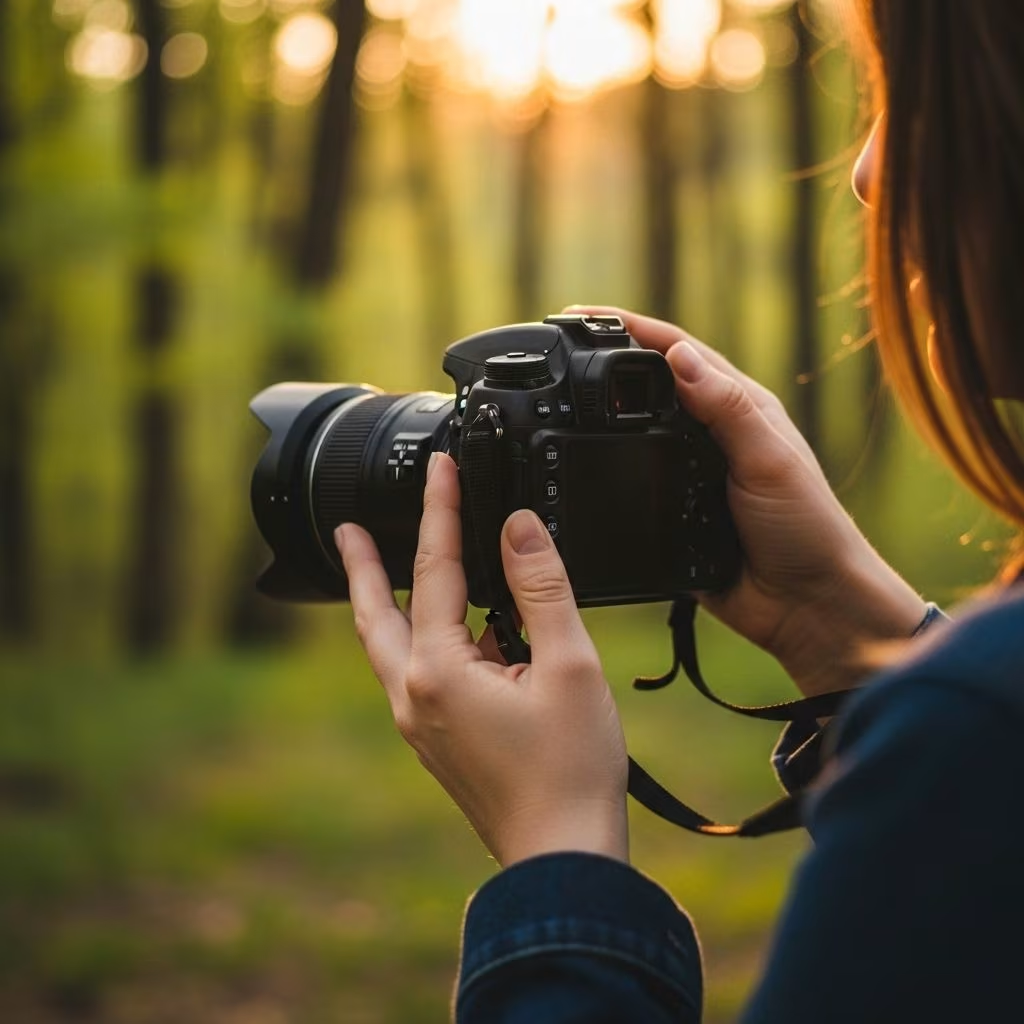
Introduction to Mindful Photography
Photography has evolved far beyond simply capturing beautiful images. In our fast-paced digital world, mindful photography emerges as a powerful practice that combines the art of image-making with deep present-moment awareness. This transformative approach invites photographers to slow down, observe deeply, and connect authentically with their surroundings.
Mindful photography for deep observation represents a shift from reactive shooting to intentional seeing. Rather than rushing to capture every moment, practitioners learn to pause, breathe, and truly witness the world around them. This practice cultivates not only better photographs but also enhanced awareness, reduced stress, and a deeper appreciation for the beauty that exists in everyday moments.
The foundation of mindful photography lies in the understanding that the camera becomes a tool for meditation and self-discovery. When we approach photography with mindfulness, we transform routine picture-taking into a profound practice of observation, creativity, and personal growth. This methodology has gained recognition among photographers, therapists, and mindfulness practitioners as an effective way to develop visual literacy while nurturing mental well-being.
Understanding Mindful Photography for Deep Observation
Mindful photography integrates the principles of mindfulness meditation with photographic practice, creating a unique approach to visual storytelling. At its core, this practice emphasizes being fully present in the moment of image creation, developing what photographer Gregory Berg calls the ‘Attentional Aperture’ – the lens through which we perceive and interact with the world.
The practice differs significantly from conventional photography approaches. While traditional photography often focuses on technical excellence and aesthetic outcomes, mindful photography prioritizes the process of seeing and being. Practitioners learn to notice subtle details, patterns, and moments that might otherwise go unobserved in the rush of daily life.
Deep observation through mindful photography involves cultivating a state of open awareness where the photographer becomes fully immersed in their environment. This heightened state of attention allows for the discovery of extraordinary beauty in ordinary moments, transforming how we perceive and interact with our surroundings.
The practice recognizes that meaningful photography emerges from a place of genuine connection rather than mechanical execution. When photographers approach their craft with mindfulness, they develop an enhanced ability to recognize and capture authentic moments that resonate with emotional truth and visual impact.
The Benefits of Mindful Photography
Engaging in mindful photography for deep observation offers numerous benefits that extend well beyond improved image quality. These advantages encompass mental health, creative development, and personal growth, making it a holistic practice with far-reaching positive effects.
Mental Health and Well-being Benefits
Regular practice of mindful photography serves as a form of moving meditation, helping to reduce stress and anxiety while promoting mental clarity. The focused attention required during mindful photography sessions naturally quiets the mental chatter that often accompanies daily life, creating space for peace and calm.
Research in positive psychology has identified mindful photography as an effective tool for enhancing mood and promoting emotional regulation. The practice encourages practitioners to step away from rumination about past events or worry about future concerns, anchoring them firmly in the present moment where creativity and healing can flourish.
Enhanced Observational Skills
One of the most significant benefits of mindful photography is the dramatic improvement in observational abilities. Practitioners develop what could be called ‘photographer’s sight’ – an enhanced capacity to notice details, patterns, light qualities, and compositional opportunities that previously went unnoticed.
This heightened awareness extends beyond photography sessions, improving overall life experience. Practitioners often report noticing more beauty in their daily routines, developing greater appreciation for natural phenomena, and experiencing increased satisfaction from simple moments.
Creative Development and Artistic Growth
Mindful photography cultivates authentic artistic expression by encouraging photographers to move beyond conventional approaches and discover their unique visual voice. The practice emphasizes personal interpretation over technical perfection, allowing creativity to emerge naturally from genuine observation and emotional response.
The slow, contemplative approach characteristic of mindful photography promotes experimentation with perspective, composition, and subject matter. Practitioners often discover new ways of seeing familiar subjects, leading to more original and compelling imagery.
Core Techniques for Mindful Photography
Developing proficiency in mindful photography requires mastering several fundamental techniques that integrate mindfulness principles with photographic practice. These methods form the foundation for developing deep observational skills and creating meaningful images.
The Three-Step Foundation Process
The core methodology of mindful photography centers around a three-step process that combines movement, awareness, and creative expression. This structured approach provides a framework for developing mindful photography skills while maintaining flexibility for personal adaptation.
Step One: Mindful Walking
Begin each mindful photography session with a period of mindful walking, treating this movement as a gentle form of meditation. Focus attention on the physical sensations of walking – the feel of feet connecting with the ground, the rhythm of breath, and the movement of air against skin. This preliminary practice helps establish present-moment awareness and prepares the mind for deeper observation.
During mindful walking, resist the urge to immediately reach for the camera. Instead, allow yourself to become fully immersed in the environment, noticing sounds, smells, and visual elements without the pressure to capture them. This initial period of pure observation enhances receptivity to photographic opportunities.
Step Two: Conscious Noticing
As awareness deepens through mindful walking, begin actively noticing elements in the environment that draw attention or evoke emotional response. This involves developing what could be termed ‘soft focus awareness’ – maintaining broad environmental awareness while allowing specific details to emerge naturally into consciousness.
Practice the mental noting technique by quietly acknowledging interesting observations: ‘interesting light,’ ‘beautiful texture,’ or ‘compelling pattern.’ This internal commentary helps develop discrimination between routine visual stimuli and elements with genuine photographic potential.
Step Three: Playful Exploration
When something captures attention, engage with it playfully through the camera viewfinder or screen. Avoid rushing to capture the obvious shot; instead, spend time exploring different angles, perspectives, and compositional approaches. This exploration phase often reveals unexpected beauty and creative possibilities.
Approach this experimentation with curiosity rather than attachment to specific outcomes. The goal is to thoroughly explore the photographic possibilities inherent in the subject while maintaining present-moment awareness throughout the creative process.
Developing Your Attentional Aperture
The concept of the ‘Attentional Aperture’ represents a fundamental principle in mindful photography, describing the photographer’s capacity to notice and respond to visual opportunities in their environment. Like a camera’s aperture controls the amount of light entering the lens, the attentional aperture determines how much of the surrounding visual information enters conscious awareness.
Developing a wide attentional aperture involves training the mind to maintain open, receptive awareness while walking or moving through environments. This state of consciousness allows for the simultaneous awareness of both broad environmental patterns and specific details, creating optimal conditions for discovering photographic opportunities.
Expanding Awareness Through Practice
Regular practice gradually expands the attentional aperture, enabling practitioners to notice subtleties that previously escaped attention. This expansion occurs naturally through consistent engagement with mindful photography exercises, particularly the combination of mindful walking with conscious observation.
The process involves developing comfort with ambiguity and uncertainty, allowing interesting subjects to reveal themselves rather than actively searching for specific types of images. This receptive approach often leads to unexpected discoveries and more original photographic work.
Integrating Multiple Senses
While vision remains primary in photography, mindful practice incorporates information from all senses to create a more complete environmental awareness. Sounds, smells, and tactile sensations all contribute to the overall sensory experience that informs photographic decisions.
This multi-sensory approach helps photographers develop more nuanced responses to their environment, often leading to images that capture not just visual appearance but also emotional atmosphere and sensory richness.
Step-by-Step Practice Guide
Establishing a consistent mindful photography practice requires structure and commitment. The following guide provides a comprehensive framework for developing proficiency in mindful photography techniques while maintaining flexibility for personal adaptation and growth.
Establishing Your Practice
Begin with short, focused sessions of 15-20 minutes, gradually extending duration as comfort and skill develop. Choose familiar environments for initial practice sessions, such as neighborhood streets, local parks, or even indoor spaces. Familiarity reduces distractions and allows greater focus on developing observational skills.
Create a pre-photography ritual that includes several minutes of breath awareness or brief meditation. This preparation helps transition from everyday consciousness into the receptive awareness required for effective mindful photography.
Progressive Skill Development
Structure practice sessions to build skills progressively, starting with basic awareness exercises and gradually incorporating more complex techniques. Early sessions should emphasize observation over image creation, allowing time to develop comfort with slowed-down, contemplative approaches to photography.
| Week | Focus Area | Key Activities | Duration |
|---|---|---|---|
| 1-2 | Basic Awareness | Mindful walking, breath awareness, environmental observation | 15 minutes |
| 3-4 | Conscious Noticing | Mental noting, attention to light and shadow, texture observation | 20 minutes |
| 5-6 | Camera Integration | Slow composition, perspective experiments, technical mindfulness | 25 minutes |
| 7-8 | Creative Expression | Personal style development, emotional response integration | 30 minutes |
Advanced Practice Techniques
As basic skills develop, incorporate advanced techniques such as single-subject extended observation, where practitioners spend entire sessions exploring one subject from multiple perspectives and in changing light conditions. This intensive approach deepens understanding of how environmental factors influence photographic potential.
Experiment with ‘blind’ photography sessions where practitioners work with eyes closed or heavily restricted vision, relying on other senses to guide camera placement and timing. These exercises enhance intuitive photography skills and reduce over-dependence on purely visual analysis.
Equipment and Technical Considerations
Mindful photography can be practiced effectively with any camera equipment, from smartphones to professional DSLR systems. The key is selecting tools that support rather than complicate the mindful photography process, emphasizing simplicity and ease of use over technical sophistication.
Camera Selection and Setup
Choose equipment that feels comfortable and familiar, minimizing technical distractions during practice sessions. Many practitioners find that simpler cameras with fewer controls actually enhance mindful photography by reducing decision-making complexity and allowing greater focus on observation and composition.
Consider using cameras with articulated screens or live view modes, which allow viewing without bringing the camera to eye level. This approach maintains better environmental connection and often results in more natural, less intrusive photography experiences.
Technical Settings for Mindful Practice
Use camera settings that support spontaneous capture while maintaining image quality. Aperture priority or program modes often work well, allowing the photographer to focus on composition and timing rather than technical adjustments. Consider slightly higher ISO settings to enable handheld photography in various lighting conditions without worry about camera shake.
Minimize equipment complexity by using single focal length lenses or zoom lenses set to one focal length throughout a session. This constraint encourages creative problem-solving through composition and perspective changes rather than relying on lens selection to solve visual challenges.
Overcoming Common Challenges
Mindful photography practice often presents unique challenges that differ from conventional photography obstacles. Understanding these challenges and developing strategies to address them helps ensure consistent progress and maintains motivation throughout the learning process.
Managing Impatience and Expectations
The slow, contemplative pace of mindful photography can initially feel frustrating for photographers accustomed to rapid shooting styles. Combat impatience by reframing practice sessions as meditation rather than photography, emphasizing process over product and present-moment awareness over image creation.
Set realistic expectations by understanding that mindful photography skills develop gradually through consistent practice. Focus on improving observational abilities and present-moment awareness rather than comparing current work to previous achievements or others’ images.
Dealing with Self-Consciousness
Many practitioners initially feel self-conscious about moving slowly with cameras in public spaces or spending extended time photographing simple subjects. Overcome this challenge by practiced in less populated areas initially, gradually building confidence to practice mindful photography in busier environments.
Remember that mindful photography often appears quite ordinary to casual observers, typically involving less obvious behavior than traditional photography sessions. The practice emphasizes internal awareness changes rather than dramatic external actions.
Maintaining Consistency in Practice
Establish realistic practice schedules that fit naturally into existing routines rather than requiring major lifestyle changes. Even brief 10-minute sessions can provide benefits and help maintain momentum during busy periods.
Create accountability through photography journals, online communities, or practice partners who share interest in mindful approaches to photography. Regular sharing and discussion of experiences helps maintain motivation and provides support during challenging periods.
Frequently Asked Questions
Q: Do I need expensive camera equipment to practice mindful photography?
A: No, mindful photography can be practiced effectively with any camera, including smartphone cameras. The focus is on developing observational skills and present-moment awareness rather than achieving technical perfection, so simple equipment often works better by reducing distractions.
Q: How long should I practice mindful photography in each session?
A: Start with 15-20 minute sessions and gradually increase duration as comfort develops. The quality of attention matters more than session length, so shorter focused sessions are more beneficial than longer distracted ones.
Q: Can mindful photography help improve my regular photography skills?
A: Yes, mindful photography significantly enhances overall photographic abilities by developing better observational skills, compositional awareness, and ability to recognize meaningful moments. These skills directly transfer to all types of photography.
Q: Is it normal to feel restless or impatient during early practice sessions?
A: Absolutely. Restlessness and impatience are common initial responses to the slowed-down pace of mindful photography. These feelings typically decrease with consistent practice as the mind becomes accustomed to more contemplative approaches.
Q: How do I know if I’m practicing mindful photography correctly?
A: Focus on the quality of awareness and presence during practice rather than the resulting images. Successful mindful photography feels calm, focused, and naturally curious. If you notice increased awareness of your environment and feel more present, you’re practicing effectively.
Q: Can mindful photography be practiced indoors?
A: Yes, indoor environments offer excellent opportunities for mindful photography practice. Home environments, offices, and indoor public spaces all provide rich subjects for observation and photography while developing mindful awareness skills.
Conclusion
Mindful photography for deep observation represents a transformative approach to both photography and personal development. By integrating mindfulness principles with photographic practice, practitioners develop enhanced observational skills, greater present-moment awareness, and a deeper appreciation for the beauty that surrounds us daily.
The practice offers benefits that extend far beyond improved photography, contributing to reduced stress, enhanced creativity, and greater life satisfaction. Through the simple act of combining mindful awareness with camera work, practitioners discover new ways of seeing and being in the world.
Success in mindful photography comes not from achieving perfect images but from cultivating authentic presence and curiosity. As practitioners develop their attentional aperture through consistent practice, they often find that both their photography and their overall life experience become richer and more meaningful.
The journey of mindful photography is deeply personal, with each practitioner discovering their unique way of seeing and expressing their relationship with the world. By embracing this practice with patience and openness, photographers at any level can transform their relationship with their craft while developing valuable life skills that support overall well-being and creative fulfillment.
References
- https://www.digitalphotomentor.com/develop-art-seeing-mindful-photography/
- https://www.katykahlaphotography.com/blog/tips-for-practicing-mindful-photography
- https://alexandriaarttherapy.com/blog/mindful-photography
- https://positivepsychology.com/mindful-photography/
- https://benjaminstevens.com.au/the-true-power-of-mindfulness-photography/
- https://www.psychologytoday.com/us/blog/child-development-central/202410/mindfulness-and-contemplative-photography
- https://tinybuddha.com/blog/how-to-create-peace-and-calm-through-mindful-photography/


