


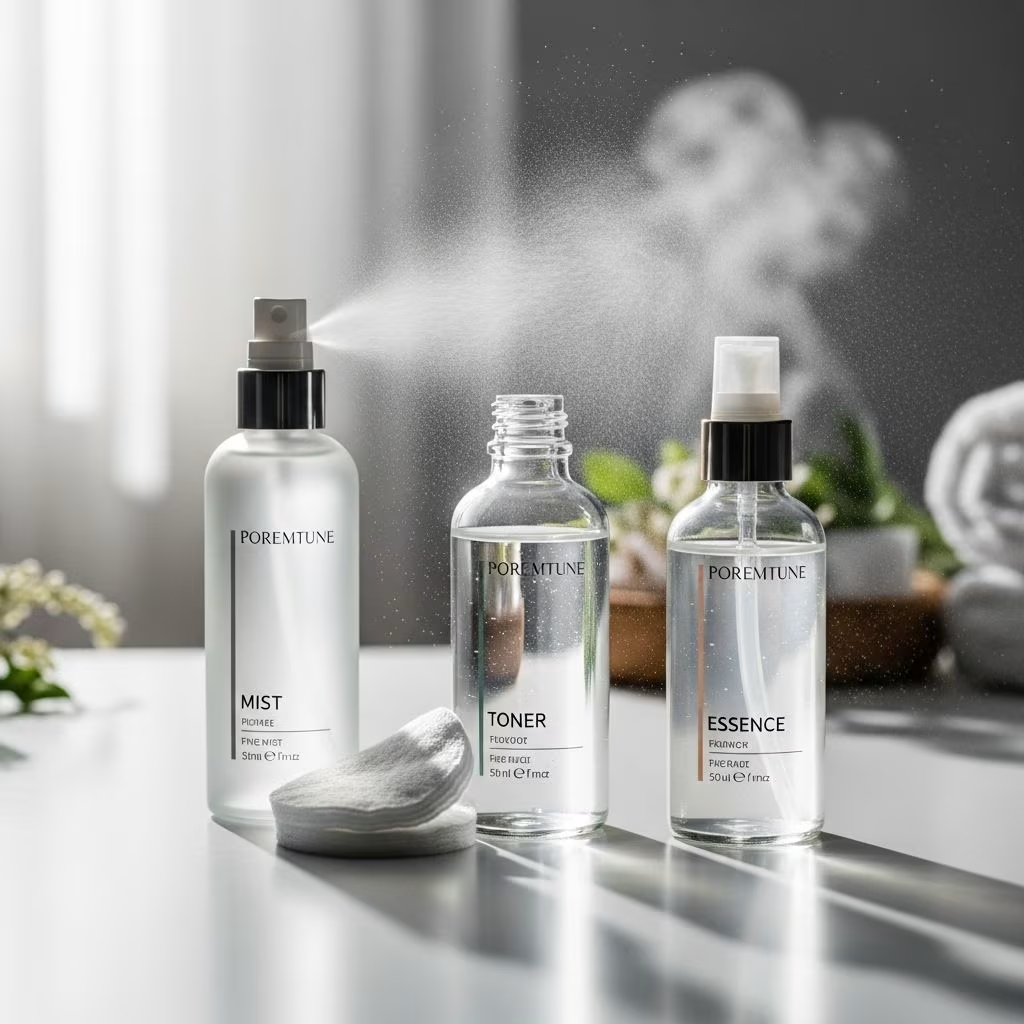
Mists vs. Toners vs. Essences: Hydration Delivery Explained
With the proliferation of skincare products, navigating the differences between mists, toners, and essences can be bewildering. Each promises hydration and healthier skin, but their uses, benefits, and places in your skincare routine are distinct. This guide demystifies these three hydration heroes, comparing their roles, ingredient profiles, and impacts on the skin, so you can build a routine perfectly matched to your needs.
Introduction to Hydration in Skincare
Hydration is a cornerstone of healthy skin. Maintaining balanced skin moisture improves barrier function, reduces sensitivity, and enhances radiance. As a result, cosmetic science has produced specialized products to optimize hydration delivery—chief among them mists, toners, and essences.
While these products often share water-based formulations and lightweight textures, their roles, histories, and uses have evolved. Understanding their differences helps you avoid redundancy in your routine and select products that truly benefit your complexion.
Defining Mists, Toners, and Essences
Toners
Historically, toners were developed to rebalance the skin’s pH after cleansing, especially following the use of harsh, alkaline soaps. Modern cleansers are generally pH-balanced, leading toners to shift focus toward providing a light boost of hydration, gently removing residual impurities, and preparing the skin for following steps. They are typically liquid in texture, applied with a cotton pad or directly with hands.
- Primary Functions: Cleanses, balances, lightly hydrates, and preps the skin.
- Texture: Watery, lightweight.
- Application: Cotton pad or palms, swept over the face post-cleansing.
Mists
Mists are water-based sprays designed to quickly refresh, cool, and hydrate the skin throughout the day. Their formulations closely resemble toners but are intended for convenient, touchless application. Modern face mists can be simple hydrating sprays or contain added antioxidants, soothing botanicals, or even innovative bi-phase systems that combine botanical oils and water for extra nourishment.
- Primary Functions: Instant hydration, skin refreshment, makeup setting, post-workout or travel skin boost.
- Texture: Ultra-light, watery to slightly emollient (bi-phase variants may appear separated until shaken).
- Application: Fine mist sprayed directly onto the face (under or over makeup), anytime for instant moisture.
Essences
The essence originated in Asian skincare as a step designed to deeply hydrate, replenish, and amplify the effects of subsequent treatments like serums and moisturizers. Essences are still water-based but may feature a slightly richer, more viscous texture and are often enhanced with a higher concentration of targeted active ingredients (e.g., antioxidants, ferments, brightening agents).
- Primary Functions: Deep hydration, prepping the skin for actives, delivering a concentrated dose of beneficial ingredients.
- Texture: Watery to slightly viscous; more substantial than a toner but less dense than a serum.
- Application: Patted onto clean skin with hands, typically after toner and before serum/moisturizer.
Comparing Mists, Toners, and Essences
| Attribute | Mists | Toners | Essences |
|---|---|---|---|
| Primary purpose | Refresh, hydrate, soothe | Cleanse, balance, lightly hydrate | Deeply hydrate, prep, deliver actives |
| Texture | Watery, sprayable | Watery | Watery to slightly viscous |
| Key ingredients | Humectants, botanical extracts, antioxidants, sometimes oils (bi-phase) | Humectants, gentle acids, astringents, soothing botanicals | High concentration of actives, hydrating agents, ferments |
| Mode of use | Spray-on, anytime or after cleansing | Swipe on post-cleansing | Pat in after toner or cleansing |
| Skin prep | Yes, plus on-the-go hydration | Yes | Yes, with enhanced absorption properties |
| Frequency | Multiple times a day | 1–2 times daily | 1–2 times daily |
Hydration Delivery Mechanisms
All three product types harness humectants—water-attracting molecules like glycerin and hyaluronic acid—to draw moisture into the skin. Their liquid formulas capitalize on the skin’s increased permeability when damp, ensuring better uptake of hydration and preparation for richer treatments to follow.
- Toners: May also contain light exfoliants (lactic or glycolic acid), gentle astringents, or calming agents for sensitive skin. They mainly provide surface hydration and mild clarifying benefits.
- Mists: Primary function is quick, surface-level moisture replenishment and instant soothing. Bi-phase mists add an emulsified layer of botanical oils, locking in hydration for dry or stressed skin types.
- Essences: Feature more concentrated levels of hydrating and treatment actives, including fermented extracts (such as galactomyces), peptides, or antioxidants for deep cell-level hydration and repair.
Product Layering and Order of Application
Correct product layering optimizes absorption and effectiveness. In general, products are applied following the rule: lightest to richest consistency.
- Step 1: Cleanser (removes dirt, oil, and makeup)
- Step 2: Toner (removes residuals, balances pH, light hydration)
- Step 3: Essence (deep hydration, preps for active treatments)
- Step 4: Serum (targeted therapy for specific concerns)
- Step 5: Moisturizer (locks in hydration, repairs barrier)
- Optional: Mist (can be used after toner, essence, or throughout the day as needed—even as a final layer or makeup refresher)
Some people find the overlap of these steps unnecessarily complex. Many experts suggest that, unless you crave the sensory experience, you can minimize your routine by selecting just one well-formulated hydrating liquid after cleansing, especially for sensitive or over-processed skin.
How to Choose for Your Skin Type
Dry Skin
- Bi-phase mists and moisture-rich toners or essences can restore hydration and reinforce the skin barrier.
- Look for ingredients like hyaluronic acid, plant oils, and ceramides.
- Layering a hydrating toner and an essence can be especially beneficial in arid environments.
Oily or Acne-Prone Skin
- Exfoliating toners (containing mild acids) can balance oil and clarify clogged pores.
- Lightweight, watery essences can hydrate without heaviness or congestion.
- Mists are useful for mid-day freshness but should be non-comedogenic and free of heavy emollients.
Combination Skin
- Multi-pronged approach: use an exfoliating mist on the T-zone, hydrating toner or essence on drier cheek zones, or layer according to seasonal needs.
- Adjust products as skin changes.
Sensitive Skin
- Choose alcohol-free toners and mists with soothing botanicals (chamomile, aloe, calendula).
- Test essences for potential triggers; look for fragrance-free, hypoallergenic formulations.
Benefits and Potential Drawbacks
Benefits
- Enhanced hydration: Immediate boost to moisture levels, plumping the skin and improving absorption of following treatments.
- Preparation: Prepares the skin by rebalancing pH and opening up pathways for actives to absorb more deeply.
- Customizable routines: Ability to fine-tune your regimen based on season, skin needs, or time constraints.
- Refresh and soothe: Mists, in particular, deliver instant comfort—ideal for travel, post-workout, or long hours in dry environments.
Potential Drawbacks
- Redundancy: Overlapping functions may lead to using unnecessary extra steps and products.
- Sensitivity: Some toners (formulated with alcohol or strong acids) may irritate sensitive skin.
- Misleading marketing: Differences can be subtle; brands may exaggerate distinctions to encourage more product purchases.
- Over-layering: Using too many hydrating layers can sometimes cause pilling under makeup or overwhelm very oily skin.
Frequently Asked Questions (FAQs)
Q: Can I use a mist, toner, and essence together in one routine?
A: Yes, but it’s usually not necessary unless you enjoy the ritual or have specific skincare reasons. Layer products from thinnest to thickest: toner, then essence, followed by a mist whenever extra hydration is needed.
Q: Are mists, toners, and essences interchangeable?
A: In many ways, yes—their base formulas are often very similar, with differences mainly in viscosity, concentration of actives, and method of application. Choose according to preferred texture and specific skin concerns.
Q: Do any of these products replace my moisturizer?
A: No. They supplement hydration but should be followed by a moisturizer to seal in water and provide lasting nourishment. Exception: layering several hydrating liquids in humid climates may be sufficient for oily skin.
Q: What ingredients should I look for in these products?
A: Hydrating ingredients like glycerin, hyaluronic acid, aloe vera, antioxidants, gentle acids (for toners), and fermented actives (for essences). Avoid high levels of alcohol in toners if you have sensitive or dry skin.
Q: When should I mist my face?
A: Use after cleansing, post-sun exposure, while traveling, during or after flights, or any time your skin feels parched or tight. Mists can also be used to set makeup or revitalize midday skin.
Q: Are essences necessary?
A: Not strictly—if you have a simple routine and your skin feels healthy, you may not need an essence. However, those seeking intensive hydration or enhanced delivery of actives may benefit from incorporating one.
Q: How do I know which type is best for me?
A: Consider your skin’s hydration needs, sensitivity, routine complexity preferences, and ingredient tolerances. Dry, mature skin often thrives with a layered approach, while oily skin benefits from lightweight and clarifying options.
Summary and Takeaways
Ultimately, mists, toners, and essences all deliver hydration and prime the skin for treatment. The best results come from understanding your skin’s unique needs and tailoring your routine accordingly—whether that means using one, two, or all three types, smartly selected for your skin type, lifestyle, and climate.
Simplifying your approach and focusing on quality formulas rather than the sheer number of steps is a modern skincare mantra worth following for radiant, resilient skin.
References
- https://jordansamuelskin.com/blogs/news/mists-toners-essences
- https://eminenceorganics.com/us/blog/bi-phase-mists-toners-essences-difference
- https://pinksoul.pk/blog/essence-vs-serum-vs-toner-vs-face-mist
- https://www.mybeautyaffairs.com/blogs/gybaio/facial-mist-vs-toner-vs-essence-what-s-the-difference
- https://www.cosmedix.com/blogs/posts/why-you-should-add-an-essence-toner-and-face-mist-to-your-skincare-routine-what-s-the-difference
- https://www.youtube.com/watch?v=dFgVDbDf-iQ
- https://jurlique.com/blogs/news/behind-the-skincare-debate-toner-or-essence-or-both
- https://asianbeautyessentials.com/blogs/the-idol-beauty-blog/essence-vs-toners-vs-serums
- https://www.swissvita.my/blogs/lifestyle/toners-vs-face-mists-the-differences-explained


