


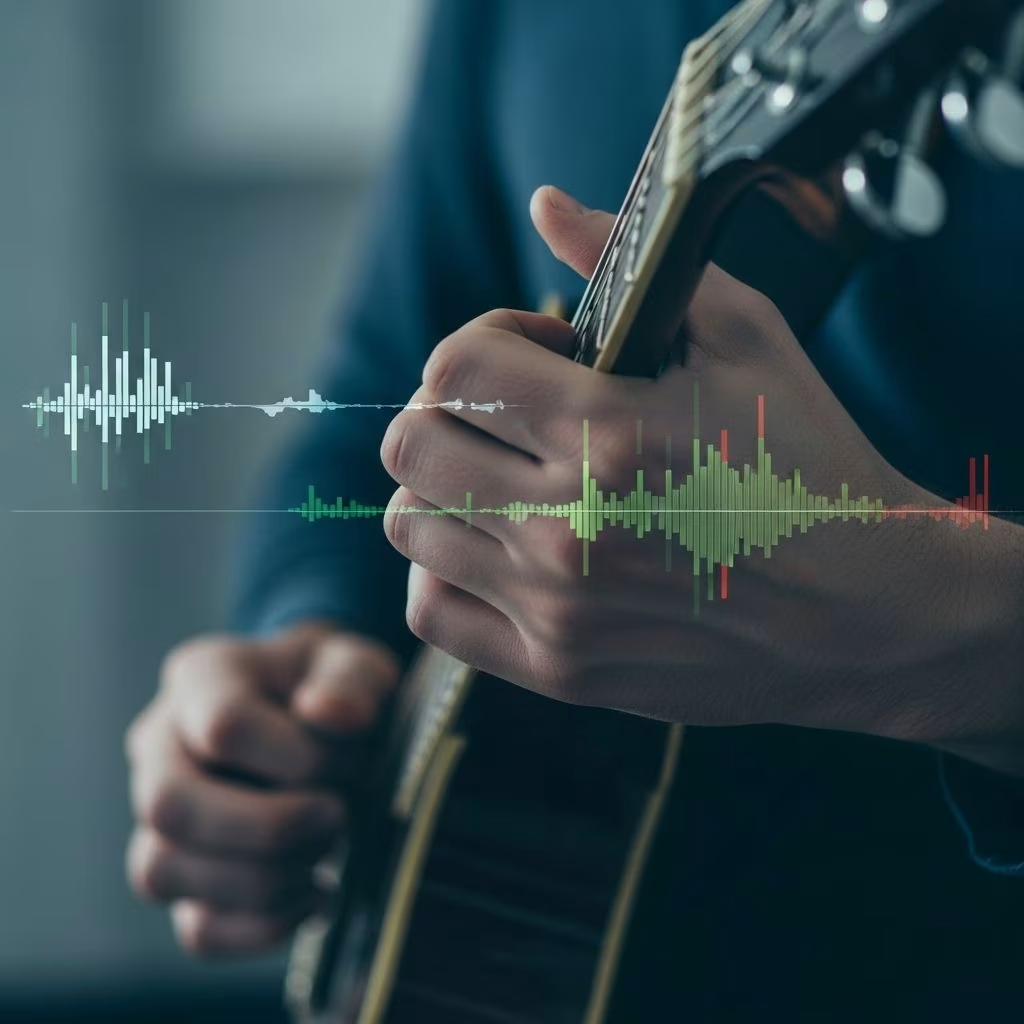
Performance anxiety is a persistent challenge among musicians of all levels, often shaping the quality of their performance and their relationship with music itself. While anxiety may be seen as detrimental, contemporary research suggests a more nuanced view: performance anxiety can both hinder and, in some instances, enhance musical outcomes depending on how it is managed and appraised. Mood tracking—the practice of systematically recording and analyzing one’s emotions—offers musicians a powerful toolkit to understand, monitor, and regulate their anxiety, paving the way toward healthier and more successful performances. This article explores the underlying mechanisms of musicians’ performance anxiety, the benefits of mood tracking, practical mood tracking strategies for musicians, evidence-based management techniques, and answers to frequently asked questions.
Understanding Performance Anxiety in Musicians
Performance anxiety, also called music performance anxiety (MPA), refers to the nervousness or fear experienced before or during a musical performance. It is a multifaceted experience encompassing:
- Physical symptoms: rapid heartbeat, sweating, trembling, dry mouth, nausea, muscle tension, and shortness of breath
- Cognitive symptoms: negative self-talk, intrusive thoughts, difficulty concentrating, and memory lapses
- Emotional symptoms: dread, fear, nervousness, irritability, low self-esteem
- Behavioral symptoms: avoidance of performance, excessive practice or procrastination, social withdrawal, reliance on substances
- Social and musical symptoms: fear of judgment, reduced performance quality, and increased errors
While the majority of musicians seek to minimize their anxiety to appear “cool, calm, and collected,” some recognize that experiencing a certain level of anxiety may enhance alertness or performance energy. The interplay between these emotional goals shapes each musician’s approach to managing anxiety.
The Role of Mood Tracking in Performance Anxiety
Mood tracking is the systematic process of recording moments of emotional states, physical sensations, and contextual factors (such as rehearsal, performance, audience size, or time of day). The primary objectives of mood tracking for musicians are:
- Increasing self-awareness of anxiety triggers, patterns, and cycles
- Distinguishing between helpful and unhelpful forms of anxiety
- Identifying mood shifts before, during, and after performances
- Informing mental health interventions and strategies with real-world data
By externalizing inner experiences into a recordable format, mood tracking empowers musicians to observe—not just feel—their emotional landscape, helping them make informed choices about regulation strategies and even performance preparation.
How Anxiety Impacts Musical Performance
Performance anxiety influences musicians at every stage of their musical journey, with effects ranging from mild nervousness to debilitating fear. Key impacts include:
- Physiological arousal: Over-arousal can impair fine motor skills, vocal control, and timing essential for musical performance
- Cognitive interference: Excessive anxiety leads to distracting thoughts, increased self-doubt, and memory lapses, making it difficult to focus on the music
- Negative emotional feedback loop: Poor performance due to anxiety may reinforce avoidance behaviors, further deepening performance-related fears
- Quality of life impacts: Chronic anxiety can diminish overall well-being, reduce enjoyment of music, and discourage participation in musical activities
Conversely, a moderate, well-regulated level of anxiety can be “+harnessed” to enhance alertness and fuel positive performance energy, as evidenced by emerging stress optimization models.
Mood Tracking Methods for Musicians
Musicians can employ a range of mood tracking methods, from simple pen-and-paper journals to sophisticated digital apps. Each method should aim to capture both qualitative (subjective emotions, thoughts) and quantitative (mood ratings, physical symptoms) data.
- Manual Mood Journals:
Musicians write regular entries noting their emotional state, physical sensations, thoughts, performance context, and perceived performance outcomes. Common methods include:
- Daily mood logs with ratings (e.g., 1-10 scale)
- Reflection prompts about specific musical events
- Emotional triggers and coping responses
- Mood Tracking Apps:
Numerous mental health apps offer mood tracking features, providing visuals (such as graphs and calendars) that help reveal trends over time. Many allow for customized categories such as “pre-concert nerves” or “post-rehearsal calm.”
- Performance Self-Reports:
After each performance or rehearsal, musicians record a brief self-assessment, rating their level of anxiety, excitement, focus, and satisfaction. These can be combined with physiological indicators if possible.
- Physiological Monitoring:
Wearable devices can track heart rate, skin conductance, and other biosignals that may correlate with heightened anxiety, offering objective support to self-reported moods.
Consistency is key: the most effective mood tracking is done regularly and integrated naturally into a musician’s routine.
Mood Tracking Table Example
| Date | Activity | Mood (1-10) | Anxiety Level (1-10) | Physical Symptoms | Notes/Triggers |
|---|---|---|---|---|---|
| 2025-09-18 | Solo rehearsal | 7 | 4 | Tense shoulders | Caffeine before practice |
| 2025-09-19 | Live performance | 5 | 8 | Sweaty hands, rapid heart | Large unfamiliar audience |
| 2025-09-20 | Practice at home | 8 | 2 | None | Well-rested, supportive family nearby |
Interpreting Mood Data and Gaining Insight
Once patterns are recorded, musicians can review data to identify:
- Consistent triggers: e.g., greater anxiety before new works, in unfamiliar venues, or with unsupportive audiences
- Ineffective vs. effective coping strategies: What calms you? What makes anxiety worse?
- Mood cycles: Recurring times of high anxiety (e.g., before competitions or juries)
- Connections between anxiety and performance outcomes
Awareness of these patterns allows for targeted intervention—whether that be mental rehearsal, relaxation exercises, or seeking support—rather than defaulting to avoidance or unhealthy behaviors.
Mood Regulation Techniques: Evidence and Applications
Effective self-regulation of performance anxiety is grounded in a combination of evidence-based techniques and personal experimentation. Research and clinical reports support the following methods for musicians:
- Cognitive-Behavioral Therapy (CBT):
CBT is widely recognized for helping musicians reframe negative thought patterns about performance, replace distorted beliefs (e.g., fears of catastrophe), and develop structured coping strategies.
- Breathing and Relaxation Exercises:
Brief, structured breathing practices can quickly lower physiological arousal and promote calm. Visualization—such as imagining performing well or picturing a place of relaxation—can also reduce anxiety levels before and during performances.
- Mindfulness Meditation:
Mindfulness helps musicians observe anxiety without judgment, allowing them to remain grounded and present even when anxious feelings arise, rather than being overwhelmed by them. Mood tracking can help reinforce these practices by making musicians aware of their present state.
- Reappraisal and Positive Mindsets:
Emerging research suggests that actively reinterpreting anxiety as excitement or preparation energy—rather than as a threat—can facilitate improved performance outcomes. Mood tracking helps musicians notice when anxiety might be adaptive versus when it is debilitating.
- Improvisational and Group Therapy:
Participation in improvisational music therapy, group improvisation, or supportive peer groups can help musicians feel less isolated, build confidence, and learn techniques for mood management. Group dynamics can cause emotional states to synchronize, for better or worse, making collective mood tracking useful for ensembles.
Designing a Mood Tracking Plan: Steps and Recommendations
- Define your goals: Are you tracking to identify triggers, improve performance quality, or manage long-term wellbeing? Clarify your priorities.
- Select tracking tools: Choose a method (journal, app, spreadsheet, wearable) that fits your routine.
- Set frequency and reminders: Track at consistent moments (e.g., pre-performance, post-rehearsal, nightly).
- Record both quantitative and qualitative data: Rate mood/anxiety numerically but also describe context and feelings.
- Review your data weekly or monthly: Look for recurring themes and adapt your strategies accordingly.
- Integrate findings into practice: If certain triggers or mindsets consistently worsen anxiety, experiment with new regulation techniques or adjust performance preparation accordingly.
Involving a teacher, coach, or therapist can offer external perspective and support for interpreting data and developing action plans.
Technology and Apps for Musicians’ Mood Tracking
Many musicians turn to digital solutions for enhanced mood tracking, visualization, and motivational features. Notable options include:
- General mood tracking apps: Daylio, Moodnotes, Bearable, and Moodfit (enable custom mood entries and track trends visually)
- Health and mindfulness platforms: Headspace, Calm, Insight Timer (offer guided relaxation, meditation, and breathing exercises targeted for performers)
- Musician-specific tools: While not as common, some music practice log apps include mood or anxiety tracking fields for correlating emotional states with practice and performance routines.
For privacy, remember to use secure, password-protected digital tools, and consider data handling policies if connecting with teachers or therapists.
Frequently Asked Questions (FAQs)
Q: How can I tell if my performance anxiety is normal or needs professional help?
If anxiety consistently impairs your enjoyment of music, daily functioning, or leads to avoidance of valued activities, consulting a mental health professional with experience in performance anxiety is recommended.
Q: Is mood tracking only helpful for severe anxiety?
No, mood tracking is beneficial for all musicians, regardless of anxiety levels. Even mild or occasional nerves can provide insight when tracked.
Q: How long before I see results from mood tracking?
Many musicians notice patterns within a few weeks, but the greatest benefit comes from integrating mood tracking into regular habits and acting on obtained insights over the long term.
Q: Can mood tracking and management relieve anxiety during group performances as well as solo?
Yes, tracking mood both individually and collectively (in ensembles or bands) can identify group-wide anxiety patterns and help design interventions benefiting everyone involved.
References
- Emotion Goals in Music Performance Anxiety – PMC
- Conquer Performance Anxiety in Music with These 18 Techniques
- A review of music performance anxiety in the lens of stress models
- Improvisational Therapy Methods for Music Performance Anxiety
References
- https://pmc.ncbi.nlm.nih.gov/articles/PMC7307273/
- https://artoffreedom.me/conquer-performance-anxiety-in-music/
- https://www.frontiersin.org/journals/psychology/articles/10.3389/fpsyg.2025.1576391/full
- https://digscholarship.unco.edu/cgi/viewcontent.cgi?article=1069&context=urj
- https://pmc.ncbi.nlm.nih.gov/articles/PMC11851691/
- https://www.taoconnect.org/stress-anxiety/conquer-performance-anxiety-musicians/
- https://scholarsbank.uoregon.edu/bitstreams/99b3631e-e4ff-4481-bb32-bf1db7b0d60f/download
- https://journals.sagepub.com/doi/full/10.1177/03057356251322655
- https://bulletproofmusician.com/the-one-thing-we-often-overlook-when-trying-to-beat-performance-anxiety/


