


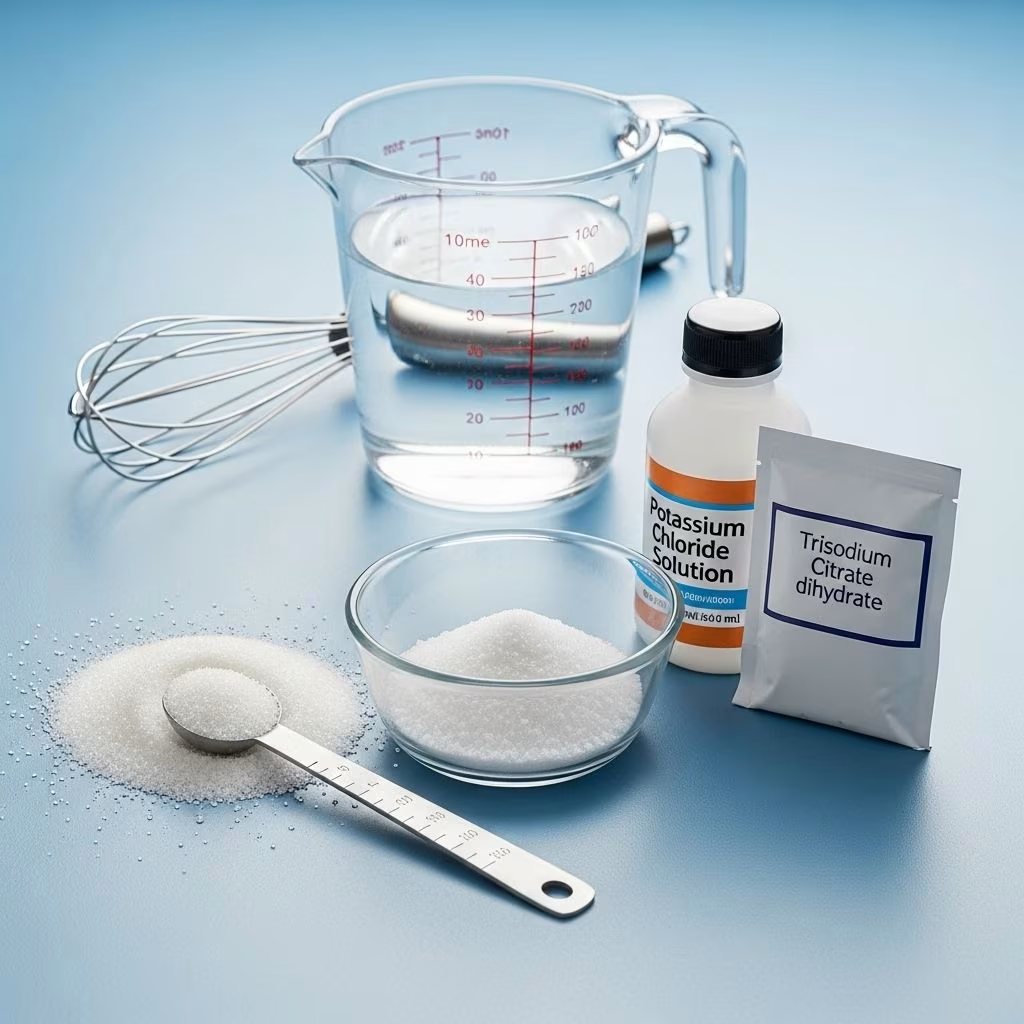
Introduction to Oral Rehydration Solution (ORS)
Oral Rehydration Solution (ORS) is a scientifically formulated mixture of water, glucose, and essential electrolytes—primarily sodium and potassium—designed to efficiently treat and prevent dehydration caused by diarrhea and vomiting. Recognized globally, ORS is recommended by healthcare organizations as a first-line intervention for dehydration across all age groups, significantly reducing mortality and morbidity rates, especially in children under five years of age.
ORS works by leveraging natural transport mechanisms in the intestinal lining, allowing rapid absorption of fluids and electrolytes even when the body is losing these crucial substances due to gastrointestinal disturbances.
Historical Background and Development
The concept of ORS originated in the 1940s, with its widespread use emerging after pivotal discoveries during the 1960s cholera epidemics. Researchers found that the presence of glucose enhances sodium and water absorption via specialized co-transporters in the intestine. Before ORS, intravenous fluid therapy was the only widely used solution for severe dehydration, often unavailable in low-resource settings.
Since its introduction, ORS has been included in the World Health Organization’s List of Essential Medicines and is credited as one of the most significant healthcare advancements in reducing childhood deaths worldwide.
Mechanism of Action
ORS operates on a well-characterized biochemical principle: the co-transport of glucose and sodium across the intestinal epithelium.
- Glucose-Sodium Co-Transport: When both glucose and sodium are present in the intestine, they are absorbed together through a specialized protein channel. This process directly facilitates the uptake of water into the bloodstream.
- Electrolyte Replacement: Diarrhea and vomiting cause significant losses of sodium, potassium, and water. ORS replaces these in ideal proportions, preventing metabolic complications such as acidosis and hypokalemia.
- Dual-Action Formulations: Modern research has explored adding fermentable starches, like high-amylose maize starch (HAMS), which generate short-chain fatty acids in the colon to further stimulate sodium and water absorption.
This efficient mechanism means ORS can restore hydration even when losses are ongoing, making it invaluable in acute gastroenteritis, cholera, and other diarrheal diseases.
Composition and Formulation
The WHO-recommended ORS formulation is a precise mix of glucose and salts, designed to optimize both efficacy and safety. The standard composition is as follows:
| Ingredient | Concentration (mmol/L) | Function |
|---|---|---|
| Sodium chloride (NaCl) | 75 | Restores extracellular sodium |
| Glucose | 75 | Facilitates sodium absorption |
| Potassium chloride (KCl) | 20 | Prevents hypokalemia |
| Sodium citrate | 10 | Corrects acidosis |
The total osmolarity of standard ORS = 245 mOsm/L, which balances electrolyte replacement with palatability and minimizes the risk of hypernatremia.
- Some versions may use sucrose in place of glucose, and sodium bicarbonate may substitute sodium citrate.
- Flavorings and flow agents may be added to improve palatability and shelf-life, but the basic therapeutic value is defined by the above ingredients.
- Zinc supplementation is sometimes included for children to further reduce diarrhea duration.
Homemade ORS Preparation
In resource-limited settings, a simple homemade ORS can be prepared using household ingredients:
- 6 level teaspoons of sugar
- 0.5 level teaspoon of salt
- 1 liter of clean water
This mixture approximates the effectiveness of commercial ORS, though studies on homemade solutions are limited.
Types of ORS and Modified Formulations
Since the original formulation, several variants have emerged:
- Standard WHO/UNICEF ORS: Used globally for children and adults with mild to moderate dehydration.
- Hypoosmolar ORS: Lower osmolarity solutions reduce stool volume, vomiting, and risk of hypernatremia.
- Rice-Based ORS: Instead of glucose, rice powder is used as a carbohydrate source; may be more effective in cholera cases.
- ORS with Fermentable Starch (HAMS-ORS): Delivers resistant starch to the colon, where it is fermented, further enhancing sodium and fluid absorption. Clinical trials show reduced diarrhea duration.
Administration and Dosage Guidelines
ORS is designed for oral administration, making it accessible outside hospital settings. Dosage depends on the degree of dehydration, age, and ongoing losses.
Phases of Treatment
- Rehydration Phase:
- Rapid replacement of existing fluid and electrolyte losses over 3–4 hours.
- Frequent small sips are preferred (spoon, cup, or syringe), especially in children.
- For persistent vomiting, 5 mL every five minutes, gradually increasing as tolerated.
- Maintenance Phase:
- Ongoing replacement of continued losses from diarrhea or vomiting.
- Unrestricted, age-appropriate diet should resume after rehydration.
- Breastfeeding and regular formula feeding should continue where appropriate.
For those unable to tolerate oral intake, ORS can be given via nasogastric tube at a slow, steady rate.
Global Impact and Usage Statistics
ORS has had a transformative impact on public health, significantly reducing deaths from diarrheal diseases worldwide. The World Health Organization estimates that ORS can reduce mortality from diarrhea by up to 93%, representing one of the most effective interventions in modern medicine.
-
References
- https://www.defeatdd.org/blog/how-does-oral-rehydration-solution-work/
- https://pmc.ncbi.nlm.nih.gov/articles/PMC3950600/
- https://en.wikipedia.org/wiki/Oral_rehydration_therapy
- https://www.ghsupplychain.org/sites/default/files/2019-02/MNCH%20Commodities-OralRehydration.pdf
- https://www.utmb.edu/Pedi_Ed/CoreV2/Fluids/Fluids11.html
- https://pmc.ncbi.nlm.nih.gov/articles/PMC9464461/
- https://med.virginia.edu/ginutrition/wp-content/uploads/sites/199/2015/11/KellyArticle-Oct-04.pdf
- https://www.who.int/publications/i/item/WHO-FCH-CAH-06.1


