


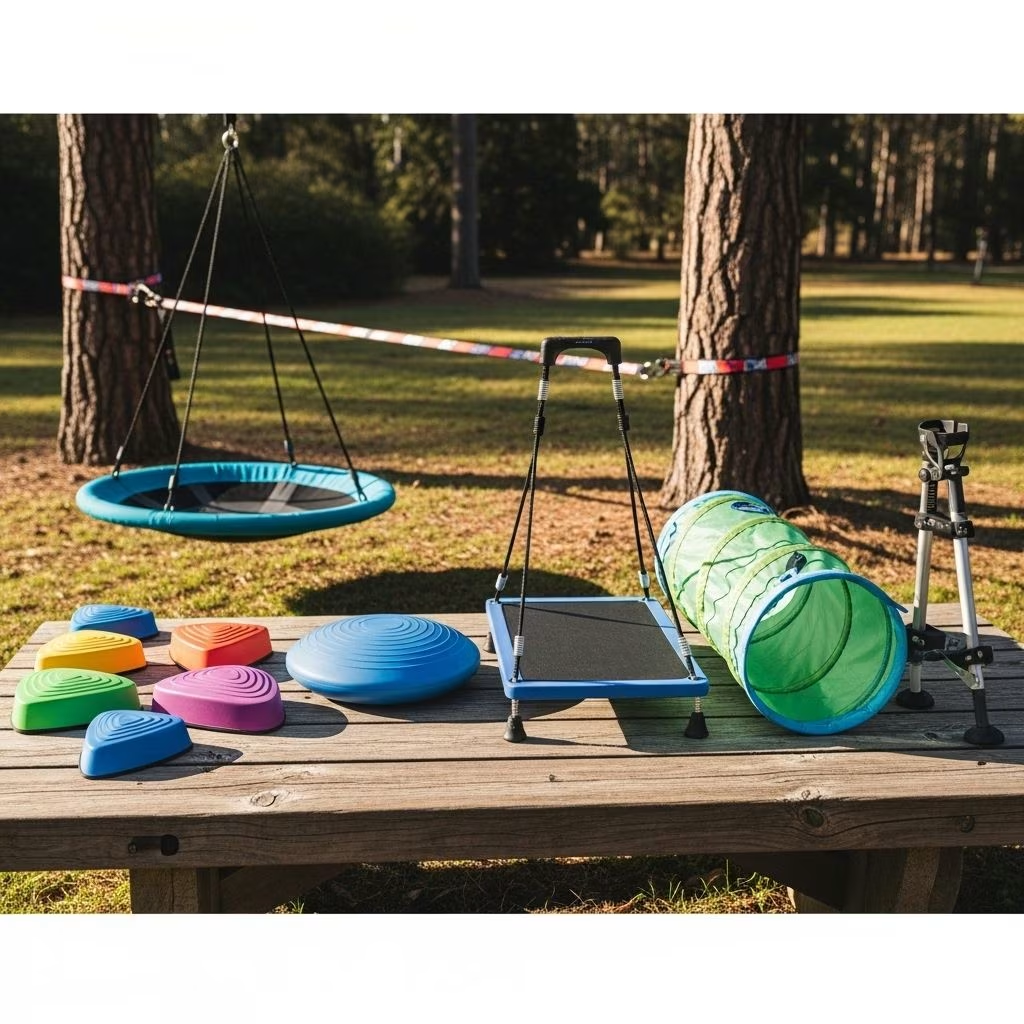
Outdoor Equipment That Stimulates the Vestibular System: Transforming Play for Healthy Sensory Development
The vestibular system is a foundational component of sensory integration, directly influencing balance, coordination, movement, and the ability to process information from the surrounding environment. Modern trends toward increased indoor and sedentary lifestyles pose risks to children’s vestibular health. However, a wealth of outdoor equipment and play activities are designed to naturally activate and strengthen this crucial system, promoting healthy development and greater physical and sensory competence.
What is the Vestibular System?
The vestibular system is located within the inner ear, comprising semicircular canals and otolith organs that respond to movement and head position. This network communicates with the brain to regulate balance, spatial orientation, and coordinated movement. Every movement against gravity—be it spinning, tumbling, swinging, or jumping—activates the fluid within these canals, stimulating hair cells that transmit vital positional and motion data to the brain.
Key functions of the vestibular system include:
- Helping individuals determine their body’s position in space
- Enabling smooth, coordinated eye and bodily movements
- Supporting attention, focus, and emotional regulation through ties to the brain’s reticular activating and limbic systems
- Enhancing gross motor skills and postural control
Why Vestibular Stimulation Matters
Active stimulation of the vestibular system is vital for healthy physical and intellectual development, particularly in children. Regular vestibular input:
- Strengthens balance and core body stability
- Facilitates effective coordination and motor planning
- Regulates emotional responses and improves attention spans
- Reduces anxiety and supports calmness, especially in children with sensory processing disorders
A lack of natural, challenging play leads to underdeveloped vestibular senses, seen in reduced core strength, difficulty with coordination, and poor balance—concerns identified in contemporary studies on child development.
How Outdoor Equipment Stimulates the Vestibular System
Outdoor environments provide diverse opportunities to activate the vestibular system naturally and enjoyably. Play equipment designed to challenge gravity—requiring spinning, swinging, climbing, balancing, and rolling—delivers the dynamic movement essential for strong vestibular development.
Compared with indoor or seated activities, outdoor play offers:
- More freedom to move and experiment with motion
- Varied terrain and natural features that enhance sensory input
- Access to community play structures fostering social, physical, and sensory growth
Types of Outdoor Equipment for Vestibular Stimulation
Occupational therapists recommend a range of outdoor equipment specifically designed to stimulate the vestibular system. These can be found in parks, playgrounds, schools, and backyards. Below is a categorized overview of popular equipment and how they engage vestibular senses:
| Equipment | Vestibular Actions | Key Benefits |
|---|---|---|
| Swings (rotary, tire, hammock) | Spinning, forward-backward/sideways movement | Improves balance, coordination, sensory integration |
| Climbing Frames (monkey bars, rope nets) | Climbing, pulling, hanging, inverting | Strengthens core, challenges orientation |
| Slides and Foam Wedges | Sliding down, crawling up/down inclined surfaces | Develops postural control, motion perception |
| Balance Beams and Stepping Stones | Balancing, walking on uneven or narrow surfaces | Enhances equilibrium, body awareness |
| Trampolines | Bouncing, jumping | Stimulates inner ear, gross motor development |
| Rocking Chairs and Sensory Cushions | Repetitive rocking, dynamic sitting | Calms, improves body control |
| Bikes and Scooters | Linear movement, acceleration/deceleration | Builds coordinated, rhythmic movement |
Examples of Outdoor Vestibular Equipment
- Monkey Bars and Rope Ladders – promote hanging and swinging, strengthening grip and arm muscles while stimulating the vestibular sense
- Hammocks or Tire Swings – facilitate multi-directional movement, including spinning and gentle rocking
- Balance Beams – support walking and challenging equilibrium on narrow surfaces
- Trampolines – provide dynamic jumping and bouncing experiences that move the head in different planes
- Slides – sliding provides gravitational input and accelerative-decelerative feedback
- Seesaws and Rocking Equipment – create up-and-down linear motion enhancing vestibular activation
- Climbing Nets and Walls – present vertical and diagonal movement challenges, which promote body awareness and spatial orientation
Benefits of Vestibular Play
- Improved Coordination & Balance: Activities like climbing and swinging strengthen core muscles and stabilize posture, especially crucial for children with sensory processing challenges
- Gross Motor Skill Development: Outdoor vestibular equipment supports walking, running, jumping, and more complex movement patterns vital for healthy growth
- Supports Emotional Regulation: Vestibular stimulation is tied to mood, attention, and emotional resilience, especially for children with anxiety or hyperactivity
- Promotes Social and Cognitive Growth: Group play on outdoor equipment fosters cooperation, problem-solving, and spatial awareness
- Increases Physical Fitness: Repeated use of equipment encourages strength, endurance, and cardiovascular health
Safe Guidelines for Vestibular Activities
While vestibular play is beneficial, safety is essential to maximize its positive impact. Consider the following guidelines:
- Ensure all equipment is in good condition and appropriate for the child’s age and abilities
- Supervise during higher-risk activities, such as climbing or intense spinning
- Avoid over-restriction; allow children to explore natural risks and challenges where feasible for optimal development
- Encourage progressive difficulty—starting with simple activities and advancing as abilities grow
- Teach children to identify and manage feelings of dizziness, discomfort, or imbalance, pausing when necessary
Outdoor Vestibular Activity Ideas
The outdoor environment is rich in opportunities for vestibular play that can be spontaneous, structured, or therapeutic. Try the following activities to stimulate vestibular growth:
- Tree Climbing – Enables multi-dimensional movement and challenges head position in space
- Playing Tag or Hide-and-Seek – Fast changes in direction, acceleration, and running activates vestibular senses
- Rolling Down Hills – Full-body, gravity-driven movement
- Hopscotch – Jumping, balancing, and shifting between positions
- Riding Bikes or Scooters – Dynamic movement with spatial navigation
- Swinging and Rotating in Playground Swings – Vary direction and speed for different stimulation
- Balancing on Logs or Rocks – Natural uneven surfaces increase difficulty and sensory feedback
- Crawling Through Tunnels or Under Obstacles – Changes head orientation and body awareness
- Bouncing on Trampolines – Incorporates acceleration, deceleration, and aerial movement
For children with special needs or sensory processing disorders, therapeutic outdoor programs may adapt these ideas for restorative, calming, or organizing effects.
Frequently Asked Questions (FAQs)
Q: What age group most benefits from outdoor vestibular play?
A: All age groups can benefit, but infants, toddlers, and elementary-aged children experience the most rapid sensory development and gain the greatest advantage from regular vestibular stimulation.
Q: Are there risks to vestibular activities?
A: Minor risks like dizziness or falls exist, but appropriate supervision, quality equipment, and gradual progression considerably minimize these concerns. Under-stimulation is a larger risk for most children today.
Q: What signs indicate a child may need more vestibular input?
A: Signs include poor balance, difficulty with coordination, avoidance of movement activities, and challenges staying focused or emotionally regulated.
Q: Can vestibular play help children with developmental delays or sensory disorders?
A: Yes, targeted vestibular activities can reduce anxiety, improve body awareness, and aid gross motor skills. Occupational therapists regularly incorporate vestibular equipment in treatment plans.
Q: Are indoor activities or equipment effective for vestibular stimulation?
A: While indoor options exist (e.g., wobble boards, foam wedges), outdoor environments naturally offer richer, more varied, and challenging experiences, which are generally more effective.
Conclusion
Outdoor play equipment provides an invaluable opportunity to stimulate and develop the vestibular system in children, helping them build balance, coordination, and emotional resilience. Through conscious integration of nature-based activities and specialized outdoor equipment, caregivers, educators, and therapists can harness the powerful developmental benefits of vestibular stimulation, supporting healthier and happier children for generations to come.
References
- https://www.greenchildmagazine.com/how-outdoor-play-stimulates-a-childs-vestibular-system/
- https://www.occupationaltherapy.com/articles/therapeutic-benefits-outdoor-play-5303
- https://www.theottoolbox.com/vestibular-activities/
- https://funandfunction.com/blog/benefits-of-climbing-for-sensory-processing-disorders
- https://napacenter.org/vestibular-input/
- https://www.pentagonplay.co.uk/news-and-info/proprioceptive-vestibular-activities-sen
- https://www.miracle-recreation.com/blog/advantages-motion-play-equipment/
- https://www.playaustralia.org.au/sites/default/files/PlayTodayFactsheet-%20vestib+propsystems.pdf


