


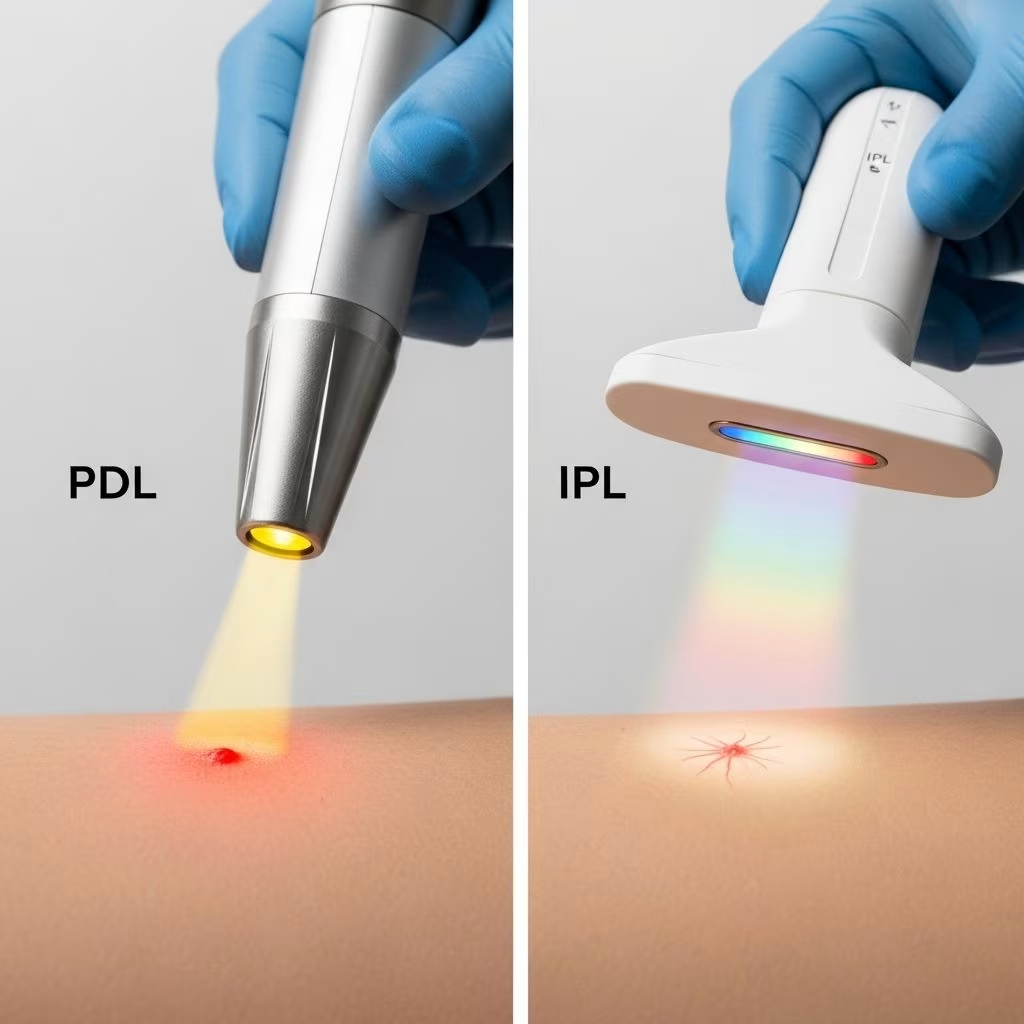
Vascular lesions, including telangiectasia, spider veins, port wine stains, and cherry angiomas, are among the most common skin conditions treated in dermatology. Two of the most prominent light-based therapies for these lesions are the Pulsed Dye Laser (PDL) and Intense Pulsed Light (IPL) systems. Both approaches harness photothermolysis to selectively target vascular components, but they differ in wavelength specificity, depth of penetration, clinical performance, and side effect profiles. This article provides a detailed comparative analysis, synthesizing current evidence and expert guidance to help patients and clinicians navigate optimal treatment choices.
Introduction to Vascular Lesions
Vascular lesions refer to a broad group of skin conditions marked by abnormal or dilated blood vessels. Common types include:
- Port wine stains (capillary malformations).
- Telangiectasia (spider veins).
- Hemangiomas (benign tumors formed by blood vessels).
- Cherry angiomas (small, red papules).
- Facial erythema and diffuse redness.
These lesions can cause cosmetic concerns, psychological distress, and in certain cases, medical complications. Treatment selection is guided by lesion type, depth, size, patient preferences, and risk of adverse effects.
Mechanisms: How PDL and IPL Work
Pulsed Dye Laser (PDL)
PDL technology delivers a concentrated beam of yellow light (most commonly at 585 or 595 nm), targeting the oxyhemoglobin within blood vessels.
- Monochromatic: Focused at a single wavelength ideal for superficial vessels.
- Pulse duration: Typically 450 microseconds, matching the thermal relaxation time of small cutaneous blood vessels to minimize collateral damage.
- Depth of penetration: Up to 1.5 mm, depending on wavelength and device settings.
The laser energy induces selective photothermolysis (vessel-specific heating and coagulation), causing vessel destruction and subsequent clearance by the body’s immune system.
Intense Pulsed Light (IPL)
IPL is a non-laser, broadband light therapy (typically 500–1200 nm) that utilizes custom filter settings and pulse durations to selectively target various chromophores, including hemoglobin, melanin, and water.
- Polychromatic: Wide spectrum allows flexibility in targeting both superficial and moderately deep vessels of varying diameters.
- Pulse durations: Adjustable from 2 to 100 milliseconds, accommodating both small and larger vessel targets.
- Depth of penetration: Can reach deeper-seated vessels not easily accessed by PDL.
IPL heats the vessel wall through longer, controlled pulses; this leads to denaturation of vessel proteins, gradual coagulation, and eventual vessel absorption. Notably, IPL can target multiple vascular and pigmented lesions simultaneously.
Indications for PDL and IPL
| Condition | Pulsed Dye Laser (PDL) | Intense Pulsed Light (IPL) |
|---|---|---|
| Superficial telangiectasia (facial/spider veins) | Highly effective, gold standard | Effective, especially for larger facial veins |
| Port wine stains | First-line, particularly in pediatric and adult patients | Less studied; may assist in deeper or nodular variants |
| Hemangiomas | Good results in selected cases | May be useful for deeper components |
| Cherry angiomas | Effective | Highly effective |
| Rosacea-associated erythema | Effective | Very effective; reduces background redness |
| Deeper mixed or nodular vascular lesions | Limited efficacy | Better efficacy; penetrates deeper |
Efficacy: What Studies Show
Direct comparative trials have shed light on the relative efficacy of PDL and IPL in the management of vascular lesions.
Key Findings from Clinical Studies
- Both PDL and IPL are effective in treating facial telangiectasia, port wine stains, and cherry angiomas, with clinical clearance rates exceeding 70–80% in many studies.
- PDL often delivers superior cosmetic improvement, especially for superficial, red lesions. One randomized study of patients with cutaneous telangiectasia found a statistically significant greater improvement with PDL in both clinical and dermoscopic outcomes, though both devices produced noticeable improvement.
- IPL offers greater versatility due to customizable wavelength and pulse duration; it is well suited to mixed vessel sizes and deeper or blended vascular/pigmented lesions.
- For deep purple or nodular lesions, IPL or long-pulsed Nd:YAG lasers may outperform PDL, which has limited depth penetration.
- IPL treatment sessions are often associated with less downtime and less immediate post-procedural bruising (purpura) compared to PDL.
Duration and Number of Treatments
- PDL: Typically 2–6 sessions, spaced 4–8 weeks apart, depending on lesion type and depth.
- IPL: 3–6 sessions spaced 3–8 weeks apart; frequency may vary based on severity, vessel size, and patient response.
Side Effects and Safety Considerations
Pulsed Dye Laser (PDL) Side Effects
- Purpura (bruising) is a frequent, expected effect; may last up to 7–14 days and can be cosmetically concerning.
- Pigmentary changes: Transient hyperpigmentation or (rarely) hypopigmentation may occur, particularly in darker skin types.
- Skin texture changes: Hypertrophic scarring or atrophy is now rare with newer-generation devices and optimized protocols.
- Transient erythema, swelling, or discomfort are common for several hours to days after treatment.
Intense Pulsed Light (IPL) Side Effects
- Lower risk of bruising compared with PDL; minimal purpura, allowing quicker social recovery.
- Pigmentary changes may develop (especially in tan or dark skin) but are generally less common with conservative settings.
- Potential for vesicles, crusting, mild swelling, or transient redness after sessions.
- Serious complications (burns, scarring) are rare with experienced operators.
Advantages and Limitations of PDL and IPL
| Feature | Pulsed Dye Laser (PDL) | Intense Pulsed Light (IPL) |
|---|---|---|
| Specificity | High: single-wavelength, optimal for hemoglobin | Moderate: targets multiple chromophores |
| Depth penetration | Shallow to moderate (up to 1.5 mm) | Variable; can reach deeper lesions |
| Pain/discomfort | Brief, moderate (may need cooling or anesthetic) | Mild to moderate (generally well tolerated) |
| Downtime | Frequent bruising; 1–2 weeks recovery | Minimal bruising; rapid return to activities |
| Versatility | Mostly for vascular lesions | Treats vascular, pigmented, and even some hair removal indications |
| Skin types | Lower risk in lighter skin; caution in dark skin (greater pigment risk) | Caution in dark skin; safer with appropriate filters/settings |
Patient Experience and Practical Considerations
- PDL treatments may require planning due to visible bruising. Patients may wish to time sessions to avoid important social events.
- IPL treatments are typically better tolerated with less post-procedural evidence, making them attractive for those seeking little to no downtime.
- IPL devices require significant operator expertise to safely customize settings and avoid burns, especially on darker skin types.
- Multiple sessions are frequently required with either method for optimal results; outcomes vary for different lesion types and colors.
Cost, session length, and provider familiarity with each device also influence therapy selection. PDL is sometimes preferred in academic and specialty laser centers, while IPL units may be more widely available and used in cosmetic clinics.
Expert Recommendations and Guidelines
- PDL is considered the gold standard for superficial, red lesions such as facial telangiectasia, port wine stains, and early hemangiomas.
- IPL is ideal for broader vascular involvement, background erythema (as in rosacea), and for patients seeking lower downtime.
- For deeper or larger diameter vessels, IPL or Nd:YAG lasers may provide superior results.
- Combination strategies, using IPL for diffuse redness and PDL for focal prominent vessels, are emerging as effective approaches in some practices.
Patient counseling regarding expectations, risk of pigmentary changes (especially in darker skin), and likelihood of multiple sessions is critical for both modalities.
Frequently Asked Questions (FAQs)
Q: Which is better for facial spider veins—PDL or IPL?
A: Both technologies are effective; however, PDL is often regarded as the gold standard for fine, red spider veins owing to its wavelength specificity and clearance rates. IPL offers advantages for larger, deeper, or mixed lesions, particularly when minimal downtime is desired.
Q: What is the downtime after treatment with PDL or IPL?
A: PDL typically causes purpura (bruising) lasting 1–2 weeks, while IPL sessions result in far less visible after-effects, allowing quicker return to daily routines.
Q: Are these treatments painful?
A: Most patients report mild to moderate discomfort (a snapping or tingling sensation). Cooling, anesthetic creams, or air chillers can reduce discomfort. IPL is generally better tolerated.
Q: Can either treatment be used on all skin types?
A: Both PDL and IPL are safest and most effective in lighter skin (Fitzpatrick types I–III). They can cause pigmentary changes in darker skin, so extra caution and lower energies are required.
Q: How many sessions will I need?
A: Most patients require multiple sessions—2 to 6 for PDL, 3 or more for IPL. The number depends on lesion characteristics, skin type, and response.
Q: Can PDL and IPL be combined?
A: In some treatment protocols, both modalities are combined sequentially for best results—addressing both focal vessels and diffuse redness or pigmentation.
References
- Current Trends in Intense Pulsed Light – PMC
- Lasers for vascular lesions: Standard guidelines of care – Indian Journal of Dermatology, Venereology and Leprology
- A comparison of intense pulsed light and laser treatment of cutaneous telangiectases – Rheumatology (Oxford)
References
- https://pmc.ncbi.nlm.nih.gov/articles/PMC3390232/
- https://ijdvl.com/lasers-for-vascular-lesions-standard-guidelines-of-care/
- https://academic.oup.com/rheumatology/article/53/8/1422/1775276
- https://pmc.ncbi.nlm.nih.gov/articles/PMC8611125/
- https://bhskin.com/blog/vbeam-laser-vs-ipl-what-is-the-difference-and-which-one-is-right-for-you/
- https://mcosmeticsurgery.com/ipl-vs-laser-treatment-which-is-best/
- https://e-century.us/files/ajtr/17/7/ajtr0164741.pdf
- https://onlinelibrary.wiley.com/doi/10.1111/jocd.16549


