


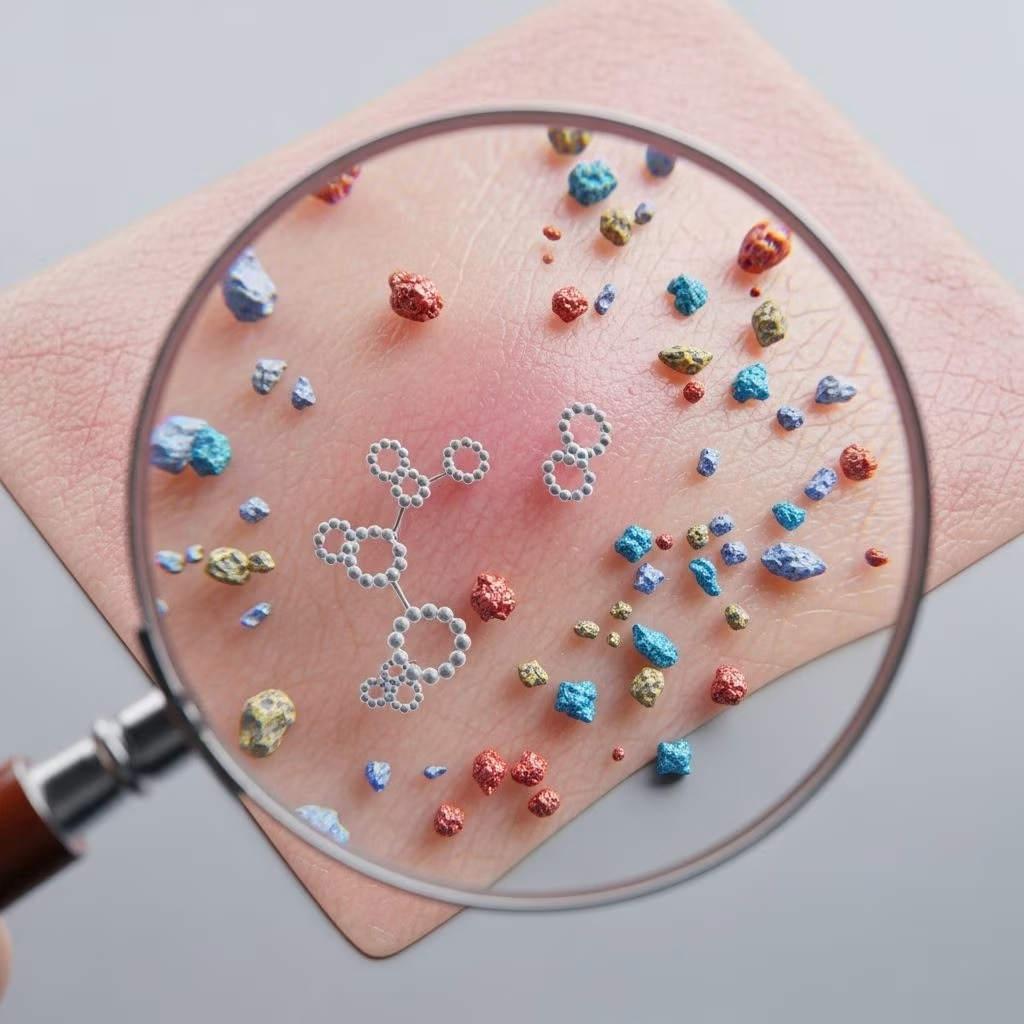
Phthalates & Microplastics: Skin Sensitizer Mechanism
Phthalates and microplastics have become focal points in environmental and dermatological research due to their pervasive presence in consumer products, cosmetics, and the environment. Concerns are escalating regarding their potential to function as skin sensitizers—substances that trigger allergic skin reactions—by disrupting skin homeostasis, provoking inflammation, and facilitating the penetration of other toxic agents. This article presents a thorough examination of the mechanisms by which microplastics and phthalates affect human skin, highlights the risks associated with combined exposures, and discusses current scientific understanding and knowledge gaps.
Introduction
The growing use of plastics and synthetic chemicals in consumer goods and industrial processes has led to a dramatic increase in environmental contamination by microplastics and phthalates. Microplastics often serve as carriers for phthalates and other plasticisers, compounds designed to enhance flexibility and durability in polymers. However, these same additives are now recognized for their ability to disrupt endocrine function and pose risks to human health, particularly through direct skin contact. Meanwhile, microplastics themselves have raised alarm for their capacity to penetrate biological barriers, induce inflammation, and interact with pollutants like phthalates to magnify health threats.
What Are Phthalates and Microplastics?
- Phthalates: A group of synthetic chemicals used primarily as plasticizers. Common types include diethyl phthalate (DEP), dibutyl phthalate (DBP), di(2-ethylhexyl) phthalate (DEHP), diisononyl phthalate (DINP), and di-octyl terephthalate (DOTP). Used extensively in plastics, cosmetics, and personal care products.
- Microplastics (MPs): Small plastic particles (<5 mm) originating from the breakdown of larger plastics or directly manufactured for use in products such as exfoliating cosmetics, personal care items, and synthetic textiles. Nanoplastics (NPs) are even smaller—often under 100 nm—and can cross biological barriers more readily.
Sources and Routes of Human Exposure
Modern lifestyles facilitate exposure to microplastics and phthalates both directly (via skin contact) and indirectly (via ingestion, inhalation, or drinking water).
- Cosmetics and personal care products: Include exfoliants, cleansers, and creams containing microplastics and phthalates.
- Plastic packaging: Leaching of phthalates occurs from packaging materials into their contents and onto the skin when handled.
- Synthetic textiles: Release microfibers during washing and wear, contributing to skin and environmental exposure.
- Environmental sources: Microplastics and phthalates are widespread in soil, water, and air, contributing to omnipresent background exposure.
Skin Barrier Function and Sensitization
The skin is the largest organ of the human body and serves as a critical barrier against environmental threats. The physical, chemical, and immunological components of the skin function in concert to prevent the entry of xenobiotics and pathogens.
- Epidermal barrier: Prevents penetration of harmful substances. Disruption can lead to sensitization – the process by which the immune system is trained to recognize and react to new antigens, including chemical irritants and allergens.
- Penetration potential: Microplastics and phthalates can breach the epidermal barrier, especially when particle size is less than 100 nm.
- Homeostasis disruption: Both MPs and NPs provoke inflammatory responses, altering local immune function and increasing the likelihood of skin sensitization.
Mechanisms of Phthalates as Skin Sensitizers
Phthalates are recognized for their ability to trigger adverse skin reactions through several mechanistic pathways:
- Protein binding and haptenization: Upon skin contact, phthalates may conjugate with skin proteins, creating neoantigens that initiate immune sensitization.
- Oxidative stress induction: Phthalates such as MEHP increase reactive oxygen species within dermal epithelial cells, leading to cellular injury and release of pro-inflammatory cytokines.
- Chronic inflammation: Persistent low-level exposure can cause continuous immune activation, increasing risk of dermatitis, eczema, and other allergic skin conditions.
- Endocrine disruption: Phthalates can disrupt skin homeostasis by interfering with hormonal pathways that regulate growth, repair, and immune function.
Table: Common Phthalates and Their Skin Effects
| Phthalate | Common Use | Penetration Ability | Skin Effects |
|---|---|---|---|
| DEP | Cosmetics, lotions | Moderate | Potential irritant, allergen |
| DBP | Nail polish, synthetic textiles | High | Allergen, disrupts skin proteins |
| DEHP | PVC plastics, packaging | High | Oxidative stress, chronic inflammation |
| DINP/DOTP | Flexible plastics, toys | Low-Moderate | Possible irritant, chronic effects unclear |
Skin Alterations Caused by Microplastics
Microplastics, by virtue of their small size and chemical composition, can provoke a variety of deleterious skin responses.
- Barrier penetration: Particles under 100 nm (NPs) can traverse the skin barrier, entering dermal and subdermal layers.
- Local inflammation: Microparticle deposition triggers localized immune reactions, including infiltration by macrophages and release of pro-inflammatory mediators, such as TNF-α and IL-6.
- Oxidative stress: MPs foster the generation of reactive oxygen species, damaging skin cells and exacerbating inflammatory cycles.
- Cytotoxicity: MPs and their nano-counterparts can induce cellular death (apoptosis or necrosis) in epidermal cells, impairing barrier integrity and accelerating aging or disease.
Combined Effects: Phthalates & Microplastics
Interactions between microplastics and phthalates often magnify their health threats to the skin. MPs serve as carriers and reservoirs for phthalate molecules, enhancing their availability and potentiating overall toxicity.
- Leaching and release mechanisms: Phthalates form a surface layer on microplastic particles such as PVC, leaching instantaneously and then slowly but continuously when exposed to water or skin moisture. This means prolonged or repeated skin contact with microplastics steadily releases phthalates.
- Transport and bioavailability: Attachment to MPs facilitates the diffusion and penetration of phthalates through the skin barrier, increasing systemic exposure.
- Sorption behavior: Hydrophobic interactions dominate, allowing MPs to adsorb high levels of DBP and DEP, rendering them more available across a wide pH range and environmental conditions.
- Additive toxicity: MPs enhance the toxicity of phthalates synergistically by facilitating their transport and release into skin and other tissues.
Table: Interaction Mechanisms between Microplastics and Phthalates
| Microplastic Type | Phthalate | Sorption Capacity | Skin Risk Factor |
|---|---|---|---|
| PVC | DEHP, DOTP, DINP | High | Continuous leaching, barrier penetration |
| PS | DBP | Very High | Strong hydrophobic binding, high allergenic potential |
| PE | DBP, DEP | Moderate | Moderate carrier activity |
Current Research and Knowledge Gaps
- Relatively few studies have systematically documented dermal exposure from cosmetics or synthetic textiles, particularly in everyday scenarios.
- The synergy and cumulative effects of chronic, low-level exposure to both phthalates and MPs remain poorly characterized.
- While MPs in cosmetics are associated with inflammation and cytotoxicity, more epidemiological data are needed to clearly link them with specific skin diseases.
- Further research is needed into particle size, surface chemistry, and environmental factors that modulate penetration and sensitization.
- No systematic investigations are available for inhalation or indirect exposure pathways arising from microplastic-laden dust and synthetic textile fibers.
Regulatory Perspectives and Mitigation
- Regulatory agencies (EU, FDA, etc.) are intensifying restrictions on certain phthalates in consumer products, especially those directly contacting skin.
- Bans and phase-outs on the use of microplastics in rinse-off cosmetics have been initiated in Europe and North America.
- Recommendations include minimizing contact with materials known to leach phthalates, such as PVC, and avoiding unnecessary use of microplastic-containing cosmetics.
- Greater transparency and labeling are advocated for consumer products containing synthetic polymers and plasticizers.
Frequently Asked Questions (FAQs)
Q: Can skin absorb phthalates directly from microplastics?
Yes. Studies demonstrate that microplastics facilitate both instantaneous and long-term leaching of phthalates upon contact with water or skin. This enhances the penetration of phthalates into the skin, increasing sensitization risk.
Q: Which products are most likely to expose skin to microplastics and phthalates?
Cosmetics, personal care products (such as cleansers and exfoliants), synthetic textiles, and plastic packaging are significant sources. Any product containing PVC, PS, or PE plastics and phthalate plasticizers poses a risk.
Q: What are the main skin effects that can result from microplastic or phthalate exposure?
Possible effects include increased inflammation, oxidative stress, dermatitis, eczema, and enhanced skin aging. Chronic exposure may trigger allergic reactions and disrupt normal skin barrier function.
Q: Is there a safe limit for skin exposure to microplastics or phthalates?
No universally defined safe limit currently exists for dermal exposure, as research is ongoing. Regulatory agencies suggest minimizing exposure, particularly for high-risk groups such as infants, children, and those with pre-existing skin conditions.
Q: How can I reduce my exposure to microplastics and phthalates?
- Choose cosmetic and personal care products labeled as “phthalate-free” and “microplastic-free”.
- Use natural fabrics over synthetic textiles.
- Reduce use of plastic-packaged products, especially those in contact with skin.
- Increase awareness of product labels and ingredients.
Conclusion
The intertwined threats posed by microplastics and phthalates as skin sensitizers represent a growing area of concern for dermatology and public health. By understanding their mechanisms, sources, and interactions, scientists and regulatory bodies can better guide product formulation, safety standards, and personal choices to minimize exposure. Ongoing research is critical to fill knowledge gaps and drive further regulatory action in the face of rising chemical and plastic pollution.
References
- https://onlinelibrary.wiley.com/doi/10.1111/jocd.16167
- https://pubs.acs.org/doi/10.1021/acs.est.2c05108
- https://www.frontiersin.org/journals/endocrinology/articles/10.3389/fendo.2021.724989/full
- https://pmc.ncbi.nlm.nih.gov/articles/PMC7068600/
- https://pmc.ncbi.nlm.nih.gov/articles/PMC8157593/
- https://pubs.acs.org/doi/10.1021/envhealth.3c00053


