


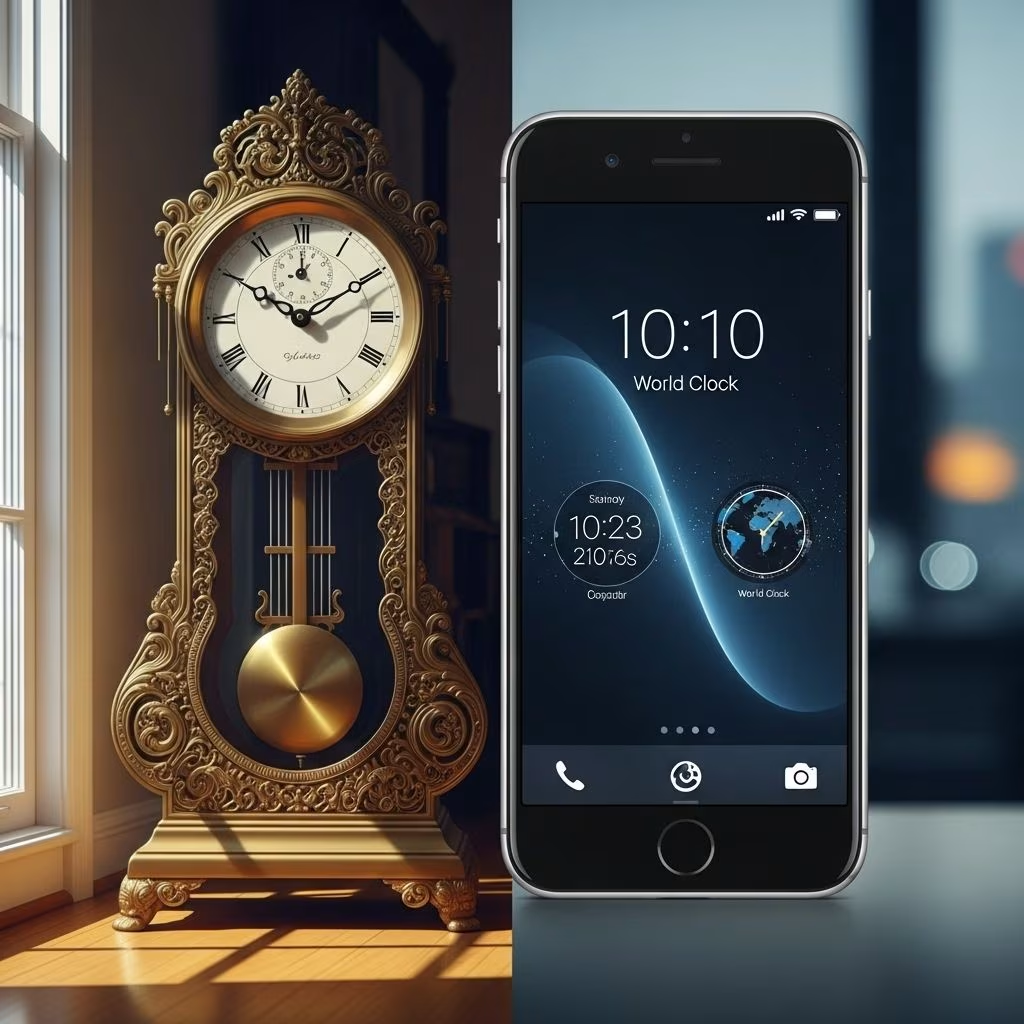
In a world increasingly reliant on smartphones for everyday functions, the question arises: is the physical clock, a centuries-old tool, still relevant for accurate timekeeping and optimal productivity? This comprehensive article explores the advantages, disadvantages, and unique considerations surrounding the use of physical clocks versus phones, drawing on research, expert opinion, and practical experience.
Introduction
For centuries, physical clocks have reliably measured and communicated time. In the past two decades, however, the smartphone has revolutionized how people access time—integrating clocks with hundreds of other functions. But amidst this convenience, concerns have emerged regarding distraction, reliability, and security.
This article investigates whether physical clocks are more effective than phones for personal and professional timekeeping, considering factors such as productivity, device dependability, data security, and psychological well-being.
The Evolution of Timekeeping
The journey of timekeeping has evolved rapidly, especially with technological advancements in the 21st century. This evolution can be divided into major phases:
- Mechanical Era: Grandfather clocks, wall clocks, and wristwatches dominated homes and workplaces.
- Electronic Age: Battery-powered analog and digital clocks offered increased portability and affordability.
- Digital Revolution: Smartphones, wearables, and computers brought timekeeping to digital screens connected to atomic clocks for unparalleled precision.
Physical clocks continue to exist alongside digital devices, often serving as dedicated tools for time awareness and management.
Physical Clocks vs. Phones: A Comparative Analysis
Understanding the merits of each method requires a careful analysis of their key attributes. The following table summarizes the primary differences:
| Feature | Physical Clocks | Phones |
|---|---|---|
| Reliability | Always on if powered; not dependent on internet or batteries (if analog) | Dependent on battery life, software stability, and connectivity |
| Durability | Designed to last years, often decades; simple maintenance | Subject to breakage, battery degradation, or obsolescence every 2–5 years |
| Distraction Potential | None; single-purpose device | High; often leads to checking notifications or engaging with apps |
| Security/Privacy | No data collection or digital security risks | Potential for location and personal data tracking by apps |
| Customization | Limited (e.g., design, analog/digital display, alarms) | Extensive (multiple time zones, sounds, visual styles, integrations) |
| Accessibility | Visible at a glance; large-format clocks work for groups | Personal; must be interacted with (unlocked, app opened) |
Device Reliability and Durability
Physical clocks have long been valued for their reliability. Most analog and digital clocks continue running with basic maintenance—either winding, battery replacements, or reliable mains power. For organizations and workplaces, this translates into:
- Extended lifespan: Many physical time clocks operate efficiently for 10+ years, compared to mobile devices which may need replacement due to breakage, outdated hardware, or loss within 2–5 years.
- System independence: Physical clocks do not rely on software that may become corrupted or outdated, nor do they need a stable internet connection or frequent firmware updates.
- Continuous uptime: A wall clock, desk clock, or watch is typically always visible and operational, unaffected by app crashes, dead batteries (especially true for mechanical clocks), or device interruptions.
By contrast, phones offer unparalleled versatility but are fundamentally less durable as timekeepers:
- Battery dependency: Phones require regular charging, and their clocks are unavailable when the device is off or out of battery.
- Vulnerability to damage: Phones are subject to screen cracks, water damage, and obsolescence due to fast-moving technological standards.
For critical environments—such as workplaces or classrooms—where consistent, unbroken access to the time is necessary, physical clocks are often preferred due to their durability and resilience against common technological issues.
Impact on Productivity and Focus
One of the most significant differences between physical clocks and phones lies in their influence on attention management and workflow. Physical clocks provide time information in isolation, with no additional features. This simple function yields several productivity benefits:
- Zero distraction: Checking the time on a clock involves no risk of encountering messages, notifications, or social media, thus preserving focus and preventing task-switching.
- Visual accessibility: Wall clocks or desk clocks are constantly visible, reducing the cognitive effort needed to check the time and reinforcing time awareness throughout a workplace or household.
- Routines and time blocking: Analog clocks, in particular, support visual management techniques like the Pomodoro Technique, where physical cues help mark work sprints and rest intervals.
Conversely, modern mobile phones are designed as multifunctional devices, often undermining their utility as timekeepers:
- Habitual distraction: Opening a phone to check the time can lead to unintended engagement with apps, social media, or games, disrupting deep work and increasing procrastination.
- Notification overload: Even with notification silencing, the visual cues of missed calls or unread messages can erode concentration and encourage multitasking.
Studies consistently show that smartphone-related interruptions negatively impact productivity. Many productivity experts thus recommend keeping a physical clock visible and smartphones out of immediate reach during focused work sessions.
Security and Privacy Considerations
In environments where data security and privacy are paramount, the choice between physical clocks and phones takes on added weight:
- Physical clocks do not collect, transmit, or store any private data, completely eliminating digital privacy risks.
- Phones, especially when used for time tracking or logging work hours, can expose sensitive data—including geolocation, personal contacts, and activity logs—to third-party apps or cloud services.
- Corporate environments: Physical, hardware-based time clocks often provide more secure authentication and record-keeping, as they are under strict access control and isolated from employee personal data.
- Security management costs: Relying on personal mobile devices for timekeeping requires ongoing IT support and security updates, which can become costly and complex for employers.
While phones can offer secure time-tracking through advanced apps, physical clocks remain the default choice for environments that require the strictest standards of confidentiality and minimal exposure to cyber risk.
Psychological and Well-being Effects
Research increasingly suggests that the omnipresence of smartphones can adversely affect mental health and well-being. When examining this through the lens of timekeeping:
- Physical clocks promote mindfulness and a healthier separation between work and leisure. Checking the time does not attract unrelated digital temptations.
- Phones can encourage compulsive checking behavior, increasing stress, sleep disruption (when used as alarm clocks by the bedside), and reduced quality of rest due to blue light exposure and notifications.
- Bedtime routines: Sleep experts widely advocate for analog or physical alarm clocks in bedrooms, discouraging phone use immediately before sleep to foster better sleep hygiene.
By choosing physical clocks for timekeeping and leaving phones outside sleep or work areas, individuals reinforce healthier digital boundaries and create environments more conducive to deep rest and focused performance.
Practical Use Cases and Recommendations
The ideal timekeeping solution often depends on context, goals, and user behavior. Below are common scenarios and recommendations:
- Workplaces with Fixed Locations: Install visible wall or desk clocks to provide a reliable, shared time reference. Use physical time clocks or biometric devices for secure, auditable time tracking.
- Remote Work and Mobile Teams: Mobile phone-based time tracking with GPS is often necessary for distributed workforces, enabling flexible, location-aware logging and simplified scheduling.
- Home Offices and Study Areas: Use a physical clock to minimize phone checking and maintain focus. Phones can be reserved for alarms or emergency communications and stored away during concentrated work periods.
- Bedrooms and Rest Areas: Opt for analog alarm clocks to foster restful routines. Avoid keeping phones in bedrooms to reduce mental stimulation and promote healthier sleep.
- High-Security Environments: Rely on non-networked, physical clocks for time display and access control to minimize digital attack surfaces and privacy concerns.
Ultimately, integrating both tools—while leveraging the simplicity of physical clocks and the flexibility of digital devices—can support personalized and effective time management strategies.
Frequently Asked Questions (FAQs)
Q: Are physical clocks more accurate than phones for keeping time?
A: Most modern phones synchronize their clocks with internet or cellular networks, granting them near-atomic precision. However, high-quality quartz or radio-controlled physical clocks can match or exceed this accuracy for most daily needs.
Q: Why are physical clocks recommended for bedrooms?
A: Sleep experts suggest using analog or digital physical clocks in bedrooms to avoid the sleep-disrupting effects of smartphone screens, notifications, and blue light exposure.
Q: What are the security advantages of physical clocks in workplaces?
A: Physical clocks do not collect or store any personal data, making them immune to cyberattacks, data breaches, or identity theft risks associated with digital timekeeping on phones.
Q: Do phones offer any advantages over physical clocks for timekeeping?
A: Phones offer greater flexibility, customizable alarms, and integrated scheduling features. For mobile or remote teams, location tracking and immediate communication can be essential.
Q: Should I replace all phone-based clocks with physical clocks?
A: It depends on your needs. For focused work and restful environments, physical clocks offer proven benefits. In dynamic, mobile settings, phones provide unmatched versatility. Using both in complementary ways often yields the best results.
Conclusion
While the smartphone has revolutionized timekeeping, the physical clock retains its unique merits—simplicity, reliability, security, and freedom from distraction. Organizations and individuals attuned to these benefits can optimize productivity, mental well-being, and data security by thoughtfully integrating physical clocks into modern routines. The most effective approach balances the strengths of both technologies, tailoring tools to context and personal habits for truly effective time management.
References
- https://www.accu-time.com/workforce-management-articles/8-reasons-biometric-time-clocks-are-more-secure-than-mobile-devices/
- https://www.timetrakgo.com/2024/07/09/7-benefits-of-mobile-time-tracking-with-gps-for-businesses/
- https://blog.crownworkforcemanagement.com/mobile-time-tracking-vs.-traditional-time-clocks-a-comparative-analysis
- https://www.getharvest.com/blog/benefits-of-electronic-vs-manual-employee-time-tracking-1
- https://www.paydayhcm.com/blog/time-tracking-methods-tracking-employee-hours
- https://arcoro.com/resources/when-to-use-a-portable-time-clock
- https://www.oloid.com/blog/understanding-time-clocking-systems-benefits-and-challenges


