


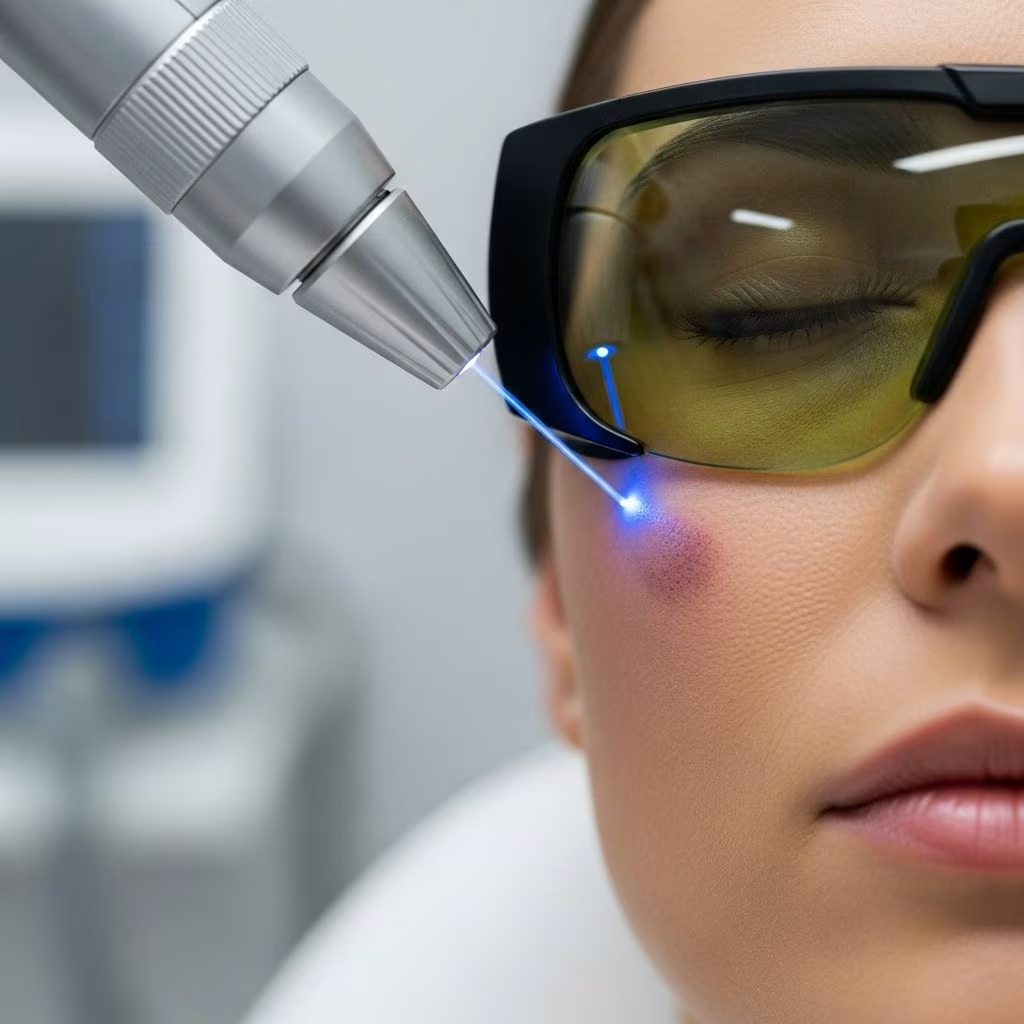
Hyperpigmentation, characterized by darkened patches on the skin, is a common dermatological issue with diverse underlying causes such as sun exposure, hormonal changes, inflammation, or genetic factors. Laser therapy has rapidly evolved as one of the most advanced modalities to correct pigmentation issues. Among the latest innovations, PicoSure laser technology stands out for its speed, safety, and efficacy. This article explores how PicoSure compares to conventional laser therapies and other common treatments, providing an extensively researched guide for patients and clinicians alike.
What is Hyperpigmentation?
Hyperpigmentation refers to darkened areas of skin caused by excess melanin production. Common forms include:
- Melasma: Brown or gray patches, often on the face, typically linked to hormonal changes.
- Sunspots: Also called solar lentigines, these spots arise from cumulative sun exposure.
- Post-inflammatory hyperpigmentation: Dark marks left after acne or injury.
- Freckles: Genetic or sun-induced pigmented spots.
- Café-au-lait spots and Nevus of Ota: Congenital, deeper pigmented lesions.
While most hyperpigmentation is medically benign, it can cause considerable psychosocial distress and is challenging to treat—especially in individuals with medium to dark skin tones due to the risk of further pigment alteration from treatments.
Overview of Laser Treatments for Hyperpigmentation
Laser therapy uses focused light energy to target melanin-rich areas, fragmenting pigment so the body can naturally clear it. Two main groups:
- Ablative Lasers: Remove outer skin layers. E.g., CO2, Er:YAG lasers.
- Non-Ablative Lasers: Target deeper tissue, sparing surface skin. E.g., Q-switched lasers, Pico lasers.
Non-ablative lasers have become popular for pigmentation because they minimize downtime and risk of scarring. Q-switched and Pico lasers are the modern options, often chosen for their precision and reduced side effects.
Understanding PicoSure Laser Technology
PicoSure is the world’s first picosecond aesthetic laser, employing photothermal energy delivered in picoseconds (one trillionth of a second). Its core features:
- 755 nm Wavelength: Targets melanin in skin with great specificity.
- Picosecond Pulses: Ultra-short bursts convert light energy to pressure rather than heat, shattering melanin into tiny particles.
- Fractional Handpieces: Create Laser Induced Optical Breakdown (LIOB) in the upper dermis, stimulating collagen, improving skin texture and reducing pigmentation.
- Minimal thermal damage: Reduces risk of burns and post-inflammatory hyperpigmentation (PIH), especially important for darker skin types.
This rapid delivery differentiates PicoSure from older nanosecond lasers, which rely more on heat transfer, raising risk of collateral skin trauma.
PicoSure’s high-precision photomechanical approach safely addresses various forms of pigmentation, as well as overall skin rejuvenation and even tattoo removal.
Conventional Lasers: Q-Switched and Fraxel
Q-Switched lasers deliver energy in nanoseconds (billionths of a second), shattering pigment primarily through photothermal effects. Common Q-switched wavelengths include 532nm, 694nm, and 1064nm.
Other non-ablative lasers, such as Fraxel Dual, target water in the skin to produce microinjuries that trigger regeneration, but are less specific to melanin.
Conventional systems can be highly effective, yet may carry higher risks—particularly for patients with Fitzpatrick skin types IV-VI (medium to dark skin tones)—due to more thermal diffusion and chance of PIH.
PicoSure vs. Conventional Lasers: Efficacy
How do results compare between PicoSure and traditional lasers?
- PicoSure: Clinical studies show significant improvement in melasma, sunspots, café-au-lait spots, freckles, and Hori’s nevus. One study revealed visible results after even one session, with further improvement after multiple treatments, and virtually no post-treatment hyperpigmentation. Both melasma and congenital pigmented lesions respond well.
- Q-Switched and Ablative Lasers: Can be effective, sometimes with faster >90% pigment reduction in 1-7 sessions. However, conventional Q-switched lasers may cause more swelling, crusting, or PIH, particularly in darker skin.
One side-by-side clinical trial demonstrated results from 755nm picosecond laser (PicoSure) comparable to widely used topical depigmentation creams, with the added benefit of rapid improvement and sustained pigment clearance.
Advantages Specific to PicoSure
- Targets pigment with less heat, minimizing risk of collateral skin trauma.
- Can provide improvement even for deeper or recalcitrant pigmentation (e.g., Hori’s macules, Nevus of Ota) where creams are ineffective.
- Stimulates collagen and elastin, giving a dual benefit of skin rejuvenation.
Safety and Suitability for Different Skin Types
PicoSure lasers are especially valued for their safety profile. Unlike many traditional laser systems, which risk causing or aggravating hyperpigmentation in patients with medium-to-dark complexions, the PicoSure mechanism involves a gentler photomechanical effect:
- All skin types (I-VI) may be treated safely, including those with naturally higher risk of pigment alteration from laser therapies.
- Minimal risk of post-inflammatory hyperpigmentation (PIH), thanks to limited heat diffusion, even in Asian and African skin.
- Low incidence of side effects: Most patients report only brief redness or mild swelling, with very rare cases of prolonged irritation or pigmentation worsening.
Conventional Q-switched lasers are less predictable for patients above Fitzpatrick skin type III, sometimes requiring test spots or lower initial settings to avoid complications. PicoSure’s lower incidence of heat-related effects makes it a safer choice for a diverse population.
Treatment Experience and Recovery
PicoSure sessions are quick—typically 10 to 20 minutes per session. The sensation is often described as a rapid snapping, like a rubber band against the skin, which is more tolerable than the burning or stinging that may accompany older laser modalities.
Downtime:
- PicoSure: Minimal to none. Temporary redness or swelling resolves within a few hours to a day. Patients can return to regular activities almost immediately.
- Traditional Q-Switched/Ablative Lasers: May involve several days of visible redness, crusting, or skin peeling. Instructions to avoid sun exposure and heavy cosmetics post-treatment are universal for both.
Minor aftercare, such as applying gentle moisturizers and high-SPF sunscreen, maximizes results and minimizes complications for all laser procedures.
Expected Results and Longevity
Visible improvements from PicoSure generally appear within 2–3 weeks after the first treatment, as pigment is gradually broken down and cleared by biological processes. Additional enhancements develop over 4–8 weeks as collagen and elastin rebuild in the skin. A typical treatment course may include 2–4 sessions spaced a few weeks apart, depending on the type and depth of pigmentation.
Longevity:
- PicoSure: Results are often long-lasting, especially when combined with careful sun protection. Occasional maintenance touch-ups may be recommended for persistent or recurrent pigment (such as melasma) or in cases of ongoing sun exposure.
- Conventional Systems: Similar durability, though some patients find themselves needing more frequent maintenance sessions due to higher recurrence risk, particularly when initial thermal damage triggers rebound pigment.
Risks, Side Effects, and Limitations
All laser treatments carry some risk, and no system is universally effective. Risks and limitations include:
- Temporary redness, tingling, and swelling are typical after laser therapy.
- Pigment alteration/worsening: Rare with PicoSure, but possible, especially if sun exposure post-treatment is not managed carefully.
- Ineffectiveness for certain pigment types: Blue, gray, or extremely deep pigment may require more sessions or adjunctive therapies.
- Recurrence: Chronic pigment disorders such as melasma can return, particularly with sun or hormonal triggers.
- Not suitable for raised lesions: Flat pigmented patches respond best; raised moles or growths may not benefit from pigment-specific lasers.
Nevertheless, the risk of permanent scarring or lasting side effects is extremely low with modern picosecond lasers, especially when administered by experienced providers and combined with diligent sun protection.
Frequently Asked Questions (FAQs)
Q: Who is the ideal candidate for PicoSure hyperpigmentation treatment?
A: PicoSure is suitable for most adults seeking improvement of benign flat pigmentation (melasma, sunspots, freckles). It is safe and effective for all skin types due to its low risk of heat damage. Pregnant or breastfeeding women and those with active skin infections are not candidates.
Q: How many sessions are usually needed for optimal results?
A: Most patients require 2–4 sessions for best results, spaced 3–4 weeks apart. Some pigment types may respond with even fewer, while resistant or dense lesions may take more.
Q: Is there any downtime after PicoSure treatment?
A: Minimal downtime is expected. Mild redness or sensitivity usually resolves within a day. Compared to traditional lasers, PicoSure has a rapid recovery and is well-suited for busy lifestyles.
Q: Can PicoSure treat deeper or congenital pigment like Hori’s macules or Nevus of Ota?
A: Yes, PicoSure is effective for certain deep dermal pigmentation (Hori’s macules, Nevus of Ota) after multiple sessions. However, more resistant lesions may require combination therapies.
Q: Is the treatment painful?
A: Most patients describe a tolerable snapping sensation not requiring anesthesia. Topical numbing can be used for sensitive areas.
Q: Will hyperpigmentation come back after PicoSure?
A: Long-term success is typical if sun exposure is minimized and hormonal triggers (for melasma) are managed. However, recurrent pigment is possible and can be retreated as needed.
Summary Table: PicoSure vs. Other Non-Ablative Laser Options
| Aspect | PicoSure (Picosecond 755 nm) | Q-Switched Nd:YAG/Alexandrite | Fractional Non-Ablative (Fraxel, etc.) |
|---|---|---|---|
| Pulse Duration | Picoseconds (trillionth/sec) | Nanoseconds (billionth/sec) | Microseconds–milliseconds |
| Mechanism | Photomechanical, pressure wave | Photothermal, heat & pressure | Fractional thermal |
| Targets | Pigment, collagen, tattoos | Pigment, tattoos | Texture, scars, wrinkles, some pigment |
| Risk of PIH | Very low | Moderate; higher for dark skin | Moderate |
| Downtime | Minimal (hours) | Short (1–2 days) | Moderate (redness/peeling 3–5 days) |
| Best for | Flat pigment, most skin types | Flat pigment; caution for dark skin | Texture + pigment combination |
| Sessions needed | 2–4 (typical) | 2–7 | 3–5 |
Key Takeaways:
- PicoSure offers a highly precise, rapid, and low-risk approach to treating hyperpigmentation for all skin types.
- It excels in safety, minimal downtime, and satisfactory results even in darker skin, compared to conventional lasers.
- While no treatment is completely without risk or universally effective, PicoSure represents a state-of-the-art solution for patients seeking skin clarity, vibrance, and confidence.
References
- https://www.kirschderm.com/how-effective-is-picosure-laser-for-melasma-removal/
- https://pmc.ncbi.nlm.nih.gov/articles/PMC10816936/
- https://labeautyskincenter.com/what-sets-picosure-pro-skin-treatment-apart/
- https://www.donlanaesthetics.com/blog/why-i-recommend-picosure-laser
- https://pubmed.ncbi.nlm.nih.gov/36897459/
- https://balabalalaserclinic.com/blog/pico-laser-results-timeline
- https://drdavinlim.com/picosure-laser-melasma/
- https://www.becomeaesthetics.com.sg/why-pico-laser-doesnt-seem-to-work-the-real-unaware-truth/


