


Overview
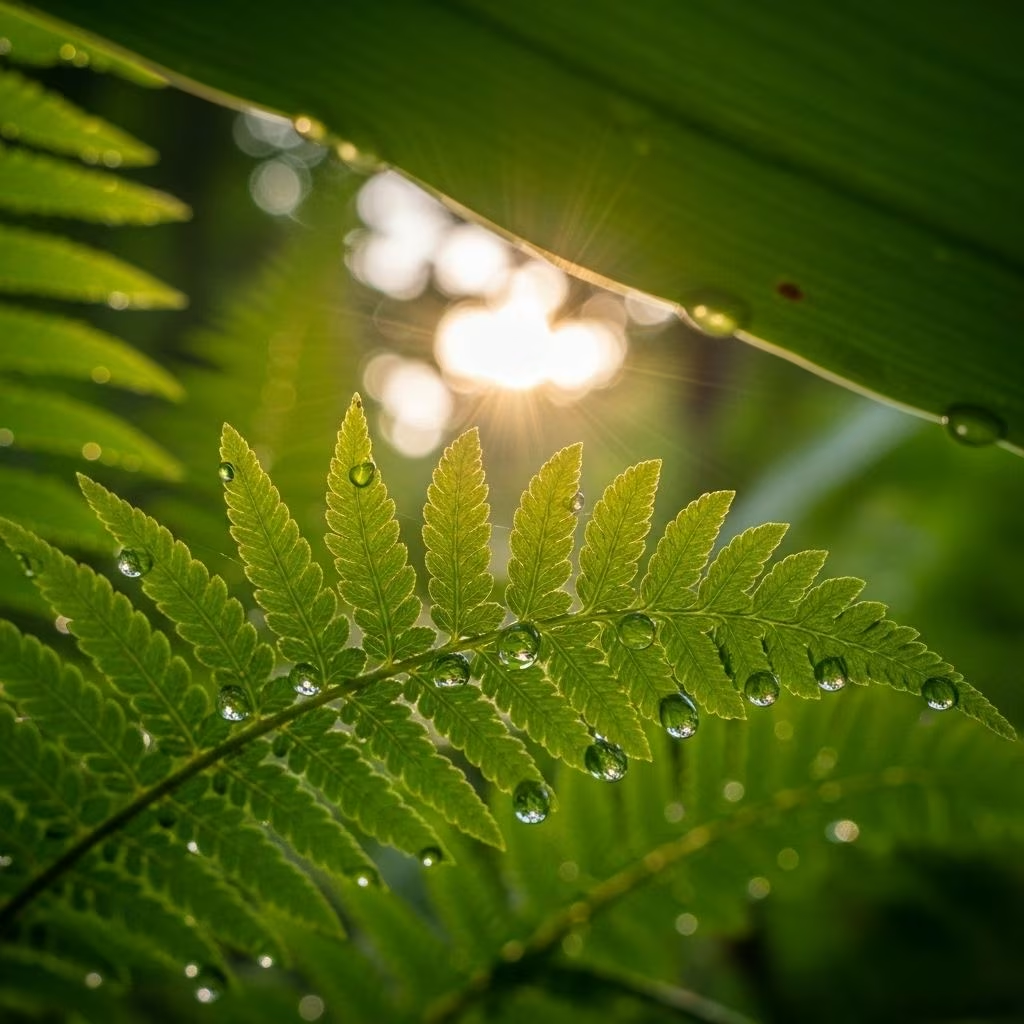
Polypodium Leucotomos (PLE) is a tropical fern with a long history of use in traditional medicine for its skin-protective properties. In recent decades, it has garnered attention from the dermatological community for its potential as an internal, or “oral,” sunscreen—offering protection against the harmful effects of ultraviolet (UV) radiation from within the body. Unlike topical sunscreens, which absorb or reflect UV rays directly at the skin’s surface, PLE is taken as a dietary supplement and works by neutralizing free radicals and reducing oxidative stress caused by sun exposure. This article provides a comprehensive review of PLE, highlighting its mechanism of action, efficacy, safety, and current scientific evidence.
History and Origins
Polypodium Leucotomos is native to Central America and has been used for centuries by indigenous communities, particularly in Honduras, for its anti-inflammatory and skin-protective properties. Traditionally, the plant was brewed into teas or applied topically to soothe irritated skin and prevent sunburn. Only in the last few decades has PLE been scientifically investigated for its alleged function as an internal sunscreen and its broader role in skin health.
Mechanism of Action
The core of PLE’s photoprotective effects lies in its rich composition of polyphenolic compounds—including chlorogenic acid, coumaric acid, vanillic acid, caffeic acid, and ferulic acid—which act as potent antioxidants. Unlike chemical sunscreens, which absorb UV light and convert it into heat at the molecular level, PLE works by:
- Neutralizing free radicals: By scavenging reactive oxygen species (ROS) generated by UV exposure, PLE reduces oxidative stress within skin cells, thereby minimizing DNA and cellular damage.
- Reducing inflammation: PLE modulates inflammatory pathways, lessening the erythema (skin redness) and swelling typically seen after excessive sun exposure.
- Supporting skin barrier integrity: Studies suggest that PLE helps maintain the stratum corneum (the outermost layer of skin), preventing structural breakdown caused by UV rays and maintaining its protective function.
Both oral and topical PLE have demonstrated photoprotective effects, with oral administration leading to systemic protection throughout the skin and rapid absorption providing early defense against sunburn.
Clinical Efficacy and Research Findings
Several clinical studies have explored PLE’s effectiveness as an internal sunscreen:
- Sunburn Protection: Human studies show that oral PLE (typically at doses of 240–480 mg) reduces the severity of sunburn, erythema, and the number of sunburn cells after UV exposure. Some studies even suggest a decrease in DNA mutations in skin cells exposed to UV light by as much as 84% when supplemented with PLE.
- Photodermatoses: In conditions like polymorphic light eruption (PLE) and solar urticaria, supplemental PLE has reduced symptom severity and delayed the onset of UV-induced skin reactions at higher doses (up to 960 mg/day).
- Long-term Cancer Prevention: While evidence is preliminary, an uncontrolled study in patients with xeroderma pigmentosum (a genetic condition with reduced DNA repair and high cancer risk) showed fewer new skin cancers over a 12-month period among PLE-treated patients compared to expected rates. Long-term, placebo-controlled studies are needed to confirm PLE’s role in preventing skin cancer.
- Combined Use with Sunscreens: Studies evaluating sunscreens containing PLE extract alongside traditional chemical or mineral filters found enhanced protection against cellular DNA damage and apoptosis (programmed cell death) compared to sunscreens without PLE. This synergistic effect suggests that combining internal and topical protection may offer the most comprehensive defense.
Skin Protection and Repair
PLE’s benefits extend beyond UV mitigation:
- Antioxidant Defense: PLE’s polyphenols combat not only UV-induced radicals but also those generated by pollution, smoke, and dietary stressors, potentially slowing skin aging and reducing pigmentation irregularities.
- Anti-Inflammatory Effects: PLE may improve inflammatory skin conditions such as eczema, psoriasis, and dermatitis, though larger trials are required for definitive proof.
- Cell Survival and Repair: In vitro studies indicate PLE helps skin cells survive and proliferate after UV exposure, supporting tissue repair and reducing morphological changes in skin cells.
Available Forms and Dosage
PLE is available commercially as:
- Oral supplements: Capsules or tablets, e.g., Fernblock® , with typical doses ranging from 120 to 480 mg per day for general photoprotection, and up to 960 mg/day for certain photodermatoses.
- Topical formulations: Creams and lotions, sometimes combined with traditional sunscreens for enhanced effect.
Onset of action is rapid, with peak effects seen within hours of oral intake and lasting for up to 2 hours after administration in some studies. For optimal protection, PLE should be taken before anticipated sun exposure and used in conjunction with sunscreen and protective clothing.
Comparison with Chemical and Physical Sunscreens
| Feature | Polypodium Leucotomos (Internal) | Chemical Sunscreens (Topical) | Physical (Mineral) Sunscreens (Topical) |
|---|---|---|---|
| Mechanism | Antioxidant, reduces oxidative stress, neutralizes free radicals | Absorbs UV rays, converts to heat | Reflects/scatters UV rays |
| Application | Oral supplement | Topical application | Topical application |
| Protection Scope | Systemic, covers all exposed skin | Local, requires full coverage and reapplication | Local, immediate protection upon application |
| Duration | Rapid absorption, short-lived (2–4 hrs) | Requires reapplication every 2 hrs | Requires reapplication, especially after swimming/sweating |
| Side Effects | Generally well tolerated | Potential for irritation, allergy, endocrine disruption | May cause white cast, less likely to irritate |
- Complement, Not Replacement: PLE does not replace the need for topical sunscreen or sun-protective practices. Instead, it provides an additional layer of defense against the broader cellular damage caused by UV exposure, including oxidative stress and inflammation.
- Combined Approach: The most effective sun protection strategy combines internal (PLE), topical (sunscreen), and behavioral (clothing, shade) measures.
Key Benefits
- Internal, Comprehensive Protection: Unlike topical sunscreens, which protect only the skin surface and require meticulous application, PLE works from within to shield all skin cells from oxidative damage caused by UV radiation.
- Reduces Sunburn and Erythema: Clinical studies consistently show reduced sunburn severity and delayed onset of erythema in individuals supplementing with PLE.
- Antioxidant and Anti-inflammatory Activity: PLE’s polyphenols offer broad-spectrum antioxidant and anti-inflammatory benefits, potentially improving skin health beyond sun protection.
- Support for Sensitive Skin: PLE may benefit those with photosensitivity disorders, such as polymorphic light eruption, by reducing symptom severity and improving tolerance to sunlight.
- Synergistic Effects: Combining PLE with other antioxidants (e.g., nicotinamide, red orange extract) or topical sunscreens yields superior protection compared to either approach alone.
Safety Profile and Side Effects
Polypodium Leucotomos is generally well tolerated, with few reports of side effects in clinical trials. However:
- Mild Gastrointestinal Symptoms: Some individuals may experience mild nausea or stomach upset, particularly at higher doses.
- Allergic Reactions: As with any supplement, there is a rare risk of allergic reaction in susceptible individuals.
- Drug Interactions: No significant drug interactions have been reported, but patients on immunosuppressive therapies or with chronic health conditions should consult their healthcare provider before use.
Long-term safety data are limited, underscoring the importance of ongoing research and cautious use, especially at higher dosages. Pregnant and breastfeeding women, as well as children, should avoid PLE supplementation until more safety data are available.
Frequently Asked Questions
Does Polypodium Leucotomos replace sunscreen?
No, PLE does not replace traditional sunscreen. It should be used as an adjunct to topical sunscreens, protective clothing, and sun avoidance, not as a substitute for these proven methods.
How quickly does Polypodium Leucotomos work?
PLE is rapidly absorbed, with some protection observed within hours of ingestion and lasting up to 2–4 hours. For best results, take PLE before sun exposure.
Is Polypodium Leucotomos safe for everyone?
PLE is generally well tolerated, but long-term safety data are limited. Consultation with a healthcare provider is recommended for children, pregnant women, and those with chronic conditions.
Can Polypodium Leucotomos prevent skin cancer?
Preliminary studies suggest a possible protective effect, particularly for high-risk populations, but conclusive evidence of reduced skin cancer incidence is lacking.
What is the recommended dosage?
Most studies use doses of 120–480 mg daily for general protection, with up to 960 mg/day for photodermatoses. Always follow product labeling and consult a healthcare professional for personalized advice.
Future Directions and Ongoing Research
While the current evidence supports the use of PLE as an adjunctive photoprotective agent, larger, long-term, placebo-controlled studies are needed to confirm its efficacy in reducing skin cancer risk and to establish optimal dosing regimens for different populations. Research is also exploring synergistic combinations, such as PLE with nicotinamide and red orange extract, for enhanced protection. Additionally, the role of PLE in treating other dermatological disorders characterized by oxidative stress and inflammation—such as vitiligo and melasma—is an emerging area of interest.
In conclusion, Polypodium Leucotomos offers a unique and promising approach to sun protection by addressing the cellular consequences of UV exposure from within. While not a replacement for standard sunscreens, it provides valuable antioxidant and anti-inflammatory support that may benefit skin health, especially for those with heightened sun sensitivity or a desire for comprehensive photoprotection. Continued research will further clarify its place in dermatological practice.
References
- https://skintypesolutions.com/blogs/skincare/polypodium-leucotomos
- https://www.humnutrition.com/blog/polypodium-leucotomos/
- https://www.lisaboehmbeauty.com/blog/summer-2024-beauty-edit
- https://dermnetnz.org/topics/polypodium-leucotomos
- https://www.lifeextension.com/magazine/2019/7/oral-sunscreen-provides-all-over-protection
- http://www.surgicalcosmetic.org.br/details/746/en-US/evaluation-of-effectiveness-of-a-sunscreen-containing-polypodium-leucatomos-extract-in-reducing-the-sun-damage-to-the-skin
- https://pmc.ncbi.nlm.nih.gov/articles/PMC4345929/
- https://pmc.ncbi.nlm.nih.gov/articles/PMC10381169/
- https://www.clinikally.com/blogs/news/a-revolutionary-approach-to-skin-cancer-prevention


