


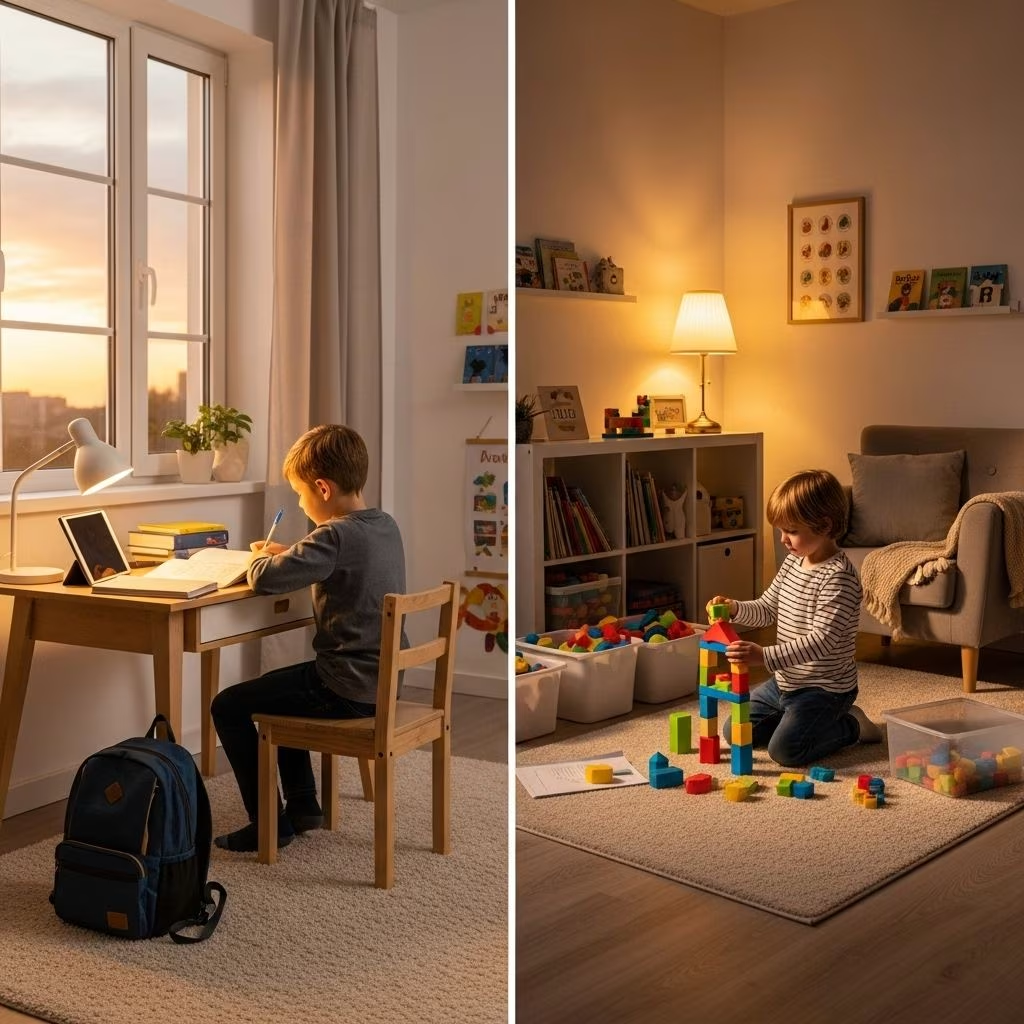
Establishing consistent afternoon and evening routines for school-age children is one of the most valuable gifts parents can provide. After a full day of learning, social interaction, and mental stimulation at school, children need structure that helps them transition smoothly from academic mode to home life, and eventually to restful sleep. A well-designed routine reduces stress for both parents and children while fostering independence, responsibility, and healthy habits that last a lifetime.
The hours between school dismissal and bedtime represent a critical window for family connection, skill development, and preparation for the next day. Without proper structure, these hours can quickly become chaotic, filled with power struggles over homework, screen time battles, and bedtime resistance. However, with thoughtful planning and consistent implementation, afternoons and evenings can transform into opportunities for growth, bonding, and peace.
Understanding the Importance of Structured Routines
School-age children thrive on predictability and consistency. After spending six to seven hours in a structured school environment, they benefit from having clear expectations at home as well. Routines provide children with a sense of security and control over their environment, reducing anxiety and behavioral issues. When children know what comes next, they experience less resistance to transitions and develop better self-regulation skills.
Research consistently demonstrates that children with established routines perform better academically, exhibit fewer behavioral problems, and develop stronger executive function skills. Routines teach time management, responsibility, and the ability to plan ahead—all crucial life skills that extend far beyond childhood. Additionally, predictable routines free up mental energy that children can redirect toward learning, creativity, and social development rather than constantly wondering what happens next.
For parents, routines reduce the mental load of constant decision-making and minimize daily conflicts. When everyone knows the schedule, there’s less need for reminders, negotiations, and power struggles. This creates a calmer household atmosphere where family members can focus on connection rather than logistics.
The Immediate After-School Transition
The moments immediately following school dismissal set the tone for the entire afternoon and evening. Children arrive home with varying energy levels—some are wound up and need to release physical energy, while others are mentally exhausted and require quiet decompression time. Understanding your individual child’s needs during this transition is essential for creating a routine that works.
The first step in any after-school routine should be establishing a consistent arrival ritual. This might include hanging up backpacks in a designated spot, placing lunchboxes by the sink, and removing shoes. These simple actions create a physical and mental transition from school mode to home mode. Teaching children to handle these tasks independently from kindergarten onward builds responsibility and reduces parental workload.
Following the arrival ritual, most children benefit from a healthy snack. After several hours since lunch, blood sugar levels may be low, affecting mood and concentration. Offering nutritious options like fruit with nut butter, vegetables with hummus, cheese and whole-grain crackers, or yogurt with granola provides the energy boost children need for afternoon activities. Involving children in snack preparation develops independence and healthy eating habits.
The period immediately after snacking should accommodate your child’s individual needs. Some children need active outdoor play to burn off accumulated energy before they can focus on homework or quiet activities. Others need quiet downtime—perhaps reading, drawing, or simply relaxing—to recover from the sensory and social demands of the school day. Observing your child’s behavior patterns and mood will help you determine which approach works best.
Homework Time: Strategies for Success
Homework represents one of the most contentious aspects of after-school routines, but with the right approach, it doesn’t have to be a daily battle. The key is establishing clear expectations, providing appropriate support, and maintaining consistency.
For children in kindergarten through fifth grade, research suggests completing homework before dinner yields the best results. Children are still relatively fresh, and the incentive of play and family time afterward provides motivation. As homework takes approximately 10 minutes per grade level (10 minutes for first grade, 20 minutes for second grade, and so on), this approach keeps homework sessions manageable and prevents late-evening fatigue from interfering with completion quality.
Creating a dedicated homework space is crucial for success. This doesn’t necessarily mean a formal desk—some children work well at the kitchen table where parents can provide support, while others prefer the quiet of their bedroom. The important factors are adequate lighting, minimal distractions, and easy access to necessary supplies like pencils, erasers, paper, and reference materials.
Establishing a consistent homework start time eliminates daily negotiations about when to begin. Whether it’s immediately after snack time, after 30 minutes of outdoor play, or at 4:00 p.m. sharp, consistency creates a habit that eventually requires less parental enforcement. Using a visual timer helps children develop time awareness and creates urgency without constant parental reminders.
Parents should adopt a supportive but not overly involved role during homework time. Being available to answer questions, clarify instructions, and provide encouragement is appropriate, but completing work for children or hovering constantly undermines independence and learning. The goal is teaching children to manage their own work, ask for help when needed, and develop problem-solving skills.
Afternoon Activities and Free Play
Once homework is complete, children need time for activities that promote physical health, creativity, and social development. The modern tendency to over-schedule children with organized activities often leaves insufficient time for unstructured free play, which research shows is essential for developing imagination, problem-solving skills, and emotional regulation.
Outdoor play should be a daily priority whenever weather permits. Physical activity improves mood, concentration, and sleep quality while reducing stress and anxiety. Activities can range from organized sports practice to simple neighborhood bike rides, backyard exploration, or playground visits. Even 30 to 60 minutes of outdoor time provides significant benefits.
When outdoor play isn’t possible, indoor physical activity remains important. Dancing to music, indoor obstacle courses, yoga for kids, or active video games that require movement can help children release energy. Following active play with quieter activities helps children transition toward the calmer evening routine ahead.
Creative play opportunities should be woven throughout afternoons. Building with blocks or Legos, drawing and coloring, crafting projects, playing with dolls or action figures, or engaging in dramatic play all support cognitive and emotional development. Avoid the temptation to over-direct these activities—children benefit most when they can follow their own interests and imagination.
Chores and Responsibilities
Incorporating age-appropriate chores into afternoon and evening routines teaches responsibility, contributes to family functioning, and builds life skills. School-age children are capable of meaningful household contributions, and research shows that children who do chores develop stronger work ethic, self-reliance, and relationship skills.
For children ages 5 to 7, appropriate chores include tidying their room, making their bed, setting the table, feeding pets, watering plants, putting away clean laundry, and clearing their dishes after meals. These tasks take minimal time but instill the habit of contributing to household maintenance.
Children ages 8 to 10 can handle more complex responsibilities such as loading or emptying the dishwasher, taking out trash, vacuuming their room, preparing simple snacks or meals with supervision, sorting laundry, and caring for younger siblings for short periods. These tasks develop competence and independence.
Children ages 11 to 12 are capable of preparing full meals with minimal supervision, doing their own laundry from start to finish, cleaning bathrooms, yard work, and organizing spaces beyond their own room. These skills prepare them for the increasing independence of adolescence.
The key to successful chore integration is making them predictable and non-negotiable. When chores happen at the same time each day and are treated as expected contributions rather than optional tasks, resistance decreases significantly. Some families prefer chores immediately after school, while others build them into the pre-dinner routine. Consistency matters more than specific timing.
Dinner and Family Connection Time
Dinner time represents a critical opportunity for family connection that research consistently links to better academic performance, stronger family relationships, and reduced behavioral problems. Even with busy schedules, prioritizing regular family dinners—even if they’re sometimes simple or occasionally involve takeout—provides significant benefits.
Establishing a consistent dinner time creates structure and anticipation. For school-age children, dinner typically falls between 5:30 and 7:00 p.m., depending on family schedules and preferences. Earlier dinners better support healthy digestion before bedtime and allow more time for evening routines.
Making dinner time screen-free maximizes connection opportunities. This means no television, tablets, or phones for any family member during the meal. Instead, use this time for conversation, sharing highlights from each person’s day, discussing plans for tomorrow, or playing simple verbal games. Even 20 to 30 minutes of focused family interaction provides substantial relationship benefits.
Involving children in meal preparation and cleanup teaches valuable life skills while providing additional connection time. School-age children can wash vegetables, tear lettuce, set the table, pour drinks, and handle other age-appropriate food preparation tasks. After dinner, children should participate in clearing the table, scraping plates, loading the dishwasher, or washing dishes by hand.
Evening Wind-Down Activities
The transition from dinner to bedtime should involve progressively calming activities that prepare children’s minds and bodies for sleep. This gradual wind-down prevents the jarring transition from high-energy activities directly to bed, which often results in bedtime resistance and delayed sleep onset.
After dinner cleanup, families might engage in low-key activities together such as playing board games, doing puzzles, reading aloud, listening to music, or taking an evening walk. These activities provide continued family connection while beginning the shift toward rest. Limiting screen time during this period supports better sleep—the blue light from screens interferes with melatonin production and makes falling asleep more difficult.
Preparation for the next day should occur during the evening wind-down rather than rushed morning chaos. This includes packing backpacks, laying out clothes, preparing lunches, and reviewing the next day’s schedule. When children participate in this preparation from an early age, it becomes an automatic habit that serves them throughout their academic career.
Some families use this time for brief one-on-one connections with each child, especially in multi-child households where individual attention can be scarce. Even five to ten minutes of focused, undivided attention helps children feel valued and provides opportunities to discuss concerns or successes from their day.
Creating an Effective Bedtime Routine
A consistent bedtime routine is perhaps the most important element of evening structure. School-age children need between 9 to 11 hours of sleep per night, depending on their age, which means bedtime should typically fall between 7:30 and 9:00 p.m. for children waking at 6:00 to 7:00 a.m. for school.
An effective bedtime routine typically lasts 30 to 45 minutes and follows a predictable sequence. A typical routine might include:
Bathtime or shower (7:00-7:20 p.m.): Warm water promotes relaxation and signals the body that sleep time is approaching. Children in elementary school can often handle bathing independently with minimal supervision, though younger children may still need assistance.
Putting on pajamas and dental hygiene (7:20-7:30 p.m.): Children should brush teeth for two full minutes, floss, and wash their face. Making this non-negotiable prevents later resistance and establishes lifelong healthy habits.
Quiet time in bedroom (7:30-8:00 p.m.): This period might include reading independently or with parents, listening to calming music or audiobooks, quiet conversation, or simple relaxation activities. Many families incorporate reading time into bedtime routines, which supports literacy development while promoting relaxation.
Lights out (8:00 p.m.): The actual bedtime should remain consistent, even on weekends, to maintain healthy sleep patterns. While occasional later nights are inevitable, dramatic shifts in sleep schedule disrupt circadian rhythms and make weekday mornings more difficult.
Creating a sleep-conducive environment supports quality rest. Bedrooms should be cool (65-68°F is ideal), dark (blackout curtains help), and quiet (white noise machines can mask disruptive sounds). Removing televisions, tablets, and other screens from bedrooms eliminates temptation and improves sleep quality.
Age-Specific Schedule Examples
While individual family needs vary, these sample schedules provide starting points for creating afternoon and evening routines tailored to different age groups.
Kindergarten and 1st Grade (Ages 5-7)
3:00 p.m. – Arrive home, put away backpack and lunch containers
3:15 p.m. – Healthy snack
3:30 p.m. – Outdoor play or physical activity
4:30 p.m. – Homework time (10-20 minutes)
4:45 p.m. – Free play (indoor or outdoor)
5:30 p.m. – Tidy room, simple chore
6:00 p.m. – Dinner and family time
6:45 p.m. – Prepare for next day, pack backpack
7:00 p.m. – Bath time
7:30 p.m. – Pajamas, brush teeth
7:45 p.m. – Reading time with parent
8:00 p.m. – Lights out
2nd to 4th Grade (Ages 7-10)
3:30 p.m. – Arrive home, unpack backpack
3:45 p.m. – Snack time
4:00 p.m. – Homework time (20-40 minutes)
4:45 p.m. – Free play, outdoor activity, or extracurricular activity
5:45 p.m. – Afternoon chore
6:15 p.m. – Dinner and family conversation
7:00 p.m. – Cleanup and prepare for next day
7:30 p.m. – Bath/shower, brush teeth, pajamas
7:45 p.m. – Independent reading or family reading time
8:15 p.m. – Quiet time in room
8:30 p.m. – Lights out
5th to 6th Grade (Ages 10-12)
3:30 p.m. – Arrive home, handle backpack and lunch
3:45 p.m. – Snack
4:00 p.m. – Homework time (50-60 minutes)
5:00 p.m. – Physical activity, extracurricular, or free play
6:00 p.m. – Chore time
6:30 p.m. – Dinner and family discussion
7:15 p.m. – Limited screen time or family activity
7:45 p.m. – Prepare for next day
8:00 p.m. – Shower, dental hygiene, pajamas
8:30 p.m. – Independent reading or audiobook
9:00 p.m. – Lights out
Common Challenges and Solutions
Challenge: After-school meltdowns
Many children experience emotional dysregulation after school due to the effort of holding it together all day. Solution: Allow for decompression time immediately after school. This might mean 15-30 minutes of quiet alone time, physical activity to release tension, or a healthy snack to address low blood sugar. Avoid demanding conversations or activities during this adjustment period.
Challenge: Homework battles
Resistance to homework often stems from fatigue, hunger, or unclear expectations. Solution: Ensure adequate snack and downtime before homework begins. Break assignments into smaller chunks with brief breaks between. Use timers to create urgency without nagging. Maintain a supportive but not overbearing presence. If struggles persist, consult with teachers about appropriate difficulty level and time requirements.
Challenge: Excessive screen time
Without limits, children naturally gravitate toward screens. Solution: Establish clear rules about when and how much screen time is allowed. Many families save screens for after homework and chores are complete, using them as an incentive rather than an entitlement. Set a daily time limit (30-60 minutes for school-age children) and use parental controls to enforce it. Provide appealing alternatives like outdoor play, crafts, or family games.
Challenge: Bedtime resistance
Children often resist bedtime, claiming they’re not tired or negotiating for more time. Solution: Maintain absolute consistency with bedtime, even when met with resistance. Start the routine at the same time each evening, creating physical and psychological cues that sleep is approaching. Ensure children are getting adequate physical activity during the day to promote tiredness at bedtime. Avoid caffeine and sugar in the hours before bed. Consider implementing a reward system for cooperative bedtime behavior.
Challenge: Balancing multiple children’s needs
Different ages require different routines and attention levels. Solution: Stagger routines when possible so older children can work independently while you assist younger ones. Create visual schedules that children can follow with minimal prompting. Teach older children to help younger siblings with certain tasks. Recognize that some parts of the routine (like dinner and bedtime) can happen simultaneously while others (like homework) may need individual attention.
Frequently Asked Questions
What time should school-age children go to bed?
School-age children typically need 9-11 hours of sleep, so bedtime depends on wake-up time. For children waking at 6:30 a.m., bedtime should be between 7:30-8:30 p.m. for younger elementary students and 8:00-9:00 p.m. for upper elementary students. Consistency is more important than the exact time.
Should homework come before or after playtime?
For most children in kindergarten through fifth grade, completing homework before dinner and free play works best. Children are still relatively fresh, and the promise of play afterward provides motivation. However, some children need physical activity first to focus effectively. Observe your child’s individual needs and adjust accordingly.
How much free play should children have after school?
Children should have at least one to two hours of unstructured play time daily, including significant outdoor time when possible. This might be split between after homework completion and after dinner. Free play is essential for creativity, stress relief, and healthy development.
What if our after-school schedule includes extracurricular activities?
Build activities into your routine rather than letting them disrupt it entirely. If soccer practice runs from 4:30-5:30 p.m., adjust homework to earlier or later. Pack healthy snacks for the car. Prepare dinner in advance on busy days. Maintain the bedtime routine even when earlier activities run late. Consider whether the number of activities allows for adequate downtime and family connection.
How do I get my child to do chores without constant reminders?
Make chores part of the non-negotiable routine at the same time each day. Use visual checklists that children can reference independently. Implement natural consequences—if the table isn’t set, dinner is delayed. Offer praise when chores are completed without reminding. Avoid rescuing children by doing their chores for them, even when it would be faster.
Should siblings have the same bedtime?
While it’s tempting to put all children to bed simultaneously, age-appropriate bedtimes better serve everyone’s needs. Younger children need more sleep and should go to bed earlier. Staggered bedtimes also provide opportunities for individual attention with each child. However, keeping bedtimes within 30-60 minutes of each other simplifies the evening routine.
What if my child says they’re not tired at bedtime?
Bedtime is non-negotiable, but falling asleep isn’t something we can force. If your child genuinely isn’t tired, they can have quiet time in their room—reading, listening to audiobooks, or resting quietly—but they must stay in bed with lights off. Ensure they’re getting adequate physical activity during the day and avoid screens before bed, as these factors significantly impact tiredness.
How long does it take to establish a new routine?
Research suggests it takes 21 to 66 days to form a new habit, with the average being about two months. Expect the first two to three weeks to require significant effort and consistency from parents. After this initial period, routines become more automatic. Stay patient and consistent even when facing resistance.
References
- https://www.thechildrenscenter.com/2020/03/30/daily-schedule-ages-5-8/
- https://www.nurturelife.com/blog/daily-schedule-kids/
- https://www.beginlearning.com/parent-resources/after-school-routines/
- https://mother-u.com/after-school-routines/
- https://www.socialworkerstoolbox.com/printable-visual-schedules-and-daily-routine-charts-for-children/
- https://thirdspacelearning.com/us/blog/after-school-routine/
- https://toolsforyourchildssuccess.org/tools/12-years-old/routines/
- https://www.purewow.com/family/daily-schedule-for-kids


