


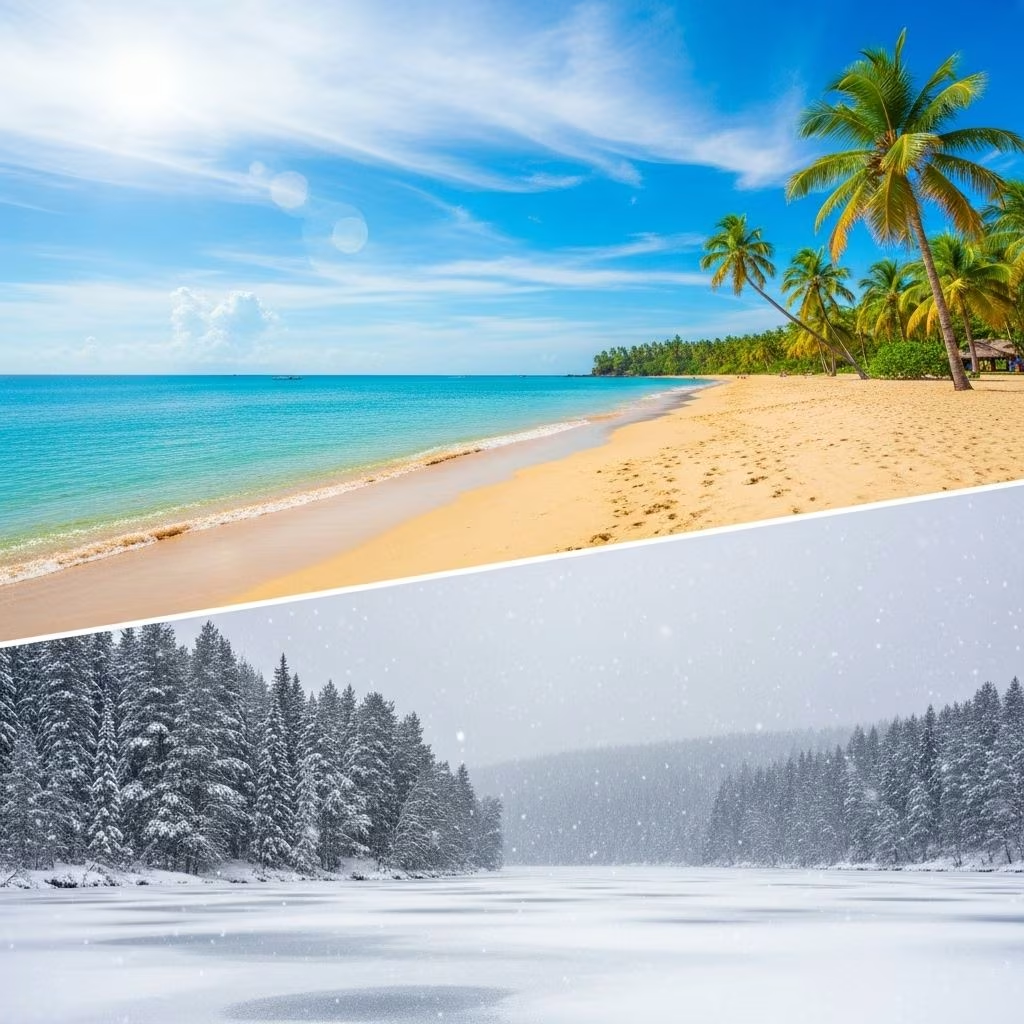
Introduction to Seasonal Changes
Seasonal changes are a natural part of Earth’s cycle, influenced by its axial tilt of approximately 23.5 degrees. This tilt causes variations in how sunlight reaches the planet, resulting in distinct seasons—spring, summer, autumn (fall), and winter. Each season brings unique weather patterns and conditions that significantly affect human activities, environmental conditions, and biodiversity. In this article, we will delve into the specifics of summer and winter, exploring how these seasons impact both human activities and the environment.
What Causes Seasons?
Seasons are primarily caused by Earth’s tilted axis, which does not stand straight up and down relative to the Sun’s position. This tilt leads to different parts of the Earth receiving varying amounts of sunlight throughout the year, resulting in the distinct seasons. The tilt’s orientation in space remains constant, but as Earth orbits the Sun, different hemispheres are tilted toward or away from the Sun.
Summer Season
Summer occurs when a hemisphere is tilted toward the Sun, typically from June to August in the Northern Hemisphere and from December to February in the Southern Hemisphere. This positioning results in longer days and more direct sunlight, making summer the warmest season in both hemispheres.
Characteristics of Summer
- Longer days and more daylight hours
- Higher temperatures due to increased sunlight exposure
- Warmest months with June, July, and August being the peak in the Northern Hemisphere
- Plant growth is most active during this period
- Increased outdoor activities and recreation
Winter Season
Winter occurs when a hemisphere is tilted away from the Sun, resulting in colder temperatures and shorter days. This season typically spans from December to February in the Northern Hemisphere and from June to August in the Southern Hemisphere.
Characteristics of Winter
- Shorter days and less daylight
- Colder temperatures due to reduced sunlight exposure
- Coldest months with December and January being the peak in the Northern Hemisphere
- Some plant life is dormant or undergoes adaptations like hibernation for animals
- Increased indoor activities and use of heating systems
Human Activities and Seasonal Changes
Seasonal changes significantly influence various human activities, from agriculture and recreation to migration and cultural festivals.
Agriculture and Seasonal Changes
- Summer: Optimal for planting and growing crops due to longer days and warmer temperatures.
- Winter: Often involves harvest for crops that mature during summer, and some areas may require protected cultivation methods.
Recreation and Leisure
- Summer: Popular for outdoor activities like swimming, hiking, and cycling.
- Winter: Often associated with indoor activities or winter sports like skiing and ice skating.
Environmental Impacts of Seasons
The changing seasons have profound effects on the environment, including impacts on wildlife, ecosystems, and climate patterns.
Wildlife and Seasonal Changes
- Summer: Many animals breed and grow during this warm period.
- Winter: Some animals hibernate or migrate to avoid harsh conditions.
Seasonal Migration and Ecosystems
Seasonal changes can lead to migrations of certain species, affecting local ecosystems and biodiversity. For example, some birds migrate to warmer climates during winter, contributing to the diversity of ecosystems they visit.
Seasonal Lag and Its Effects
There is often a lag between the solstices (the longest and shortest days of the year) and the peak temperatures. This lag occurs because it takes time for the Earth’s surface to heat up or cool down in response to the changing sunlight patterns.
Meteorological vs. Astronomical Seasons
Seasons can be defined either meteorologically or astronomically. Meteorological seasons are based on temperature patterns and are divided into four quarters of the year, while astronomical seasons are marked by the solstices and equinoxes.
Meteorological Seasons
Meteorological seasons are defined by temperature patterns: – Summer is the hottest quarter of the year. – Winter is the coldest quarter of the year. – Spring and Autumn are the transitional periods between these temperature extremes.
Astronomical Seasons
Astronomical seasons are marked by specific astronomical events: – The Summer Solstice marks the beginning of summer. – The Winter Solstice marks the beginning of winter. – The Equinoxes mark the beginning of spring and autumn.
Frequently Asked Questions (FAQs)
Q: Why do we have seasons?
A: Seasons are primarily caused by Earth’s tilted axis, which results in different amounts of sunlight reaching different parts of the planet throughout the year.
Q: What are the main differences between summer and winter?
A: The main differences are in temperature, daylight hours, and weather patterns. Summer is warm with long days, while winter is cold with shorter days.
Q: How do seasonal changes affect human activities?
A: Seasonal changes significantly influence agriculture, recreation, migration patterns, and cultural practices. For example, summer is ideal for outdoor activities, while winter often involves indoor activities or winter sports.
Q: What is seasonal lag?
A: Seasonal lag refers to the delay in temperature changes after the solstices or equinoxes, due to the time it takes for the Earth’s surface to adjust to new sunlight patterns.
Conclusion
Seasonal changes are a fundamental aspect of Earth’s cycle, shaping both human activities and environmental conditions. Understanding these changes is crucial for managing ecosystems, predicting weather patterns, and planning economic and social activities effectively. By recognizing the unique characteristics of each season, we can better adapt to and appreciate the natural cycles that govern our planet.


