


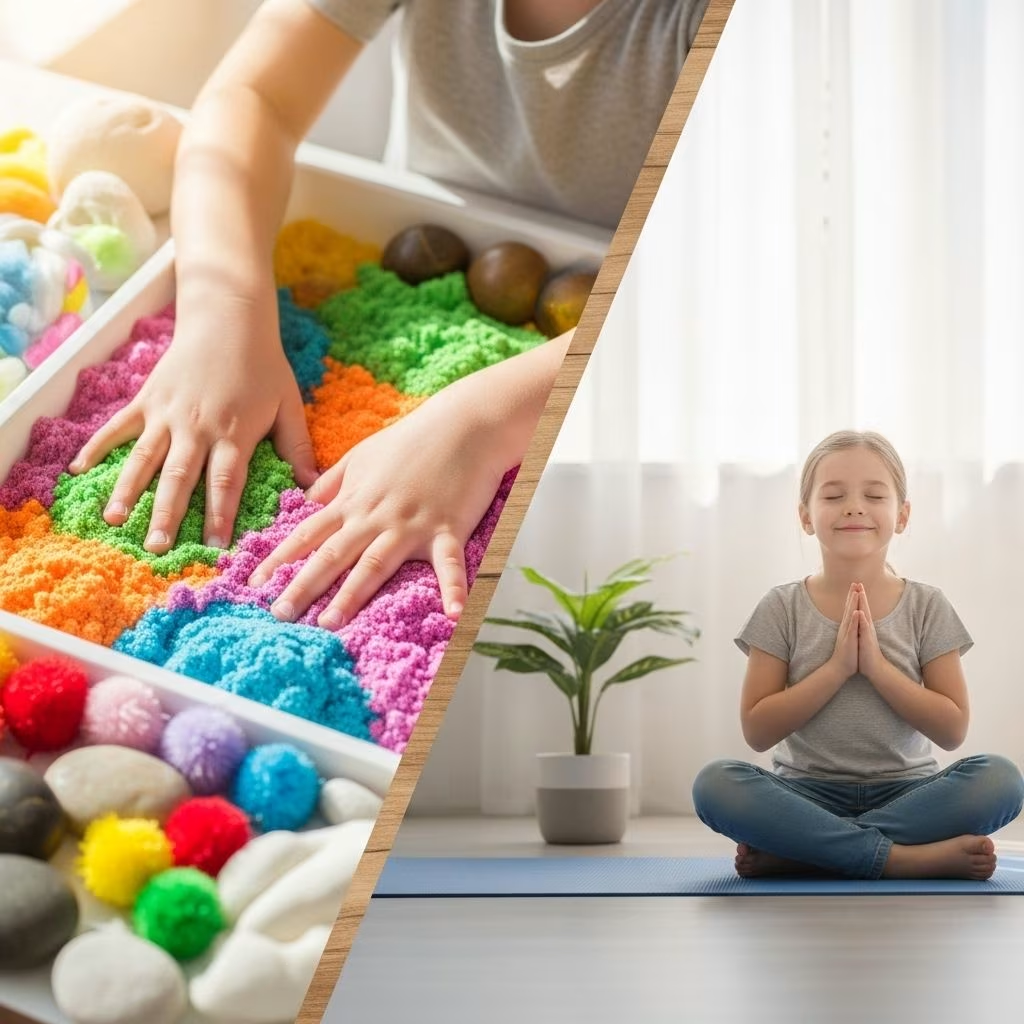
Helping children navigate their emotions, regulate their behaviors, and foster focus is a top priority for parents and educators. Two prominent approaches used in homes, classrooms, and therapy settings are sensory activities and mindfulness practices. While these concepts sometimes overlap and can complement each other, each offers distinct benefits and relies on different mechanisms for supporting healthy child development.
Introduction to Sensory Activities and Mindfulness
Modern childhood is characterized by constant sensory input and rapid transitions. Kids face diverse challenges, from sensory overload to emotional stress. Sensory activities and mindfulness have emerged as key tools to help children process the world around them, self-regulate, and achieve calm. Understanding their differences ensures each approach is used purposefully and effectively.
Definitions and Core Concepts
Sensory Activities
Sensory activities are experiences designed to engage one or more of the five senses: sight, hearing, touch, taste, and smell. Sometimes, sensory play also involves the senses of balance, body awareness, or internal sensations like hunger or heart rate. The aim is to stimulate, regulate, or calm the nervous system through hands-on exploration or movement .
- Focus is on external sensory input.
- Examples include playing with sand, listening to music, finger painting, or smelling different herbs .
- Often used to support children with sensory processing differences, but beneficial for all kids .
Mindfulness for Kids
Mindfulness is the practice of focusing awareness on the present moment in a nonjudgmental and accepting way. For children, this can include activities that encourage bringing attention to their bodies, thoughts, and feelings without distraction .
- Emphasis is on internal awareness and regulation.
- Examples: deep breathing, guided meditations, body scans, or mindful listening .
- Helps children manage stress, emotions, and attention.
Purpose and Objectives
Key Purposes of Sensory Activities
- Stimulate or calm the nervous system depending on the child’s needs .
- Support sensory integration (i.e., how the brain processes sensory information) .
- Enhance motor skills, cognitive development, and social interaction.
- Provide an outlet for emotional expression, especially for children who struggle to verbalize feelings .
Objectives of Mindfulness Practices for Kids
- Develop present-moment awareness and focus .
- Strengthen emotional regulation and resilience .
- Cultivate acceptance, patience, and self-compassion.
- Offer strategies to manage anxiety, stress, and overwhelm.
Mechanisms of Action and Practice
How Sensory Activities Work
Sensory activities interact directly with the child’s immediate environment and nervous system. By providing or altering stimuli—like texture, sound, temperature, or movement—these activities help children self-regulate and make sense of their surroundings .
- Calming effect: Slow, gentle, repetitive actions (e.g., kneading dough, stroking a soft fabric, gentle rocking) help quiet overactive sensory systems .
- Alerting effect: Bright colors, strong smells, or loud sounds can increase alertness and wakefulness when kids need a boost .
- Processing and integration: Regular exposure to diverse sensory inputs helps the brain better identify, organize, and respond to sensory information.
How Mindfulness Works
Mindfulness for kids is rooted in attentional training and emotional acceptance. By focusing on the breath, bodily sensations, or present experience, children gradually learn to identify internal states and respond thoughtfully, rather than reacting impulsively .
- Awareness training: Guides children to notice sensations, feelings, and thoughts as they arise.
- Self-regulation: Teaches calming methods (e.g., deep breathing, progressive muscle relaxation) that activate the body’s relaxation response .
- Emotion labeling: Helps children put words to feelings, encouraging nonjudgmental acceptance of both positive and negative emotions.
Examples and Practical Applications
Sensory Activities Examples
- Tactile play: Playing with sand, water beads, or slime; finger painting; exploring different textured materials .
- Visual and auditory sensory activities: Looking at calm-down jars; watching swirling glitter; listening to calming music; playing “I spy” games .
- Olfactory and gustatory play: Smelling herbs or scented play dough; trying new flavors; identifying kitchen spices by scent .
- Movement activities: Swinging, jumping on trampolines, spinning, or yoga .
Mindfulness Activities for Kids
- Breathing exercises: Bubble breaths, flower breathing, and lion’s breath .
- Progressive muscle relaxation: Tensing and relaxing muscle groups, sometimes paired with stretching .
- Guided visualization: Listening to stories or scripts that walk the child through a calming scene .
- Mindful movement: Yoga, slow walking, or gentle stretching that emphasizes body awareness .
- Mindful coloring/arts: Coloring books or crafts done with focused attention on each stroke or movement .
Benefits and Research Evidence
Benefits of Sensory Activities
- Supports sensory processing development: Helps children with or without sensory processing challenges learn to interpret and respond to sensory input .
- Reduces anxiety and stress: Calming sensory play lowers stress hormones and provides emotional outlets .
- Improves focus and motor skills: Activities like sand play, crafting, or movement-based games build attention and fine/gross motor abilities .
- Encourages emotional expression: Sensory play lets children express feelings through action when they struggle to find words .
Benefits of Mindfulness for Kids
- Builds emotional regulation and resilience: Research shows mindfulness practices reduce emotional reactivity and strengthen coping skills .
- Improves attention and learning: Present-moment focus boosts sustained attention and reduces impulsivity .
- Helps manage sensory overload: Mindfulness training assists children with sensory processing issues in handling overwhelming sensory input .
- Promotes self-awareness: Kids become more in tune with their thoughts, bodily signals, and emotions.
When to Use Sensory Activities and Mindfulness
- Sensory activities are especially beneficial for children who:
- Show signs of sensory processing challenges (e.g., are overwhelmed by loud noises or bright lights, or seek certain sensations repeatedly).
- Have difficulty sitting still, focusing, or transitioning between activities.
- Need to settle their bodies and minds before engaging in learning or social interaction.
- Mindfulness practices are helpful for children who:
- Experience anxiety, mood swings, or emotional outbursts.
- Need tools for calming their mind, especially during or after stressful events.
- Want to enhance focus, patience, and the ability to cope with challenges.
Integrating Both Approaches: Differences in Practice
While sensory activities and mindfulness overlap—many mindfulness activities use sensory input as an anchor—their underlying intention and focus differ. Sensory play anchors the child in the tangible, external world, while mindfulness guides the child inward to notice, accept, and regulate internal experiences .
- Sensory activities often precede or complement mindfulness, preparing the body and brain to engage more deeply in mindfulness practices.
- Sensory tools (weighted blankets, fidgets) can be incorporated into mindfulness routines for children with heightened sensory needs .
- Mindfulness can transform sensory play into an intentional, present-focused experience by encouraging children to notice and describe sensations in the moment .
Comparison Table: Sensory Activities vs Mindfulness for Kids
| Aspect | Sensory Activities | Mindfulness |
|---|---|---|
| Primary Focus | External sensory input (touch, sound, sight, etc.) | Internal awareness (thoughts, emotions, bodily sensations) |
| Goals | Sensory integration, regulation, stimulation, or calming | Present-moment awareness, emotional regulation, stress relief |
| Methods | Hands-on activities (e.g., sand play, music, tactile toys) | Breathe work, meditation, visualization, mindful movement |
| Who Benefits | All children; especially those with sensory processing issues | All children; especially those with anxiety or emotional challenges |
| Environments | Playrooms, outdoors, therapy spaces | Calm settings, classrooms, therapy, home |
| Examples | Finger painting, sandboxes, scented jars | Bubble breathing, body scans, mindful coloring |
Frequently Asked Questions (FAQs)
Q: Can sensory activities be considered mindfulness?
A: Sensory activities can be practiced mindfully—meaning with present-moment focus and nonjudgmental awareness—but not all sensory play is naturally mindful. The intention and guidance matter. For example, asking a child to notice the feel and sound of sand beneath their fingers transforms sensory play into a mindful experience .
Q: Are mindfulness activities always sensory?
A: Many mindfulness activities use sensory anchors (breath, sound, movement), but mindfulness can extend beyond sensory input to include internal states, thoughts, and emotions .
Q: Which approach should I use for my child—sensory activities or mindfulness?
A: The choice depends on your child’s unique needs. Kids with excess energy, difficulty focusing, or sensory processing differences may benefit from sensory activities as a foundation. Children struggling with emotional regulation, anxiety, or impulsivity may find mindfulness especially helpful. The two approaches can be used together for greater benefit.
Q: Are there risks to using sensory or mindfulness activities?
A: Both are generally safe, especially when tailored to a child’s preferences and sensitivities. For children with sensory processing disorder or trauma history, avoid overwhelming or triggering activities, and consult with professionals as needed .
Q: How can I make sensory activities more mindful?
A: Slow down the pace. Issue prompts that encourage focusing on the moment (e.g., “What do you feel? What do you hear?”). Guide your child to notice physical sensations, emotions, and changes as they play .
Conclusion: Helping Children Thrive
Both sensory activities and mindfulness practices are powerful approaches for supporting child development, each with unique strengths and applications. Sensory activities provide essential input to the body and brain, grounding children in their environment and supporting emotional release. Mindfulness, on the other hand, sharpens internal awareness and equips kids with skills to stay calm, focused, and resilient in the face of life’s challenges. Used separately or in tandem, these strategies empower children to thrive—emotionally, cognitively, and socially.
References
- https://lemonlimeadventures.com/simple-sensory-activities-that-teach-mindfulness/
- https://hmlfunctionalcare.com/mindfulness-for-kids-with-sensory-processing-issues/
- https://sandmagination.com/mindfulness-sensory-play-for-kids-how-sandmagination-sparks-calm-and-connection/
- https://sensoryprocessingdisorderparentsupport.com/mindfulness-activities-for-children
- https://www.yourtherapysource.com/blog1/2021/11/28/sensory-mindfulness/
- https://kidtherapy.org/sensory-activities-engaging-within-natural-environments/
- https://mypacifichealth.com/mindfulness-for-kids-activities-benefits/
- https://blissfulkids.com/mindfulness-kids-smell-tell-sensory-awareness-game/
- https://www.nhsggc.org.uk/kids/life-skills/joining-in-with-sensory-differences/


