


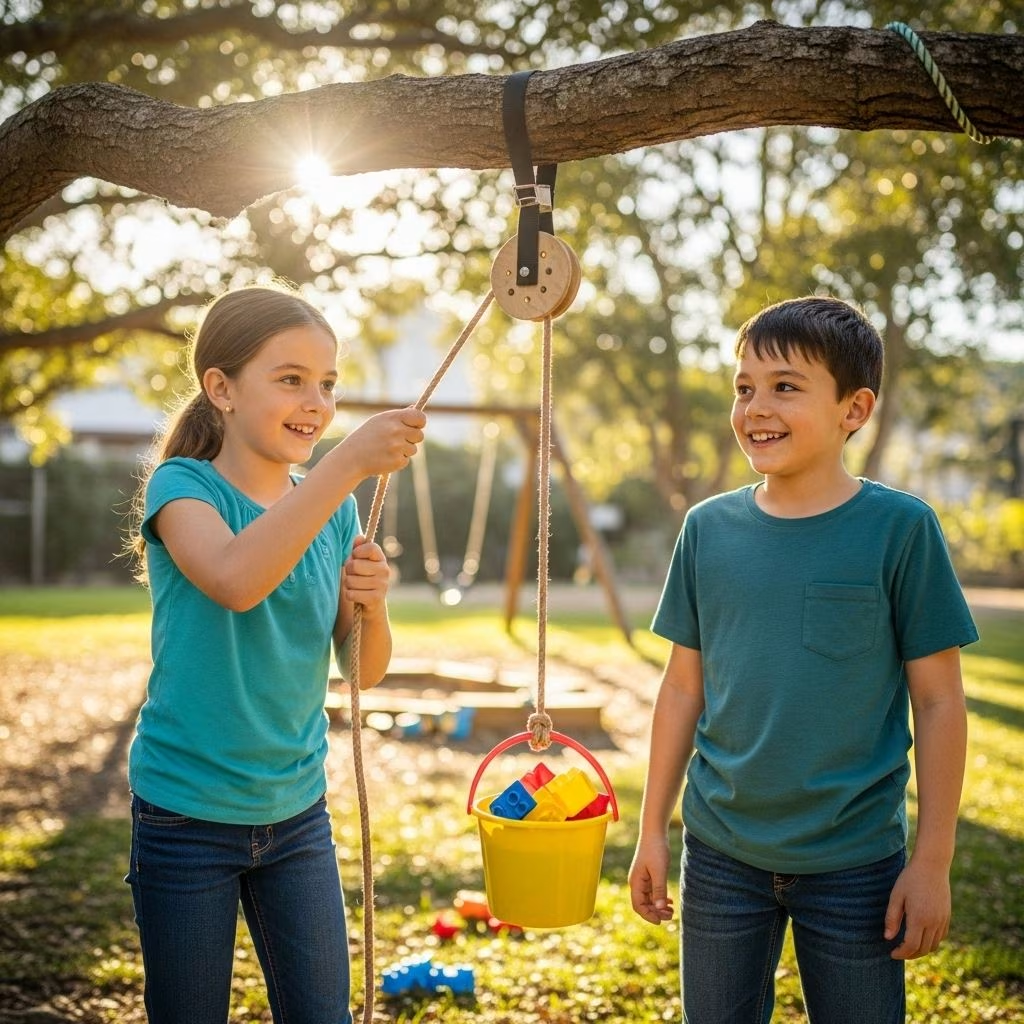
Introduction to Simple Pulley Systems for Outdoor STEM Play
Engaging children in hands-on STEM activities is crucial for fostering their curiosity and understanding of scientific principles. One of the most effective ways to do this is by creating simple pulley systems for outdoor play. Pulleys are simple machines that make lifting heavy objects easier by changing the direction of the force applied. This article will explore how to build and integrate pulley systems into outdoor STEM education.
Benefits of Pulley Systems in STEM Education
Pulley systems offer several benefits when used in STEM education:
- Understanding Core Science Concepts: Pulleys help children understand fundamental scientific principles such as forces, gravity, and mechanical advantage. By experiencing how pulleys can make heavy objects feel lighter, kids grasp essential physics concepts.
- Developing Cognitive Skills: Building and experimenting with pulleys enhances focus, self-control, and sequential thinking. These activities promote sustained attention and the development of executive functions critical for academic success and life beyond the classroom.
- Motor Skills Development: Threading ropes and pulling loads engage both fine and gross motor skills, strengthening hand muscles and promoting coordination and physical development.
- Cultivating Creativity and Innovation: Simple pulley setups allow children to experiment and innovate, encouraging design thinking and adaptation.
Types of Pulley Systems for Outdoor Play
There are several types of pulley systems that can be used for outdoor STEM play, each offering unique educational opportunities:
- Fixed Pulley: This system has a pulley attached to a stable object, allowing for easy lifting of loads by changing the direction of force.
- Movable Pulley: The pulley moves with the load, reducing the amount of force needed to lift it. This setup is ideal for children playing alone, as it allows them to load and lift independently.
- Compound Pulley: Combining fixed and movable pulleys, this system can lift heavier loads with less effort. It requires more setup but offers greater mechanical advantage.
Creating a Simple Pulley System
Setting up a simple pulley system is straightforward and requires minimal materials:
- Materials Needed:
- A sturdy stick or broom handle
- A pulley wheel (thread spool, bottle cap, etc.)
- A rope or string
- A small bucket or bag for the load
- Setup Steps:
- Place the stick securely between two chairs or tie it to a strong branch.
- Thread a skewer or pencil through the center hole of your pulley wheel.
- Attach the pulley wheel to the stick by tying loops of string around it.
- Thread the main rope over the pulley wheel.
- Tie one end of the rope to the bucket or bag and fill it with a small load.
- Pull down on the other end of the rope to lift the load.
Conducting Pulley STEM Challenges
For a more engaging experience, consider these STEM challenges:
- Experiment 1: Comparing Fixed and Movable Pulleys: Have children record the force required to lift a load with each type of pulley using a spring scale.
- Experiment 2: Building a Compound Pulley System: Challenge kids to lift a heavy load using a multi-pulley setup, comparing the effort needed with fewer pulleys.
Frequently Asked Questions
Q: What are the benefits of using pulleys in STEM education?
A: Pulleys provide hands-on experience with fundamental scientific principles, enhance cognitive skills, and promote motor skills development.
Q: How do I set up a simple pulley system for outdoor play?
A: Use a sturdy stick, pulley wheel, rope, and a small load. Attach the pulley to the stick, thread the rope, and tie the load to one end.
Q: What is the difference between a fixed and movable pulley?
A: A fixed pulley changes the direction of force, while a movable pulley reduces the force needed to lift a load by moving with it.
Conclusion
Simple pulley systems offer a fun and educational way to engage children in STEM activities outdoors. By exploring different types of pulleys and conducting experiments, kids gain a deeper understanding of physics and engineering principles, all while enhancing cognitive and motor skills.
Table of Content
- Introduction to Simple Pulley Systems for Outdoor STEM Play
- Benefits of Pulley Systems in STEM Education
- Types of Pulley Systems for Outdoor Play
- Creating a Simple Pulley System
- Conducting Pulley STEM Challenges
- Frequently Asked Questions
- Conclusion
References
- https://littlebinsforlittlehands.com/homemade-outdoor-pulley-play-idea-simple-machines/
- https://inventorsoftomorrow.com/2021/01/07/pulley-play-for-kids/
- https://www.imthecheftoo.com/blogs/stem-for-kids/building-fun-your-pulley-stem-activity-guide
- https://www.teachengineering.org/activities/view/cub_simple_lesson05_activity1
- https://www.youtube.com/watch?v=opHj8acYyW0
- https://www.steampoweredfamily.com/pulley-system-stem-challenge/
- https://www.sciencebuddies.org/blog/teach-simple-machines-experiments


