


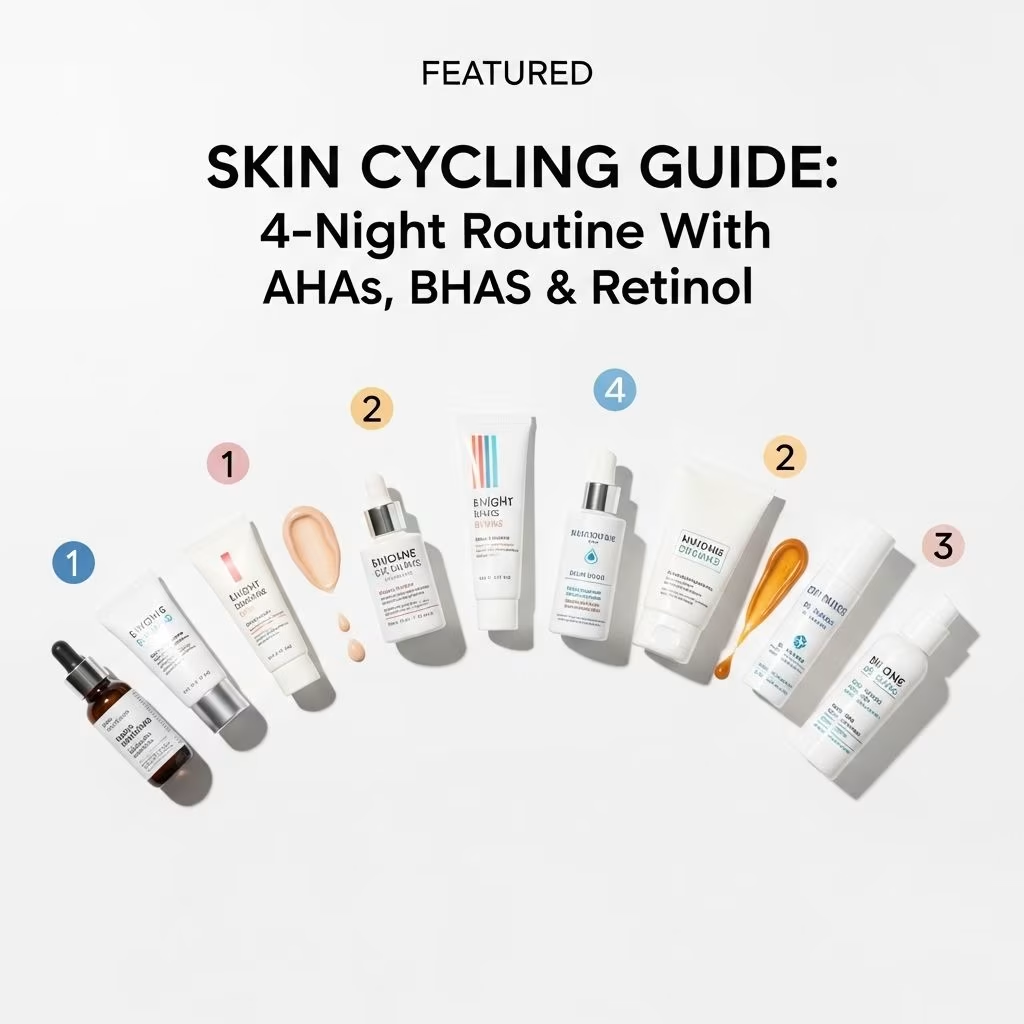
In the ever-evolving world of skincare, skin cycling has risen as a balanced and scientific approach to harnessing the benefits of powerful active ingredients like AHAs, BHAs, and retinol—without the irritation and damage that often comes from overuse. This comprehensive guide will help you master skin cycling, explaining the science, step-by-step routines, safety advice, and how to customize your journey to glowing skin.
What is Skin Cycling?
Skin cycling is a dermatologist-formulated skincare routine where active ingredients like exfoliating acids (AHAs, BHAs) and retinoids are rotated across a multi-night cycle, followed by periods of recovery with gentle moisturization. This rotation is designed to optimize skin results while minimizing the risks of irritation and barrier disruption that can occur with overuse of these potent ingredients.
Originally popularized by Dr. Whitney Bowe, skin cycling simplifies the process of incorporating actives, making advanced skincare accessible and safer for all skin types.
How Skin Cycling Works: The Core Philosophy
Rather than stacking multiple actives on the same night, skin cycling applies a strategic 3- or 4-night routine:
- Night 1 – Exfoliation: Uses chemical exfoliants (AHAs/BHAs) to resurface the skin and unclog pores.
- Night 2 – Retinoid: Applies retinol or prescription-strength retinoids to accelerate cell turnover and combat aging.
- Nights 3 & 4 – Recovery: Focuses on recovery and barrier repair with hydrating and soothing products.
This cycle is repeated, allowing the skin to reap the full benefits of each active while preventing over-exfoliation, inflammation, and sensitivity.
Benefits of Skin Cycling
- Reduces irritation: Separating potent actives minimizes redness, peeling, and sensitization.
- Optimizes efficacy: Each ingredient works to its strengths on dedicated nights without interference.
- Improves skin texture: Regular but controlled use of exfoliants and retinoids boosts smoothness and radiance.
- Supports barrier health: Recovery nights rebuild hydration and resilience for a balanced complexion.
- Customizable: Can be adapted to individual schedules and tolerances.
Key Actives: Understanding AHAs, BHAs, and Retinol
Alpha Hydroxy Acids (AHAs)
AHAs, such as glycolic acid and lactic acid, are water-soluble exfoliating acids that work on the skin’s surface. They are ideal for addressing:
- Dullness and uneven skin tone
- Fine lines and texture irregularities
Beta Hydroxy Acids (BHAs)
The most commonly used BHA is salicylic acid. BHAs are oil-soluble and penetrate deep into pores, making them ideal for:
- Oily and acne-prone skin
- Clogged or enlarged pores
Retinol and Retinoids
Retinol (over-the-counter) and retinoids (prescription-strength) are derivatives of vitamin A. They work by speeding up cell turnover—helpful for:
- Reducing wrinkles and fine lines
- Improving acne and hyperpigmentation
- Boosting collagen production
Important: Retinoids can make the skin more sensitive to sunlight. Always pair their use with daily SPF.
The 4-Night Skin Cycling Routine: Step-By-Step
| Night | Focus | Purpose | Core Products |
|---|---|---|---|
| 1 | Exfoliation (AHAs/BHAs) | Remove dead skin, unclog pores, prep skin | Exfoliant (glycolic/lactic acid, salicylic acid), gentle cleanser, moisturizer |
| 2 | Retinoid | Stimulate cell turnover, address aging/acne | Retinol or retinoid, gentle cleanser, moisturizer |
| 3 | Recovery | Repair barrier, hydrate, soothe | Hydrating serum (hyaluronic acid), gentle cleanser, rich moisturizer |
| 4 | Recovery | Strengthen skin, promote resilience | Gentle cleanser, barrier cream or moisturizer, optional soothing ingredients |
Night 1: Exfoliation
After cleansing, apply a chemical exfoliant (AHA for radiance and fine lines; BHA for congestion and acne) following the product’s instructions. Avoid layering multiple exfoliants. If you’re new to acids, start with a mild, low-concentration product and patch-test before use.
Night 2: Retinoid Application
Cleanse first, then apply a pea-sized amount of retinol or prescription retinoid. Beginners and those with sensitivity may benefit from sandwiching the retinoid between layers of moisturizer (the “retinol sandwich method”). Always follow with a moisturizer.
Nights 3 & 4: Recovery and Barrier Support
These are “rest” nights: skip actives and focus on hydration and barrier repair. Use gentle cleansers, hydrating serums, and rich moisturizers, possibly including ceramides, glycerin, or niacinamide.
AM Skincare Tips
- Use a gentle cleanser and moisturizer every morning.
- Always apply a broad-spectrum SPF 30+ daily to protect from heightened sun sensitivity due to actives.
Ingredient Integration and Best Practices
- Introduce one new product at a time. Patch testing is essential for all new actives.
- Do not combine exfoliants and retinoids in a single night: This causes excessive irritation.
- Moisturize generously on all nights, especially after applying actives.
- Monitor your skin for signs of irritation, such as redness, burning, flaking, and adjust the frequency if needed.
- Listen to your skin: If your skin barrier is compromised (tightness, stinging, or persistent peeling), increase the number of recovery nights or pause actives.
Sample Skin Cycling Product List
- Gentle Cleanser (AM/PM)
- Exfoliant (Night 1): Glycolic Acid 5-10% or Salicylic Acid 1-2%
- Retinol or Retinoid Cream (Night 2): Start with 0.025-0.05% retinol
- Hydrating Serum: Hyaluronic Acid
- Moisturizer: Barrier repair or ceramide cream
- SPF 30+ (AM)
Customizing Your Skin Cycling Routine
Skin cycling is not one-size-fits-all. Here’s how you can tailor the cycle:
| Skin Type | Customization Tips |
|---|---|
| Sensitive | Use lower concentrations; extend recovery nights to 3-4; avoid physical exfoliants. |
| Oily/Acne-Prone | BHAs may be more beneficial; balance actives with non-comedogenic moisturizers. |
| Normal/Combination | Standard 4-night cycle is usually effective. |
| Mature | Focus on retinoids and AHAs; supplement with peptides or antioxidants. |
| Beginner | Start with a 5- or 7-night cycle; slowly add actives. |
Adjusting Frequency
- If you experience persistent dryness or irritation, increase recovery nights between actives.
- Experienced users with resilient skin may shorten the cycle (e.g., 3 nights), but always prioritize skin comfort over speed.
Safety, Precautions, and Who Should Avoid Skin Cycling
Is skin cycling safe? For most people, yes. Properly implemented, it minimizes the risks associated with potent actives. However, be aware of the following:
- Avoid in pregnancy & breastfeeding: Retinoids are contraindicated if pregnant or breastfeeding.
- Manage allergies: If allergic to aspirin (salicylate), avoid BHAs (salicylic acid).
- Poorly tolerated skin conditions: Those with active eczema, rosacea, or compromised skin barriers should consult their dermatologist before starting.
- Monitor sun exposure: Both retinoids and acids increase photosensitivity—daily SPF is mandatory.
Frequently Asked Questions (FAQs)
Q: Can I use vitamin C or other serums with skin cycling?
Yes, but schedule vitamin C and other antioxidants for the morning routine, as these work well to protect against daytime environmental stressors. Avoid combining additional actives with your nightly cycle unless directed by a professional.
Q: Can I skin cycle if I have sensitive skin?
Absolutely. Just start slowly, use the mildest concentrations, and extend rest nights as needed. Always patch-test new products before applying to your entire face.
Q: Is skin cycling safe long-term?
Yes. The routine is designed for ongoing use, though you should continually assess your skin’s needs and tolerance, adjusting the actives’ frequency and concentration as appropriate.
Q: Should I stop other actives while skin cycling?
Initially, streamline your skincare to the essentials. You can reintegrate additional treatments gradually, but never layer them with retinoids or exfoliating acids at night to avoid irritation.
Q: Is it normal to peel when starting skin cycling?
Mild, temporary flaking is common when starting actives like retinol or acids, especially if you are new to these ingredients. Reduce the strength and increase recovery nights if you experience significant discomfort.
Final Thoughts
Skin cycling offers a pragmatic, effective way to harness the benefits of modern actives while reducing the risks. By respecting your skin’s natural rhythms and limits, skin cycling can help you achieve healthier, stronger, and more radiant skin with less confusion and frustration.
References
- https://health.osu.edu/health/skin-and-body/skin-cycling
- https://theordinary.com/en-us/blog/skin-cycling.html
- https://www.healthline.com/health/skin-cycling
- https://www.oneskin.co/blogs/reference-lab/how-to-skin-cycle
- https://www.ulta.com/discover/skin/what-is-skin-cycling-and-how-do-you-do-it
- https://bioelements.com/blogs/blog/estheticians-guide-to-skin-cycling
- https://www.dermstore.com/blog/how-to/what-is-skin-cycling-your-step-by-step-guide/
- https://www.esteelauder.com/blog-article-skin-cycling-routine


