


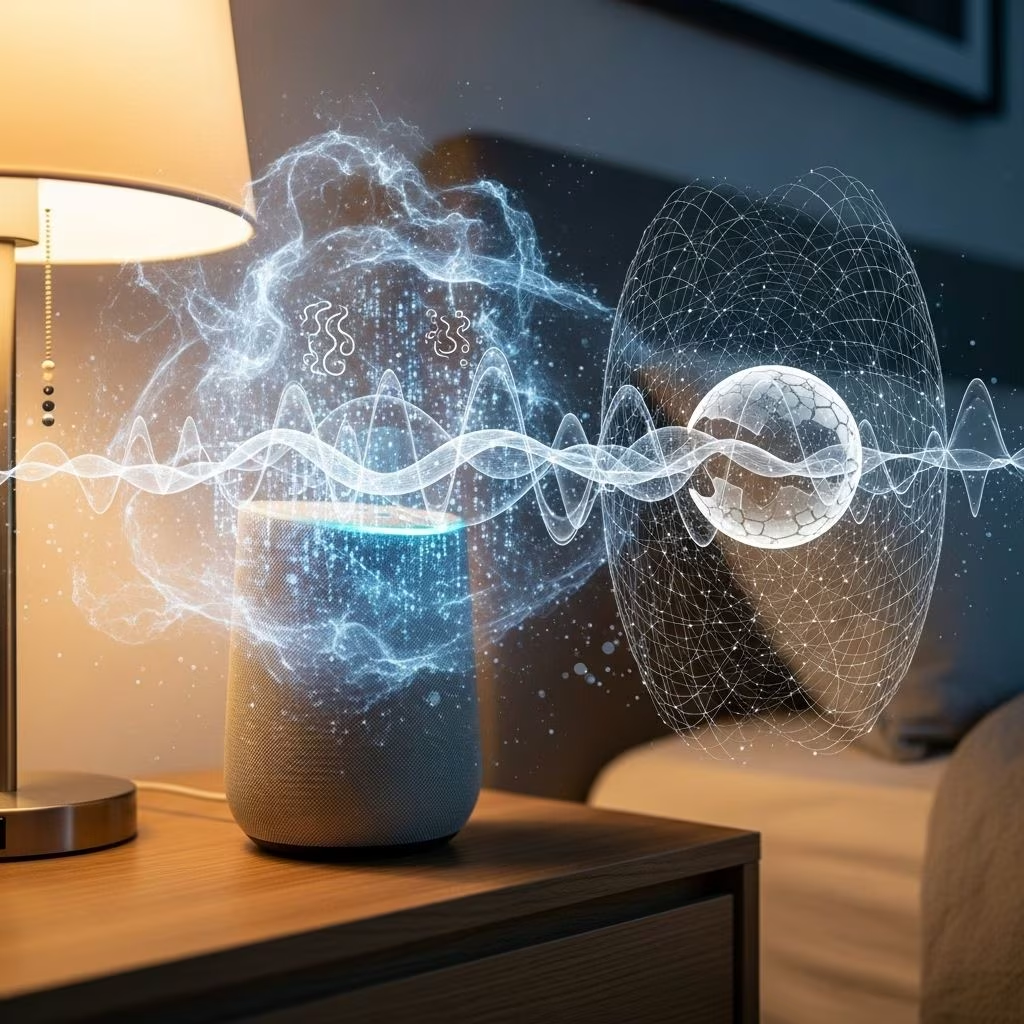
Introduction: The Dual Role of Smart Speakers
Smart speakers—devices like Amazon Alexa, Google Home, and Apple HomePod—have rapidly become fixtures in modern homes. These voice-controlled assistants promise convenience, entertainment, and even companionship, acting as digital butlers that can answer questions, play music, control smart home devices, and more. However, alongside their benefits, smart speakers are emerging as a source of psychological tension. While some users find them helpful for managing anxiety, others are unnerved by perceived surveillance and data collection, raising fundamental questions about trust, privacy, and the psychological impact of living with always-listening devices.
Smart Speakers and Public Speaking Anxiety
Recent research highlights a surprising twist in the story of smart speakers: they may help alleviate certain types of anxiety, particularly related to public speaking. Researchers at Penn State developed a public-speaking tutor for Amazon Alexa that guides users through cognitive restructuring exercises—a psychological technique designed to help individuals recognize and modify negative thought patterns. In studies, participants who used this tutor reported reduced pre-speech anxiety, suggesting that smart speakers could serve as accessible, judgment-free platforms for practicing and improving public speaking skills.
This shift marks a departure from viewing smart speakers merely as information retrieval tools. Instead, they are evolving into coaching devices, able to provide psychological support in a non-judgmental environment—something that can be especially valuable for individuals who fear being evaluated by human therapists or peers.
The Paradox of Social Presence: Does Alexa Help or Hinder?
Interestingly, the level of social responsiveness built into smart speakers influences user experience. In the Penn State study, participants interacted with Alexa versions that varied in sociability—some offered more personal greetings and conversational cues, while others were more functional and straightforward. Those who engaged with the more social version reported feeling a stronger sense of interpersonal closeness with the device, which correlated with lower speech anxiety.
However, the increased sociability of smart speakers can be a double-edged sword. On one hand, users can experience reduced anxiety by anthropomorphizing the device—treating it as a social agent rather than a mere tool. On the other hand, this sense of closeness may also raise expectations about the device’s capabilities and intentions, potentially heightening anxiety if the device fails to meet those expectations or behaves unpredictably.
Surveillance Fears: Why Privacy Concerns Matter
Despite their therapeutic potential, smart speakers are also a source of anxiety for many users—particularly around privacy and surveillance. The “always-listening” nature of these devices, which must remain alert for wake words like “Alexa” or “Hey Google,” creates a pervasive sense of being monitored. Even when companies assure users that recordings only occur after the wake word is detected, concerns persist about accidental recordings, data breaches, and the potential for third-party access to sensitive conversations.
These concerns are not merely theoretical. High-profile incidents, such as accidental recordings being sent to unintended recipients and data leaks, have fueled public skepticism. For some users, the presence of a smart speaker in the home can trigger feelings of paranoia or a constant, low-level anxiety about being watched or overheard.
How Smart Speakers Collect and Use Data
Understanding the anxiety triggered by smart speakers requires a closer look at how these devices collect, store, and utilize data. Key data collection mechanisms include:
- Voice Recordings: Smart speakers record and analyze voice commands to improve accuracy and deliver personalized responses. These recordings are often stored in the cloud for further analysis.
- Behavioral Data: Devices may track user interactions—such as frequently asked questions, music preferences, or shopping habits—to tailor recommendations.
- Third-Party Integrations: Many smart speakers connect with other services (e.g., calendars, email, and smart home devices), expanding the scope of potential data collection.
While companies claim to anonymize and secure this data, the possibility of misuse or unauthorized access remains a significant concern for users.
The Psychological Impact: Anxiety, Paranoia, and Trust
The psychological impact of smart speakers is complex, influenced by both their facilitative and intrusive qualities. For some, the ability to interact with an AI in the privacy of their home—without fear of human judgment—offers a safe space to practice skills and manage anxiety. For others, the knowledge that a device is always listening, even passively, can induce a state of hyperawareness or paranoia.
This dichotomy is grounded in broader psychological principles. The presence of technology that mimics human interaction (speech, responsiveness, even humor) can foster attachment and trust, as seen in the Penn State study. Conversely, the same technology can erode trust if users feel their privacy is compromised or if the device behaves unpredictably.
Design Choices: Social Cues, Personification, and User Experience
The design of smart speakers plays a pivotal role in shaping user perceptions and emotional responses. Research shows that the way users mentally personify smart speakers—whether they imagine the device as a human-like entity or a purely technological object—affects their comfort and anxiety levels.
- Social Cues: Incorporating social cues, such as friendly greetings or conversational prompts, can increase user engagement and reduce anxiety, as demonstrated by the Penn State research.
- Personification: When users anthropomorphize their smart speakers, they may experience a sense of companionship, but this can also heighten unease if the device’s behavior becomes erratic or invasive.
- Privacy Controls: Transparent privacy settings, mute buttons, and clear indicators of when the device is recording can help mitigate surveillance fears.
User Acceptance and Sociocultural Factors
Acceptance of smart speakers is not uniform; it varies by age, technological literacy, and cultural context. For example, a study on the use of smart speakers for physical activity in older adults found that while the devices were generally seen as usable and enjoyable, technical issues like Wi-Fi connectivity and command phrasing sometimes hindered adoption. Users who are less comfortable with technology may experience heightened anxiety around both device use and privacy concerns.
Cultural attitudes toward surveillance and privacy also play a significant role. In societies with a strong tradition of privacy rights, users may be more skeptical of smart speakers and more likely to experience surveillance-related anxiety. Conversely, in cultures more accepting of technological integration, users may be more willing to trade some privacy for convenience and entertainment.
Industry and Regulatory Responses
As concern grows, both the tech industry and regulators are responding to the dual challenges of user anxiety and privacy:
- Industry Initiatives: Companies are introducing features like visual indicators for active listening, enhanced encryption, and the ability to delete recordings automatically.
- Regulatory Frameworks: Governments are enacting stronger data protection laws, such as the European Union’s General Data Protection Regulation (GDPR), which give users more control over their personal data.
- Transparency Reports: Some companies now publish regular transparency reports detailing government requests for data and highlighting steps taken to protect user privacy.
Mitigating Anxiety and Surveillance Fears
Mitigating the dual anxieties associated with smart speakers requires a multipronged approach:
- Education: Informing users about how smart speakers work, what data they collect, and how to control privacy settings can alleviate irrational fears.
- Design Improvements: Building devices with clear privacy controls, tangible feedback (like lights showing when recording), and options for local rather than cloud-based processing can boost user trust.
- Therapeutic Use: Leveraging the social aspects of smart speakers for therapeutic purposes, as seen in the Penn State research, can turn anxiety triggers into anxiety relievers.
- Regulatory Compliance: Continued advocacy for strong privacy regulations and transparent corporate practices will be essential in building public trust.
Frequently Asked Questions (FAQs)
Can smart speakers really help with anxiety?
Yes, research shows that smart speakers can help reduce certain types of anxiety, such as public speaking anxiety, by providing cognitive restructuring exercises in a non-judgmental environment.
Why do people fear surveillance from smart speakers?
The “always-listening” function, combined with past incidents of accidental recordings and data breaches, has led many to worry about being constantly monitored, even if unintentionally.
How can I protect my privacy with a smart speaker?
You can protect your privacy by regularly reviewing and deleting voice recordings, using mute buttons when not in use, disabling unnecessary features, and educating yourself about your device’s privacy settings.
Are smart speakers safe for children and families?
Smart speakers can be safe if privacy settings are managed carefully, but parents should supervise use, especially for younger children, and be aware of the types of data that may be collected.
What are companies doing to address privacy concerns?
Companies are introducing more robust privacy controls, visual indicators for when devices are listening, and options for automatic deletion of recordings. Regulatory initiatives are also pushing for greater transparency and user control.
References
- https://www.labmanager.com/how-your-smart-speaker-could-relieve-public-speaking-anxiety-22511
- https://www.psu.edu/news/research/story/anxious-about-public-speaking-your-smart-speaker-could-help
- https://pmc.ncbi.nlm.nih.gov/articles/PMC11399739/
- https://www.frontiersin.org/journals/computer-science/articles/10.3389/fcomp.2022.981435/full
- https://ischool.syracuse.edu/wp-content/uploads/2020/06/He-Is-Just-Like-Me-A-Study-of-the-Long-Term-Use-of-Smart-Speakers-by-Parents-and-Children.pdf
- https://pmc.ncbi.nlm.nih.gov/articles/PMC10897797/
- https://dl.acm.org/doi/10.1145/3613904.3642846


