


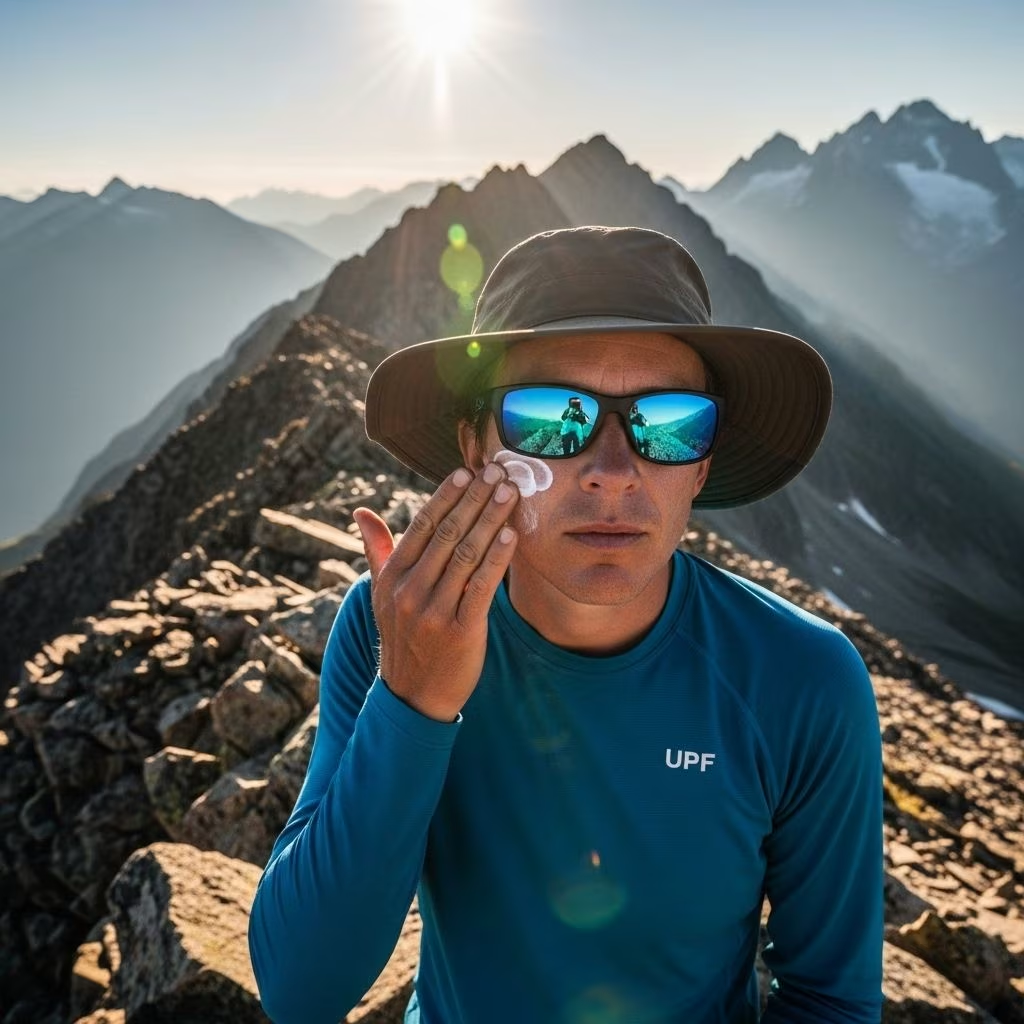
Sunscreen Efficacy at High Altitude and Humidity
Protecting your skin from the harmful effects of solar radiation is one of the most important health practices, but the stakes are considerably higher in environments with elevated altitude or increased humidity. High-altitude locales—whether alpine slopes, mountain villages, or tropical peaks—are subject to intensified ultraviolet (UV) radiation. Coupled with variable humidity, these factors influence both the risk of skin damage and the effectiveness of various sunscreen formulations. This article explores the scientific mechanism underlying sunscreen performance at high altitudes and in humid climates, outlines practical guidelines, and provides expert recommendations for optimizing photoprotection where it matters most.
- Overview: The Science Behind Sunscreen Protection
- UV Radiation: Why Altitude Matters
- The Role of Humidity in Skin and Sunscreen
- Best Sunscreen Formulations for Extreme Conditions
- Application Guidelines: Frequency, Quantity, and Technique
- Comprehensive Photoprotection Strategies
- Risks and Recent Research on Skin Cancer and Sunburn
- Frequently Asked Questions
- References
Overview: The Science Behind Sunscreen Protection
Sunscreen is designed to prevent the harmful effects of UVA and UVB rays, the two primary forms of ultraviolet radiation that reach the Earth’s surface. When skin is exposed, UVA rays can penetrate deeply, leading to premature aging and wrinkling, while UVB mainly affects the superficial layers, causing sunburn and contributing directly to skin cancer risk. Sunscreen efficacy is measured by its Sun Protection Factor (SPF), which denotes the product’s ability to shield skin from UVB rays. Broad-spectrum sunscreens use combinations of chemical filters (like avobenzone or oxybenzone) and physical blockers (such as zinc oxide or titanium dioxide), the latter providing additional defense against both UVA and UVB.
UV Radiation: Why Altitude Matters
High-altitude environments expose inhabitants and travelers to significantly elevated levels of UV radiation. Several scientific studies and dermatology organizations have mapped the increase, revealing the following:
- For every 1,000 feet (about 305 meters) ascended, UV intensity increases by about 10%.
- For every 1,000 meters (about 3,300 feet), UV intensity rises by 10–12%.
- At ski resorts above 2,100 meters, the peak UV index can be 20–30% higher than at sea level.
This amplification is mainly due to a thinner atmosphere at altitude, leading to reduced filtration of UV rays. The risk is further compounded in snowy or icy environments, where reflective surfaces can bounce up to 80% of UV rays back toward exposed skin. The result: faster sunburn, increased DNA damage, and higher rates of skin cancer—even in cold or winter conditions.
| Altitude | Approximate UV Increase | Environmental Notes |
|---|---|---|
| Sea Level | Baseline | Typical urban or coastal UV exposure |
| 1,000 feet (305 m) | +10% | Low mountain villages, hilly terrain |
| 3,300 feet (1,000 m) | +10–12% | Moderate elevation ski resorts |
| 7,000+ feet (2,100+ m) | +20–30% | High-elevation mountain peaks |
| Snow/Ice Present | Up to +80% reflected UV | Alpine, polar, and winter sports environments |
Key Risks at High Altitude
- Shorter time to sunburn: At altitudes like Vail, Colorado, sunburn can occur in as little as six minutes on clear days without protection.
- Higher rates of skin cancer and photoaging: DNA damage accumulates faster, increasing risk for melanoma, squamous cell carcinoma, wrinkles, and dark spots.
- Amplified reflection hazards: Snow and ice cause double the exposure compared to beach settings.
The Role of Humidity in Skin and Sunscreen
Humidity can impact both skin physiology and the efficacy of sunscreen products. While high humidity generally makes the skin sweat more and appear moister, it also poses several challenges:
- Sweat increases photosensitivity: Perspiration reduces the minimal erythema dose (MED), meaning less radiation is needed to cause sunburn.
- Sunscreen wash-off or dilution: Many chemical formulations are not designed to withstand heavy sweating, so protection rapidly decreases in humid, active conditions.
- Greater absorption and distribution changes: Humid skin may absorb topical products differently, altering their effectiveness and sometimes leading to uneven coverage.
As a result, high humidity environments require sunscreens with robust water- and sweat-resistant properties, and demand more frequent reapplication to maintain protection.
Best Sunscreen Formulations for Extreme Conditions
Effective sunscreen choice at high altitude and/or humidity is rooted in the right formulation and application strategy. Leading dermatology organizations and recent studies recommend:
- Broad-spectrum coverage: SPF 30 or higher; blocks both UVB and UVA rays.
- Physical blockers: Zinc oxide and titanium dioxide offer more stable protection, do not degrade as quickly at altitude, and are less dependent on skin chemistry.
- Water-resistant products: ‘Water resistant’ or ‘very water resistant’ offers effective protection during sweating and physical activity.
- Opaque, creamy formulations: Thicker products remain visible on the skin and are less likely to wash away.
- UPF (Ultraviolet Protection Factor) clothing: Works in synergy with sunscreen to provide persistent physical shielding, especially during extended outdoor activities at altitude.
Formulation Comparison Table
| Type | Advantages | Best Use | Limitations |
|---|---|---|---|
| Chemical | Thin texture, blends in | Light activity, low sweat/humidity | Less stable at high UV, may wash off with sweat |
| Physical (Mineral) | Broad-spectrum, stable, water-resistant | High altitude, intense sun, heavy sweat | May feel heavy or leave white cast |
| UPF Clothing | Consistent, no need for reapplication | Mountaineering, prolonged exposure | Limited protection to covered areas |
Application Guidelines: Frequency, Quantity, and Technique
Application technique substantially affects sunscreen efficacy, especially in demanding environments:
- Apply one ounce (a shot glass) over entire body; one teaspoon for the face and neck.
- Apply 15–30 minutes before outdoor exposure so the product can bind with skin.
- Reapply every two hours, or more frequently if swimming, sweating heavily, or towel drying—regardless of SPF rating.
- Choose water-resistant formulations for sports, skiing, or high humidity activities.
- Pay special attention to missed areas: ears, lips, hands, nose, back of neck, and scalp (if hair is thin).
At high altitude, UV intensity can degrade sunscreen faster. Reapplication more frequently than the standard (every two hours) may be necessary, especially under active or humid conditions.
Comprehensive Photoprotection Strategies
Experts stress that the most robust defense involves multiple strategies combined. These include:
- Sunscreen: Broad-spectrum, water-resistant, correct reapplication frequency.
- UPF-rated clothing: Long sleeves, hats, sunglasses, gloves for additional shielding.
- Seeking shade: During peak UV hours (10am–4pm), minimize direct exposure.
- Avoiding peak sun intensity: Early morning or late afternoon activities are safer.
- Education and awareness: Understand local UV index, altitude gain, and surface reflectivity risks.
On the mountain or in humid tropics, combining physical and chemical protection, vigilant application, and strategic behavior yields the best results for preventing premature aging and skin cancer.
Risks and Recent Research on Skin Cancer and Sunburn
High-altitude and humid environments have both been increasingly associated with higher risks of skin damage, as outlined by peer-reviewed studies:
- Randomized controlled trials confirm sunscreen use reduces melanoma and squamous cell carcinoma rates.
- Alpine research indicates sunburn can occur in as little as 6 minutes without proper protection at altitude.
- Long-term daily use of SPF 15 or higher reduces wrinkle progression by up to 24% over 4.5 years.
- Water-resistant broad-spectrum sunscreen reduces UVA-induced collagen breakdown, helping prevent wrinkling and photoaging.
Therefore, medical organizations universally recommend comprehensive sun protection, with a special emphasis on high-risk environments such as mountains, snowfields, and humid tropical zones.
Frequently Asked Questions (FAQs)
Q: Does altitude affect how long sunscreen lasts?
A: Yes, the intense UV radiation at high altitude degrades sunscreen more quickly. It’s necessary to reapply more often than at sea level, particularly if you are sweating or exposed to snow/ice.
Q: Should I use a higher SPF at altitude?
A: Broad-spectrum sunscreens with SPF 30 or above are recommended for high altitudes. SPF 50+ may offer additional margin of safety, but frequent reapplication is most important.
Q: How does humidity impact sunscreen efficacy?
A: Humidity leads to increased sweating, which can wash off or dilute sunscreen. Water-resistant, sweat-resistant formulas designed for sports are best at maintaining protection in these conditions.
Q: Are physical (mineral) sunscreens better than chemical filters at altitude?
A: Physical blockers, such as zinc oxide and titanium dioxide, are more stable and effective against broad-spectrum UV, especially under intense sunlight at altitude.
Q: Can I rely on clothing alone for sun protection?
A: UPF-rated clothing offers consistent protection but leaves exposed areas (face, hands) vulnerable. Sunscreen remains essential for comprehensive coverage.
Q: Does snow reflect UV radiation?
A: Yes, snow can reflect up to 80% of UV rays back toward skin, drastically increasing exposure risk compared to sand or water.
References
- Reflective Truth of Higher Elevation and Skin Cancer in Colorado.
- Sunscreen vs. UPF Clothing: Your High-Altitude Sun Protection Strategy.
- Photoprotection in Outdoor Sports: A Review of the Literature.
- Sun Safety In Colorado: The Definitive Guide.
- The efficacy and safety of sunscreen use for the prevention of skin cancer.
- CDC Yellow Book: Sun Exposure in Travelers.
References
- https://www.vanguardskin.com/the-reflective-truth-of-higher-elevation-and-skin-cancer-in-coloradoans/
- https://brlsports.com/blogs/fitness-training-nutrition/sunscreen-vs-upf-clothing-your-high-altitude-sun-protection-strategy
- https://pmc.ncbi.nlm.nih.gov/articles/PMC8850489/
- https://www.altitudemedicine.com/2025/06/sun-safety-in-colorado-the-definitive-guide-to-protecting-your-skin-from-uv-risks/
- https://pmc.ncbi.nlm.nih.gov/articles/PMC7759112/
- https://www.cdc.gov/yellow-book/hcp/environmental-hazards-risks/sun-exposure-in-travelers.html


