


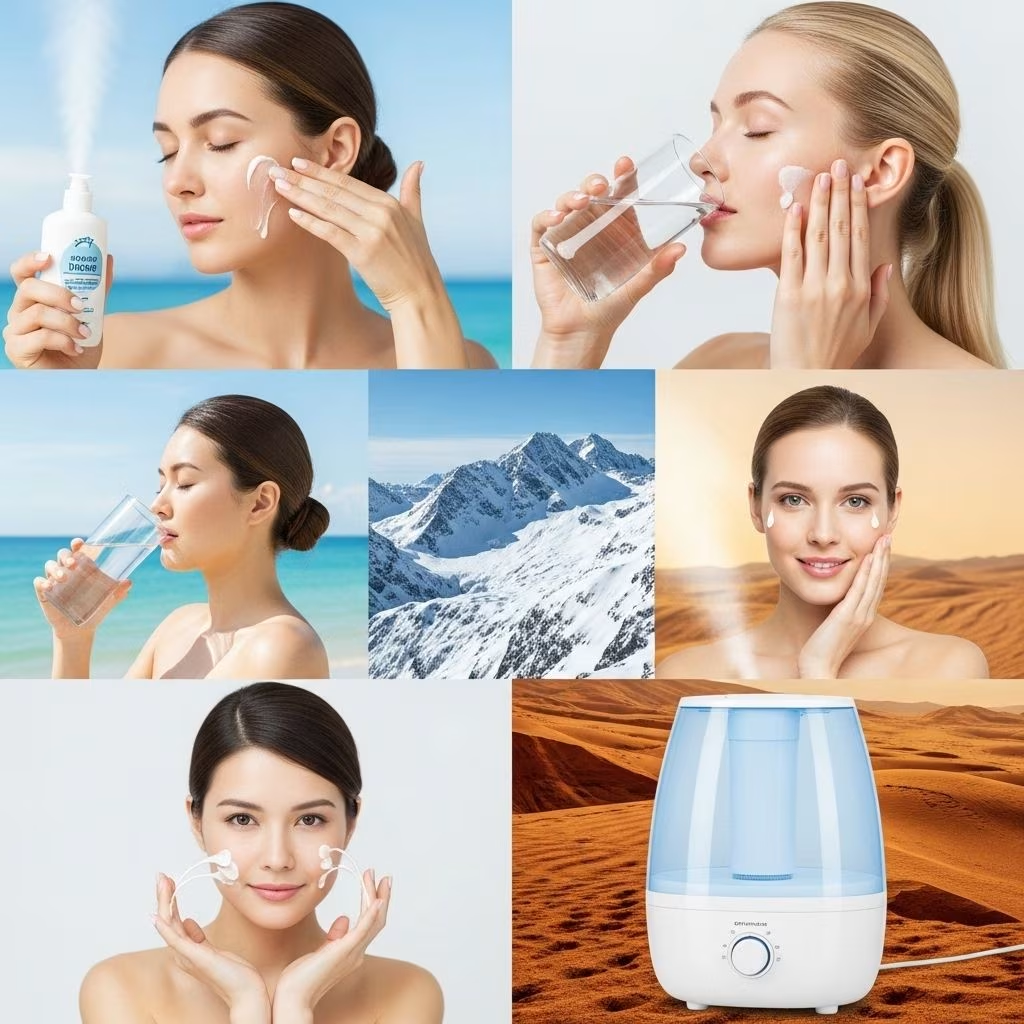
Maintaining optimal skin hydration is a foundation for overall skin health, comfort, and appearance. Transepidermal water loss (TEWL)—the process by which water escapes from the skin to the environment—plays a critical role in this balance. In today’s rapidly changing environment, understanding and controlling TEWL, especially across varying climates, is more important than ever for maintaining skin resilience and health.
Introduction to TEWL
Transepidermal water loss (TEWL) refers to the passive movement of water from within the body, through the epidermal layer of the skin, where it ultimately evaporates into the atmosphere. While TEWL is a normal physiological process crucial for thermoregulation and cutaneous function, excessive TEWL can result in dry, dehydrated, or compromised skin. Understanding TEWL is essential for individuals seeking to manage skin health amidst daily environmental and lifestyle fluctuations.
The Science and Mechanism of TEWL
Our skin consists of three main layers:
- Epidermis – Outermost protective layer.
- Dermis – Middle supportive tissue layer.
- Hypodermis – Innermost fat and connective tissue.
TEWL occurs primarily as water migrates from the dermis up through the epidermis, escaping via the stratum corneum (the outermost “brick-and-mortar” layer of dead skin cells and lipids) into the external environment.
This process is usually regulated by a healthy skin barrier. However, when this barrier is compromised, water escapes faster than it can be replenished, leading to visible signs of dehydration, tightness, and dullness.
Key Functions of Skin Water Balance
- Regulates body temperature
- Protects underlying tissues
- Supports enzymatic activity and cellular function
- Maintains smooth and supple skin appearance
Role of the Skin Barrier
The skin barrier—particularly the stratum corneum—acts as a highly selective shield, preventing unregulated water loss while also blocking the entry of irritants and pathogens. The integrity of this barrier is akin to a brick wall, with corneocytes (“bricks”) enmeshed in lipid-rich (“mortar”) layers. When these lipid layers become disrupted (due to internal or external stressors), they create pathways or “cracks,” facilitating increased water evaporation.
| Component | Function |
|---|---|
| Corneocytes | Provide structural strength |
| Lipids (ceramides, fatty acids, cholesterol) | Seal gaps, preventing water loss |
| Natural Moisturizing Factors (NMFs) | Attract and retain water within corneocytes |
TEWL and Variable Climates
Environmental and climatic conditions profoundly influence TEWL rates. Our skin’s ability to maintain optimal hydration is consistently challenged by external factors, particularly during rapid changes in climate or exposure to extreme conditions.
How Different Climates Affect TEWL
- Low humidity (e.g., winter, arid deserts): Accelerates water evaporation, resulting in faster TEWL and dry, flaky skin.
- Cold weather: Reduced humidity and environmental stress impair natural lipid replenishment.
- Hot, dry climates: Stimulate sweating (active water loss), but rapid evaporation can dehydrate the skin barrier faster.
- Air conditioning and indoor heating: Lower indoor humidity, further accelerating TEWL.
- Poor air quality/pollution: Increases oxidative stress and can damage skin barrier lipids, increasing TEWL risk.
Importance of Adaptive Skincare
Travelers, outdoor workers, and anyone relocating between climates must proactively adapt skincare routines to mitigate TEWL. This means adjusting hydration strategies for both acute and chronic climatic variations.
Measuring and Assessing TEWL
TEWL is an objective, quantifiable parameter frequently measured in both dermatological research and clinical skincare assessment.
- TEWL meters (evaporimeters) measure the water vapor flux from the skin surface, typically expressed in g/m²h.
- Higher readings indicate compromised barrier function or damaged skin.
- Lower readings suggest an effective, intact barrier with minimal water loss.
Consistent monitoring is especially important in clinical trials, evaluating product efficacy, or managing chronic skin conditions.
Clinical Impacts of Excessive TEWL
When TEWL becomes elevated beyond physiological norms, the following negative effects are commonly reported:
- Dryness and visible flaking
- Itching and irritation
- Increased sensitivity and redness
- Fine lines and dullness due to dehydration
- Impaired wound healing
- Heightened risk for eczema, dermatitis, and other inflammatory skin conditions
Chronic excessive TEWL undermines both comfort and appearance, and in severe cases, predisposes the skin to infection and pathological changes.
Major Causes Influencing TEWL
Many factors, both intrinsic and extrinsic, influence the rate of TEWL. These include:
| Factor | Impact on TEWL |
|---|---|
| Age | Barrier function weakens; higher TEWL risk in infants & elderly |
| Climate & Humidity | Low humidity accelerates TEWL |
| Temperature Extremes | Cold/heat may disrupt lipids & proteins |
| Air Conditioning or Heating | Induces low indoor humidity |
| Pollution & Toxins | Increase oxidative stress; impair barrier |
| Over-washing & Harsh Products | Strip skin lipids, increasing water loss |
| Medical Conditions | Eczema, psoriasis, and dermatitis heighten TEWL |
| Sleep patterns | TEWL is naturally highest during sleep |
Strategies to Control TEWL in Variable Climates
Successfully managing TEWL, especially when moving between climates or during seasonal transitions, requires a multi-layered approach. Below are evidence-based strategies to reduce water loss and fortify the skin barrier:
1. Humectants: Attract Moisture
- Hyaluronic acid, glycerin, urea, and panthenol (Vitamin B5) are common humectants capable of drawing moisture from the environment and lower layers of skin to the outer epidermis.
- Effective in boosting hydration but should be paired with occlusives, especially in dry climates, to prevent withdrawal of moisture.
2. Occlusives: Seal Water In
- Ceramides, fatty acids, shea butter, squalane, and plant-derived oils are classic occlusives that form a protective, water-resistant film on the skin’s surface.
- They are critically important in arid and windy climates where rapid evaporation is a threat.
3. Barrier-Repair Ingredients
- Formulations containing ceramides, cholesterol, and essential fatty acids are proven to replenish skin lipid reservoirs and restore barrier integrity.
- Niacinamide (Vitamin B3) enhances barrier repair and helps regulate water content.
4. Gentle Cleansing
- Use fragrance-free, pH-balanced cleansers to avoid disturbing skin lipids and proteins.
- Limit water temperature and duration of baths or showers.
5. Environmental Adaptation
- Use humidifiers during dry indoor spells or winter.
- Protect skin with clothing, scarves, or face masks in harsh wind, sun, or pollution.
6. Nighttime Care
- Moisturize before bedtime to counter heightened nocturnal TEWL.
7. Avoid Over-Exfoliation and Irritants
- Restrict chemical or physical exfoliants, especially in harsh climates.
- Avoid products containing excessive alcohols, fragrances, or aggressive surfactants.
8. Nutrition and Hydration
- Ensure adequate daily fluid intake.
- A diet rich in omega-3 fatty acids, antioxidants, and vitamins supports barrier repair from within.
Sample Skincare Routine for Variable Climates
- Morning: Gentle cleanse, apply humectant serum (e.g., hyaluronic acid), layer occlusive moisturizer, follow with sunscreen.
- Daytime: Reapply moisturizer as needed; use face mist for quick hydration boosts in dry air.
- Night: Rich, occlusive moisturizer or sleeping mask after humectant/repair serums; use a bedroom humidifier.
Frequently Asked Questions (FAQs)
Q: Is TEWL always bad for the skin?
No, TEWL is a normal physiological process essential for skin health. It only becomes problematic when water loss outpaces the skin’s ability to replenish, leading to dryness, irritation, and compromised barrier function.
Q: How quickly can TEWL increase in a new climate?
TEWL can spike almost immediately when exposed to low humidity, wind, or air conditioning. However, visible symptoms (flaking, redness) may take days to manifest depending on individual barrier strength and skincare regimen.
Q: Are there people more susceptible to excessive TEWL?
Yes. Infants, the elderly, individuals with skin conditions (eczema, dermatitis, psoriasis), and those with naturally dry or sensitive skin have a weaker skin barrier and are at higher TEWL risk.
Q: Can foods or supplements help reduce TEWL?
A balanced diet rich in essential fatty acids (omega-3), antioxidants, and water supports healthy barrier function. Supplements can be considered, but topical barrier repair remains the most direct approach.
Q: Does sunscreen help control TEWL?
Yes. UV exposure accelerates skin barrier damage and increases TEWL. A broad-spectrum sunscreen helps preserve both the health and function of the barrier.
References
- 1. What Is Transepidermal Water Loss and How To Stop It, Eminence Organics
- 2. Transepidermal Water Loss (TEWL) and How it Affects Your Skin, NIOD
- 3. What is TEWL and how can you prevent it?, Pai Skincare
- 4. What is Trans-epidermal Water Loss (T.E.W.L), SkinCeuticals
- 5. What is Transepidermal Water Loss (TEWL)?, CeraVe Australia
- 6. Transepidermal water loss (TEWL): Environment and pollution, NCBI/PMC
- 7. What Is Transepidermal Water Loss and How Does It Affect Your Skin?, ISDIN
- 8. Transepidermal water loss, Wikipedia
References
- https://eminenceorganics.com/us/blog/2021/09/20/what-transepidermal-water-loss-how-stop-it
- https://niod.com/en-is/blog/trans-epidermal-water-loss.html
- https://www.paiskincare.us/blogs/guides/tewl-trans-epidermal-water-loss
- https://www.skinceuticals.com/skincare-advice/transepidermal-water-loss-tewl.html
- https://www.cerave.com.au/blog/dry-skin/transepidermal-water-loss
- https://pmc.ncbi.nlm.nih.gov/articles/PMC9168018/
- https://www.isdin.com/us/blog/all/what-is-transepidermal-water-loss/
- https://en.wikipedia.org/wiki/Transepidermal_water_loss


